Connect with us

Business

Why I sold ownership of Geregu Power Plant — Otedola

info

Published

on

Admin ajax 1 1.jpg

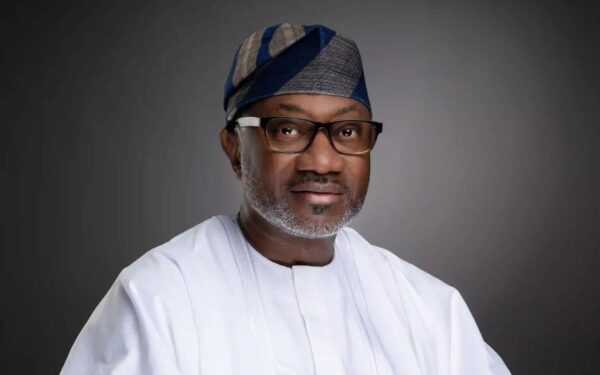
Nigerian billionaire businessman Femi Otedola has disclosed that he sold his stake in Geregu Power Plc to invest in the planned public offering of the Dangote refinery project owned by Aliko Dangote.

Mr Otedola made the disclosure while speaking to journalists during a visit to the Dangote Refinery on Wednesday.

While praising Mr Dangote’s industrial projects, he described the businessman as “a colossus” and “one of the greatest men that has come out of Africa.”

“That’s one of the reasons why I sold my stake in the Geregu plant to come and invest my proceeds in the IPO of Dangote Refinery,” Mr Otedola said.

The businessman said he had repeatedly appealed to Mr Dangote to allocate shares to him in the refinery’s private placement.

PT WHATSAPP CHANNEL

“On a personal note, I have appealed to him. I have been here with him 25 times,” he said, adding that as part of his compensation, Mr Dangote should allocate him shares worth $100 million during the private placement phase.

Mr Otedola described the Dangote refinery project as a transformational investment capable of freeing Nigeria and Africa from economic dependence.

“I wish Aliko Dangote is a colossus, a genius, probably one of the greatest men that has come out of Africa for delivering us out of economic slavery in Nigeria and by extension Africa,” he said.

Last December, Mr Otedola offloaded his interest in Geregu Power Plc, the electricity generation company he took public in October 2022 at a market value of N250 billion, which was valued at the time to be in the neighbourhood of N2.9 trillion.

The deal was valued at $750 million, a source with knowledge of the transaction told PREMIUM TIMES at the time. Until the completion of the share sale, he was the majority owner of the Lagos-quoted firm.

In his remarks on Wednesday, Mr Dangote revealed that preparations were underway for an Initial Public Offering (IPO) of the refinery, which he said could be launched by September.

According to him, investor demand for the offering has already reached “billions of dollars.”

“There is quite a lot of demand in terms of people disturbing us, pushing us, saying we want to buy,” he said.

Mr Dangote said the goal was to allow early investors to benefit from the refinery’s future growth in the same way investors benefited from early stakes in global technology firms.

“We want it to be like when you buy Amazon or Apple… everybody has become a millionaire and that is what we want to bring into Africa,” he said.

READ ALSO: Billionaire, Femi Otedola, among writers shortlisted for BCA African Business Book 2026

The Dangote refinery, located in Lagos, began fuel production last year and is expected to significantly reduce Nigeria’s dependence on imported petroleum products.

The facility has been widely described as Africa’s largest refinery and one of the biggest single-train refineries globally.

Mr Otedola’s comments come amid increasing investor interest in large-scale infrastructure and energy assets in Nigeria, especially projects linked to domestic refining and industrialisation.


Continue Reading
Click to comment

Leave a Reply

Your email address will not be published. Required fields are marked *

Business

UBA Champions Diaspora Healthcare Investment at ANPA America Symposium

info

Published

on

By

IMG 0146.webp

Africa’s Global Bank, United Bank for Africa (UBA) Plc, has reaffirmed its commitment to strengthening diaspora engagement, advancing healthcare development in Nigeria through the introduction of its healthcare investment proposition to the Nigerian-American medical community at the 2026 ANPA Carolinas Symposium held in Charlotte, North Carolina.

The ANPA Carolinas Symposium, hosted annually by the South Carolina and North Carolina Chapters of the Association of Nigerian Physicians in the Americas (ANPA), convenes over 170 physicians and healthcare professionals for medical and scientific dialogue on issues impacting communities across North America, the Caribbean, and Africa, particularly among people of Nigerian descent.

Speaking at the event, UBA’s Head of Diaspora Banking, Anant Rao, made a compelling case for structured diaspora participation in Nigeria’s healthcare transformation, encouraging attendees to expand their contribution beyond remittances toward long-term institution-building.

“The financial infrastructure required to connect your success abroad to sustainable institutional impact at home has not been intentionally designed for diaspora healthcare investors until now,” Rao said.

During his presentation, Rao introduced the ANPA–UBA Diaspora Healthcare Investment Platform — a professionally managed investment vehicle designed to channel diaspora capital into specialist hospitals, diagnostic centres, telemedicine infrastructure, and medical training institutions across Nigeria.

“Every dollar invested delivers a dual return — creating value for investors while contributing meaningfully to Nigeria’s healthcare future. We now have the regulatory framework, banking infrastructure, governance structures, and institutional commitment to make this possible,” he added.

Under the proposed structure, UBA will serve as custodian and structuring bank, while United Capital Asset Management, one of Nigeria’s leading asset managers with over ₦1.2 trillion in assets under management, will act as fund manager.

As part of deepening engagement with the Nigerian-American medical community, Rao also proposed a Memorandum of Understanding (MoU) between UBA and the two ANPA chapters. The proposed collaboration is anchored on six strategic pillars: preferred banking offerings for ANPA members; quarterly financial education sessions; the joint Healthcare Infrastructure Fund; a dedicated ANPA Wealth and Legacy Desk; access to group-rate family healthcare plans through Avon HMO; and a UBA co-matching contribution framework to support qualifying impact vehicles under the Pearl Endowment Fund.

The initiative represents a further expansion of UBA’s diaspora value proposition, which currently includes Non-Resident Nigerian (NRN) accounts in multiple currencies, fixed-income and dollar-denominated investment solutions through United Capital, elder-care trust solutions under the Homeland Anchor Care Trust programme in partnership with Avon HMO, and private wealth management offerings tailored to senior diaspora professionals.

The 2026 ANPA Carolinas Symposium marks another milestone in UBA’s strategic engagement with the diaspora community and reinforces the Bank’s long-held belief that diaspora capital can play a transformative role in accelerating healthcare and infrastructure development across Africa.

The post UBA Champions Diaspora Healthcare Investment at ANPA America Symposium appeared first on Business Today NG.

Continue Reading

Business

Budget office DG defends Tinubu’s foreign engagements, faults Peter Obi’s claims

info

Published

on

By

Images 4.jpeg

The Director General of the Budget Office of the Federation, Tanimu Yakubu, has defended the foreign engagement strategy of President Bola Tinubu, describing recent criticisms by the former Anambra State Governor, Peter Obi, as a “populist simplification” of Nigeria’s economic realities.

Mr Yakubu, in an article titled “Foreign Engagements and the Dangers of Populist Simplification: Peter Obi’s Ignorance,” argued that Mr Obi failed to appreciate the complexities involved in rebuilding investor confidence and restoring economic stability in a country emerging from fiscal and monetary challenges.

On 16 May, Mr Obi criticised the value of recent foreign state visits by Nigerian leaders, arguing that such engagements must translate into measurable economic benefits for citizens, rather than ceremonial visits.

“State visits by leaders are not tourism, and diplomacy is not a fashion parade,” Mr Obi said.

According to Mr Yakubu, the Tinubu-led administration inherited an economy burdened by structural weaknesses, including fuel subsidy costs, exchange-rate distortions, mounting debt-service obligations, dwindling investor confidence, and heavy reliance on the Central Bank of Nigeria (CBN) financing to sustain government operations.

PT WHATSAPP CHANNEL

The Budget Office DG said under such conditions, international engagements should not be viewed as ceremonial trips but as strategic efforts aimed at rebuilding sovereign credibility, strengthening diplomatic relations, restoring investor confidence, and attracting long-term capital.

Mr Yakubu said the former Anambra state governor oversimplifies economic realities, which has a tendency to reduce complex questions of economic recovery.

“No serious analyst disputes that foreign engagements should ultimately produce measurable economic outcomes. The real issue, however, is whether Mr. Obi properly understands the sequence through which nations emerging from fiscal and monetary instability rebuild investor confidence, restore credibility, and reposition themselves within global capital markets.

“President Tinubu inherited an economy facing severe structural stress: an unsustainable fuel subsidy regime, multiple exchange-rate distortions, collapsing fiscal buffers, mounting debt-service pressures, dwindling investor confidence, and unprecedented dependence on Ways and Means financing simply to sustain government operations.

“Under such circumstances, international engagements are not mere ceremonial excursions; they become instruments for rebuilding sovereign credibility, restoring policy confidence, reassuring investors, strengthening diplomatic alignments, attracting long-term capital, and repositioning the country within regional and global economic networks,” Mr Yakubu said.

Economic comparison

He also faulted Mr Obi’s comparison of Nigeria’s economic situation with that of the United States under former President Donald Trump, saying the two countries operate under entirely different economic realities.

According to him, the United States engages China from the position of the world’s dominant reserve currency issuer, also as the largest consumer market on earth, and a mature industrial economy with deep capital markets and global technological dominance.

In contrast, the director general said Nigeria is a reforming emerging economy attempting to stabilize itself after years of fiscal distortion and policy disequilibrium.

Mr Yakubu further argued that the benefits of international engagements often take time to materialise, stressing that major investments, infrastructure partnerships, and sovereign financing commitments usually emerge gradually after sustained diplomatic and economic engagement.

ALSO READ: Ex-foreign affairs minister criticises Tinubu’s ambassadorial appointments

He described it as contradictory for critics to oppose reforms such as fuel subsidy removal and exchange-rate unification while simultaneously demanding immediate foreign investment inflows.

Mr Yakubu said its is inconsistent to oppose stabilization reforms on one hand while simultaneously demanding the investment confidence that only such reforms can eventually produce.

“More importantly, many of the benefits of state engagements do not materialize instantly in the form of dramatic headline announcements. Serious investments, infrastructure partnerships, manufacturing relocations, energy financing arrangements, and sovereign investment commitments often emerge gradually after sustained diplomatic engagement, policy stabilization, and investor confidence-building.

“Ironically, many of the same critics now demanding immediate investment inflows were among those who opposed the difficult stabilization reforms, including fuel subsidy removal and exchange-rate unification, that were necessary to restore the macroeconomic credibility investors require before committing long-term capital,” he said.

He extolled the administration and CBN’s achievements in stabilising the economy with reforms, and that Nigeria was approaching a dangerous fiscal cliff before the administration’s intervention.

“Diplomacy should indeed generate economic value. But rebuilding a damaged economy requires more than slogans, photo comparisons, or selective foreign analogies.

“It requires difficult decisions, international re-engagement, policy credibility, institutional stabilization, and the patience necessary for long-term economic restructuring to take root,” Mr Yakubu said.


Continue Reading

Trending