Events
NESREA, Stakeholders Push Youth-Led Response to Flooding at World Environment Day Event in Jos

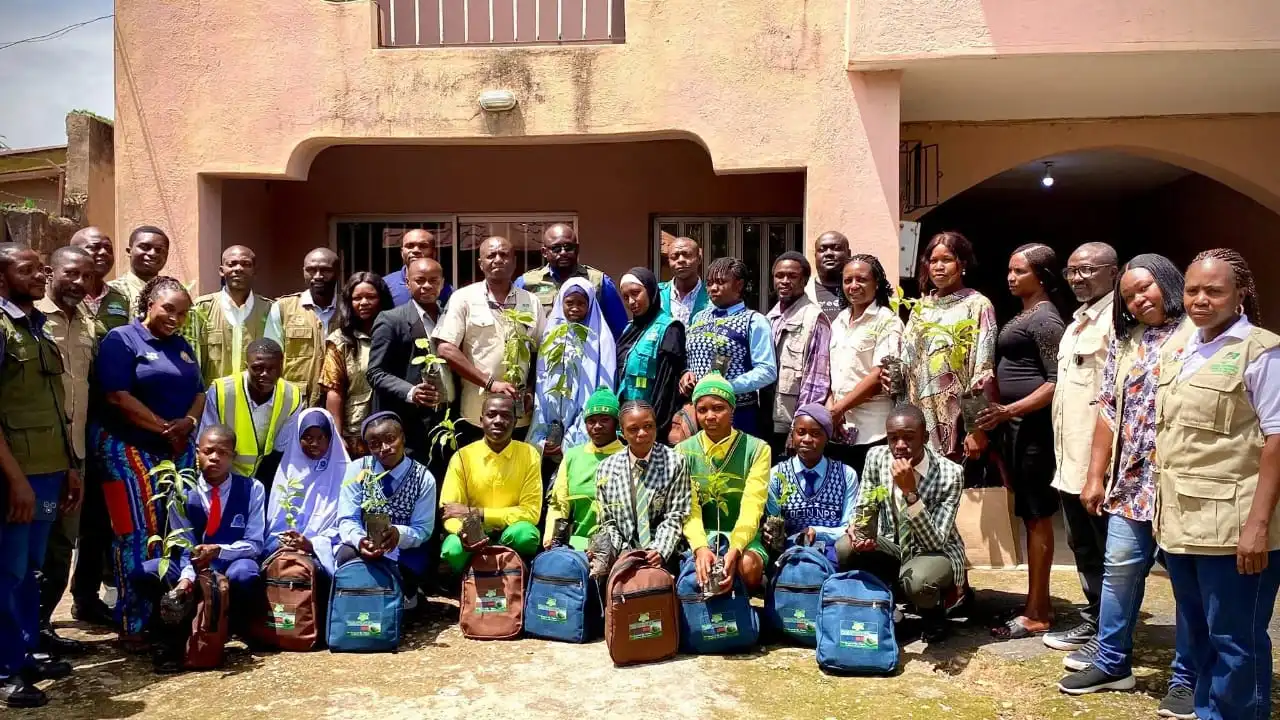
The National Environmental Standards and Regulations Enforcement Agency (NESREA), North Central Zonal Headquarters, Jos, has called for collective action to address flooding and other environmental challenges as it commemorated the 2026 World Environment Day with an interactive session involving selected secondary schools in Plateau State.
The event, held on Thursday at the agency’s headquarters in Jos, was themed “Inspired by Nature: For Climate, For Our Future”, with students engaging in debates and presentations on “Community Action Against Flooding.”
Speaking at the event, Acting Zonal Director of NESREA North Central Zone, Mr. Appiah Jude Fiifi, emphasized that climate action must begin at the grassroots level, stressing that communities, schools, markets, and households all have critical roles to play in environmental protection.

He noted that flooding, open waste burning, indiscriminate disposal of refuse, plastic pollution, and poor environmental practices remain major challenges across the North Central region.
According to him, NESREA continues to enforce environmental standards across industries in Jos, Lafia, Makurdi, Lokoja, Minna, Ilorin and other locations within its jurisdiction, while also driving Extended Producer Responsibility programmes aimed at reducing plastic and electronic waste.
“We are encouraging Nigerians to reduce their plastic footprint. Simple actions such as refusing unnecessary nylon bags and disposing waste responsibly can make a significant difference,” he said.
Fiifi disclosed that the agency was also exploring legal frameworks to address indiscriminate dumping of waste, popularly known as fly-tipping, while advocating better waste management practices and protection of wetlands and forests.
He said the 2026 World Environment Day theme underscores the need for collective action in addressing climate change and securing a sustainable future.
Earlier, NESREA staff member Victoria Efion presented a brief history of the agency, environmental governance in Nigeria, and World Environment Day.
She explained that World Environment Day was established by the United Nations General Assembly in 1972 during the Stockholm Conference on the Human Environment and is celebrated annually on June 5 to promote environmental awareness and action.
Efion also highlighted key milestones in Nigeria’s environmental governance, including the establishment of the Federal Environmental Protection Agency (FEPA) in 1988, the Environmental Impact Assessment Act in 1992, the Federal Ministry of Environment in 1999, and NESREA in 2007.

Delivering the keynote address, Plateau State Commissioner for Environment, Climate Change and Mineral Development, Hon. Peter Kanang Gwom, described climate change as one of the greatest threats facing humanity and urged citizens to take responsibility for protecting the environment.
Gwom commended NESREA for engaging young people, noting that the future of environmental sustainability rests largely in the hands of the younger generation.
He expressed concern over changing weather patterns, delayed rainfall, flooding, and the growing challenge of plastic pollution, saying government was exploring alternatives to single-use plastics and nylon materials.
“Waste is no longer waste; waste is wealth. We must begin to see environmental protection as everyone’s responsibility. What we do today will determine the future that our children inherit,” he stated.
The Commissioner encouraged the students to become environmental ambassadors in their schools and communities by promoting tree planting, proper waste disposal, and climate-conscious behaviour. He also announced a cash reward of ₦50,000 each for the participating schools in recognition of their active participation and outstanding presentations during the interactive session, noting that the gesture was aimed at further encouraging environmental awareness among students and motivating them to continue championing climate action in their respective schools and communities.

Also speaking, Director General of the Plateau Environmental Protection and Sanitation Agency (PEPSA), Mr. Samuel Dapiya, said flooding in many communities is often worsened by poor waste management practices and blocked drainage systems.
He noted that non-biodegradable waste such as plastic bottles, sachet water bags, cans and nylon materials are frequently found obstructing waterways whenever flood assessments are conducted.
Dapiya reiterated the agency’s commitment to enforcing environmental regulations and revealed that authorities were considering stricter measures against activities that contribute to environmental degradation.
The Special Adviser to the Governor on Environmental Issues, Mr. Israel Damaum, stressed that government efforts alone would not solve the flooding problem without active community participation.
He urged residents to support environmental initiatives by maintaining proper sanitation practices and discouraging indiscriminate dumping of refuse into drains and waterways.
Other goodwill messages were delivered by representatives of the Standards Organisation of Nigeria (SON), the University of Jos Waste Management Project, and environmental advocacy groups, all of whom emphasized environmental responsibility, tree planting, waste reduction, and climate education.

A major highlight of the event was a debate and interactive session involving students from Haneef High School Jos, Government Secondary School Laranto, COCIN LGC Nyango Private School Bukuru Low Cost, and Bethel International Christian Academy, Rayfield.
The students examined the causes and impacts of flooding in Nigeria and proposed solutions including proper waste management, regular environmental sanitation, tree planting, improved urban planning, public awareness campaigns, early warning systems, and stronger community participation in environmental protection.

They argued that while government agencies have important responsibilities, communities must also take ownership of environmental challenges to reduce flooding and build resilient neighbourhoods.
As part of the event activities, the attending students and dignitaries were also taken on a guided tour of NESREA’s operational equipment and field tools used in environmental monitoring and enforcement. The demonstration exposed them to practical aspects of the agency’s work, including waste management monitoring and compliance enforcement techniques, giving the students a better understanding of how environmental regulations are implemented in the field.

At the end of the programme, participating students were certified as Environmental Ambassadors and presented with eco-friendly school kits, seedlings, and a pledge card encouraging them to serve as advocates for environmental sustainability.
Presenting the seedlings, organizers urged the students to “Plant and Nurture, Do Not Bury,” emphasizing the importance of tree planting in combating climate change and environmental degradation.

In his closing remarks, the Plateau State Coordinator of NESREA, Mr. Polycarp Moezang, reminded participants that environmental protection is a shared responsibility.
“The issue of climate change is everybody’s business, not just government’s business. Let all that has been said here not remain mere talk. We must take actionable steps and become environmental saviours,” he said.
The event was organized by NESREA North Central Zonal Headquarters with support from Foster Tin Company Ltd, NVM, Indviz Metals, and ABC A.B. Chami & Co. Ltd.






Lingzhi Global Nigeria Ltd. has announced plans to hold the second edition of the Coffee Festival International Nigeria in Calabar, Cross River State, from October 30 to November 1, 2026, as part of efforts to promote coffee production and expand opportunities across the value chain.
The festival, organised in collaboration with the National Coffee and Tea Association of Nigeria, NACOFTAN, will be held under the theme, “Coffee Sustainability and Empowerment: Focusing on Women and Youth Development,” with emphasis on skills development, community development and job creation.

The Chief Executive Officer of Lingzhi Global, Mrs. Blessing Nanman, disclosed this at a stakeholders’ meeting in Abuja, saying the event would bring together coffee stakeholders, investors and international participants to explore opportunities in farming, processing, packaging, marketing and export.
“Farmers have gone to work. Some processors are already at the verge of breaking through. This is the time where we want to invite all investors, partners and international organisations to support us in the coffee industry,” Nanman said.
She said the maiden edition attracted participants from different countries, while the 2026 festival is expected to draw representatives from about 30 countries. According to her, the event would further define opportunities within the coffee value chain and encourage local consumption of coffee.
Nanman said Lingzhi Global was also expanding its coffee business through the establishment of coffee shops, noting that the outlets had become platforms where communities, families and people from different backgrounds could connect over coffee.

She said Cross River was selected to host the second edition because of its potential for coffee production and the state government’s efforts to expand cultivation through the distribution of millions of coffee seedlings.
Speaking on the forthcoming festival, Cross River State Commissioner for Agriculture and Irrigation Development, Hon. Johnson Ebokpo, commended Lingzhi Global for its role in promoting coffee and tea development in the state and for working with stakeholders to strengthen the sector.
He said the company had contributed efforts to improve farmers’ access to seedlings, knowledge and markets, describing its partnership with the state as important to the development of the coffee value chain.
“We are pleased to be collaborating with Lingzhi Global, organisers of the International Coffee Festival, and NACOFTAN,” Ebokpo said.
The commissioner said the festival would give Cross River greater visibility as a coffee-producing destination while creating opportunities for women and young people to participate in the industry.
“This is also an opportunity for us to use the festival as a platform to create jobs for our people, particularly women and youths, while providing them with opportunities to learn more and develop their skills,” he said.
Ebokpo said the coffee industry extends beyond farming to processing, packaging and export, stressing that young people could create businesses and develop their own brands by participating in different stages of the value chain.
He said Cross River has about 23,000 square kilometres of arable land suitable for coffee development and has the agro-ecological advantage of producing both Arabica and Robusta varieties. He added that the state plans to distribute at least 30 million coffee seedlings over five years.
President of NACOFTAN, Dr. Hassan Usman, said the festival would provide an opportunity for Nigerian stakeholders to exchange knowledge and technology with international players in the coffee industry.
“The Coffee Festival is not only Nigerian in inclusion, but international. We have people coming from Brazil, Indonesia, Kenya and all the countries. The globe will be around with us,” Usman said.
Usman also commended Lingzhi Global for taking stakeholders across the country and beyond to gain knowledge in coffee processing and marketing, saying the company had played a critical role in connecting Nigerian stakeholders with international opportunities.
He said stakeholders would use the gathering to strategise on strengthening the coffee value chain and changing the narrative around coffee production in Nigeria, while calling for greater participation from government agencies, investors and other stakeholders.
The 2026 Coffee Festival International Nigeria is expected to bring together farmers, processors, roasters, investors, experts and other stakeholders from Nigeria and abroad for three days of knowledge-sharing, networking and promotion of the coffee industry.


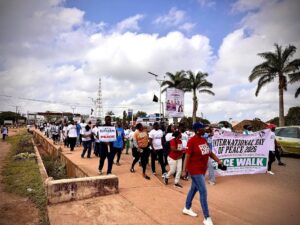
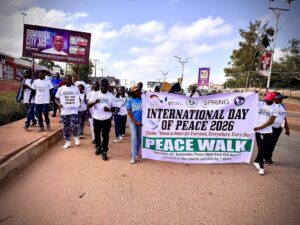
The streets of Jos echoed with a simple message on Saturday: peace is everyone’s responsibility.
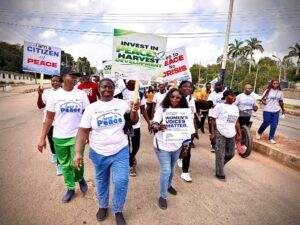
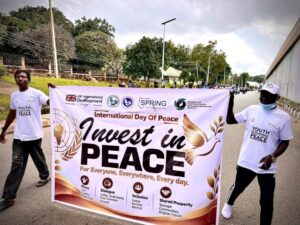
As part of activities marking the 2026 International Day of Peace, the Women for Positive Peacebuilding Initiative (WOPPI) joined other peace organisations for a peace walk from Old Airport Junction to Secretariat Junction Bridge.
Holding placards calling for unity, dialogue and peaceful coexistence, participants took the message of peace to the streets and into the public space.
This year’s International Day of Peace, observed on September 21, is themed “Invest in Peace – For Everyone, Everywhere, Every Day.” The United Nations says the theme highlights the role of ordinary people as “everyday architects of peace.” (United Nations Peacekeeping)

For WOPPI Executive Director, Lantana Abdullah, the message is particularly important for Plateau, a state with a history of violent conflicts.
She said peace cannot be left to government or security agencies alone. Every citizen, she stressed, has a role to play.
“Every citizen residing in Plateau or beyond Plateau or in Nigeria must play their part in making sure we sustain and build enduring peace for everyone.”
Abdullah urged citizens to choose dialogue over confrontation, report responsibly and speak up when they see issues capable of threatening peace.
She also challenged negative narratives about Plateau, pointing out that people continue to live, work and build their livelihoods across the state despite its troubled past.




For WOPPI, women must also be at the centre of this process. The organisation works to strengthen women’s voices, train them as mediators and involve them in preventing and resolving conflicts within their communities.
The walk therefore carried more than placards. It carried a reminder: peace is not something people wait for others to create. It is something communities build—one conversation, one intervention and one peaceful choice at a time.
And in the words of this year’s global message, that investment must happen for everyone, everywhere, every day. (United Nations)


-
News3 days ago
Miners Association Seeks Support To Unlock $3bn Gemstone Export Potential
-

 Health3 days ago
Katsina health professionals declare 7-day warning strike
-
Health4 days ago
Kenya confirms second Ebola case as contact develops symptoms in quarantine
-
News4 days ago
Ricursive Intelligence is betting on AI-designed chips to help solve the compute crisis