Business
UK launches £15 million initiative to boost investment, deepen reforms in Nigeria

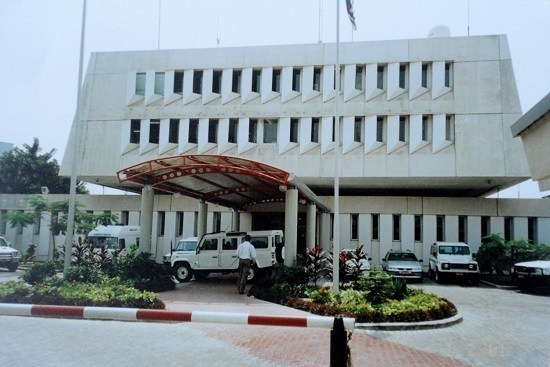

The UK has launched a £15 million initiative, aimed at attracting private investment, supporting economic reforms and speeding up Nigeria’s long-term economic transformation.
The initiative was announced during a recent visit by the UK Minister for Africa and International Development, Jenny Chapman, according to a statement issued by the British High Commission on Friday.
The programme, announced during Ms Chapman’s meeting with Taiwo Oyedele, the minister of finance and coordinating minister of the economy, will run for three years. It plans to deepen ongoing reforms, strengthen the private sector and unlock new sources of capital for economic growth.
“The UK-Nigeria Growth Programme helps bring this partnership to life by supporting capital market development, technology investment, small businesses and technical assistance,” Mr Oyedele said.
“We look forward to seeing these opportunities deliver lasting benefits and drive progress for both countries.”

The new programme comes as Nigeria and the UK look to expand economic cooperation beyond traditional development assistance towards investment-led growth.
Alongside the initiative, the UK announced expanded synergy in Nigeria’s digital economy through the SPRIRET initiative under its Digital Access Programme.
The initiative will enhance governance reforms across five states and help reduce regulatory barriers constraining investment in broadband infrastructure, digital services, and emerging technologies.
The British High Commission said the intervention is expected to encourage greater private-sector participation and improve the business environment for technology-driven investments.
Trade, finance partnerships
During the visit, Ms Chapman met Minister of Industry, Trade and Investment Jumoke Oduwole to review the progress so far recorded under the Enhanced Trade and Investment Partnership between both countries.
Discussions centred on scaling up Nigeria’s exports through the UK’s Developing Countries Trading Scheme, strengthening cooperation in the fintech sector, and expanding capital market linkages.
READ ALSO: Democracy Day: Tinubu says economic reforms are boosting healthcare funding
The engagement reflects growing efforts by the two countries to deepen trade and investment ties as Nigeria seeks to diversify its economy and attract foreign capital.
According to the statement, British International Investment, the UK’s development finance institution, has invested roughly $800 million in sectors including agriculture, manufacturing and renewable energy in Nigeria.
The UK government is also supporting the rehabilitation and expansion of Lagos ports through financing valued at about $1 billion.
The country remains an important destination for Nigerian businesses seeking international expansion, with seven Nigerian banks now operating there.



The Aliko Dangote Foundation (ADF) has said 777,907 vulnerable women across 15 Nigerian states are on track to benefit from 15.56 million shares in Dangote Petroleum Refinery and Petrochemicals under its Women Share Subscription Grant Initiative.
In a statement issued on Sunday by Zouera Youssofou, its managing director/CEO, the foundation said the programme aims to promote financial inclusion and empower women through equity ownership in one of Africa’s largest industrial investments.
“A total of 777,907 underprivileged Nigerian women across 15 states are set to benefit from 15.56 million shares in Dangote Petroleum Refinery and Petrochemicals IPO under the Aliko Dangote Foundation’s (ADF) Women Share Subscription Grant Initiative,” the statement said.
The initiative forms part of the foundation’s broader target of empowering two million vulnerable women across Nigeria’s 36 states and the Federal Capital Territory (FCT), it stated further.
The foundation said 15 state governments have committed to participating in the programme, under which each state’s financial contribution will be matched by the foundation to provide beneficiaries with shares at no cost to the beneficiaries.
The participating states include Abia, Anambra, Borno, Ebonyi, Enugu, Gombe, Imo, Kebbi, Kwara, Lagos, Nasarawa, Niger, Plateau, Yobe and Zamfara.

Last week, PREMIUM TIMES reported that the Dangote Petroleum Refinery and Petrochemicals extended its ongoing $1.6 billion IPO, originally scheduled to end on 13 October, by two weeks to enable broader participation across Africa, following robust, continent-wide interest.
Since its launch, the IPO has been heralded as the biggest-ever on the continent. It is offering 4.1 billion shares at N525 per unit, with a minimum subscription of 10 shares. Its green shoe option allows an additional 30 per cent of the shares on offer to be sold if it is oversubscribed.
In July, a private placement ahead of the IPO was 270 per cent oversubscribed, even though the original plan was to raise $2.5 billion.
The IPO attracted billions of naira within minutes of opening, with a couple of trading platforms, including Bamboo and Cowrywise, experiencing downtime on the first day on account of unprecedented subscription traffic.
Shares allocation
The foundation noted that Gombe State has emerged as the first participating state to make full payment towards the initiative, marking a milestone in its implementation.
Under the arrangement, each beneficiary is eligible to receive 20 shares at an indicative allocation price of N525 per share, giving each recipient an allocation valued at N10,500.
The state government will finance 10 shares per beneficiary, while the foundation will provide a matching contribution for the remaining 10 shares.
The initiative, according to the statement, seeks to extend the benefits of the IPO beyond institutional and high net-worth individuals to vulnerable women, many of whom may be participating in the capital market for the first time.
Rather than relying solely on conventional financial assistance, the programme intends to give beneficiaries ownership of productive assets and an opportunity to participate in long-term wealth creation.
The foundation’s target of reaching two million women across all 774 local government areas underscores its ambition to expand financial inclusion and broaden individual participation in Nigeria’s capital market.
ADF acknowledged the support of the Nigerian Exchange and the Securities and Exchange Commission in advancing the initiative’s financial inclusion objectives.
The programme runs simultaneously with the foundation’s Tertiary Students Share Subscription Grant Initiative, which is designed to support eligible students looking to participate in the IPO.
Under the students’ initiative, the foundation supports applications for 10 shares on behalf of each participating eligible student at no cost.
Discover more from Premium Times Nigeria
Subscribe to get the latest posts sent to your email.
-
News2 days ago
NUCAP: Nigeria targets 20 million people with 3,700 telecom towers – Technology Times
-

 News3 days ago
Gunmen storm Plateau mining site, kill two persons
-
News3 days ago
Nigeria needs stronger collaboration ‘to shape internet governance’ – Technology Times
-
News2 days ago
Nigeria’s Ojeleye John Tope Gets Second Futsal AFCON Assignment, to Officiate Mozambique–Tanzania Clash Tonight