Connect with us

News

Nasarawa North bye-election: Maku alleges plot to manipulate result, names nine vulnerable wards

info

Published

on

Mr Labaran Maku.jpg

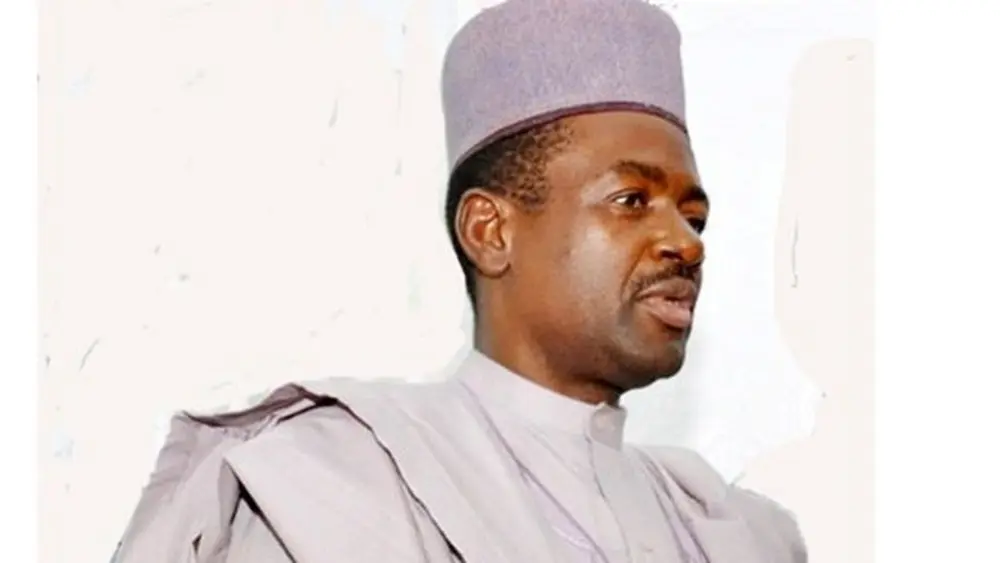
The Labour Party candidate for the June 20 Nasarawa North Senatorial District bye-election, Labaran Maku, has raised concerns over what he described as an alleged plan to compromise the electoral process in parts of the district.

Speaking during a press conference in Akpata, Nasarawa Eggon Local Government Area, on Wednesday, the former Minister of Information claimed that nine wards in Nasarawa Eggon had been identified as targets for electoral manipulation due to their high voter population and perceived support for the Labour Party.

Maku alleged that certain political interests were becoming uneasy over the growing popularity of his candidacy across the senatorial district and were therefore exploring measures to influence the outcome of the poll.

According to him, the Labour Party enjoys widespread grassroots support, particularly in Nasarawa Eggon, Akwanga and Wamba local government areas, which he said has strengthened the party’s confidence ahead of the election.

“We have credible information suggesting that there are moves to interfere with the electoral process because some people have realized that the people are determined to vote for change,” Maku stated.

He further alleged that plans were underway to deploy political thugs to disrupt voting in strategic locations, warning that any attempt to undermine the will of the electorate could trigger political tension and undermine public confidence in democracy.

The Labour Party candidate also called on federal authorities and security agencies to ensure neutrality during the election, urging them to resist any form of political pressure that could compromise the credibility of the exercise.

He expressed concern over what he described as the redeployment of some senior security officers within the state, alleging that the move mirrored developments witnessed during previous political contests.

Labaran Maku further claimed that the ruling All Progressives Congress (APC) had not conducted a transparent primary election for the bye-election, insisting that an unpopular candidate had been imposed on party members.

Despite his concerns, Maku expressed optimism about his chances at the poll, maintaining that voters in Nasarawa North have consistently demonstrated political maturity by supporting candidates based on competence, credibility and track record rather than party affiliation.

The former minister urged residents to remain peaceful, vigilant and committed to the democratic process as preparations for the bye-election enter the final stages.

Continue Reading
Click to comment

Leave a Reply

Your email address will not be published. Required fields are marked *

News

Gov Adeleke expresses concern over video of alleged threat on Osun Accord members

info

Published

on

By

Adeleke of Osun.jpg

Governor Ademola Adeleke has expressed concerns over a viral video allegedly showing Senator Francis Fadahunsi calling for the killing of Accord leaders and their family members.

Governor Adeleke raised the alarm on Tuesday during an emergency press briefing organised to report on developments on the state’s political landscape.

The governor said the alleged remarks had gone beyond political contestation and should be treated as a national security matter requiring the attention of President Bola Tinubu through the Office of the National Security Adviser.

“This is now beyond politics. This is now a national security threat. I have demanded the immediate investigation and arrest of the senator.”

He called on the Nigeria Police and Department of State Services to investigate the allegation against Fadahunsi, while urging security agencies to stop what he described as unlawful operations against Accord members and ensure that all actions before, during and after the election comply with the rule of law.

Governor Adeleke also alleged that a police directive has been issued for the immediate arrest of leaders of the Accord Party in Osun State ahead of Saturday’s governorship election.

The governor said credible reports indicated that a police signal had arrived in Osun directing the immediate arrest of Accord Party leaders, with instructions for them to be taken to Abuja and detained until Monday.

According to Adeleke, “I have spoken with the Inspector-General of Police over the reported directive and urged him to clarify whether such an order had been issued.

“I am appealing to him that this development, if true, is illegal, and presents Nigeria as a lawless country.”

He alleged that arresting Accord leaders on the eve of the election could undermine the electoral process, urging the police to publicly assure Nigerians that no such directive had been issued.

Adeleke also claimed that more than 62 Accord leaders were currently being held in police custody without charges, describing the situation as unacceptable.

“It is disturbing that we still have over 62 Accord leaders held in illegal police detention without any charges against them. This is not democracy,” he said.

DAILY POST had earlier reported that The Imole Campaign Council, TICC, had called for the arrest and prosecution of Senator Francis Adenigba Fadahunsi over an alleged threat to kill members and supporters of the Accord in Ijeshaland, Osun State.

The campaign council made the demand in a statement issued on Tuesday and signed by its Chairman, Media and Publicity, Bamidele Salam.

Continue Reading

News

INEC, AYGF urge active youth involvement in democracy

info

Published

on

By

Untitled 1 2867.png

The Independent National Electoral Commission (INEC) and the African Youth Growth Foundation (AYGF) have urged Nigerian youths to take ownership of the democratic space and actively participate in governance.

They made the call on Tuesday in Abuja at the National Youth Mentorship Conference on Sustainable Democratic Governance, themed: “Building Sustainable Pathways for Civic Leadership, Electoral Participation and Democratic Governance.”

Arome Salifu, executive director of AYGF, said youths, who constituted more than 70 per cent of Nigeria’s population, had both the responsibility and opportunity to shape the country’s political future.

Mr Salifu, however, lamented that youths had been systematically excluded, directly or indirectly, from meaningful participation in the democratic process and governance.

“This is what this conference is about to address. We have a youthful population, no doubt. The energy, the brilliance, the intellect, the intentions, and the charismatic nature of young people are well endowed. There is no doubt about it.

“When you ask every other African about Nigerians, they will tell you Nigerians are very industrious, creative, talented, and the best on the continent.

“However, when it comes to governance and democratic participation, they are totally missing in action. That is the fallacy of composition. And that is what we must not accept as a people and as a country,” he said.

Mr Salifu said the enactment of the Not Too Young to Run law was an important step but had not removed all barriers preventing youths from actively participating in politics.

“Across all political parties, how many young people are currently on the list of candidates? Of course, it is deliberate. But it is in your place to reclaim the ownership of the democratic space,” he said.

He urged youths to seek political power through lawful and democratic means rather than violence, electoral malpractice or intimidation.

Mr Salifu said political participation should involve organising, building networks, developing credible agendas, engaging in democratic processes and pursuing economic empowerment.

He called on stakeholders to create opportunities for youth economic empowerment while providing mentorship, civic education and leadership development to prepare young people for governance.

Sam Egwu, INEC resident electoral commissioner in Plateau, also urged youths to use elections as a peaceful means of expressing dissatisfaction with government and choosing competent leaders.

Speaking on “Voter Apathy in Nigeria’s Electoral Process: Implications for Democratic Legitimacy”, Mr Egwu said young people had a critical role in reversing the country’s declining voter turnout.

He said voter apathy posed a major threat to democratic legitimacy because governments elected by a small proportion of citizens could face questions about the breadth of their mandate.

Mr Egwu said that average voter turnout in Nigeria’s last three electoral cycles had remained between 30 per cent and 35 per cent.

He urged young Nigerians to demonstrate dissatisfaction with poor governance by voting rather than staying away from polling units.

“We need to show our public anger, not by resorting to violence, but by going to the polls to select the people that are popular,” he said.

Abubakar Sulaiman, director-general, National Institute for Legislative and Democratic Studies (NILDS), said youth inclusion was a fundamental requirement for legitimate and sustainable democracy.

Mr Sulaiman, represented by Christopher Ngara, director, Department of Democracy and Governance, identified unemployment, poverty, unequal access to education, weak institutions and limited political financing as major barriers.

He said youths were often treated as voters, campaign mobilisers and political foot soldiers rather than policymakers, legislators and leaders within the democratic system.

“In extreme cases, young people have also been vulnerable to political manipulation and mobilisation for political violence,” he said.

Mr Sulaiman said the situation must change, emphasising that meaningful youth participation was essential to ensuring the responsiveness, legitimacy and sustainability of Nigeria’s democracy.

Suleiman Mande, founder of The Mande Global Impact Consulting Limited, said the quality of Nigeria’s democracy depended largely on the character, knowledge and responsibility of its citizens.

Mr Mande urged young Nigerians to prepare for leadership by becoming informed, responsible and active citizens capable of contributing positively to democratic governance.

He encouraged youths to participate before, during and after elections, ask questions, demand transparency, respect the rule of law and remain engaged in governance.

“Before we demand accountability from institutions, we must first ask ourselves, are we accountable ourselves? Are we responsible citizens?” he asked.

(NAN)

Continue Reading

Trending