Connect with us

News

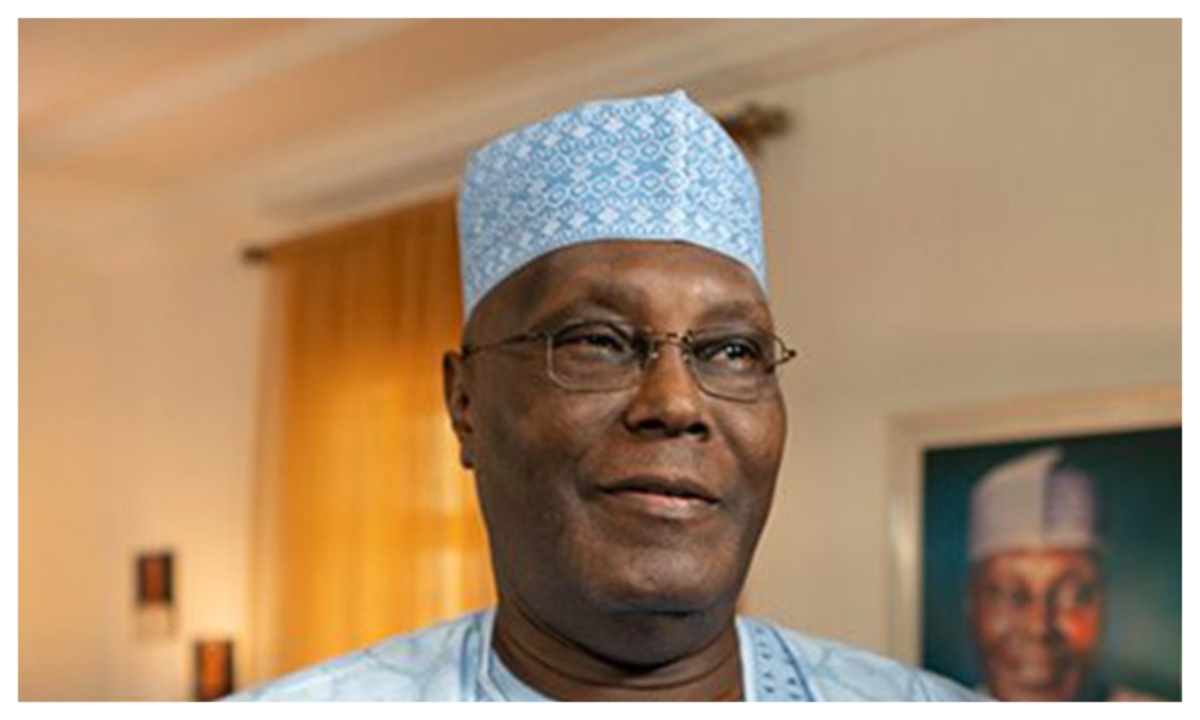
2027: Atiku faces tough hurdle in choice of running mate

info

Published

on

Atiku 2.jpg

With the African Democratic Congress, ADC, primary elections now over, attention has shifted to who becomes the running mate to the party’s presidential candidate, Atiku Abubakar.

Atiku had picked the current Nigeria Democratic Congress, NDC, presidential candidate, Mr Peter Obi as his running mate in 2019 and former governor of Delta State, Ifeanyi Okowa as his running mate in the 2023 polls.

A few weeks ago, Atiku emerged as the flag bearer of the ADC after polling the highest number of votes in the party’s primary election.

DAILY POST reports that he is said to be thinking towards the South-East, with names like the Director General of the World Trade Organization, WTO, Ngozi Okonjo-Iweala and former Speaker of the House of Representatives, Emeka Ihedioha being mentioned.

Amid these speculations, the Director of Politics at Arise News, Sumner Sambo had said Okonjo-Iweala distanced herself from such a move, stressing that she was unwilling to abandon her current post as WTO DG for a Nigerian political contest.

Okonjo-Iweala assumed the position of the DG of WTO on March 1, 2021, becoming both the first woman and the first African to lead the world trade organization.

She assumed her second term as director-general in September 2023 and her tenure runs until 2029.

However, Sambo said she had communicated her position directly to Atiku’s camp.

Sambo said: “Okonjo-Iweala is not willing to actually leave a lucrative job as DG of the World Trade Organisation to actually consider that.

“She’s made it known to them, and that is understandable because she just resumed in September last year, and she has a tenure that will run for a second term till 2029.”

Emeka Ihedioha

One of the names featuring prominently is the former governor of Imo State and ex-Speaker of the House of Representatives.

Ihedioha, who is also a member of the ADC, is believed to be among those the former Vice President is quietly evaluating as his potential running mate.

South South link with Amaechi 

While speculations are rife that Atiku is looking at the Southeast, there are also claims that he has extended his searchlight towards the South South region.

Atiku is said to be considering a fellow presidential aspirant and former Minister of Transportation who served as a two-term governor of Rivers State, Rotimi Amaechi.

The ADC presidential candidate met with Amaechi behind closed doors on Monday, but details of the meeting were never made public. 

However, some believe it has everything to do with the choice of Atiku’s running mate.

Southeast running mate won’t get Atiku votes – APC chieftain, Eli

A chieftain of the All Progressives Congress, APC, Sogbeye Eli, has said shopping for a running mate from the Southeast won’t get Atiku many votes in 2027 due to the influence of Obi in the region.

“Atiku has no room for votes from a vice-presidential candidate from both the South-East and South-West,” he said in an interview. 

Dele Momodu portrays self as Atiku’s running mate

Amid the political uncertainty, a chieftain of the ADC and former presidential candidate, Dele Momodu had posted a flyer on his social media page wherein he was portrayed as Atiku’s running mate.

Alongside the flyer, Momodu wrote: “The Attraction of Atiku Abubakar/Dele Momodu ticket”, “The right choice for a greater Nigeria.”

Spare tyre won’t be basis of Atiku picking running mate – Aide

Reacting to the speculations, Atiku’s Special Assistant on Public Communication, Phrank Shaibu, said the ADC presidential candidate would pick his running mate based on competence and not on the usual basis of “spare tyre.”

Speaking with DAILY POST, Shaibu said: “On the question of the Vice Presidential slot, it is far too early to speculate on specific regions or individuals. 

“That decision will ultimately be guided by what best serves the national interest and strengthens the mission of rescuing Nigeria.

“What I can say with confidence is that Alhaji Atiku Abubakar understands the enormous responsibilities of leadership. He appreciates that the challenges facing Nigeria today require a competent, experienced, and capable team.

“Therefore, I do not expect the choice of a running mate to be based on symbolism or the outdated notion of a “spare tyre.” Nigeria needs a governing team, not a sole administrator. 

“The Vice President must be someone who can contribute meaningfully to governance, policy formulation, economic management, national cohesion, and the overall task of rebuilding the country.

“When the time comes, Nigerians can expect a decision driven by competence, capacity, and the national interest.”

Picking running mate from Southeast Atiku’s strongest option – Lawyer

Contributing to the discussion, a lawyer, Maduabuchi Idam, pointed out that if Atiku wants national cohesion and political balance, picking his running mate from the Southeast is his “strongest option.”

Idam said Atiku can pose a great challenge to Obi’s presidential ambition if he picks a running mate from the Southeast.

“Atiku’s strongest option may be to choose a running mate from the South-East if the objectives are equity, national cohesion, and political balance in the event of victory. 

“The South-East would need meaningful representation in his administration to foster a greater sense of inclusion and national belonging.

“A northern presidential ticket without South-East representation is likely to attract criticism and apathy from a significant segment of the South-East electorate.

“Furthermore, if Atiku intends to pose a serious challenge to the influence of Peter Obi in the region, selecting a running mate from the South-East could be a strategic necessity. 

“Without such a move, securing the constitutionally required spread of votes, including a substantial share from the region, may prove difficult in the 2027 electio

Continue Reading
Click to comment

Leave a Reply

Your email address will not be published. Required fields are marked *

Health

Jos University Teaching Hospital’s psychiatric facility stretched as mental health cases rise

info

Published

on

By

Jos University Teaching Hospital e1508787256618.jpg

MTN ADVERT

For three days, Emmanuel John waited anxiously in the psychiatric emergency unit of the Jos University Teaching Hospital (JUTH), hoping a bed would become available for his daughter.

She had been referred to the hospital after suffering a severe mental health episode, but every bed in the psychiatric ward was occupied. She remained in the emergency unit, where doctors and nurses monitored her condition while the family waited for a vacant bed.

“We spent three days there because there was no bed,” Mr John told PREMIUM TIMES.

When a bed eventually became available, the family’s relief was short-lived. According to Mr John, his daughter was discharged early to yield her bed space to patients in more critical condition.

“I was disappointed, but I didn’t blame the doctors,” he said. “They were doing everything they could. The real problem is that there are too many patients and too few beds.”

PT WHATSAPP CHANNEL

Mr John’s experience illustrates the growing strain on one of North-central Nigeria’s major referral centres for mental healthcare.

John’s experience is becoming increasingly common at JUTH. As more Nigerians seek treatment for mental illness, the hospital’s psychiatric department is struggling to cope with demand, leaving patients waiting for admission, stretching healthcare workers and exposing wider weaknesses in Nigeria’s mental healthcare system.

A PREMIUM TIMES investigation, based on interviews with patients’ relatives, healthcare workers, hospital management and mental health experts, found that rising demand for psychiatric services is stretching JUTH’s capacity, forcing clinicians to make difficult decisions about admissions and discharges.

Although JUTH has not publicly released annual psychiatric admission figures, hospital officials and mental health workers interviewed by PREMIUM TIMES said they have witnessed a steady increase in patients over recent years.

They attributed the trend largely to rising substance abuse, worsening economic hardship, insecurity and increased public awareness that has encouraged more people to seek treatment.

Families caught in crisis

Mr John’s family is not alone.

Patience Samuel recalled a similar ordeal after her son developed a severe mental health condition and was taken to JUTH for specialist care.

Following an assessment, the family was informed that no admission bed was available.

“They attended to him, but they couldn’t admit him because there was no bed,” she said.

With no alternative, the family sought treatment at a private hospital, where the cost of care placed a heavy financial burden on them.

“If there had been space at JUTH, we would have stayed because treatment there is more affordable,” she said.

Their experiences highlight the difficult choices confronting many Nigerian families who depend on public hospitals for mental healthcare.

An overstretched facility

During several visits to JUTH’s psychiatric department, this reporter observed anxious relatives waiting around the emergency unit as healthcare workers attended to patients awaiting admission.

Hospital management confirmed that the department currently operates only two inpatient wards, a 20-bed male ward and a 15-bed female ward. Once the wards reach capacity, newly referred patients remain in the emergency section until space becomes available.

Female ward Psychiatric department

Healthcare workers, who spoke on condition of anonymity because they were not authorised to comment publicly, described the shortage as a persistent challenge.

According to them, clinicians are frequently compelled to balance the needs of patients already on admission with those arriving in critical condition. As a result, patients whose conditions have stabilised may be discharged earlier than doctors would ordinarily prefer to create room for emergency cases.

For many families, the alternatives are limited: endure days of uncertainty while waiting for admission or seek treatment at private facilities where the cost of care is often beyond their means.

Patients at the Department

A national challenge

The pressure on JUTH mirrors a wider crisis confronting Nigeria’s mental healthcare system.

According to the Federal Ministry of Health, only about one in five Nigerians living with severe mental illness receives appropriate treatment, leaving an estimated treatment gap of about 80 per cent.

A shortage of specialists has further weakened access to care. Nigeria has fewer than 300 practising psychiatrists serving a population of more than 200 million people, with most concentrated in major urban centres.

Mental health advocates attribute the situation to years of inadequate funding, persistent stigma, limited community-based services and the migration of healthcare professionals.

These challenges have increased pressure on tertiary hospitals such as JUTH, which now receive referrals from neighbouring states, even as their resources remain limited.

The growing burden comes despite recent policy reforms aimed at improving mental healthcare. The National Mental Health Act replaced decades-old legislation and seeks to strengthen mental health services, promote community-based care and protect the rights of people living with mental illness.

However, experts say meaningful implementation will require sustained funding, improved infrastructure and the recruitment of more specialised personnel.

Against this backdrop, JUTH has become a critical lifeline for many families seeking affordable psychiatric care, making the pressure on its limited facilities increasingly difficult to manage.

Hospital management responds

The Chief Medical Director of Jos JUTH), Pokop Bupwatda, acknowledged that the psychiatric department is operating under immense pressure but said the hospital has begun taking steps to improve capacity and service delivery.

In an interview with PREMIUM TIMES, he linked much of the increase in psychiatric admissions to the growing abuse of psychoactive substances, particularly among young people.

“We have seen many cases related to substance abuse, especially among young people,” he said. “It is one of the biggest challenges confronting mental healthcare today.”

Mr Bupwatda said the problem extends beyond patients seeking treatment.

“We have even discovered some members of our staff abusing substances. Whenever such cases arise, we ensure they receive appropriate rehabilitation because our priority is to help them recover.”

He stressed that tackling substance abuse requires a coordinated response involving families, schools, religious institutions, communities and government, arguing that hospitals alone cannot reverse the trend.

His concerns are consistent with national findings.

According to the United Nations Office on Drugs and Crime (UNODC), an estimated 14.3 million Nigerians aged 15 to 64 used psychoactive substances in 2018, representing a prevalence rate of 14.4 per cent—more than twice the global average at the time.

The survey remains Nigeria’s most comprehensive national assessment of drug use and continues to inform policy discussions on substance abuse and mental health. Cannabis remains the most commonly used illicit drug, while the non-medical use of opioids such as tramadol and codeine continues to drive addiction and psychiatric disorders across the country.

Mental health specialists say prolonged drug abuse can trigger psychosis, worsen existing psychiatric illnesses and increase the likelihood of relapse, making treatment more difficult and recovery longer.

Mr Bupwatda said the Federal Government’s policy requiring drug tests for prospective employees of federal health institutions is one of several measures aimed at addressing the challenge.

“The objective is to identify those who need help before they enter the workforce,” he said. “Where necessary, rehabilitation is provided because the goal is not punishment but recovery.”

Shortage of specialists

Beyond inadequate bed space, the hospital is also struggling with a shortage of specialised personnel.

Mr Bupwatda admitted that the psychiatric department is overwhelmed, describing the challenge as part of a wider healthcare workforce crisis affecting Nigeria.

“Yes, they are overwhelmed,” he said. “But this reflects the broader shortage of healthcare workers across the country. It is not a challenge peculiar to psychiatry.”

He explained that psychiatric care requires specialised training, making recruitment considerably more difficult than in many other areas of medicine.

“It is not every doctor or nurse that can work in psychiatry,” he said. “We are training more psychiatric nurses to strengthen the department and improve service delivery.”

During visits to the psychiatric department, this reporter observed relatives sitting quietly outside the emergency unit while nurses moved between patients awaiting admission. Inside, clinicians attended to new referrals even though the inpatient wards were already full, highlighting the pressure facing the department.

Despite these constraints, relatives of patients praised the commitment of doctors and nurses, saying staff continued to provide compassionate care despite limited resources.

Security concerns

The investigation also uncovered concerns about security within parts of the psychiatric complex.

This reporter observed sections of the complex that were not fully enclosed. Some healthcare workers, who requested anonymity because they were not authorised to speak publicly, expressed concern that the layout could make it easier for patients to leave the premises without authorisation.

Others alleged that prohibited substances occasionally find their way into the facility through visitors, potentially undermining the rehabilitation of patients receiving treatment for drug-related mental health conditions.

Responding to the allegations, Mr Bupwatda said he was unaware of the concerns but promised to investigate them.

“I am hearing that for the first time,” he said. “I will discuss it with the Head of Department. If there are security lapses, we will address them because the safety of our patients remains our priority.”

He added that strengthening security forms part of the hospital’s broader expansion plans, which are expected to improve both patient safety and the quality of psychiatric care.

Expansion offers hope, but challenges remain

Mr Bupwatda said the ongoing expansion of JUTH’s psychiatric complex is expected to ease pressure on the department by increasing admission capacity and improving the treatment environment.

According to him, the complex was designed to be developed in phases, with the existing wards representing only the first stage of the project.

He disclosed that the second phase is between 90 and 95 per cent complete and will provide additional wards and treatment spaces once commissioned.

“Our goal is to ensure that more patients receive timely care in a safer and more conducive environment,” he said.

The CMD added that JUTH’s relatively affordable treatment costs, compared with many private hospitals, have also contributed to the growing number of referrals from Plateau and neighbouring states.

“For many families, this hospital remains the most affordable option,” he said. “That is why we must continue expanding our facilities to meet the increasing demand.”

Experts call for wider reforms

Mental health experts, however, say expanding one hospital will not be enough to address Nigeria’s widening mental healthcare gap.

A Jos-based mental health expert, Mary-Jane Samuel, described the experiences of patients and their families as evidence of years of underinvestment in mental health services.

“The burden of mental illness is increasing, but investment in mental healthcare has remained inadequate,” she told PREMIUM TIMES.

While welcoming JUTH’s expansion project, she said the country must also invest in human resources by recruiting more psychiatrists, psychologists, psychiatric nurses, occupational therapists and social workers.

READ ALSO: Tinubu reappoints JUTH chief medical director

According to her, strengthening mental healthcare at primary and secondary health facilities would reduce unnecessary referrals to tertiary hospitals.

“Many patients should be able to access treatment closer to their communities instead of travelling long distances to referral hospitals,” she said. “Early diagnosis and treatment at lower levels of care will reduce the burden on facilities like JUTH.”

Mrs Samuel also advocated increased funding for psychiatric medicines, counselling services and rehabilitation programmes, stressing that effective mental healthcare extends beyond hospital admission.

Although the National Mental Health Act provides a legal framework for improving access to care, protecting patients’ rights and promoting community-based treatment, Mrs Samuel, however, cautioned that legislation alone will not transform services without increased funding.

She said that expanding psychiatric units, recruiting specialists and strengthening mental healthcare at primary and secondary facilities are essential if tertiary hospitals such as JUTH are to avoid becoming overwhelmed.

Waiting for change

For Emmanuel John, the debate over mental health funding is deeply personal.

He still remembers the anxiety of watching his daughter spend three days in JUTH’s emergency unit because no bed was available.

Although he commended the doctors and nurses for their professionalism, he believes no family should have to endure such an experience before receiving specialist care.

“I hope the government completes the new building quickly,” he said. “If there are more beds, other families will not have to go through what we experienced.”

Mrs Samuel expressed a similar hope.

“If there are more wards and more doctors, it will help families like ours,” she said.

Months after his daughter’s admission, Emmanuel John still remembers the uncertainty of waiting three days for a hospital bed. While he remains grateful for the care she received, he believes no family should have to wait during a mental health emergency because of inadequate facilities.

His experience reflects a challenge extending far beyond JUTH. As mental health needs continue to grow across Nigeria, experts say improving access to care will require more than new laws. It will demand sustained investment in specialist personnel, hospital infrastructure and community-based services to ensure that families seeking help can receive timely treatment when they need it most.


Discover more from Premium Times Nigeria

Subscribe to get the latest posts sent to your email.

Continue Reading

News

2027: Don’t sit on the fence – Falana urges religious bodies to save Nigeria’s democracy

info

Published

on

By

Femi Falana.jpg

Human rights lawyer, Femi Falana, SAN, has challenged religious bodies not to sit on the fence but to get up and save Nigeria’s democracy as the nation prepares for the the 2027 general elections.

Falana gave the charge at the 25th Mike Okonkwo Annual Lecture, themed, ‘Democracy at the Crossroads: Electoral Credibility, Judicial Integrity and the Future of Nigeria’, held at the MUSON Centre in Lagos.

According to him, religious institutions could no longer afford to remain passive when government decisions directly affected the lives, welfare and rights of their members and other Nigerians.

The senior lawyer stated that churches should look beyond spiritual activities and pay closer attention to how public resources are managed at the federal, state and local government levels.

Recommended

He further charged religious bodies to scrutinise government budgets and monitor the implementation of projects and programmes funded with public money, saying such involvement would help strengthen accountability and good governance.

“Democracy should not be reduced to the conduct of elections. Accountable leadership, effective public service, citizens’ welfare and security were also essential to a functioning democratic society.

“Religious bodies should not sit on the fence but get up and save Nigeria’s democracy,” he said.

Continue Reading

Trending