News
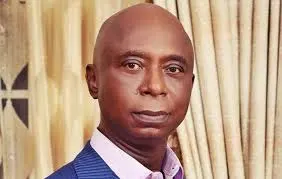
Ned Nwoko Alleges Manipulation of Delta North APC Primaries, Claims He Won Election

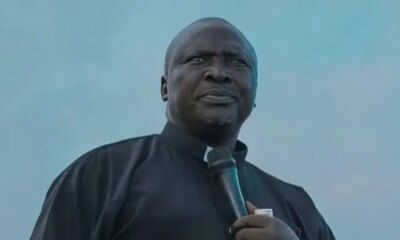





The governorship candidate of the Peoples Democratic Party, PDP, in Ebonyi State, Chief Ifeanyi Chukwuma Odii, has dismissed insinuations in some quarters that he has backed out of the contest.
Odii said he is in the race to win the election and wipe out hunger and poverty in the state and will not step down as insinuated.
He stated this in an interview with journalists at his Isu hometown, Onicha Local Government Area of Ebonyi State, on Saturday night.
He declared that his party gave him the ticket and that he was contesting to offer a lot to the people of the state who he said are yearning for good governance.
Odii described the statement by the Minister of Works, David Umahi, who said he will approach him to step down for Governor Francis Nwifuru, as political manoeuvring.
“My party, the Peoples Democratic Party gave me its mandate through consensus. That means they found me suitable, but there was a need for intervention. As such, I am contesting to be the governor of Ebonyi State because I have a lot to offer in government.
“On the issue of whether I would accept a request to step down, I am sure that is just political manoeuvring. I don’t think we have to undermine democracy. I believe every man knows what the constitution says, whether he is on the APC platform or the PDP platform, or whether he is my uncle.
“Like I said, I respect him, but I have not been asked by him to step down and I don’t think he should ask me to step down. I am contesting, and I want to say that I am still in the race. I am not giving up.
“I think you should be able to know me. You know my trajectory and how things have been. I am not even worried about the election because of myself.
“I have already got people who believe in me. I am very compassionate about how I want things to get better. When I look at how things are happening in Ebonyi, I am saddened.
“We should be talking about certain things and the general interests of the people, the betterment of Ebonyi, not only for today but for tomorrow.
“Good governance is what we need. Everybody should be concerned about it. A hungry man does not know whether he is coming from the South or the North.
“When you are hungry, nobody needs to tell you that you are hungry. We are trying to bring a government that will say goodbye to hunger in Ebonyi State,” the PDP gubernatorial candidate said.
He declared that he is contesting the governorship position to set Ebonyi State on a renewed path of progress, prosperity, and sustainable development.

Politics in Benue is usually very interesting and this is more so because, often than not, it is always treated like a race for immediate applause instead of lasting legacies.
On that strength, every administration wants quick projects, loud ribbons cutting ceremonies and visible but ephemeral promises. However and sadly, real development takes time and this is because a house is not built by painting the walls before laying the foundation, but this is the situation we were witnessing in Benue before the coming of Governor Alia.
That is why the argument for Governor Hyacinth Alia in 2027 deserves serious consideration. An administration that deserves one term to figure out the real problem, lay the foundation, and another to build on the foundation laid.
Governor Alia took over the reins of Benue State at a really difficult moment, having been handed a state that was bleeding, a state was in hemorrhaging. Before the coming of Alia, Benue faced insecurity, unpaid obligations, weak institutions, youth unemployment and a struggling economy.
These problems are not going to disappear because Alia simply wishes them to disappear; they won’t disappear through one budget or one political season. They require patience, discipline and continuity in commitment.
Every administration’s first term should be judged by the problems it met, the foundation it creates. Pertinent questions should include – are public finances becoming more transparent? Are workers paid more regularly? Are schools receiving attention? Are hospitals better equipped? Are roads being repaired in a way that connects farmers to markets? Is security being handled with greater seriousness instead of media theatrics?
A farmer in Mbagwaza needs a motorable road to move cassava to either Ihugh, Lessel or Adikpo. A trader in Agila needs a safer route to Igumale, another trader from Gbajimba needs a good road to Makurdi to reach customers. A student in Vandeikya needs a functioning classroom, not another abandoned school project. A mother in Obi needs a health centre where basic treatment is available without travelling for hours.
Such changes may not produce instant excitement, but they create the structure on which lasting progress stands. This is the path the governor is on.
The first four years should therefore be about putting systems in place – restoring confidence in government, strengthening local administration, supporting agriculture, improving security and opening the economy to private investment.
The second term would then provide the time to expand these efforts, complete unfinished projects and turn early reforms into measurable results.
Benue cannot afford to keep starting afresh every four years because people are ambitious to prove a point that has no need to be proven.
Each new government should not spend its first year discovering what the previous one already knew. Continuity should not mean researching what is already known to the current administration. It should mean giving credible policies enough time to mature while holding the government accountable.
If Alia’s administration is laying the foundation, the people must ask one simple question – is the work moving Benue forward? And the answer on the lips of the people of Benue is Yes, Benue is moving from negative to positive, a fact even the opposition are not in denial.
Sir Tersoo Kula, mnipr
Chief Press Secretary to the Governor.
Tersoo Kula: Benue 2027 for Alia – One term to lay the foundation, another to build
-

 News4 days ago
Robot data startup Mecka AI nabs $60M from Sequoia
-
Business2 days ago
Communications Ministry made ₦345.5 million duplicate payment for Abuja ICT Park project
-
Business3 days ago
Fuel subsidy would cost Nigeria over N20trn yearly — Minister
-
News2 days ago
LumenUs helps automate tedious paperwork in times of grief