Connect with us

Education

Tinubu Urges Inclusive Policies, Active Child Participation at 2026 Children’s Day Celebration

info

Published

on

Bola Tinubu 1.jpg

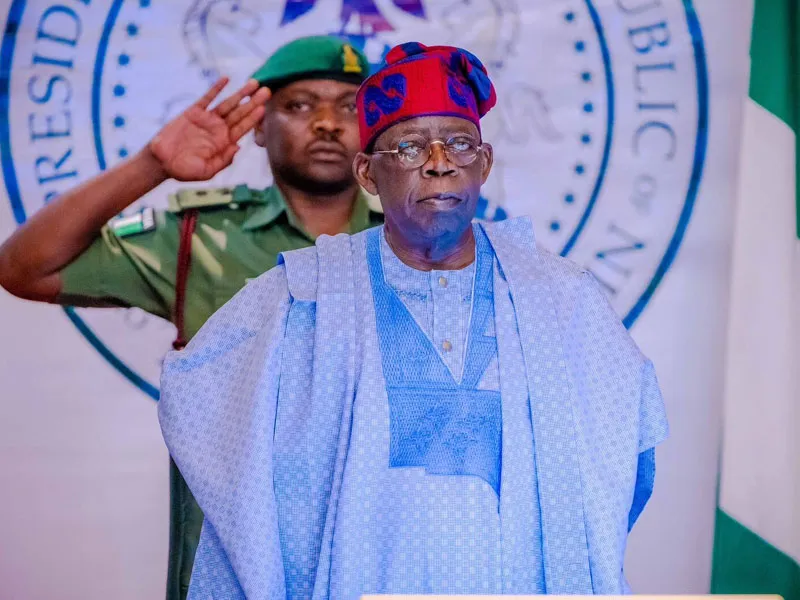
Bola Ahmed Tinubu has called on governments at all levels, families and communities to move beyond symbolic gestures and build a society where children are genuinely listened to and actively involved in decisions affecting their lives.

The President made the call during the 2026 National Children’s Day celebration held at Eagle Square in Abuja.

Represented by the Minister of Women Affairs and Social Development, Imaan Sulaiman-Ibrahim, Tinubu told pupils and students from primary and secondary schools that their voices, ideas and well-being are central to Nigeria’s future.

According to the President, the assurance that “your opinion matters, your ideas matter, your well-being matters” should not be treated as mere rhetoric but as a guiding principle for democratic renewal and national development.

The event, themed “Future Now: Promoting Inclusion for Every Nigerian Child,” focused on the need to ensure that no child is excluded from opportunities because of social status, physical condition or geographical location.

Tinubu stressed that every Nigerian child, whether from rural or urban communities, deserves equal access to quality education, healthcare, nutrition, protection, digital opportunities and a sense of belonging.

The President highlighted several programmes under the Renewed Hope Agenda aimed at improving child welfare and development, including the Renewed Hope Social Impact Intervention–774, Nutrition 774, ANRiN 2.0 and the Nigerian Education Loan Fund (NELFUND).

He also pointed to investments in Science, Technology, Engineering and Mathematics (STEM) education as well as the Ministry of Education’s NEDI platform as part of efforts to equip children with digital and technological skills for the future.

On child protection, Tinubu noted that although the Child Rights Act has been domesticated across the country, the federal government is currently reviewing both the Act and the National Child Policy to strengthen their effectiveness.

He added that through the 2025 Costed Action Plan, the government is providing financial backing to tackle violence against children, child marriage and female genital mutilation.

The President further encouraged state governments to strengthen the Nigerian Children’s Parliament, describing it as an important platform for nurturing leadership, civic responsibility and democratic participation among children.

Tinubu also advised children to avoid violence, cultism, substance abuse, cybercrime and bullying, warning that such vices destroy destinies and undermine national development.

He urged them to embrace discipline, honesty, patriotism and responsible use of technology.

In her welcome address, the Minister of State for the Federal Capital Territory, Mariya Mahmoud, represented by the Acting Mandate Secretary of the Women Affairs Secretariat, Hajiya Mukhtar, said the FCT Administration, with support from UNICEF, is strengthening community-based child protection systems, training social workers and improving oversight of orphanages and care homes.

One of the highlights of the event was an address delivered by Jessica Nufi, a student of Government Secondary School, Garki, Abuja, who spoke on behalf of children across the country.

Jessica appealed to the government to make quality education free and accessible, strengthen protection against insecurity and violence, and address early marriage, cultism, drug abuse and environmental hazards.

She lamented that poverty, insecurity and harmful social practices continue to deny many Nigerian children, especially girls, access to education and a safe future.

The student also called for improved healthcare services for children with special needs and safer school and community environments.

She urged leaders to build a Nigeria free from drugs, cultism and environmental dangers — a country the younger generation could proudly inherit.

Ending her speech with a pledge on behalf of Nigerian children, Jessica promised that children would continue to obey their parents and teachers, study hard, reject harmful behaviours and grow into responsible leaders if adults fulfilled their responsibilities toward them.

Her remarks received applause from children, parents and dignitaries at the event.

Continue Reading
Click to comment

Leave a Reply

Your email address will not be published. Required fields are marked *

Education

Nigeria, UNESCO launch mobile learning for teachers

info

Published

on

By

Images

The Federal Government, in partnership with UNESCO and the Pan-African University, has launched a mobile learning initiative to improve teacher professional development through digital technology.

The programme integrates mobile-based learning into the Pan-African Virtual and Electronic University Initiative and is designed to provide teachers and school leaders with flexible access to training resources through technology-enabled learning platforms.

The three-day Master Training Programme, themed “Empowering Female Teachers and School Leaders through Integrating Mobile-based Learning in the Pan-African Virtual and Electronic University (PAVEU) Initiative,” is being implemented by the Federal Ministry of Education in collaboration with the UNESCO International Institute for Capacity Building in Africa and the Pan African University, with funding support from the Government of Japan.

According to the ministry, the initiative targets five African countries: Nigeria, Algeria, Cameroon, Kenya and South Sudan. It seeks to expand access to continuous professional development for educators, particularly female teachers and school leaders.

The Federal Government, UNESCO and Pan African University launch a mobile learning initiative to improve teacher professional development across five African countries through digital technology. Image credit: Image FX.


“The initiative leverages mobile technology to overcome barriers such as time constraints, geographical limitations and inadequate infrastructure, enabling educators to access quality learning resources anytime and anywhere through a low-data, offline-friendly platform,” the ministry said.


Mobile learning plan to address barriers facing teachers in Nigeria

The ministry said the programme aims to address barriers that have limited teachers’ access to regular training, including geographical constraints, connectivity challenges and inadequate learning infrastructure.

“The initiative leverages mobile technology to overcome barriers such as time constraints, geographical limitations and inadequate infrastructure, enabling educators to access quality learning resources anytime and anywhere through a low-data, offline-friendly platform,” the ministry said.

The programme, the Federal Ministry of Education said, places particular emphasis on female teachers and school leaders as part of efforts to promote inclusive access to professional development opportunities.

“Accessible professional development is essential to strengthening learning outcomes and building a resilient, inclusive and future-ready education system,” the ministry said.

The deployment of mobile learning tools aligns with broader efforts across Africa to use digital platforms to improve access to education and professional training. UNESCO-IICBA has previously promoted digital development programmes for teachers across the continent, focusing on improving teacher competencies and strengthening education systems through capacity building.

UNESCO’s Global Teacher Campus initiative has also focused on providing online courses to enhance teachers’ digital skills and pedagogical competencies. The organisation estimates that the world will require about 44 million additional teachers by 2030, including an estimated 15 million new teachers in sub-Saharan Africa.

The PAVEU initiative, developed under the Pan African University framework, is designed to support virtual learning and expand access to higher education and professional development opportunities across African countries through digital platforms.

The Federal Government has in recent years introduced several digital education programmes, including virtual learning platforms and digital teacher training initiatives, as part of efforts to integrate technology into Nigeria’s education system.

In 2026, the government launched the HOPE-EDU programme, a $552 million education initiative expected to support about 29 million children, more than 500,000 teachers and 65,000 public schools through improved learning outcomes and education infrastructure.

According to UNICEF, Nigeria’s education system faces a significant learning crisis, with more than 70% of children lacking foundational literacy and numeracy skills, partly due to weak teacher capacity and limited access to standardised professional development opportunities.

The challenge is compounded by digital access limitations. UNICEF reports that only 36% of Nigeria’s population uses the internet, while 47% of teachers possess basic ICT skills, highlighting gaps in educators’ ability to fully leverage digital learning tools.

UNESCO-IICBA said the initiative is built around the use of mobile platforms to provide flexible learning opportunities for teachers who may be unable to attend traditional face-to-face training programmes. The institute added that the project is designed to strengthen teacher professional development and resilience by integrating mobile-based learning solutions into national teacher education systems across the five participating African countries.

Stay ahead with real-time reports, breaking news, and exclusive insights delivered directly to your phone. Don’t settle for outdated information. Join PLATEAUREPORTS NEWS on WhatsApp for 24/7 updates.

Follow the PlateauReports channel on WhatsApp

Continue Reading

Education

30 days after, teacher lies beheaded, Oyo schoolchildren languish as Tinubu, Makinde chase presidential ambition

info

Published

on

By

30 days after teacher lies beheaded Oyo schoolchildren languish as Tinubu Makinde chase presidential.png

A month after the mass abduction of 46 Oyo schoolchildren and teachers by terrorists on May 15 and the decapitation of a teacher, the captives remain in the forest despite military claims and political promises from President Bola Tinubu and Governor Seyi Makinde.

The terrorists kidnapped the students and staffers after invading schools in the Esienle and Yawota communities in Orire local council in Oyo state.

Days after the abduction, one of the teachers, Michael Oyedokun, was beheaded by the terrorists, pressuring the government to meet their demands for the release of the abductees.

On May 19, four days after the abduction, the Defence Headquarters, in a statement by its spokesperson, Michael Onoja, said, “Troops are currently deployed and actively operating within the forest in pursuit of the perpetrators and in search of the abducted victims.”

“Troops made contact with the criminal elements two days ago, have since reorganised, and are continuing the search and pursuit operations with full determination.”

The military and the government cited collateral damage as a reason for not taking out the terrorists.

While the schoolchildren and their teachers languish in captivity, Messrs Tinubu and Makinde have been engaging in electioneering as they chase their presidential dreams, both emerging as their party’s candidates for the 2027 election.

On May 31, Mr Makinde visited the hostages’ communities, promising their families the safe return of those abducted.

“This is not the time to start trading blame on who should be responsible for the release of these children between the state and federal government. This is just the time to come together to rescue our children and their teachers, Mr Makinde told the families of abductees. “All I need is your cooperation. Please trust us. I cannot speak much because it has security implications. I know your hearts are bleeding. My heart is also bleeding. Please trust us. We will secure their release.”

Similarly, a delegation representing Mr Tinubu, led by his chief of staff, Femi Gbajabiamila, visited the families and made a similar promise.

In a video released by the terrorists, Rachael Alamu, one of the hostages and the principal of Community High School Esinele, begged Messrs Tinubu and Makinde to negotiate with the terrorists to secure their release.

Meanwhile, the Oyo State House of Assembly has opposed negotiating with the terrorists.

Debo Ogundoyin, the speaker of the assembly, said the state would not pay ransom, give weapons to terrorists or change laws to accommodate the kidnappers.

Several protests have followed the government’s failure to rescue the hostages.

Amid public outrage and discontent, many Nigerians protested across several states, including Oyo, Lagos, Ogun, Bayelsa, Plateau and the Federal Capital Territory, demanding the immediate rescue of the hostages.

In his Democracy Day speech on June 12, Mr Tinubu said, “Though this year’s mood is dampened by the abduction of our children in Oyo and Borno, we remain hopeful for their safe return. Democracy without security is not solid enough.”

The president urged terrorists and bandits across the country to lay down their arms or face the wrath of his administration.

Continue Reading

Trending