Connect with us

News

Airtel: Affordability, digital literacy gaps slow Africa’s digital inclusion – Technology Times

info

Published

on

1781230955 admin ajax.png

Stay connected via Google News


Add as preferred source on GoogleAdd as preferred source on Google

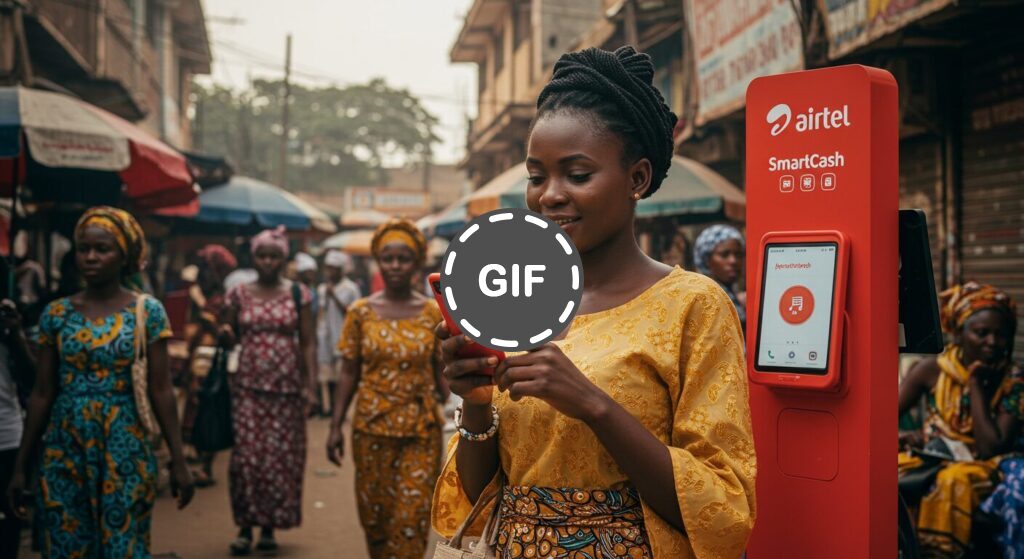
Despite continued investment in network expansion and growing adoption of digital services, affordability constraints, limited digital literacy and infrastructure gaps continue to impede digital inclusion across Africa, according to Airtel Africa.

The telecoms group that owns Airtel Nigeria, the nation’s number two mobile phone company, raised the concern in its Sustainability Report 2026, highlighting persistent barriers that prevent millions of people from fully participating in the continent’s rapidly evolving digital economy.

According to the report, expanding network coverage alone will not be enough to bridge Africa’s digital divide, as many individuals and communities remain unable to access the benefits of connectivity due to economic and educational challenges.

The findings come as governments across the continent, including Nigeria, intensify efforts to improve broadband penetration, expand digital skills programmes and deepen participation in the digital economy.

airtel-digital-literacy-slows-digital-inclusionairtel-digital-literacy-slows-digital-inclusion
Sunil Taldar, Airtel Africa CEO, is seen in the photo. Despite continued investment in network expansion and growing adoption of digital services, affordability constraints, limited digital literacy and infrastructure gaps continue to impede digital inclusion across Africa, according to Airtel Africa. Image credit: Airtel.

The Airtel report highlights the expanding role of digital financial services in supporting underserved populations and small businesses across its operating markets. “Access to connectivity creates opportunity, which is translated into financial resilience and sustainable growth through the provision of digital financial services,” Airtel says. During the reporting period, Airtel Money served more than 54 million customers and processed transactions worth $196 billion. Mobile money customer penetration increased to 29.5%, while women accounted for 44.1% of Airtel Money users.

Limited digital literacy slowing digital participation, Airtel says

Airtel says connectivity is playing an increasingly important role in driving economic growth, financial inclusion, education and access to public services, making digital access a critical development priority across Africa.

However, while demand for internet services continues to accelerate, affordability remains one of the most significant barriers to digital participation, particularly among low-income households and rural communities.

Limited digital literacy is also slowing adoption, with many people lacking the skills needed to use online services, digital financial tools and emerging economic opportunities effectively.

The challenge persists despite strong operational growth recorded by Airtel Africa during the financial year ended March 31, 2026.

The company reported a 10.5% increase in its customer base to 183.5 million subscribers, while the number of data customers grew by 14.7% to 84.2 million.

Demand for internet services also surged during the reporting period, with daily data traffic rising by 48.5%.

To support this growth, Airtel deployed more than 3,250 new network sites, expanding its infrastructure footprint to over 40,000 sites across its markets.

Population coverage increased to 81.9%, while 4G population coverage reached 75.6%, reflecting continued investment in connectivity infrastructure.

The report says Airtel increased capital expenditure by 31.9% to $884 million during the financial year to strengthen network reach, reliability and capacity.

“Modern digital infrastructure supports public services, economic diversification and long-term competitiveness across our markets,” the report states.

According to Airtel, digital inclusion extends beyond access to communications services and increasingly serves as a foundation for broader economic participation.

The Airtel report highlights the expanding role of digital financial services in supporting underserved populations and small businesses across its operating markets.

“Access to connectivity creates opportunity, which is translated into financial resilience and sustainable growth through the provision of digital financial services,” Airtel says.

During the reporting period, Airtel Money served more than 54 million customers and processed transactions worth $196 billion.

Mobile money customer penetration increased to 29.5%, while women accounted for 44.1% of Airtel Money users.

The report says the platform enables customers to receive remittances, pay school fees, access short-term credit and manage household finances, while helping small businesses benefit from faster and more secure payment systems.

“By embedding secure, accessible financial tools into everyday life, we’re strengthening economic resilience and enabling broader participation in formal economic systems,” Airtel says.

Beyond financial inclusion, the company says connectivity is becoming increasingly important for education and skills development.

Through its partnership with UNICEF, Airtel connected an additional 1,028 schools to the internet during the reporting year, bringing the total number of schools linked under the initiative to 3,296.

According to the report, 2.1 million schoolchildren accessed internet-enabled educational platforms during the year, while more than 38,800 teachers received training in digital learning tools and resources.

In Nigeria, Airtel expanded support for the Federal Government-backed Three Million Technical Talent (3MTT) initiative through its NextGen by Airtel programme.

The report says the programme aims to train 25,000 young Nigerians across 46 local government areas through 45 applied learning centres nationwide.

Participants are expected to receive training in software engineering, product design, data analytics, digital marketing and other in-demand technology disciplines.

The company says such initiatives are intended to address one of the key barriers to digital inclusion by equipping young people with the skills required to participate meaningfully in the digital economy.

The Airtel Africa Foundation is also supporting wider education and empowerment efforts across the continent.

According to the report, the Foundation funded 257 STEM scholarships across Nigeria, Uganda, Tanzania, Malawi and the Democratic Republic of Congo, while approving the renovation of more than 50 schools.

Airtel says closing Africa’s digital divide will require sustained collaboration among governments, telecommunications operators, development organisations and technology companies.

The report calls for continued investment in digital infrastructure, improved affordability of devices and connectivity services, and expanded digital literacy programmes to ensure more Africans can benefit from opportunities created by digital transformation.

Stay ahead with real-time reports, breaking news, and exclusive insights delivered directly to your phone. Don’t settle for outdated information. Join TECHNOLOGYTIMES NEWS on WhatsApp for 24/7 updates.

Join Our Whatsapp Channel
Continue Reading
Click to comment

Leave a Reply

Your email address will not be published. Required fields are marked *

Business

US, Nigeria to deepen trade, investment ties as America marks 250 years of independence

info

Published

on

By

US Nigeria to deepen trade investment ties as America marks 250 years of independence scaled.jpg

MTN ADVERT

The United States Mission in Nigeria has reaffirmed its commitment to deepening trade, investment, security, and cultural relations with Nigeria as it marked the 250th anniversary of American Independence and Freedom in Lagos.

Speaking at the celebration, the Chargé d’Affaires at the U.S. Mission to Nigeria, Keith Heffern, said the anniversary celebrates 250 years of American history while looking ahead to the country’s future leadership in innovation and global engagement.

Mr Heffern described Nigeria as one of the United States’ most important partners in Africa, noting that economic relations between both countries have continued to expand.

Chargé d'Affaires at the U.S. Mission to Nigeria, Keith Heffern, Lagos State Governor Babajide Sanwo-Olu, and U.S. Consul General in Lagos, Rick Swart
Chargé d’Affaires at the U.S. Mission to Nigeria, Keith Heffern, Lagos State Governor Babajide Sanwo-Olu, and U.S. Consul General in Lagos, Rick Swart

“Nigeria is now the United States’ second-largest trading partner in Sub-Saharan Africa. In 2025, two-way trade between our countries reached nearly $15 billion, representing a 14 per cent increase over 2024,” he said.

He added that more than 100 US companies currently operate in Nigeria, saying the investments support jobs, economic opportunities, and growth in both countries.

PT WHATSAPP CHANNEL

According to him, one of the mission’s priorities is helping American companies succeed in Nigeria through the US-Nigeria Commercial and Investment Partnership, a five-year Memorandum of Understanding signed with Nigeria’s Ministry of Industry, Trade and Investment.

Now in its second year, Mr Heffern said the initiative has brought together nearly 50 American and Nigerian companies to remove barriers to trade and investment.

He noted that Lagos hosted the first ministerial-level meeting under the partnership in January and said cooperation is focused on the digital economy, agriculture, and infrastructure to promote long-term economic growth.

Security, Cultural Collaboration

Beyond commerce, Mr Heffern highlighted the growing security collaboration between the two countries. He noted that the National Drug Law Enforcement Agency (NDLEA), working with the US Drug Enforcement Administration (DEA), recently dismantled a major transnational criminal organisation involved in drug trafficking and money laundering.

“Efforts like this disrupt the illicit networks that undermine security, finance criminal activity, and threaten the safety and prosperity of our two nations,” the diplomat said.

Mr Heffern said cultural exchanges remain a strong pillar of the bilateral relationship, with this year’s event themed ‘Motown’ to celebrate the global influence of American music and its connection to Nigeria’s creative industry.

He said Nigerian Afrobeats stars continue to enjoy global recognition, citing Rema and Burna Boy as examples of artists who have achieved international success.

Looking ahead, he said the United States hopes to strengthen cultural and commercial cooperation through sports as it prepares to host the 2026 FIFA World Cup and the 2028 Summer Olympics.

Mr Heffern also highlighted the impact of US exchange programmes, stating that more than 14,000 Nigerians have participated in U.S. government-sponsored exchanges and now form a network of leaders contributing to stronger bilateral relations.

He further announced that construction is underway on the new US Consulate General complex in Eko Atlantic, describing it as one of America’s most significant investments worldwide and “a lasting symbol” of the U.S. commitment to Nigeria.

Earlier at the event, the US Consul General in Lagos, Rick Swart, reflected on his diplomatic career as he prepares to retire from the US Department of State at the end of July.

U.S. Consul General in Lagos, Rick Swart

Mr Swart said the celebration was particularly meaningful given his experience in Lagos after serving in Mali and several other West African countries over the previous 35 years.

He acknowledged Lagos’ diversity, noting its creativity, resilience, innovation, and hospitality towards all its inhabitants.

“Of all the places Bonnie and I could have concluded our diplomatic journey, I cannot imagine a better place than Lagos, Nigeria.

“It has been the honour of my career to serve here in Lagos. The memories and friendships we have made here will stay with us long after we depart,” he said.

Partnership expansion

Also speaking, Lagos State Governor Babajide Sanwo-Olu hailed the American government, describing the United States as a country whose history has shaped global conversations for 250 years.

Lagos State Governor Babajide Sanwo-Olu

He said Lagos and the United States have maintained a productive relationship spanning more than six decades through partnerships in finance, technology, healthcare, education, and skills development.

He also said thousands of Nigerians have benefited from exchange programmes and innovations from the United States, expressing confidence that the partnership would create new opportunities for both countries in the years ahead.

READ ALSO: Oyedele proposes special commercial tribunal to boost investor confidence, attract investment

“That singular occasion, idea, and symbol was an act of modern history. There is no part of the world that has not heard of the United States of America. And it continues to shape the global conversation.

“And we’re indeed happy that, for us in Lagos, we have created that relationship for over six decades. We see the United States and Lagos as friends, not new friends, because Nigeria takes a bigger part in that friendship.

“And so one can’t help but feel lucky among the various recipients or beneficiaries of the exchange programmes that we’ve had over this long relationship. We’ve seen relationships in finance, technology, and health. We’ve seen skills being transferred,” Mr Sanwo-Olu said.

The governor noted that Nigeria remains one of America’s largest trading partners in Sub-Saharan Africa and expressed optimism that bilateral businesses and investment would continue to expand.

Continue Reading

News

Indian tech tycoon bets $30M of his own money to build AI alternative to Microsoft Office

info

Published

on

By

GettyImages 1452604857.jpg

Indian serial entrepreneur Bhavin Turakhia is making a $30 million personal bet that there is still room for another enterprise AI company. His new venture, Neo, is built on a simple premise: workplace software designed before the AI era cannot simply be upgraded with chatbots — it has to be redesigned from the ground up.

Turakhia, 46, is no stranger to ambitious enterprise technology bets. Over the past two decades, he has co-founded companies including Directi, Radix, Titan, and banking software firm Zeta, largely backing them with his own cash before bringing in outside investors. He’s doing the same with Neo.

Turakhia told TechCrunch he is bootstrapping this much money because he believes AI marks a technology shift significant enough to justify rebuilding workplace software from scratch.

“If you want to build an iPhone, you can’t take the parts of a Nokia and somehow convert it into an iPhone,” he said.

Launched internally in April this year, Neo is an enterprise work platform that combines project management, documents, file storage, and AI into a single product. The goal, Turakhia said, is to make AI an active participant in day-to-day work rather than just another assistant employees turn to separately.

Turakhia argued most incumbents face a structural disadvantage when adding AI to products designed before generative AI. Neo, he said, was designed from the ground up for AI and is model-agnostic, allowing enterprises to switch between AI models rather than being tied to a single provider.

He’s not alone in thinking this way. Investor Chamath Palihapitiya initially launched enterprise AI coding venture 8090 with his own capital before raising a $135 million funding round this week.

Still, Turakhia’s bet comes as enterprise AI has emerged as one of the most competitive areas in technology. Microsoft, Google, and Salesforce are embedding AI across their workplace software. Meanwhile every startup from the giant labs like Anthropic and OpenAI, to the productivity companies like Notion and Superhuman are racing to reshape how businesses use AI in their daily workflow.

Turakhia argued enterprise software has never been a winner-takes-all market, saying even a small share of global enterprise AI spending would represent a sizeable company.

“Even if we end up with 2% to 5% market share, that’s larger than anything I’ve built so far,” he said.

For the past few months, Neo has been in internal use across Turakhia’s companies, including Zeta. The company plans to begin rolling out the software to mid-sized businesses in the coming months, initially targeting knowledge workers across technology, consulting, and professional services firms.

Turakhia said Neo’s initial platform was built in three months, with AI extensively used in the development process, work he estimates would have taken more than a year with a much larger engineering team before generative AI.

The Bengaluru-based startup currently employs about 45 people, including 18 engineers. Turakhia told TechCrunch that it expects to grow to around 100 employees by the end of the year, with most new hires focused on AI and software engineering.

When you purchase through links in our articles, we may earn a small commission. This doesn’t affect our editorial independence.

Continue Reading

Trending