Business
Nigeria’s beneficial ownership regime at risk as banks allow inactive companies to run accounts


Nigeria’s hard-won progress on financial transparency is facing a fresh threat as thousands of inactive companies on the platform of the Corporate Affairs Commission (CAC) continue to operate bank accounts without restrictions, potentially undermining reforms that helped the country exit the global anti-money laundering grey list.
Findings by PREMIUM TIMES show that despite regulatory red flags, many of these entities remain fully active within the financial system, raising concerns about weak enforcement, regulatory disconnect, and the possibility that shell companies are being used for corruption, terrorism financing, procurement fraud, and illicit financial flows.
Official CAC data obtained by PREMIUM TIMES as of 14 April shows that Nigeria has 7,039,099 registered entities. Of this figure, only 3,202,042 are classified as active, while 3,688,101 are inactive companies.
Under CAC rules, a company becomes inactive when it fails to meet statutory obligations such as filing annual returns, disclosing beneficial ownership, or updating records relating to directors, addresses, or business objectives.
Regulatory and enforcement officials say the designation is more than an administrative classification just as transparency experts describe it as a major compliance and integrity risk because such entities often operate with outdated or undisclosed ownership structures.

Yet many of these inactive companies continue to maintain fully operational bank accounts and conduct transactions without apparent restrictions.

Dodging scrutiny
Officials at the CAC say many companies deliberately chose inactive status rather than comply with beneficial ownership disclosure requirements introduced as part of Nigeria’s anti-money laundering reforms.
“They preferred to remain inactive rather than disclose their real owners,” CAC Registrar-General Ishaq Magaji told PREMIUM TIMES.

He warned that the companies continue operating because banks have not imposed meaningful restrictions on them despite their status on CAC records.
“This is a serious problem to our financial system,” he said.
CAC spokesperson Rasheed Mahe said the commission had repeatedly alerted banks to the risks posed by inactive companies.
According to CAC insiders, the commission wrote to managing directors of banks advising them to treat inactive companies as red flags and subject them to enhanced scrutiny.
However, the officials said many financial institutions have continued to treat the advisories “with levity.”
“Blocking inactive companies from financial services is a compliance issue that all legal departments of banks should be aware of and adhere strictly to,” Mr Mahe said.
CBN and the inactive companies concerns
The Central Bank of Nigeria (CBN) did not officially respond to PREMIUM TIMES’ inquiry on what actions it was taking regarding CAC’s concerns.
However, a senior official at the apex bank, who requested anonymity because he was not authorised to speak publicly, said the regulator was aware of the issues.
“The Bank takes issues relating to financial system integrity, transparency, and regulatory compliance very seriously,” the official said.
He said the CBN was working with relevant agencies, including the CAC, to strengthen Know Your Customer (KYC), Customer Due Diligence (CDD), and account monitoring systems across the banking sector.
According to him, banks are already required under existing regulations to periodically update customer records and ensure that corporate account holders remain duly registered and compliant with applicable laws.
The official added that the CBN had issued several guidelines relating to anti-money laundering (AML), counter-terrorism financing (CFT), beneficial ownership transparency, and risk-based supervision.
“Financial institutions found to be in breach of these regulatory requirements are subject to appropriate supervisory and regulatory sanctions,” he said.
He also disclosed that the apex bank was engaging stakeholders to improve data-sharing mechanisms and deepen inter-agency collaboration.
“The CBN has reiterated its commitment to safeguarding the stability, credibility, and soundness of Nigeria’s banking system in line with global best practices,” he added.
Transparency advocate raises alarm
Commenting on the development, Umar Yakubu, Executive Director of the Centre for Fiscal Transparency and Public Integrity (CeFTPI), warned that inactive companies are often used as fronts to secure public contracts while concealing politically exposed persons and ultimate beneficiaries.

“These are entities that may exist largely on paper,” Mr Yakubu told PREMIUM TIMES.
“They may fail to file annual returns, which can limit visibility into their financial position, changes in directorship, or Persons with Significant Control (PSC).”
According to him, such opacity creates fertile ground for abuse of public procurement systems, diversion of public funds, and contract fraud.
“In some cases, such entities can be used as front companies to pursue contracts while obscuring beneficial ownership or accountability, increasing the risk of non-performance and misuse of public funds,” he said.
He cited investigations into the Federal Ministry of Humanitarian Affairs, Disaster Management and Social Development in 2024, during which the Economic and Financial Crimes Commission (EFCC) reportedly uncovered billions of naira funneled through corporate accounts linked to officials and their associates.
According to him, several companies involved in the consultancy and contract payments were either unregistered with the CAC or were inactive entities with no physical address or verifiable delivery track record.
Mr Yakubu also referenced the forensic audit of the Niger Delta Development Commission (NDDC), which uncovered thousands of “ghost contracts” allegedly awarded to shell or inactive companies lacking visible Persons with Significant Control and proper filing histories.
ALSO READ: Inside details of 80 companies linked to Herbert Wigwe across 20 countries
“Billions of naira were paid out to shell companies that vanished immediately after receiving mobilisation fees, leaving behind abandoned infrastructure projects across the Niger Delta region,” he said.
Mr Yakubu further alleged that some companies exploit loopholes by regularising their CAC records only after securing government contracts.
“In some compromised procurement processes, a company with years of unfiled returns and a flagged ‘Inactive’ status may still be positioned to receive a contract through weak oversight or improper influence,” he said.
“Once the award is secured, the company may hurriedly file outstanding annual returns and pay accumulated penalties in a single batch.”
According to him, the retroactive compliance allows such companies to restore their CAC status temporarily and satisfy bank due diligence requirements needed to receive mobilisation funds.
He cited investigations linked to the Academic Staff Union of Universities (ASUU) revitalisation fund, where contractors allegedly rushed to update their CAC filings after contract awards had already been issued.
“This allowed them to satisfy commercial bank compliance officers and successfully cash the government’s mobilisation checks,” he said.
He also alleged that similar practices occur at state and local government levels through constituency projects awarded to dormant politically connected companies.
Tax evasion and illicit financial flows
Mr Yakubu warned that inactive companies often have wider statutory compliance failures extending beyond CAC filings.
“Filing annual returns is closely linked to broader statutory compliance, including tax obligations,” he said.
“Companies that fail to meet CAC filing requirements may also have wider compliance gaps affecting corporate income tax, VAT, or education tax obligations.”
He argued that awarding contracts to such companies exposes the government to financial losses, reduced tax revenue, and weaker accountability mechanisms.
Referencing procurement scandals previously exposed by civil society organisations and the National Assembly, Mr Yakubu alleged that some non-compliant firms routed public contract payments through bureau de change operators after failing to meet standard banking and tax clearance requirements.
“Because these companies lacked valid Tax Clearance Certificates and had massive compliance gaps, they quickly routed their contract disbursements out of the formal banking system through Bureau de Change operators, turning public funds into untraceable cash or foreign currency,” he said.
He also pointed to procurement irregularities during the COVID-19 emergency spending period, when contracts for medical supplies and palliatives were allegedly awarded to newly created or non-compliant entities.
“A subsequent audit showed that many of these companies had never paid corporate income tax or filed annual returns,” he said.
Nigeria’s grey-list exit under threat
The transparency and compliance concerns by the CAC and anti-corruption activists come less than a year after Nigeria was removed from the grey list of the Financial Action Task Force (FATF) in October 2025.
![Corporate Affairs Commission (CAC) Head Office [PHOTO CREDIT: @cacnigeria1]](https://i0.wp.com/media.premiumtimesng.com/wp-content/files/2020/11/1500x500-3.jpg?resize=1500%2C500&ssl=1)
The development was widely celebrated by government officials and financial regulators as a major boost for foreign investment, remittances, and international confidence in Nigeria’s financial system.
President Bola Ahmed Tinubu described the delisting as “a major milestone in Nigeria’s journey towards economic reform, institutional integrity and global credibility.”
According to the presidency, Nigeria’s removal from the list followed more than two years of sustained reforms, inter-agency coordination, and legal changes aimed at strengthening the country’s anti-money laundering and counter-terrorism financing framework.
Nigeria was placed on the grey list in February 2023 after the FATF identified weaknesses in enforcement, transparency, and regulatory coordination.
In response, agencies including the Nigerian Financial Intelligence Unit (NFIU), the Attorney-General’s office, the Ministry of Finance, and the Ministry of Interior worked to implement reforms demanded by the FATF.
These included amendments to existing laws, new regulations, and the creation of beneficial ownership registers intended to expose the real owners of companies operating in Nigeria.
President Tinubu said the country’s exit from the grey list was “not just a technical accomplishment, it is a strategic victory for our economy and a renewed vote of confidence in Nigeria’s financial governance.”
But CAC officials now fear that allowing inactive companies to continue operating bank accounts unchecked could erode those gains and expose Nigeria to renewed international scrutiny.
Calls for urgent reforms
Experts say urgent reforms are needed to close the loopholes between CAC oversight and banking supervision.
Suggested measures include real-time integration between CAC and banking databases, automated restrictions or alerts for inactive entities, stronger enforcement of KYC and due diligence obligations
Improved collaboration between the CBN, the CAC, the NFIU, the EFCC, and other regulators and targeted sanctions against non-compliant financial institutions.
As Nigeria seeks to consolidate the reforms that secured its FATF delisting, transparency advocates warn that the continued operation of inactive corporate accounts presents a serious vulnerability.
The question now confronting regulators is whether inactive companies can continue operating freely within the banking system without consequences.
Mr Yakubu of the Centre for Fiscal Transparency and Public Integrity says until that gap is closed, inactive companies may remain among the most active conduits for financial opacity in Nigeria.


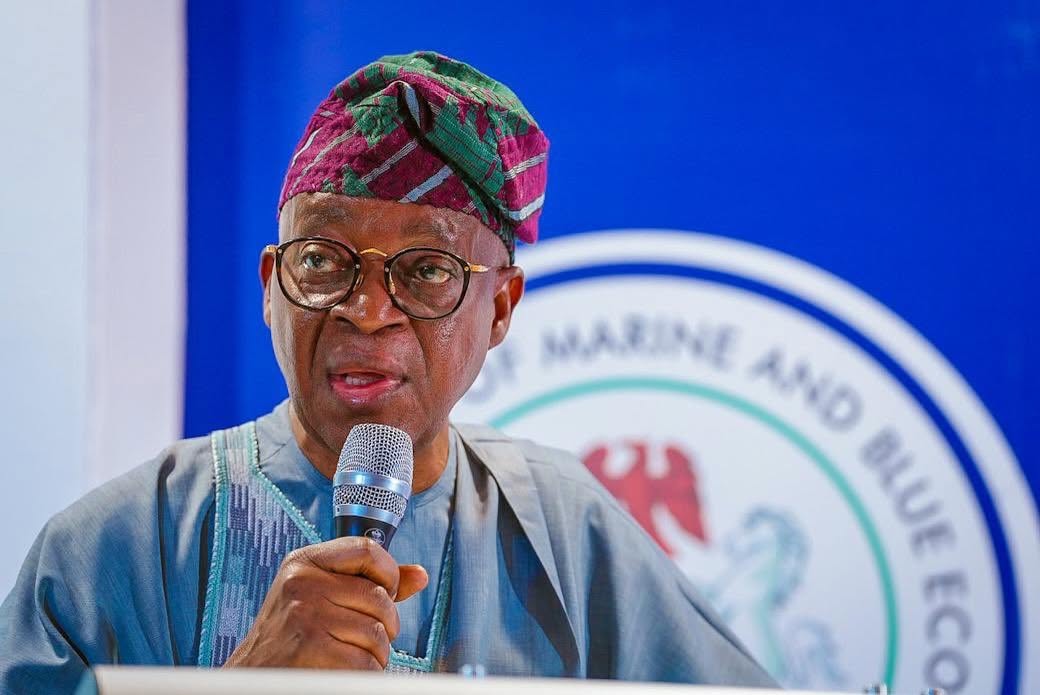
The Nigerian Ports Authority (NPA) has moved to address rail connectivity and logistics challenges affecting inland dry ports as part of efforts to integrate the facilities into the nation’s port system and improve cargo movement across the country.
The move followed a meeting between the NPA management, led by its Managing Director, Abubakar Dantsoho, and the Executive Director of Dala Inland Dry Port, Ahmad Rabiu, alongside representatives of Funtua Inland Dry Port, at the authority’s corporate headquarters in Marina, Lagos.
The engagement came after the Minister of Marine and Blue Economy, Adegboyega Oyetola, directed the transfer of operational oversight of inland dry ports to the NPA.
The discussions focused on strengthening institutional collaboration, addressing infrastructure constraints and improving operational efficiency across Nigeria’s maritime logistics chain.
Speaking during the meeting, Mr Dantsoho stressed the need to upgrade inland dry port infrastructure and technical capacity to complement ongoing modernisation efforts at the nation’s seaports.
He said the facilities must be equipped to handle increasing cargo volumes and support the broader transformation of Nigeria’s maritime sector.

“For our Inland Dry Ports to function at the same velocity as the ongoing modernisation across our seaports, we must proactively upgrade dry port infrastructure and technical capacity,” Mr Dantsoho said.
He explained that the integration of digital platforms, including the Port Community System (PCS) and the National Single Window, into seaport operations must be matched by corresponding improvements at inland dry ports.
“As we integrate digital systems such as the Port Community System (PCS) and the National Single Window in our seaports, the dry ports must deploy modern equipment and advanced technical capabilities to handle larger cargo volumes and bigger vessels coming to our coast,” he added.
Increased private-sector investment
The NPA managing director also called for increased private-sector investment in inland dry port infrastructure, noting that stronger investment would be critical to improving cargo handling capacity and operational efficiency.
He cited APM Terminals’ establishment of an Export Processing Terminal in Northern Nigeria as an example of private-sector participation in the development of inland logistics infrastructure.
ALSO READ: INVESTIGATION: Ganduje embroiled in multi-billion naira Kano dry port ownership scandal
Mr Dantsoho assured stakeholders that efforts to optimise the inland port system were underway and confirmed plans to visit the Dala and Funtua facilities to assess their operational conditions and infrastructure requirements.
Operational oversight
Speaking on behalf of the delegation, Hassan Bello welcomed the transfer of operational oversight to the NPA, expressing appreciation for what he described as a seamless transition.
Mr Bello referenced the gazetted Port Act, which recognises inland dry ports as official ports of origin and destination, while drawing attention to challenges confronting the facilities, particularly inadequate rail connectivity and broader logistics constraints.
Rail access is a critical component of inland dry port operations, as efficient connections to the national rail network can facilitate cargo movement between seaports and inland destinations, potentially reducing pressure on road transport and lowering logistics costs.
The meeting also established a framework for further technical consultations, infrastructure integration and physical planning to identify the requirements for improving operations at the facilities.
The discussions highlighted the need for detailed technical assessments, stakeholder coordination and physical inspections to establish infrastructure priorities and guide subsequent project development.
The planned visits to Dala and Funtua inland dry ports are expected to provide NPA with a clearer understanding of the facilities’ operational challenges and the interventions required to strengthen their roles in cargo distribution, trade facilitation and wider maritime logistics network.
Discover more from Premium Times Nigeria
Subscribe to get the latest posts sent to your email.
-

 Business3 days ago
Communications Ministry made ₦345.5 million duplicate payment for Abuja ICT Park project
-
News3 days ago
LumenUs helps automate tedious paperwork in times of grief
-
Business4 days ago
Fuel subsidy would cost Nigeria over N20trn yearly — Minister
-
News3 days ago
Inside INEC’s AI and cybersecurity plans to secure Nigeria’s 2027 Elections – Technology Times