Connect with us

News

Peec, one of Berlin’s rising startups, more than doubled annualized revenue in months to $10M, sources say


info

Published

on

A5fadec4 271b 4ce6 bdd2 504484c36964.jpg

One of Berlin’s rising-star, early stage startups, Peec AI, just crossed $10 million in annualized revenue, according to internal dashboard data seen and verified by TechCrunch.

Peec AI raised its $21 million Series A six months ago. While CEO Marius Meiners wouldn’t disclose its valuation to me at that time (only revealing that it was above $100 million), he did say the startup had grown its revenue to more than $4 million in the 10 months since its launch.

So, it has more than doubled its revenue trajectory, and at a faster pace.

Peec helps brands track and improve their visibility in AI searches. While based in Berlin, it recently opened an office in New York. 

It’s also serving as proof of one of the key market shifts happening in Europe’s tech scene. 

“Founders these days track revenue much more closely,” Antler partner Christoph Klink was telling me just a couple of days ago. Sitting in a hotel lobby bar during an event-laden week for the tech ecosystem, the Berlin-based VC had offhand mentioned Peec AI as one of the most successful companies in his portfolio, alongside Lovable and others. 

My next question was how he defined success, which led to a discussion of recent market cycles. Compared to six years ago, he said, the big change is that success is now defined by growth, not valuation.

Having learned lessons from 2021’s frothiness and subsequent painful return to reality, investors now know that revenue can’t be an afterthought. The corollary is that it isn’t something you can just check on every couple of weeks, Klink told me. 

Startups now tend to keep running dashboards on revenue progress, sometimes — as is the case at Peec — visible to all employees.

For some founders, this has required some adjusting; but others were born just for this new cycle.

Peec AI’s product takes the same approach as SEO dashboards, except it helps brands track generative engine optimization (GEO) — visualizing whether they show up when users type a certain set of prompts into ChatGPT and the like. 

But as Meiners then told me, he is also a former esports athlete who once ranked among the top 100 League of Legends players. This explains why he would share a revenue tracker with his whole company: his background gave him a unique take on what makes a winning team.

Talent is the first ingredient, and Peec AI took an innovative approach to hiring in Berlin’s competitive market. 

Like many startups in the Bay Area, but very few in Europe, it invested in billboards to pitch itself not only to prospective clients, but also to applicants. In our conversation, Klink had recalled with a smile that these billboards were more often than not strategically placed in front of other tech companies across the city.

What those billboards say may differ, but they are part of a narrative that attempts to position Peec AI as a company worth jumping ship for. According to Klink, this signaling is particularly important in the current AI cycle, where companies and investors are piggybacking on trends that are only just emerging — such as AI search.

This bet on undercurrents applies to many startups Klink has invested in, which is why he understands why portfolio companies like Peec AI — and Lovable — not only closely track ARR, but also sometimes publicly disclose revenue milestones despite having absolutely no obligation to do so. 

“That’s a way to show it’s working,” Klink said. “It also shows a focus on growth that sets the culture.”

When you purchase through links in our articles, we may earn a small commission. This doesn’t affect our editorial independence.

Continue Reading
Click to comment

Leave a Reply

Your email address will not be published. Required fields are marked *

News

Plateau community urges Tinubu to release compensation for land acquired for Military barracks since 1972

info

Published

on

By

Tinubu bola.jpg

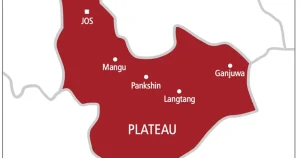
The District Head of Miango in Bassa Local Government Area of Plateau State, Daniel Chega, has appealed to President Bola Tinubu to approve the immediate release of compensation funds for lands acquired for the establishment of Maxwell Khobe Cantonment, Jos, home to the 3rd Armoured Division of the Nigerian Army.

Chega made the appeal while addressing youths, widows, orphans and other stakeholders affected by the acquisition on Friday in Miango District in Bassa LGA of the State.

The paramount ruler decried decades of delay and lack of adequate response by the Federal Government since the land was acquired in 1972.

According to the traditional ruler, “the prolonged delay in compensation payment has continued to inflict hardship on affected families who lost farmlands and sources of livelihood following the acquisition.

He disclosed that, “a joint assessment of affected properties and farmlands had earlier been conducted by officials of the Federal Ministry of Works and Housing, the Ministry of Defence, the Plateau State Ministry of Lands, Survey and Town Planning, alongside consultants, and the report had already been submitted to the Ministry of Defence.

Chega said despite repeated follow-up visits and reminders to relevant government agencies, including the Ministries of Defence and Works and Housing, “no payment has been made and no clear timeline communicated.”

“My people have demonstrated patience, understanding and cooperation over the years, but the prolonged delay has created severe economic hardship and is beginning to threaten peace and stability within the affected communities,” he said.

The monarch further revealed that in search of a resolution, he led representatives of the community on a courtesy visit to the Senior Special Assistant to the President on Political Matters, Alhaji Ibrahim Kabiru Masari, who sympathised with their situation and assured them of efforts towards addressing the matter.”

He also called on the National Security Adviser, Service Chiefs and the Minister of Defence, Christopher Musa, to “intervene urgently to facilitate compensation payment and ensure justice for the affected communities.”

While reaffirming the community’s support for government policies and development initiatives, Chief Chega stressed that, “many families remain displaced and without sustainable means of livelihood as a result of the land acquisition.”

He maintained that the demand for compensation was legitimate and expressed hope that the current administration would act swiftly to provide relief and restore confidence among affected residents.

Continue Reading

Business

NCC Appoints Oforitsenere Emiko as Interim Board Chairman to Drive Nigeria’s Tech Skills Transformation

info

Published

on

By

IMG 0662.jpeg

BY NKECHI NAECGE -ESEZOBOR—The Nigerian Communications Commission (NCC) has appointed Princess Oforitsenere Emiko as the Interim Chairman of the Governing Board of the Digital Bridge Institute (DBI). This strategic move is part of the Commission’s ongoing efforts to reposition the institute to meet the growing demands of Nigeria’s evolving digital economy.

The announcement was disclosed on Monday in a statement by the NCC’s Director of Public Affairs, Nnenna Ukoha.

According to the Commission, the appointment is aimed at strengthening the institute’s capacity to respond to the rapid transformation of the communications sector and the emerging requirements of the broader digital market.

Alongside Princess Emiko, the NCC named Engr. Abraham Oshadami, Executive Commissioner for Technical Services, and Ms. Rimini Makama, Executive Commissioner for Stakeholder Management, as interim board members. They are expected to work closely with the President and Chief Executive Officer of DBI, David Daser, as well as other continuing board members whose tenures remain valid.

Established by the NCC in May 2004, the Digital Bridge Institute was originally created as a specialized training center for telecommunications and information technology.
However, the Commission noted that the sector has since transitioned into a wider digital economy that demands continuous skills development and advanced technical capacity.

The NCC emphasized that the restructuring of the institute reflects the vital role communication infrastructure plays in national development and economic sovereignty.

A major driver of this initiative is Nigeria’s youth demographic, with approximately 70 percent of the population under the age of 30, making targeted skills development a critical component of the national transformation agenda.

To address this, the Commission stated that the renewed focus of the institute will center on five key areas: education and training, research and development, innovation, economic impact and growth, and emerging policy and regulation.

This new strategy was developed through extensive consultations involving key public stakeholders, including the Federal Ministry of Communications, Innovation and Digital Economy, the Federal Ministry of Education, TETFund, the Federal Ministry of Science and Technology, and the National Agency for Science and Engineering Infrastructure (NASENI). The initiative is ultimately designed to align DBI’s mandate with modern technological realities and strengthen Nigeria’s overall position in the global digital economy.

The post NCC Appoints Oforitsenere Emiko as Interim Board Chairman to Drive Nigeria’s Tech Skills Transformation appeared first on Business Today NG.

Continue Reading

Trending