Connect with us

Business

Consolidated Hallmark Holdings Declares N0.25k Dividend, Revenue Rises By 47%

info

Published

on

IMG 6551 300x225.jpeg

BY NKECHI BAECHE-ESEZOBOR—Consolidated Hallmark Holdings Plc, has reported a robust 47 per cent growth in insurance revenue for the 2025 financial year, alongside a record-breaking dividend payout, despite navigating severe capital market volatility that impacted its bottom line.

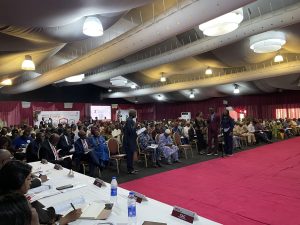
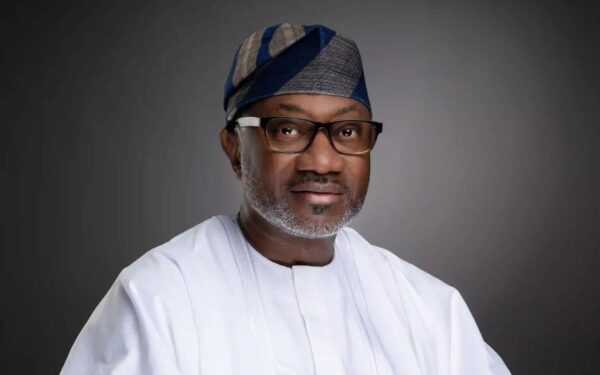
Speaking at the group’s 3rd Annual General Meeting (AGM) in Lagos, Group Chairman Shuaibu Idris disclosed that insurance revenue surged to N43.27 billion in 2025, up from N29.42 billion in the previous fiscal year.

The net insurance service result—reflecting performance after meeting claims, reinsurance obligations, and direct costs—rose sharply by 121 per cent to N6.85 billion, up from N3.10 billion in 2024.

Additionally, non-insurance operations picked up significant momentum, with operating and other non-insurance income jumping 61 per cent from N4.09 billion to N6.59 billion.

The group’s Profit Before Tax (PBT) declined to N8.44 billion from N22.65 billion in 2024. He attributed this drop entirely to a sharp decline in the mark-to-market valuation of the group’s capital market investments.

Cash and cash equivalents nearly doubled, climbing 96 per cent to N7.38 billion while financial assets grew 65 per cent to N45.90 billion.

Total assets expanded by 33 per cent to N75.94 billion, while shareholders’ funds marked a 21 per cent growth.

He noted that the fundamentals of the investment remained strong and hold better prospects for the future,” Idris stated, noting that consistency and diversity served as the group’s strength in a volatile year.

The group’s balance sheet remained highly liquid and well-capitalized:

Following its outstanding performance the board proposed a final dividend of 15 kobo per share. When combined with the 10 kobo interim dividend already distributed, CHH’s total dividend for the year stands at 25 kobo per share.

“This is the highest dividend that we have ever paid,” Idris told shareholders, expressing optimism about maintaining the growth trajectory.

Also, the Group Chief Executive Officer, Mr. Eddie Efekoha, who’s responding to shareholders questions, confirmed that the financial holding structure is perfectly insulated from recapitalization pressures.

“Our Group does not require additional capital to meet the new regulatory thresholds. We are not compelled to seek mergers or external funding, as our capital base remains strong and sufficient,” Efekoha asserted.

Efekoha noted that businesses and individuals are increasingly turning to dependable financial protection amid macro-economic uncertainties, and added that it achieved its resilience through disciplined underwriting, cost optimization, and rigorous operational processes across its subsidiaries.

The post Consolidated Hallmark Holdings Declares N0.25k Dividend, Revenue Rises By 47% appeared first on Business Today NG.

Continue Reading
Click to comment

Leave a Reply

Your email address will not be published. Required fields are marked *

Business

Nigeria’s economy grows 4.43% in Q2 2026 — NBS

info

Published

on

By

National Bureau of Statistics.jpg

MTN ADVERT

Nigeria’s economy grew by 4.43 per cent year-on-year in real terms in the second quarter of 2026, according to the National Bureau of Statistics (NBS).

The latest growth rate is higher than the 4.23 per cent recorded in the corresponding quarter of 2025 and represents an improvement from the 3.89 per cent recorded in the first quarter of 2026.

The NBS disclosed this in its Gross Domestic Product Report for the second quarter of 2026, released on Monday.

The latest figure indicates that economic activity continued to expand during the quarter, extending a gradual recovery recorded over the past year.

Nigeria’s economy grew by 3.87 per cent in real terms in 2025, compared with 3.38 per cent in 2024, according to the NBS data.

PT WHATSAPP CHANNEL

The latest quarterly performance was also the strongest growth recorded since the third quarter of 2024, when the economy expanded by 3.86 per cent, based on the NBS quarterly series.

In nominal terms, the country’s GDP stood at ₦119.29 trillion in the second quarter of 2026, while real GDP was estimated at ₦53.47 trillion.

The improvement came as both the oil and non-oil sectors recorded stronger growth compared with the preceding quarter, although the contribution of the non-oil economy remained overwhelmingly dominant.

Services remain dominant

The services sector remained the largest contributor to Nigeria’s real GDP during the quarter, accounting for 56.62 per cent of total output.

It also recorded real growth of 4.60 per cent, up from 3.94 per cent in the corresponding quarter of 2025.

Agriculture contributed 26.15 per cent to real GDP and grew by 4.39 per cent, a significant improvement from the 2.82 per cent recorded in the second quarter of 2025.

The improvement in agriculture is notable, as the sector remains an important source of employment and income for millions of Nigerians, even as farmers continue to contend with insecurity, high input costs, climate-related pressures, and infrastructure constraints.

The industrial sector, however, recorded slower growth.

Industry grew by 3.96 per cent in the second quarter, compared with 7.46 per cent in the corresponding period of 2025. It accounted for 17.23 per cent of real GDP during the quarter.

The slowdown means that the stronger headline GDP figure was not reflected uniformly across all major sectors of the economy.

Oil production rises

Meanwhile, the oil sector recorded a stronger performance during the quarter, aided by higher crude oil production.

Nigeria’s average daily oil production rose to 1.72 million barrels per day (bpd) in the second quarter, from 1.55 million bpd in the first quarter of 2026.

Production was also higher than the 1.68 million bpd recorded in the second quarter of 2025.

The increase in production coincided with stronger growth in the oil sector.

The sector grew by 7.31 per cent year-on-year in real terms, compared with 2.57 per cent in the first quarter of 2026. On a quarter-on-quarter basis, oil-sector growth stood at 10.91 per cent.

Despite the improvement, oil remained a relatively small part of Nigeria’s overall economic output.

The sector contributed 4.16 per cent to real GDP in the second quarter, up from 4.05 per cent in the corresponding quarter of 2025 and 3.92 per cent in the first quarter of 2026.

By contrast, the non-oil sector accounted for 95.84 per cent of real GDP.

The non-oil sector grew by 4.31 per cent in real terms during the quarter, compared with 3.64 per cent in the second quarter of 2025 and 3.94 per cent in the first quarter of 2026.

According to the NBS, agriculture, information and communication, real estate, trade, financial and insurance services, manufacturing and construction were among the activities that supported non-oil growth during the quarter.

Growth improves but remains moderate

The latest GDP figures suggest that Nigeria’s economy is gaining momentum, but the pace of expansion remains moderate relative to the country’s development needs.

President Bola Tinubu’s administration has repeatedly set a target of achieving 7 per cent annual economic growth by 2027. The 4.43 per cent quarterly growth, therefore, remains below the pace required to reach that broader target if sustained annual growth is the benchmark.

The economy has nevertheless recorded a gradual improvement since the contraction and weak growth rates that characterised earlier years.

The annual growth rate rose from 0.95 per cent in 2021 to 4.32 per cent in 2022, before moderating to 3.04 per cent in 2023. It then increased to 3.38 per cent in 2024 and 3.87 per cent in 2025, according to the NBS data.

The latest figures, therefore, point to a continued, although still gradual, strengthening of economic activity.

READ ALSO: Three-year scorecard of the Federal Ministry of Marine and Blue Economy

However, stronger GDP growth does not necessarily mean that households are immediately experiencing improved living standards.

GDP measures the value of goods and services produced in the economy and does not, on its own, show how income is distributed or whether households can afford basic goods and services.

For Nigerians, the impact of the latest expansion will ultimately depend on whether stronger economic activity translates into more jobs, higher incomes, increased investment and lower production and living costs.

The continued dominance of services and the improved performance of agriculture also highlight the growing importance of the non-oil economy to Nigeria’s growth story.

At the same time, the slowdown in industrial growth shows that challenges related to electricity, financing, infrastructure, logistics, and production costs continue to weigh on the productive sectors.

The latest NBS figures provide further evidence that the Nigerian economy is expanding faster than a year ago.

The bigger test, however, will be whether that growth can be sustained and broadened across productive sectors and translate into tangible improvements in Nigerians’ economic well-being.


Discover more from Premium Times Nigeria

Subscribe to get the latest posts sent to your email.

Continue Reading

Business

NSIA Insurance Grows Revenue by 18% to ₦33bn, Divests Life Insurance Portfolio

info

Published

on

By

BY NKECHI NAECHE-ESEZOBOR—NSIA Insurance Limited one of Nigeria’s most recapitalised insurance company, on Monday released its financial statement for the year ended 31st December, 2025 with 18 percent growth in revenue.

The Chairman of the company, Dr. Adesegun Akin-Olugbade, disclosed this today during a press briefing that revenue grew to ₦33 billion in 2025, representing an 18 percent growth over N30.1 billion reported in the previous year.

Profit after tax stood in excess of  ₦2 billion while total assets stood at ₦53 billion.

Committed to prompt claims payment, he said the company paid a total of ₦18 billion in claims in 2026, bringing its cumulative claims payout over the last four years to ₦47.9 billion.

Speaking further on just concluded recapitalization, he said “At the AGM, the shareholders ratified the capitalisation of N6 billion from retained earnings, increasing the company’s issued share capital from N9 billion to N15 billion through a bonus issue of two new shares for every three shares held, this strengthened the company’s capital base without requiring any additional investment from shareholders and ensured full compliance with the Nigerian Insurance Industry Reform Act of 2025.

This achievement according to him was driven by sustained financial performance, with shareholders’ funds growing by 74.3 percent from N13.6 billion in 2021 to 23.7 billion in 2025, supported by cumulative profit after tax of over N9.3 billion during the period.

The move he said will strengthened the company’s capital base without requiring additional investment from shareholders, while ensuring full compliance with the Nigerian Insurance Industry Reform Act of 2025.

He noted that as part of its strategic repositioning,it  has transitioned to operate exclusively as a non-life insurer, enabling the company to deepen its focus on general insurance.

He disclosed that its proposed transfer of its life insurance portfolio will be to CHI Consolidated Hallmark CHI Life Assurance Limited, and this, he said has received approval in principle from National Insurance Commission,(NAICOM), and will be completed upon the conclusion of the remaining legal and regulatory processes.

Looking ahead, he reassured that NSIA  remains committed to disciplined underwriting, digital innovation, superior customer service, and sustainable value creation for its customers, shareholders, and the Nigerian economy.

Also, managing Director/CEO, of the company, Moruf Apampa, explained the company’s decision to divest its life insurance portfolio to CHI Life Assurance Limited.

According to him the decision was deliberate and designed to eliminate distractions that could hinder growth in the general insurance segment.

“We’ve decided to have a more focused strategy to drive our general business. By doing so, we’re able to scale better than before because there’s no distraction — we’re focused on driving the numbers,” he said.

He disclosed that a key part of the company’s strategy is to achieve deep household penetration across the country, targeting what he described as an “NSIA family” in every Nigerian home.

“For every householder in Nigeria, we must have an NSIA family. That’s very strategic for us, and it’s deliberate. That’s where we believe we can scale, and that’s what we intend to do deliberately over the next five years,” he said.

Highlighting the company’s strength in motor insurance, he said NSIA has built a claims process designed for speed, with dedicated teams inspecting claims and, in many cases, processing payment on the same day.

“When I say motor, I can conveniently tell you that if you report a claim today, we have a team that will inspect that same claim and give you feedback that same day. If possible, once you sign, you also receive your benefit that same day,” he said, adding that this reflects the kind of institution NSIA aims to be.

He stressed that the company prioritizes customers over profit, arguing that insurers should not celebrate strong profits while shortchanging policyholders on claims.

“We’re not putting profit before the customer — we’re putting the customer before the profit. How would you feel if we came here to announce a ₦3 billion profit, but only ₦2 billion was paid out as claims, while customers outside are complaining?” he asked.

According to him, consistent delivery of value to customers is what builds trust and repeat business in the insurance industry.

“It’s usually about the message, not the messenger, and the message is always right. By delivering value to the customer, that’s when they gain the confidence to come back, repeat their purchase, and tell others that insurance actually works,” he said.

The post NSIA Insurance Grows Revenue by 18% to ₦33bn, Divests Life Insurance Portfolio appeared first on Business Today NG.

Continue Reading

Trending