Health
Malnutrition: MSF treated over 60,000 Zamfara children in 2025

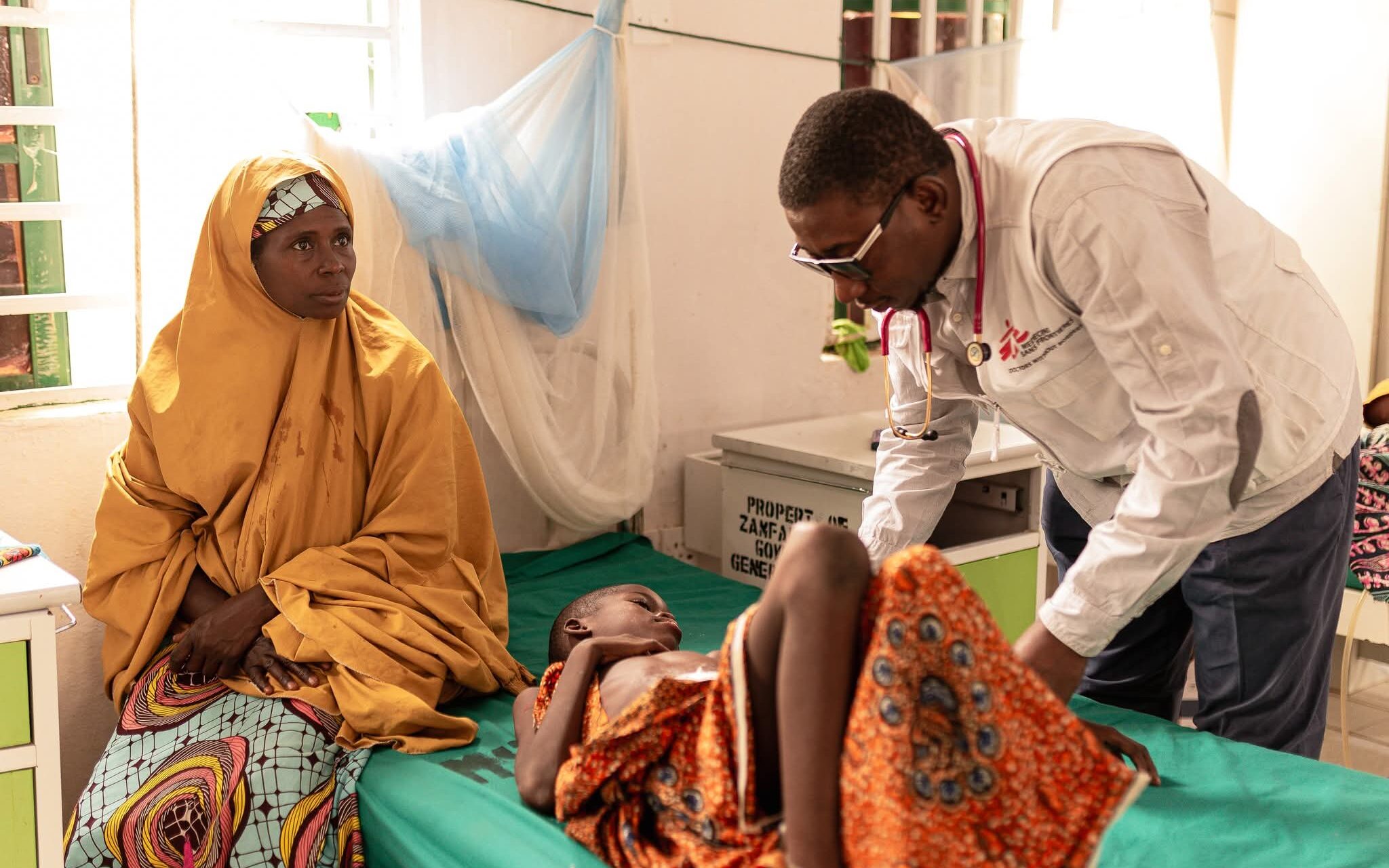
Medecins Sans Frontieres (MSF), a global health humanitarian non-governmental organisation, said it treated 60,566 children for malnutrition in Zamfara State in 2025 alone.
In an official communication posted on the NGO’s official Facebook page on Wednesday, MSF said the situation was aggravated by hunger and disease.
‘The rains also coincide with the lean season, when food stored are exhausted and new harvests are still months away. Undernutrition weakens immune systems, turning common illnesses into deadly threats, particularly for children.
“In 2025, MSF treated 60,566 children for malnutrition in Zamfara, as hunger and disease combined into a dangerous cycle,’ the organisation said.
PREMIUM TIMES reports that Zamfara State is the epicentre of a decade-long menace of banditry that has ravaged Nigeria’s northwest.

The bike-riding terrorists often invade communities, killing and abducting residents. Most of those affected in the rural communities are farmers and traders.
Killing of farmers and displacement of others has affected food production as a PREMIUM TIMES field investigation revealed in 2023.
Besides malnutrition, MSF said it has also treated children for various diseases in the state.
In 2025, the group said it ‘treated 136,778 malaria and 13,877 cholera patients in Zamfara, showing how quickly illness escalates during the rainy season.’
The health NGO said every year, the rainy season brought diseases, complicating the already strained situation in the state and the sub-region.
‘In northwestern Nigeria, particularly in Zamfara State, the rainy season brings more than relief from the heat. It brings distress, disease, and preventable deaths.
” For communities already affected by years of armed violence, displacement, and poverty, daily survival between May and September becomes an overwhelming struggle as flooding, outbreaks of infectious diseases, and worsening food insecurity come together,” it noted.
READ ALSO: Zamfara govt gives free medical treatment to 6,842 persons
MSF said while it would continue to scale up its emergency responses across northern Nigeria. However, it noted that most of the deaths were preventable.
“Preventive action before and during the rainy season is critical. Strengthening community awareness, improving access to safe water and sanitation, and ensuring timely vaccination campaigns can reduce the impact of diseases,” said Sani Adamu, nursing activity manager in MSF project Shinkafi.
“Health facilities must also be properly equipped and supported to diagnose and treat patients quickly and effectively.”






The Minister of State for Health and Social Welfare, Iziaq Salako, and other stakeholders at the 8th Nigeria Pharma Manufacturers Expo, organised by the Pharmaceutical Manufacturers Group of the Manufacturers Association of Nigeria (PMG-MAN).
Keywords: pharmaceutical manufacturing, Iziaq Salako, medicine security, local production, healthcare value chain, pharmaceuticals, PVAC
The federal government is targeting at least 70 per cent local production of essential healthcare products by 2030 as part of efforts to strengthen medicine security and reduce the country’s dependence on imports.
The Minister of State for Health and Social Welfare, Iziaq Salako, disclosed this on Monday in Lagos while declaring open the 8th Nigeria Pharma Manufacturers Expo, organised by the Pharmaceutical Manufacturers Group of the Manufacturers Association of Nigeria (PMG-MAN).
The expo, themed “Regional Manufacturing: Advancing Africa’s Pharma and Life-Science Sovereignty through Localisation,” brought together stakeholders in Nigeria’s pharmaceutical and life-sciences sector.
$2bn financing, tariff relief for drug makers
Mr Salako said the government’s Presidential Initiative to Unlock the Healthcare Value Chain (PVAC) had secured about $2 billion in financing commitments at single-digit interest rates, with about 50 Nigerian health firms in advanced discussions for funding.

He said the government was also using fiscal measures to support local pharmaceutical manufacturing, noting that 87 local manufacturers were benefiting from a presidential executive order granting zero tariffs on pharmaceutical machinery, active pharmaceutical ingredients (APIs) and excipients across almost 1,000 Harmonised System codes.
According to him, the measures are intended to strengthen domestic manufacturing and build greater resilience into Nigeria’s healthcare supply chain.
From imports to domestic capacity
Speaking further, Mr Salako said disruptions during the COVID-19 pandemic had exposed the risks associated with dependence on global supply chains and underscored the need for Nigeria and other African countries to develop domestic capacity to produce medicines, vaccines, diagnostics and other essential health technologies.
“Our conversation can no longer be limited to whether we can access medicines when global supply chains are functioning,” he said.
Mr Salako described medicine security as an issue of national resilience and sovereignty, saying Nigeria needed to develop capacity across the pharmaceutical value chain rather than concentrate on final-product assembly.
He said ongoing government efforts include expanding local production of APIs, vaccines, biologics, diagnostics and other health commodities.
Mr Salako also cited the operationalisation of the National Institute for Pharmaceutical Research and Development (NIPRD) API Capacity Building and Concept Production Centre, development of commercial API manufacturing capacity and efforts to localise production of HIV, hepatitis and syphilis diagnostic products.
He said Nigeria must also increase investment in research and development and harness its phytomedicinal resources to deepen pharmaceutical manufacturing.
Predictable market for local manufacturers
Mr Salako said the establishment of Medipool, Nigeria’s national Group Purchasing Organisation for essential medicines and medical commodities, would help create predictable demand for locally manufactured products.
He said the organisation would aggregate procurement, negotiate bulk purchases and improve supply-chain efficiency.
READ ALSO: FG seeks action on harmful gender norms to improve adolescent health
In addition, he also urged pharmaceutical manufacturers, researchers, investors and development partners to explore regional markets under the African Continental Free Trade Area (AfCFTA).
He said Nigeria’s pharmaceutical manufacturing ambitions would depend on sustained investment, innovation, regulatory alignment and access to larger regional markets.
Mr Salako said stronger collaboration among government, manufacturers, researchers, investors and development partners would be necessary to build a more resilient pharmaceutical manufacturing ecosystem in Nigeria and across Africa.
Discover more from Premium Times Nigeria
Subscribe to get the latest posts sent to your email.

Resident doctors have given the federal government a 14-day ultimatum to begin implementing outstanding agreements on their welfare and working conditions or face “further industrial action.”
The ultimatum takes effect from 1 October 2026, according to a communique issued at the end of the Nigerian Association of Resident Doctors’ (NARD) 46th Annual General Meeting (AGM) in Calabar, Cross River State.
According to the document signed by the association’s new President, Ogar Idoko, Secretary-General, Besongngem Akotanchi, and Publicity and Social Secretary, Ashimom Msughter, the meeting was held from 21 to 26 September.
The doctors said the ultimatum became necessary due to ongoing delays in resolving several welfare and professional issues, despite the government’s previous engagements and commitments.
Outstanding allowances, salaries
The resident doctors demanded the immediate payment of 19 months of outstanding Professional Allowance Table (PAT) arrears.
They also demanded payment of outstanding arrears arising from the 25/35 per cent upward review of the Consolidated Medical Salary Structure (CONMESS) for doctors and other affected health workers.
The association said several medical doctors were still owed salary and promotion arrears in various federal health institutions.
It also demanded the immediate correction of omissions and errors in the payment of the 2026 Medical Residency Training Fund (MRTF). It called for an upward review of the fund to reflect the current cost of residency training.
The doctors said the reviewed MRTF should also be captured in the 2027 Appropriation Act.
Other demands
The resident doctors called for the accelerated conclusion of the long-running Collective Bargaining Agreement between the Nigerian Medical Association and the federal government.
They said the unresolved review of the CONMESS salary structure had remained outstanding for about 17 years and was contributing to the brain drain affecting the health sector.
The association also called for a sustainable recruitment system to address “the critical manpower shortages occasioned by brain drain and guarantee safe and effective healthcare delivery.”
It demanded the implementation of the approved work-hour regulation policy, including functional biometric systems to document working hours and a standardised system for compensating doctors for excess workload.
The doctors also called for the implementation of “the Assault on Health Workers Prevention Policy across all health institutions with clear accountability mechanisms” and the payment of outstanding pension contributions.
The association further demanded urgent improvements in healthcare infrastructure, equipment and essential medical facilities across the country.
It said poor infrastructure and inadequate equipment were affecting patient safety, healthcare delivery and the training of resident doctors.
Threat of industrial action
Under the resolution, the AGM mandates that the NARD National Executive Council (NEC) “closely monitor” the government’s response over the next two weeks.
The association said it would take “all necessary lawful and constitutionally sanctioned actions”, including further industrial action, if the authorities failed to demonstrate meaningful compliance within the stipulated period.
The latest ultimatum follows several rounds of disputes between resident doctors and the federal government this year.
In January, the doctors suspended a planned nationwide strike scheduled to begin on 12 January after the National Industrial Court restrained the association from embarking on the action, and the government made fresh commitments.
READ ALSO: Resident doctors commend Uba Sani for prioritising healthcare workers’ welfare
In April, resident doctors commenced a nationwide strike over the reversal of the Professional Allowance Table and other outstanding financial obligations. The action was suspended less than 24 hours later following government interventions.
In June, the association issued another 21-day ultimatum over unpaid allowances, salary arrears and delays in the residency training fund.
The resident doctors’ latest ultimatum, therefore, gives the federal government until 1 October to “commence demonstrable implementation of the resolutions contained in this communique.”
Discover more from Premium Times Nigeria
Subscribe to get the latest posts sent to your email.
-

 News4 days ago
Crusoe abandons $1.25B plan to use Boom turbines at AI data centers
-
News3 days ago
Alex Otti should be campaigning for Peter Obi not backing Tinubu – NDC
-
News3 days ago
At Meta Connect, the company’s smart glasses were everywhere
-
News3 days ago
I created an interactive digital avatar of myself — and you can talk to it