News
Waymo expands pause to four cities as robotaxis keep driving into floods








News
Supporters’ Club Crisis: Sports Marketing Consultant Advocates 90-Day Election, Unified National Platform

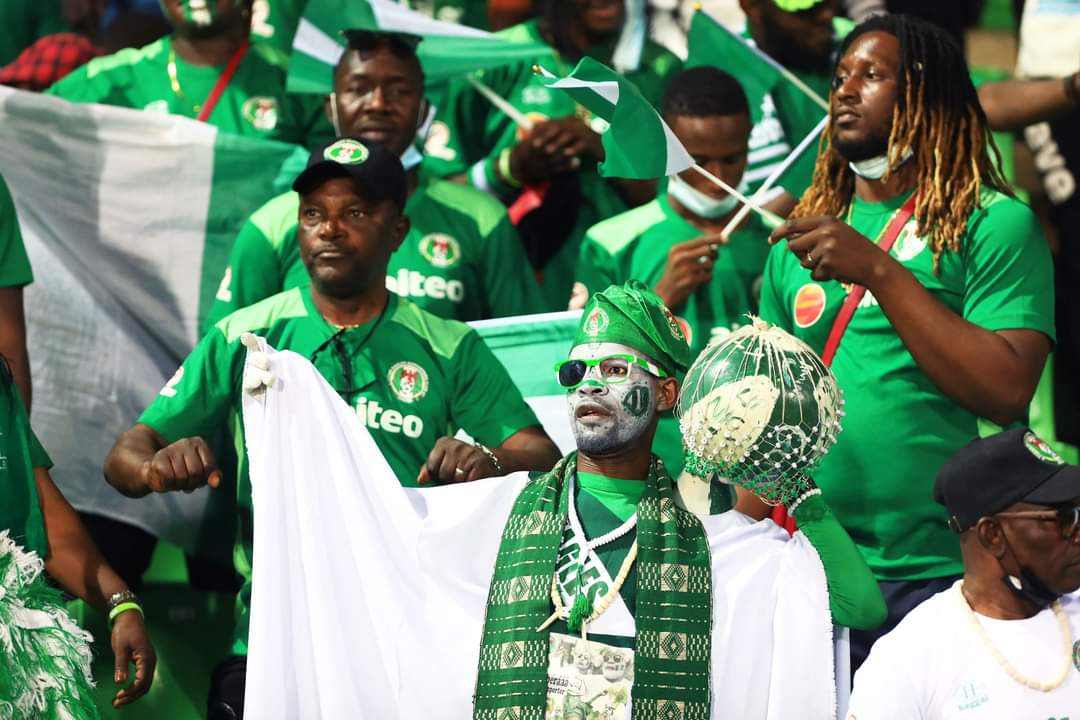
A Sports Marketing consultant to several Nigerian football supporters’ organisations, Olisemeka Obi, has called for an urgent and transparent resolution to the lingering leadership crisis within the Nigerian Football Supporters’ movement, following the expiration of the tenure of the Interim Management Committee (IMC).
Obi, who has worked professionally with different factions within the supporters’ movement, said the current situation should no longer be viewed as a contest between personalities or rival organisations, but as an opportunity to establish a sustainable structure for supporting Nigeria’s national teams.

Read Also: “We Need A New Start” — Ijeh Warns Against Return Of Former NFF Administrators | Sports247 Nigeria
Speaking against the backdrop of the controversy surrounding the continued operation of the IMC after the expiration of its mandate, Obi said the original unification initiative was a welcome development that should be preserved, but argued that an interim arrangement should not become permanent.
He noted that the subsequent resignation of the NFF Board which participated in the establishment of the IMC had made the situation more delicate, but should not be used as justification for extending an expired mandate.
“What we need now is a reset—not another faction,” Obi said.
According to him, the solution does not necessarily require the dissolution of the existing supporters’ organisations, which have their own histories, identities and loyal memberships.
Rather, he advocated a structure in which the six independent organisations retain their identities while operating under one recognised national coordinating platform for supporters of Nigeria’s national teams.
Under the proposed arrangement, he said, “the organisations should have one coordinated national supporters’ platform and delegation whenever Nigeria plays. There could be an agreed dress and branding arrangements where appropriate”. According to him, unified Supporters will have uniform chants, music and match-day activities with common rules and standards of engagement.
He also opined that there should be rransparent allocation of tickets, travel opportunities and other support with none of the factions claiming exclusive ownership of the Nigerian national team supporters’ movement.
Obi said such an arrangement would provide a more realistic definition of unity.
“Unity does not necessarily mean erasing history. It means agreeing on the things that must be done together,” he said.
He further called on the National Sports Commission, in conjunction with the appropriate transitional structure of the Nigeria Football Federation, to convene all recognised stakeholders and establish a neutral transition and electoral process.
The former consultant recommended that the entire process should be completed within 90 days, with a clear timetable covering reconciliation and verification of stakeholders, development of electoral guidelines, nominations and screening, campaigning, voting and handover.
He stressed that the election must be transparent, inclusive and credible enough to command the confidence of all participating organisations.
Obi, who has previously consulted for the Nigerian Football Supporters Club and was involved in attracting sponsorship funding for a World Cup trip, also worked with the Vincent Okumagba-led Super Eagles Supporters Club on events and media relations. He has equally consulted for the All Sports Supporters Club.
Drawing from his experience with the various organisations, he said the supporters’ movement must now move beyond personalities and institutionalise its leadership.
“Nobody should be bigger than the institution. The Super Eagles are bigger than every supporters’ club. Nigerian football is bigger than every individual,” Obi said.
He added that Nigerian football supporters deserve a structure whose legitimacy derives from a credible and transparent process rather than an expired mandate, political influence or personal loyalty.
Obi, who is a Chartered Public Relations practitioner urged all stakeholders to embrace statesmanship and focus on building a supporters’ movement capable of providing unified, professional and effective support for Nigeria’s national teams.
“Let the past be acknowledged. Let the disagreements be resolved. Let the six groups find a workable framework for unity. Let there be an election within 90 days, and let those who emerge be given the opportunity to build a supporters’ movement worthy of Nigerian football,” he said.
He emphasised that the ultimate objective should not be determining who controls the supporters’ movement, but how the movement can better support Nigeria and the Super Eagles.


Dangote Refinery will open the order book for its initial public offering to retail investors on 14 September, effectively kickstarting the $1.5 billion public share sale, said to be the continent’s biggest ever, Reuters reported Friday, citing two sources who have close knowledge of the move.
Pricing will commence at any moment now at N525 per share ($0.40), with 4.1 billion shares up for subscription, the report added, noting that the sources spoke on the understanding that their identities will not be disclosed.
The crude processing plant, which holds the distinction of being the world’s largest single-train refinery, will have the latitude to sell 15 per cent of the offer size in addition to the total number of shares up for grabs in the event the transaction is oversubscribed, a source was quoted as saying.
The facility, owned by Africa’s richest man, Aliko Dangote, is ready to double nameplate capacity to 1.4 million barrels per day (bpd).
Financing will be provided by proceeds from both the planned equity sale and a private placement held in July, which raised $2.5 billion from institutional investors and high-net-worth individuals. It was 270 per cent oversubscribed.

Another refinery, the size of the current one at 700,000 bpd, is to be established in the coastal town of Lamu in Kenya, strategically conceived by the Dangote Group as the gateway to the broader East African market.
READ ALSO: Dangote Cement sets date for London capital markets day ahead of LSE listing
Last month, the group offered a 30 per cent stake in the proposed refinery to countries in the region, including Kenya, Rwanda and Ethiopia.
The groundbreaking is scheduled for this month.
Dangote Refinery is exploring a cross-border listing on the Johannesburg Stock Exchange, the continent’s foremost bourse, following a primary listing in Lagos.
The corporation said in August that a London listing, which its sister company, Dangote Cement, is actively pursuing, is not on the cards, adding that a potential listing in the UK capital is at least three years away.
Discover more from Premium Times Nigeria
Subscribe to get the latest posts sent to your email.
-

 Business2 days ago
PLACCIMA Nominates Bolcit Barshep-Amakiri as Vice President, Commerce
-
Business4 days ago
NSIA Insurance Grows Revenue by 18% to ₦33bn, Divests Life Insurance Portfolio
-
News3 days ago
Honest Ahanor’s Move To Crystal Palace, On Loan From Chelsea, Raises Eyebrows In Italy
-
News4 days ago
Military Eliminates 324 Terrorists, Rescues 610 Kidnap Victims In August — DHQ