News
BDC Demands Declaration of Mahanga as Terrorist Enclave, Urges Urgent Resettlement of Displaced Berom Communities


The Berom Diaspora Coalition (BDC), alongside allied groups, has called on the Federal Government to declare Mahanga in Riyom Local Government Area of Plateau State a terrorist hideout, describing it as a major stronghold for armed groups allegedly responsible for persistent attacks across the state.
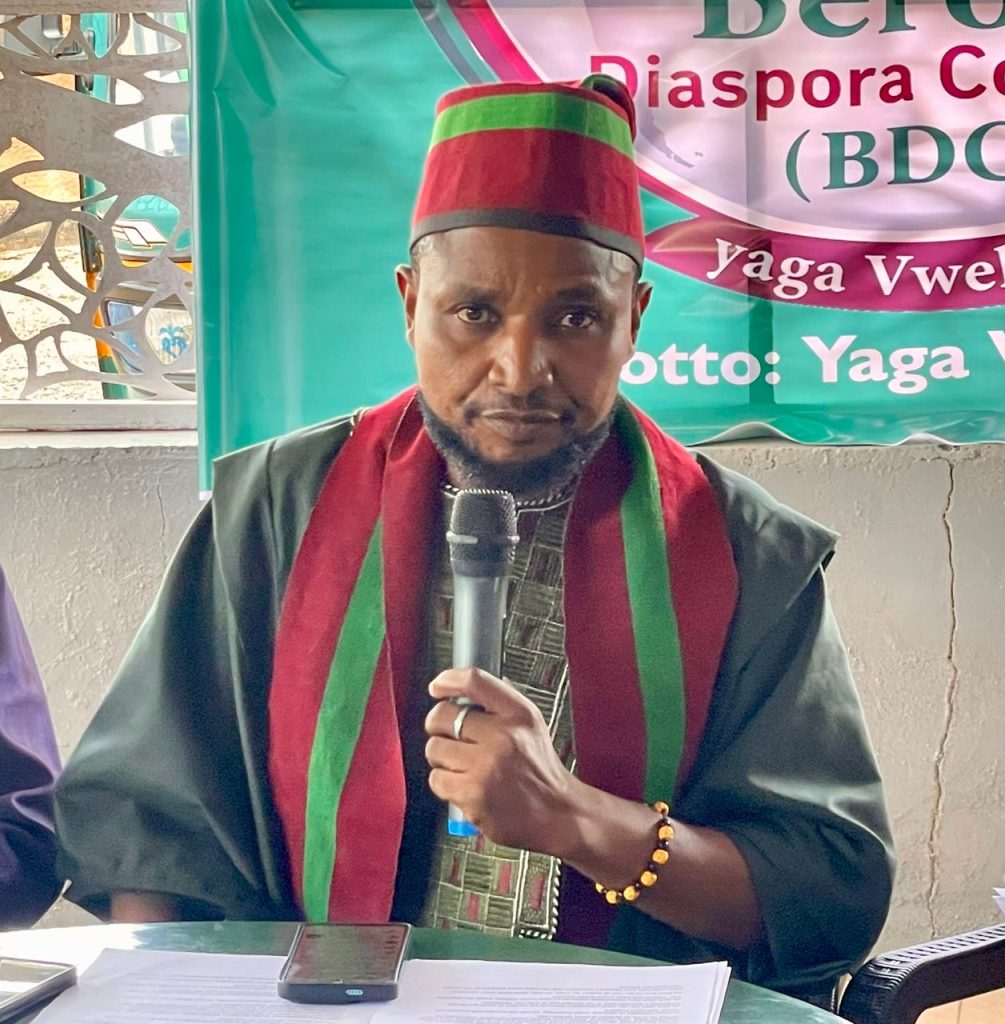
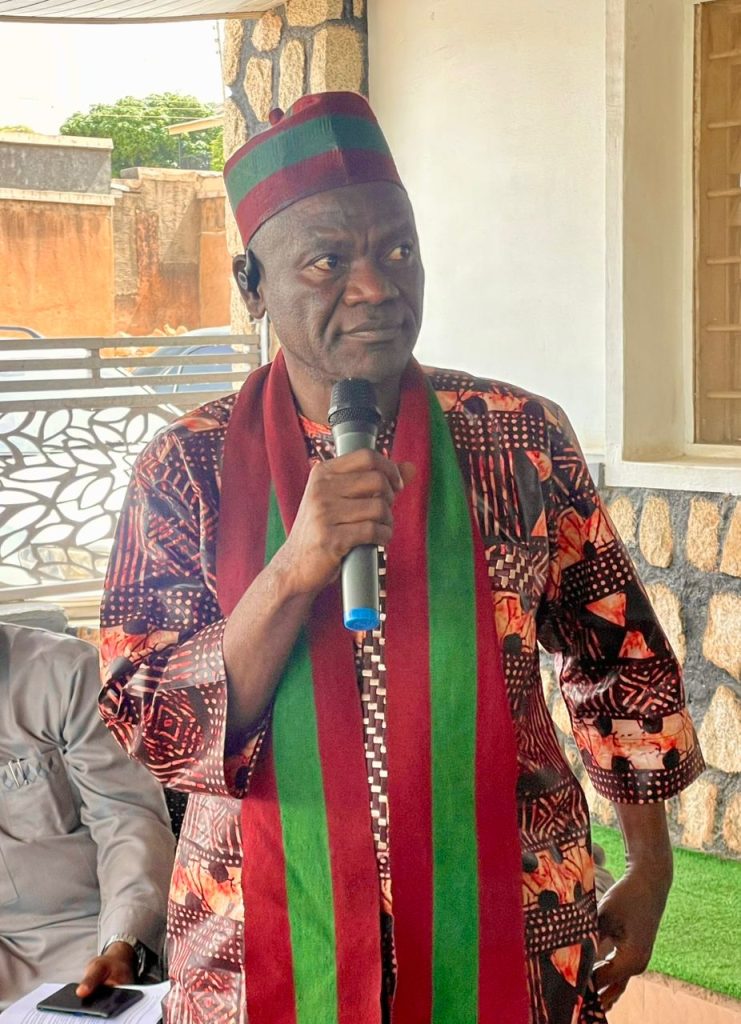
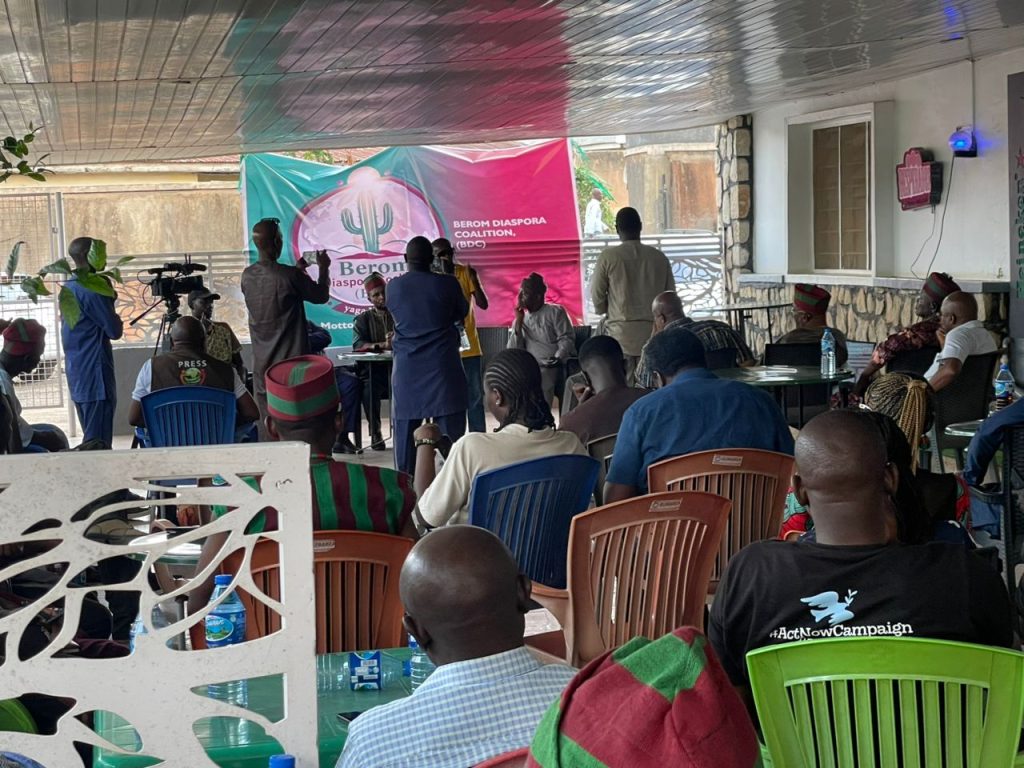
Speaking during a press conference held in Jos on April 28, 2026, under the theme “Reclaiming Our Lost Ancestral Lands and Resettlement of Our People,” Representing the coalition, Barnabas Dazi expressed deep concern over continued violence, displacement, and humanitarian crises affecting Berom communities.
The group alleged that hundreds of lives have been lost between November 2025 and April 2026, with several communities in Barkin Ladi, Riyom, Jos South, Bokkos, and Bassa Local Government Areas repeatedly attacked. According to the coalition, more than 70 Berom villages have been displaced, with some reportedly occupied by armed groups.
A key demand highlighted during the briefing was the urgent designation of Mahanga as a terrorist enclave. The coalition argued that such a move would enable security agencies to carry out decisive operations to dismantle what it described as a long-standing base for violent attacks.
Beyond security measures, the BDC emphasized the urgent need for the reclamation of ancestral lands and the safe resettlement of displaced persons. It criticized the slow pace of government intervention, noting that many affected families remain homeless while their lands are allegedly occupied.
The coalition urged both the Federal and Plateau State governments to move beyond assurances and take immediate action to restore displaced communities to their original homes. It also called for stronger prosecution of suspects linked to attacks and compensation for victims.
Reaffirming its stance, the group appealed to the international community and human rights organizations to intervene and help end the violence, stressing that the protection of lives and restoration of ancestral lands must remain a priority.

Lagos is set to erupt this Sunday as the Bet9ja Foundation Ex-Internationals Cup comes to a thrilling close. Football legends, fans, and dignitaries will converge on the city for a grand finale that promises nostalgia, entertainment, and purpose all in one package.
All the action will take place at the iconic Mobolaji Johnson Arena on Sunday, 23rd August. The venue, known for producing some of Nigeria’s finest talents, will host two blockbuster games that will bring back memories of the golden eras of Nigerian football.
Read Also: Future Eagles Payment Delay Raises Questions as Six Players Reportedly Remain Unpaid
The day kicks off with the third place match at 12pm between FC Okpara and FC Alloy. It’s a battle of pride and bragging rights, as both teams look to finish the tournament on a high and give fans a taste of classic Nigerian grit and skill.
Then comes the main event. The Final at 3pm will see FC Babington take on FC Enegwea in what is expected to be a pulsating encounter. Expect fireworks, tactical battles, and moments of magic from players who once carried the nation’s hopes.
Leading FC Babington is Bode Babington, a former Nigerian professional goalkeeper. He notably featured for Stationery Stores FC and Julius Berger FC, and represented Nigeria at the youth international level, including the 1995 Africa Youth Championship. His leadership between the sticks made him a fan favorite in the local league.
On the other side, FC Enegwea mentored by Taiwo Enegwea. He played for Lagos YSFON, Eagle Oil, First Bank and Union Bank, and climbed through the ranks to represent Nigeria at the U17, U20 and senior level. A true product of grassroots football, Taiwo embodies the pathway the Bet9ja Foundation is working to strengthen.
FC Alloy draws its name and inspiration from Alloy Agu, a former Nigerian goalkeeper and a key part of the golden generation of the late 1980s and 1990s. Agu represented Nigeria at multiple Africa Cup of Nations tournaments and was in the squad for the 1994 FIFA World Cup in the USA. After playing in Nigeria and in Belgium with RFC Liège, he transitioned into coaching and has served as goalkeepers’ coach for the Super Eagles.
FC Okpara honors Godwin Okpara, a former defender who rose to prominence in the 1990s. He enjoyed a successful club career in Europe with Paris Saint-Germain and later RC Strasbourg, where he was known for his strength, versatility, and consistency. Okpara also earned caps for the Super Eagles and remains active in football and community development after retirement.
Beyond the scores and trophies, the Bet9ja Foundation Ex-Internationals Cup is about impact. The initiative supports ex-internationals with welfare programs, medical assistance, and mentorship for young players. It’s a reminder that the legends who gave us unforgettable moments are still giving back to the game.


Deborah Moses, a graduate trainee at United Bank for Africa Plc (UBA), has described her interaction with the UBA chairman Tony Elumelu as a long-cherished dream.
Ms Moses attracted the attention of the bank’s Chairman, Tony Elumelu, after she shared observations and ideas on how the lender could address recurring problems faced by its customers.
Ms Moses made the observations on Thursday during a question-and-answer session at UBA’s Graduate Management Accelerated Programme (GMAP), where she spoke about her experience during her on-the-job training (OJT).
She told Mr Elumelu, who is finishing his tenure as the bank’s chairman in August, that many UBA customers repeatedly encounter similar problems but often do not know the documentation required to resolve them before visiting a branch.
According to her, this often leaves customers having to return home to obtain the required documents before their complaints can be addressed, creating frustration and discouraging some from returning to the bank.

“During my OJT, I observed that our customers all have repetitive problems. They will come back for the same complaints, and then most of them do not know the required documentation that they need to bring so that their problems would be attended to smoothly.
“Mostly, they will realize that the customer service will now tell them, so you need this and you need that. Please, can you go back and bring it? And they’ll be like, I don’t have time. I cannot come back to this bank again. That’s a very big problem,” she said.

Ms Moses therefore suggested that the financial institution introduce a “UBA journey guide” for customers during onboarding, containing information on the documents and steps required for different banking-related complaints and requests.
“So I want to suggest, how about we have a UBA journey guide for our customers during onboarding, when they are registering with us. We give them maybe a PDF that contains what you need to do at a particular time,” the graduate trainee said.
She explained that the guide could be available in both digital and hard-copy formats, particularly to accommodate customers who are less comfortable with digital products.
The guide, she said, could cover issues such as changing a phone number and the documents customers need to bring to the bank to ensure prompt and smooth responses to their requests.
“And we can also have it in hard copy for some of our customers who do not really like the digital product.
“This way, they are informed of what they need to bring to the bank. They don’t always have to come and go back or have to come,” she said.
Ms Moses, an agricultural economics and extension graduate, also proposed that the lender create a department responsible for capturing customers’ experiences in real time across its branches.
She said such a system would enable the bank to track the number of customers visiting its branches, those attended to and those who were not, while identifying recurring complaints.
“At the end of the day, we know this number of people came to the bank; these people were attended to, and these were not, at the branch level. Daily reports, in a way, will help us know the recurring problems, the ones that are the highest, and then we will know how to solve them and reduce inflow,” she said.
Reacting to Ms Moses’ suggestions, the UBA chairman, Mr Elumelu, invited the graduate trainee to the podium, extolled her ideas and exchanged a handshake with her.
“If we hand over to people like you in UBA, we will be safe,” Mr Elumelu said, expressing his enthusiasm to continue monitoring her career at the bank.

Meanwhile, in a Facebook post on Friday, Ms Moses said the moment reinforced her belief that ideas, initiative and the courage to speak up can create an impact, regardless of where one is in their career journey.
READ ALSO: UBA strengthens Africa’s future leadership pipeline, graduates 374 young professionals
“I always imagined the day I’d shake hands with the outgoing Chairman. Yesterday, I got more than a handshake; I got a hug, encouragement, and his recommendation.
“During my GMAP OJT, by the Grace of God, I identified a problem, suggested a solution, and dared to speak up. He loved the idea.
“That moment reminded me that ideas matter, initiative matters, and your voice can create impact; regardless of where you are in your journey,” Ms Moses added.
The UBA graduate trainee previously worked as a Human Resources Assistant at Bank of Agriculture (BOA) after graduating in 2023. She also worked with NEAT Microcredit before joining the UBA internship programme.
Discover more from Premium Times Nigeria
Subscribe to get the latest posts sent to your email.
-

 News9 hours ago
Gagdi Appreciates Appointment as Deputy Director, Security and Intelligence of 2027 Presidential Campaign Council
-
Business4 days ago
Plateau Strengthens Technical Education, Prepares NITT Centre for September Take-Off
-
News3 days ago
Osun Election: Accord Party spent N40bn – Fayose counters Davido’s claim
-
News2 days ago
Tesla, Uber, and Waymo all get the OK to operate thousands of robotaxis in Nevada