News
JUST IN: Gunmen Attack NIPSS in Plateau, Kill Three Security Operatives



A chieftain of the African Democratic Congress, ADC, Dino Melaye, has described President Bola Tinubu as a prodigal child with no identity and lineage.
Melaye made the remark while faulting Tinubu for acquiring an Airbus as a presidential jet and a yacht upon assuming office as president.
Speaking in a video he posted on X, Melaye said: "Three years before the next government, Buhari bought a jet for the office of the President but Tinubu came and refused to use it, he's the first Nigerian to get an AirBus.
"They acquired an AirBus and they acquired a Yacht that has never been to the perimeter of this country before.
"Is that not a prodigal child? But it's not his fault, Yoruba people say a child with no identity.
"He has no father, no mother, no brother, I even did a competition online that if anybody can get his classmate will get N5 million, four months after not one person.
"I'm saying this for us to know the extent of the damage and the rot, Nigeria has never had it this bad, we have never seen it this terrible."

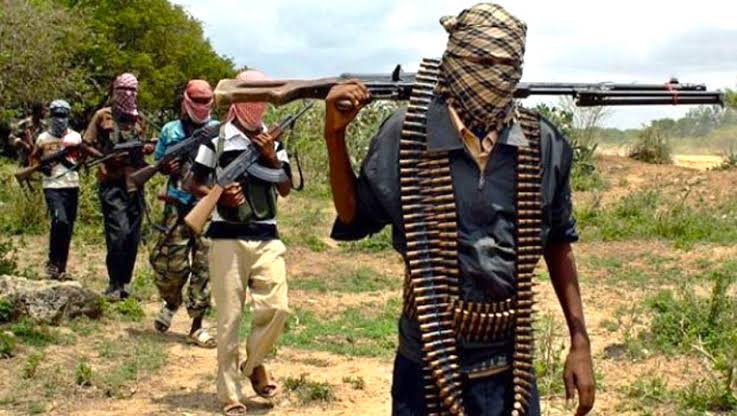
Nigerian troops rescued more than 70 abducted people, recovered N10 million ransom, and arrested several suspected terrorists and kidnappers across the country in one week, the Defence Headquarters said.
The director of defence media operations, Maj.-Gen. Michael Onoja disclosed this in a statement on ongoing military operations between October 15 and 22.
Mr Onoja said troops rescued 27 villagers abducted in the Gamji community, Katsina, and 29 residents who fled into nearby bushes during a terrorist attack in the Mariga Local Government Area of Niger.
He said troops also rescued 11 passengers after suspected attackers assaulted a commercial bus along the Ayere-Kabba road in Kogi.
Mr Onoja added that troops tracked kidnappers to Falgore Forest, neutralised two suspects, and rescued a victim abducted from Fanyabo village in Tudun Wada Local Government Area of Kano State.
He said the troops recovered N10 million suspected to be ransom paid by the victim’s family and handed the money and victim over to the family.
Mr Onoja said troops also arrested a wanted terrorist kingpin and an accomplice at the kingpin’s residence in Mokwa, Niger, recovering four mobile phones and an undisclosed amount of cash.
The defence spokesman said that in the North-East, troops of Operation Hadin Kai sustained offensive operations against terrorists in Borno and Yobe.
He said troops arrested suspected terrorist logistics suppliers and collaborators at Benisheikh Market in Kaga Local Government Area of Borno on October 16.
According to him, further arrests were made in Yobe and Borno, including suspected collaborators allegedly supplying clothing materials for terrorists’ uniforms.
He said 19 terrorist fighters and family members surrendered to or were intercepted by troops in Bama, Konduga, Mafa, and Gwoza local government areas of Borno during the period.
“The individuals reportedly cited hunger, hardship, and clashes between rival terrorist factions as reasons for leaving terrorist camps.
“Troops also rescued an abductee who escaped from a terrorist enclave in the Mandara Mountains and arrested suspected ISWAP members in Borno and Yobe.
“Following an attack on troops’ location at Mairari in Guzamala Local Government Area, troops conducted clearance operations and recovered weapons.
“Items recovered are eight AK-47 rifles, two pump-action guns, 300 rounds of PKT ammunition, two rocket-propelled grenade bombs and chargers, a handheld radio and a motorcycle,” he said.
Mr Onoja said that in the North-Central, the troops of Operation Whirl Stroke rescued five kidnap victims abandoned by their captors along the Okoloke-Isanlu-Esa route in Yagba West Local Government Area of Kogi.
He said the troops also rescued a kidnapped herder in Nasarawa and arrested a wanted gunrunner and militia leader at Jape village in Vandeikya Local Government Area of Benue.
Mr Onoja said troops arrested a suspected arms dealer in Jalingo, Taraba, over an alleged attempt to sell 200 rounds of 7.62mm special ammunition.
According to him, the suspect disclosed the location of three AK-47 rifles.
He said troops had, in another operation, arrested a suspected kidnapper in Taraba and subsequently apprehended other members of a kidnapping syndicate allegedly operating with six AK-47 rifles.
“Troops also raided the residence of a militia leader at Abako in Katsina-Ala Local Government Area of Benue, destroying the militia’s hideout.
“In Plateau, troops rescued two people abducted while travelling to Jos and arrested three suspects during an operation at a suspected kidnappers’ hideout in Riyom Local Government Area.
“One of the suspects was identified as an alleged logistics supplier,” he added.
The defence spokesman said the troops of Operation Udo Ka arrested five suspects over the kidnapping of 20 prospective National Youth Service Corps (NYSC) members in Imo
The operation, according to him, was conducted around Irete and Orogwe in Owerri West Local Government Area, leading to the recovery of three AK-47 rifles, one English pistol and 81 rounds of 7.62mm special ammunition.
In Anambra, he said the troops responding to a suspected secessionist attack pursued the fleeing suspects, who abandoned a bus and escaped in another vehicle.
According to him, the troops recovered the bus, a pump-action gun, and five cartridges.
In the South-South, Mr Onoja said the troops of Operation Delta Safe conducted an offensive operation against suspected kidnappers in Amendokhian Forest, Esan North-East Local Government Area of Edo.
He added that the operation led to the neutralisation of one suspect and the recovery of a pump-action rifle and six live cartridges.
Mr Onoja said the troops of Operation Fansan Yamma engaged terrorists in Sokoto and Katsina, recovering AK-47 rifles, motorcycles, ammunition and other equipment.
He said the Chief of Defence Staff, Gen. Olufemi Oluyede, commended troops for their resilience and the collaboration of other security agencies.
“He urged personnel to remain disciplined, respect human rights, and comply with the rules of engagement, warning that terrorists remained dangerous despite sustained pressure.
“The CDS also urged traditional rulers, community leaders, and youths to report threats promptly, reject mob action, and avoid providing safe havens for criminals.
“He called on the media to verify reports, particularly those involving sensitive communal issues, to avoid inflaming tensions,” he said.
Mr Onoja said the armed forces would sustain operations until peace and security were restored across the country.
(NAN)

-

 News2 days ago
Obi, Kwankwaso to hold Middle Belt Youth, Village Hall Meeting in Jos
-
Business4 days ago
How Your Side Hustle Income Ends Up in Your RSA
-
News3 days ago
Blacksmith hits unicorn valuation after Sequoia leads Series C
-
Entertainment2 days ago
FOGMMON PLATEAU CONGRATULATES EJIDIKE UGOCHUKWU (𝙈𝙞𝙣𝙨𝙩𝙧𝙚𝙡 𝙅𝙞𝙙) ON HIS APPOINTMENT AS NATIONAL PRESIDENT