Connect with us

News

Insecurity: FG seeks stronger collaboration with traditional rulers

info

Published

on

Tinubu 2 1.jpg

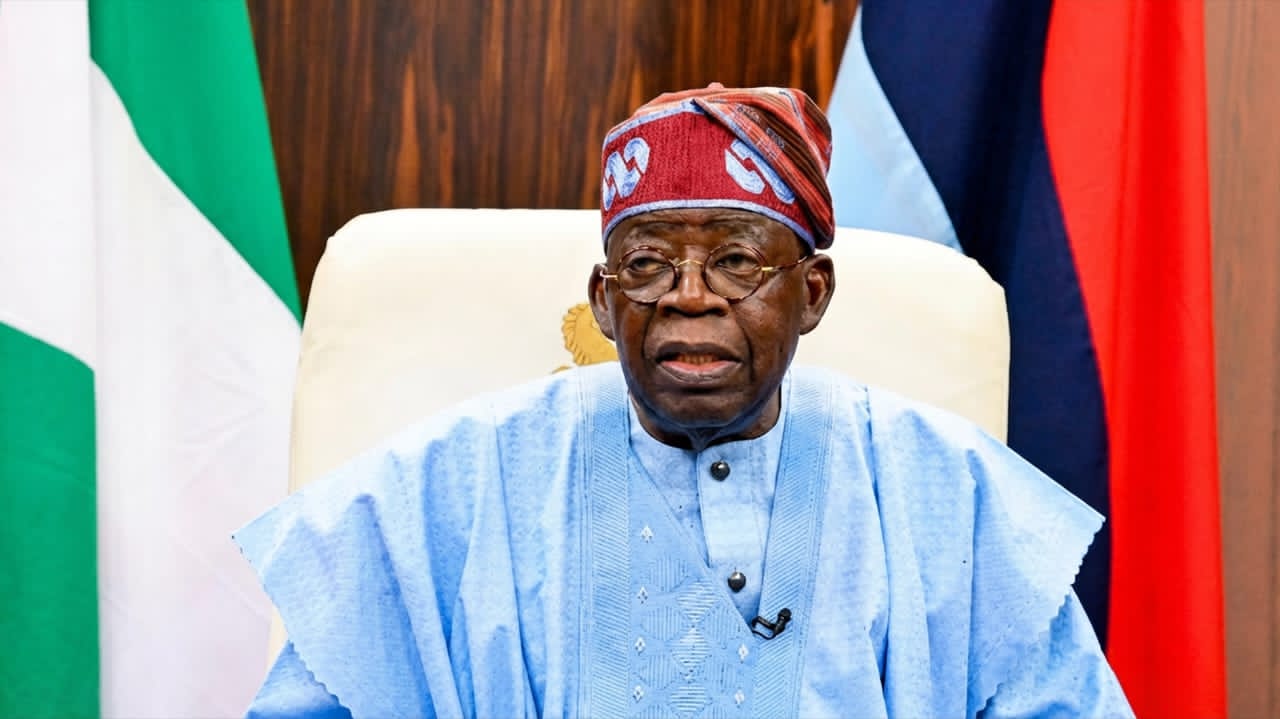
President Bola Tinubu has reaffirmed the Federal Government’s commitment to strengthening collaboration with traditional institutions to promote peace, security, unity and sustainable development across the country.

The position was conveyed by the Minister of Information and National Orientation, Mohammed Idris, during the 8th Executive Committee Meeting of the Northern Traditional Rulers’ Council in Dutse, Jigawa State, according to a statement by the minister’s Special Assistant on Media, Rabiu Ibrahim.

The President acknowledged the role of traditional rulers in governance, peacebuilding and community mobilisation, describing them as critical partners in advancing national development.

“The administration of President Bola Ahmed Tinubu fully recognises the strategic role of traditional institutions and remains committed to deepening engagement with traditional rulers in advancing peace, security, national cohesion, and development,” Idris said.

The minister commended the Northern Traditional Rulers’ Council, led by the Sultan of Sokoto, Alhaji Muhammad Sa’ad Abubakar, for its contributions to peace, security and development across Northern Nigeria.

Speaking on the theme of the meeting, ‘Peace, Unity and Development of the North’, Idris said peace and unity remain essential for progress and prosperity.

“Without peace, development becomes difficult; without unity, progress cannot be sustained. The pursuit of both must remain our collective responsibility,” he stated.

The minister noted that traditional rulers remain important stakeholders because of their close relationship with communities and their ability to mobilise citizens around national objectives.

On security, Idris said the Federal Government had continued to strengthen coordination among the Armed Forces, intelligence agencies and other security institutions, resulting in gains against criminal and terrorist groups in different parts of the country.

“While challenges remain, the administration is sustaining military operations, improving intelligence gathering, and enhancing inter-agency collaboration,” he said.

He added that the government was also addressing issues such as poverty, unemployment, social exclusion and limited economic opportunities, which he said contribute to insecurity.

The minister highlighted ongoing government initiatives in agriculture, livestock development, solid minerals, infrastructure, education financing, consumer credit and support for small businesses.

He described the establishment of the Federal Ministry of Livestock Development as a strategic intervention aimed at modernising livestock production, improving productivity and reducing conflicts linked to competition for natural resources.

Idris also cited the Lagos-Calabar Coastal Highway, Sokoto-Badagry Super Highway, Calabar-Abuja Super Highway and the Akwanga-Jos-Bauchi-Gombe Road Corridor as major infrastructure projects designed to boost economic growth and national integration.

The minister further stressed the role of traditional rulers in promoting public awareness and combating misinformation, noting that development programmes are more effective when citizens understand and participate in them.

“In an age characterised by the rapid spread of misinformation and disinformation, traditional rulers remain among the most trusted leaders in our society,” he said.

He expressed confidence that the meeting would produce recommendations capable of strengthening peace, unity and development across Northern Nigeria and the country.

Idris also extended condolences to the government and people of Katsina State over the death of retired Major General Rabe Abubakar, describing his passing as a loss to the nation.

The meeting was attended by traditional rulers, government officials and other stakeholders from across Northern Nigeria.

Continue Reading
Click to comment

Leave a Reply

Your email address will not be published. Required fields are marked *

News

2027: Northern candidates should wait till 2031 to contest – Kano Gov, Yusuf

info

Published

on

Governor Abba Yusuf of Kano State has urged presidential candidates to wait until 2031 to contest the number one seat of the country.

Yusuf made the call on Sunday at the Government House in Kano, where he also advocated for the continued rotation of Nigeria’s presidency between the North and the South.

According to him, presidential power should rotate between the two regions, with each given the opportunity to produce a president for two consecutive terms.

The governor further stated that allowing each region complete two terms would give an administration enough time to implement major policies and development programmes.

Recommended

“I urge support for President Bola Tinubu to complete his second term because this would allow the South to complete its two-term cycle before power returns to the North.

“We should allow the South to complete its two-term cycle. After that, power will return to the North in 2031,” governor Yusuf said.

He urged political stakeholders, particularly in the North, to exercise patience and allow the current political arrangement to run its course, effectively asking northern presidential aspirants to defer their ambitions until after the 2027–2031 tenure.

Continue Reading

News

Veterinary Organisation Urges Renewed Commitment To Preventing Avoidable Rabies Deaths

info

Published

on

IMG 20260928 WA0054 1024x768.webp

By Felicia Imohimi


The Blueblood Veterinary Services has recommended stronger integrated surveillance linking veterinary and human health systems in the prevention, eradication of rabies and its avoidable human deaths in Nigeria.


The Director, Blueblood Vet Ltd., Dr Bala Muhammed, made the recommendation in an interview with the News Agency of Nigeria (NAN) in Abuja on Monday, in commemoration of the World Rabies Day.


NAN reports that World Rabies Day is commemorated annually on September 28, and the 2026 edition has the theme “Stronger Together”.


Muhammed said that the day should be commemorated with a renewed commitment to preventing every avoidable rabies death rather than a day of remembrance.


He advised that every dog bite should be reported, investigated and used as an opportunity to prevent further transmission.


The director emphasised that sustained mass vaccination of dogs must remain at the centre of rabies control to break rabies transmission at its source and protect the entire communities.


According to him, Nigeria must move from responding to outbreaks to preventing them.


He identified rabies as one of the world’s most tragic public-health paradoxes with almost 100 per cent fatal once clinical symptoms appear.


He said that it was therefore imperative that a post-exposure prophylaxis must be available and accessible.


”Anyone bitten or scratched by a potentially rabid animal should immediately wash the wound thoroughly with soap and running water and seek urgent medical care.


“No Nigerian should die because lifesaving treatment is unavailable, unaffordable or delayed.


“The global zero by 30 goal to end human deaths from dog-mediated rabies by 2030 is ambitious, but achievable with sustained political commitment and community action.


“Responsible dog ownership, vaccination, avoiding contact with unfamiliar animals and promptly reporting bites can save lives.


“Schools, traditional institutions, religious organisations and the media can help make this knowledge widespread,” he said.


Speaking on the year’s theme Muhammed stressed the need for dogs to be vaccinated, while people, particularly children should be protected, bite treated, cases reported, and surveillance strengthened.


“This is because rabies may be fatal after symptoms appear, but rabies deaths are preventable. That is the true meaning of ‘Stronger Together’, he said.


The director, who described the theme as particularly relevant to Nigeria, emphasised that rabies does not respect the boundaries between human health, animal health and communities.


He noted that its prevention required veterinarians, medical doctors or human medics, government agencies, dog owners, community leaders, schools, the media and international partners to work together.


”This is the essence of the ‘One Health’ approach,” he added.


He noted that the recent rabies outbreak in Nigerian demonstrated the urgency.


Speaking on rabies incidence in the country Muhammed said that in the Federal Capital Territory (FCT), authorities have confirmed eight rabies cases and two deaths in the Gwagwalada and Kwali Area Councils in 2026.


“In Bassa Local Government Area of Plateau, 25 rabies cases and 12 deaths were reported in 2025 including three members of a family. These are not mere statistics. Behind every number is a person, a family and a community.


“The World Health Organisation (WHO) estimates that rabies causes about 59,000 deaths globally each year, with dogs responsible for approximately 99 per cent of human rabies infections.


“WHO has also cited an estimated 10,000 annual rabies deaths in Nigeria, while acknowledging that inadequate surveillance means the true burden may be higher.


“On World Rabies Day, let us remember those we have lost, but let remembrance become action,”Muhammed said.


He urged the media to move the conversation beyond reporting deaths.


According to him, when a rabies case occurs, inquire whether the dog is vaccinated, was post-exposure treatment available? How many other bites occurred? Was the animal tested? What is being done to prevent another case?(NAN)(NAN)


FUA/DCO

=====

Continue Reading

Trending