Connect with us

News

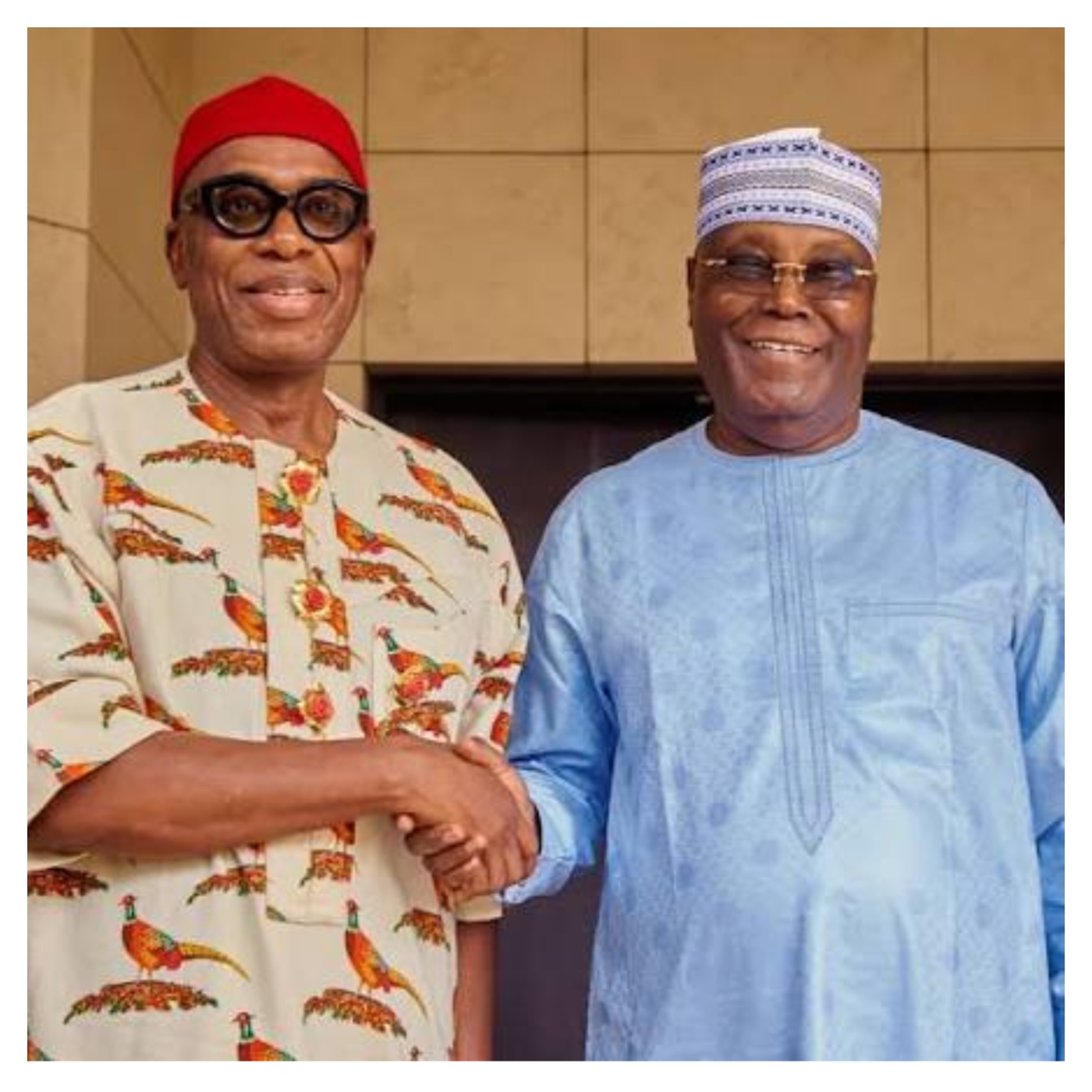
ADC: Why Atiku-Amaechi ticket will defeat Tinubu in 2027 – Bolaji Abdullahi

info

Published

on

AtikuAmaechi.jpg

The National Publicity Secretary of the African Democratic Congress, ADC, Bolaji Abdullahi, has expressed confidence that the party’s presidential ticket of Atiku Abubakar and Rotimi Amaechi will defeat President Bola Tinubu in the 2027 general election.

Speaking on Channels Television’s Politics Today on Monday, Abdullahi described the Atiku-Amaechi ticket as a formidable team capable of providing better leadership and winning the election.

According to him, all the aspirants who contested the ADC presidential primary possessed qualities that would enable them to perform better than the current administration.

“We believe that everybody who was running as an aspirant on the platform of the ADC, whether it’s Atiku or Rotimi Amaechi or Mohammed Hayatu-Deen, will do far better than what President Bola Tinubu is doing,” he said.

Abdullahi added that the emergence of Atiku as the party’s presidential candidate and Amaechi as his running mate has strengthened the party’s chances ahead of the 2027 polls.

He also said the ADC would be on the ballot in the 2027 general election and disclosed that the party would soon formally unveil its presidential ticket to Nigerians.

The ADC spokesman further maintained that the party conducted a credible primary election. Amaechi, who contested the presidential primary, lost to Atiku before being announced as the party’s vice-presidential candidate on Monday.

Political parties have continued to consolidate their positions ahead of the 2027 general election. President Bola Tinubu is the presidential candidate of the All Progressives Congress, APC, while Atiku will contest on the ADC platform. Peter Obi is the presidential candidate of the Nigeria Democratic Congress, NDC.

Tinubu won the 2023 presidential election with over eight million votes, while Obi and Atiku secured more than six million votes each.

Continue Reading
Click to comment

Leave a Reply

Your email address will not be published. Required fields are marked *

News

Glasgow 2026: Mbata, Orakwe Carry Team Nigeria’s Boxing Medal Hopes After Four Early Exits

info

Published

on

By

IMG 20260726 WA0313.jpg

Team Nigeria’s boxing campaign at the ongoing 2026 Commonwealth Games in Glasgow has been reduced to just two remaining medal hopefuls after four Nigerian boxers crashed out of the competition in the opening rounds.

READ ALSO: Glasgow 2026: Ajishola Kadijat Becomes Fourth Nigerian Boxer Eliminated After Split Decision Loss

Following the eliminations of Hassan Foly, Abduramon Abdul-Wahab, David Akintola, and Ajishola Kadijat, the nation’s hopes now rest on Patricia Mbata and Orakwe Blessing, who have both progressed to the quarter-finals in their respective weight categories.

Mbata will be the first Nigerian boxer in action when she faces England’s Mary Kate Smith in the women’s 75kg quarter-final on Tuesday, July 28.

Victory in the bout will move her within touching distance of a Commonwealth Games medal.

Orakwe Blessing will then take to the ring on Wednesday, July 29, against Australia’s Lekeisha Pergoliti in the women’s 70kg quarter-final as she aims to keep Nigeria’s medal aspirations alive.

Nigeria’s boxing campaign has endured a difficult start in Glasgow, with four successive defeats.

Hassan Foly was the first casualty after suffering a 0-4 points defeat to Lesotho’s Refiloe Thai in the men’s 70kg Round of 32.

Abduramon Abdul-Wahab also bowed out following a comprehensive 5-0 points loss to Uganda’s Battl Nuhu in the men’s 65kg Round of 32.

David Akintola’s challenge ended after he lost 4-1 on points to Tanzania’s Yusuf Lucasi Changalawe in the men’s 80kg Round of 32.

Ajishola Kadijat became the fourth Nigerian boxer to exit the Games after a closely contested 3-2 split decision defeat to Wales’ Helen Jones in the women’s 54kg Round of 16.

With four boxers already eliminated, the responsibility of ending Nigeria’s disappointing boxing campaign now falls on Mbata and Orakwe.

Their quarter-final contests represent Team Nigeria’s final opportunity to secure medals in boxing at the Glasgow 2026 Commonwealth Games.

Continue Reading

Business

US 12.5% tariff unlikely to hurt Nigeria – CPPE

info

Published

on

By

Muda Yusuf.jpg

MTN ADVERT

The Centre for the Promotion of Private Enterprise (CPPE) has said the United States’ decision to impose a 12.5 per cent tariff on imports from Nigeria is unlikely to have a significant impact on Nigeria’s economy.

The think tank disclosed this in a statement by its Chief Executive Officer, Muda Yusuf, on Sunday, citing the dominance of tariff-exempt petroleum exports and the relatively small share of Nigerian exports destined for the US.

On Friday, the United States announced a plan to impose a 12.5 per cent tariff on imports from Nigeria.

The US government said the decision is part of a new trade measure targeting countries that have failed to prohibit the importation of goods produced with forced labour.

CPPE said the tariff is part of a broader policy shift by the United States aimed at protecting domestic industries and strengthening manufacturing competitiveness.

PT WHATSAPP CHANNEL

According to the think tank, the new tariff regime is a continuation of the reciprocal tariff policy introduced under US President Donald Trump, though it is now implemented under a different legal framework.

“CPPE’s assessment is that the new tariff regime represents a continuation of the Trump administration’s reciprocal tariff policy, albeit under a different legal framework.

“Following the judicial invalidation of the earlier reciprocal tariffs, the current measures appear to have been restructured under Section 301 of the U.S. Trade Act, with allegations relating to forced labour providing the statutory basis for their implementation,” CPPE said.

It added that although the legal basis has changed, the policy objective remains to essentially protect US domestic industries, strengthen American manufacturing competitiveness and advance broader US trade and economic interests.

Impact on Nigeria

The body said the direct economic implications for Nigeria would be limited because most of the country’s exports to the United States are petroleum products, which are exempt from the tariffs.

“Nigeria’s exports to the United States are heavily concentrated in crude oil, liquefied natural gas and other petroleum products, which account for more than 80 per cent of Nigeria’s merchandise exports to the US.

“These products have been exempted from the tariff measures, leaving the bulk of Nigeria’s exports unaffected,” the agency said.

CPPE also stated that the United States is not Nigeria’s largest export destination, noting that Nigeria’s first-quarter 2026 merchandise trade data showed that exports to the US accounted for only 5.56 per cent of total exports valued at about N21.6 trillion.

By comparison, India accounted for 13.09 per cent of Nigeria’s exports during the period, followed by France with 9.29 per cent, the Netherlands with 9.22 per cent and Spain with 7.68 per cent, placing the United States as the country’s fifth-largest export market.

ALSO READ: US tariff hike could hurt Nigeria’s export earnings, industrial growth – MAN

According to CPPE, these trade patterns reduce Nigeria’s exposure to the new tariff measures, noting that they will only have modest impacts on Nigeria’s export earnings, foreign exchange receipts and macroeconomic performance.

“While some non-oil exporters, particularly in agriculture and manufacturing, may experience reduced competitiveness in the U.S. market, the overall impact on Nigeria’s export earnings, foreign exchange receipts and macroeconomic performance is expected to be modest,” the body said.

The group added that the development reflects a broader shift in global trade towards protectionism and greater use of trade policy to advance domestic economic objectives.

Solution

CPPE urged Nigeria to accelerate export diversification, improve manufacturing competitiveness, deepen domestic value addition and maximise opportunities under the African Continental Free Trade Area.

It also called on the government to strengthen labour standards, improve supply chain transparency and engage the United States through diplomatic and trade channels to minimise the impact of the measures on affected exporters.

CPPE said the greater challenge for Nigeria lies in navigating an increasingly fragmented and protectionist global trading environment, rather than immediate export challenges.

“Overall, while the new US tariffs have generated understandable concern, their direct economic implications for Nigeria should not be overstated.

“The greater challenge lies not in the immediate loss of export opportunities, but in navigating an increasingly fragmented and protectionist global trading environment,” the think tank said.


Continue Reading

Trending