News
World Bank sets May 13 deadline for Nigeria’s $2bn Project BRIDGE bids – Technology Times

Nigeria’s $2 billion Project BRIDGE has entered a critical procurement phase as the World Bank has announces a May 13, 2026 deadline for the submission of bids from private sector investors seeking to participate in the nationwide fibre infrastructure initiative.
The deadline seen by Technology Times is contained in an official Invitation for Prequalification published under Project ID P508383, titled Building Resilient Digital Infrastructure for Growth – BRIDGE, and issued through the Federal Ministry of Communications, Innovation and Digital Economy.
According to the notice, the submission deadline is set for “May 13, 2026 17:00,” marking the close of the first stage in the selection of private sector investors expected to participate in the financing and delivery of the large-scale broadband project.


“The project is structured as a partnership between Federal Government of Nigeria (the ‘Government’) and the private sector… where the Government is playing a catalytic role in ensuring meaningful broadband connectivity can be accessed by all persons in the country,” according to the World Bank notice.
Project BRIDGE as a national digital infrastructure programme for Nigeria
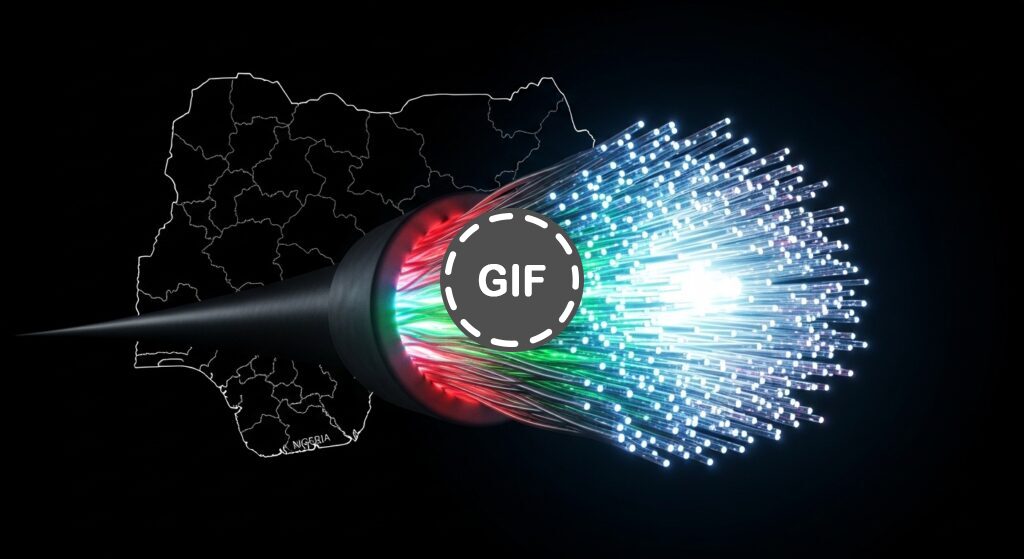
The document describes Project BRIDGE as “an initiative by the Federal Ministry of Communications, Innovation and Digital Economy (“FMCIDE”) aimed at facilitating the deployment of 90,000 km of fibre optic infrastructure across Nigeria – covering all of Nigeria’s 36 states and the FCT and connecting >770 local governments across the country.”
The project is a national digital infrastructure programme designed to extend broadband connectivity across the country, with the Federal Government working alongside private investors under a structured partnership model.
“The project is structured as a partnership between Federal Government of Nigeria (the ‘Government’) and the private sector… where the Government is playing a catalytic role in ensuring meaningful broadband connectivity can be accessed by all persons in the country,” according to the World Bank notice.
The Bank further explains that the initiative goes beyond connectivity, noting that it “represents a foundation for digital transformation and economic growth and is expected to deliver significant growth across multiple sectors of the economy.”
At the core of the implementation structure is a Special Purpose Vehicle (SPV), which will serve as the project delivery entity.
“Project BRIDGE will be delivered through a Nigerian Special Purpose Vehicle (‘SPV’) incorporated as a limited liability company – to ensure independence and participation of a broader group of Private Sector investors,” the World Bank states.
The SPV will be jointly owned by the Federal Government and private investors, with majority ownership reserved for the latter.
“The proposed Project BRIDGE SPV will be structured as a joint venture between the Government and the Private Sector,” the document states. “Under this arrangement, the Government will hold between 25% and 49% shareholding in the Project BRIDGE SPV, while the Private Sector investors will hold the balance of not less than 51%.”
To support the structuring of the transaction and the selection of investors, the Quest Merchant Bank was appointed as transaction adviser for the project.
“Quest Merchant Bank (‘Quest MB’) has been mandated to act as Transaction Adviser to assist in structuring the Project BRIDGE SPV and identifying qualified Private Sector investors (‘Eligible Investors’),” the notice states.
Acting on behalf of the ministry and the Project Implementation Unit (PIU), the adviser has invited interested investors to participate in the prequalification process.
“Quest MB on behalf of the FMCIDE and the Project Implementation Unit (‘PIU’) of Project BRIDGE is hereby pleased to invite Eligible Investors to submit a detailed response to this Invitation in order to be considered for the role of Private Sector investor in the Project BRIDGE SPV,” the document notes.
The notice specifies that responses must be submitted in the form of a formal letter, accompanied by supporting documentation.


“The Government has secured USD 800,000,000 (Eight Hundred Million US Dollars) in financing, comprising USD 500,000,000 from the World Bank (WB), USD 200,000,000 from the African Development Bank (AfDB), and USD 100,000,000 from the European Bank for Reconstruction and Development (EBRD),” the document states.
“The response submitted should be via a Letter (‘Response Letter’) together with relevant supporting documentation as required by this invitation,” it states.
The financial framework of the project is also outlined in detail, with total project cost estimated at $2 billion.
It adds that a portion of the funding has already been secured through multilateral financing arrangements.
“The Government has secured USD 800,000,000 (Eight Hundred Million US Dollars) in financing, comprising USD 500,000,000 from the World Bank (WB), USD 200,000,000 from the African Development Bank (AfDB), and USD 100,000,000 from the European Bank for Reconstruction and Development (EBRD),” the document states.
These funds are intended to support the government’s equity participation in the SPV.
“The Government intends to apply part of these proceeds toward its equity contribution in the Project BRIDGE SPV,” it adds.
Private sector investors are expected to provide the remaining financing required for the project.
“Private Sector investors,” it adds, “will be expected to provide the remaining financing for the project, which may comprise equity investment and/or a combination of equity and debt, subject to final transaction structuring.”
The selection of investors will follow the World Bank’s procurement framework for public-private partnerships.
“The selection of Private Sector investors in Project BRIDGE will be in accordance with the Public Private Partnership Selection (PPP) process as outlined in World Bank’s Procurement Regulations for IPF Borrowers, Sixth Edition, February 2025 (‘Procurement Regulations’) and is open to all Eligible Investors,” the document states.
To be considered, interested parties must provide detailed information across several areas, including corporate profile, legal status, strategic rationale, track record and financial capacity.
“Interested Eligible Investors must provide a written Response Letter… with comprehensive details covering the following critical areas,” the notice states.
Under the corporate profile requirement, investors are asked to provide detailed information about their organisation or consortium.
“Provide a detailed corporate profile and, if submitting as a consortium, all members of the proposed consortium,” the document states, adding that “interested Eligible Investors are required to clearly indicate the lead entity in the consortium and the specific role(s) each member of the consortium will play.”
On legal status, the notice requires evidence of incorporation and eligibility under World Bank rules.
“Documentary evidence should be the Certificate of Incorporation of the Company or its equivalent and other constitutional documents of the Eligible Investor,” it states, adding that entities “must be from an eligible country as per World Bank’s Eligibility requirement.”
The strategic rationale section calls for investors to outline their interest in the project and relevant experience.
“Provide the reasons for the Eligible Investors’ interest in Project BRIDGE and the strategic value expected to be contributed,” the notice states, noting that submissions should indicate prior experience in telecommunications or digital infrastructure.
The track record requirement focuses on recent project experience.
“Eligible Investors,” the document states, “should provide a list of telecommunications, digital infrastructure or other similar type infrastructure deployed, owned, managed, operated or invested in, in the last 5 (five) years as may be applicable.”


“Eligible Investors,” the document states, “should provide a list of telecommunications, digital infrastructure or other similar type infrastructure deployed, owned, managed, operated or invested in, in the last 5 (five) years as may be applicable.”
Financial capacity is also a key criterion, with investors required to demonstrate their ability to commit capital.
“Indicate the amount that the Eligible Investor… is willing to invest in the equity of the Project BRIDGE SPV,” the notice states, adding that this must be supported with “the latest audited financial statements, financing letters of support/credit facilities etc.”
The notice specifies a minimum investment threshold.
“Demonstrated financial capacity to invest a minimum of USD 10,000,000 (Ten Million US Dollars) in equity,” it states.
Investors are also required to provide a timeline for funding mobilisation.
“Interested participants will also be required to submit a detailed timeline and roadmap for funding mobilization… outlining the key milestones and duration required to achieve Financial Close,” the document notes.
The timeline for closing the transaction has been defined.
“It should be noted that the intention is for the Private Sector funding to be fully secured and Financial Close achieved by Q3 2026,” the notice states, clarifying that “Financial Close shall mean the point at which funding commitments are drawn down by the Project BRIDGE SPV.”
Additional compliance requirements are outlined as part of the submission process, including disclosures on litigation, conflicts of interest and adherence to anti-corruption standards.
“A confirmation… that it is not involved in and has disclosed any material litigation… that may reasonably impact or impair its ability to participate,” the notice states.
On compliance, it adds that investors must confirm adherence to global anti-corruption guidelines.
“A confirmation… that it is compliant with the World Bank’s Guidelines on Preventing and Combating Fraud and Corruption,” the document states.
The notice also requires declarations relating to sexual exploitation and harassment compliance, as well as confirmation of the accuracy of submitted information.
“A confirmation… that all information, statements and description contained in the submission are in all respects true, correct and complete,” it states.
The evaluation process will be based on defined criteria, including experience, financial capacity and ability to mobilise funding within the required timeframe.
“Investors… will be evaluated based on… demonstrated experience… demonstrated financial capacity… and ability to provide firm commitments by Q3 2026,” the notice states.
Following the evaluation, successful applicants will be notified.
“Quest MB… shall notify all prequalified Investors in writing that they have been prequalified,” the document states, adding that unsuccessful applicants will also be informed.
Submission instructions are provided, including delivery channels and documentation requirements.
“Eligible Investors are required to submit their response… not later than 5.00 PM (WAT), Wednesday, 13th May 2026 electronically… and/or in hard copy,” the notice states.
The document also provides contact details for enquiries and clarifications, as well as a complaints mechanism through the Project Implementation Unit.
In its legal section, the notice clarifies the nature of the invitation.
“This invitation does not constitute an invitation to tender or an offer to sell or a solicitation of an offer to subscribe for or purchase any securities,” it states.
It further notes that participation in the process is at the cost and risk of the applicant.
“Neither FMCIDE, the PIU, Quest MB nor any of their respective affiliates… accept any liability… for the cost of any submission,” the document states.
The notice concludes with disclaimers on representations and warranties.
“No representation or warranty (whether express or implied) is made by this invitation,” it states, adding that all liability is expressly disclaimed.
With the May 13 deadline approaching, the prequalification process marks the next phase in the rollout of Project BRIDGE, as the Federal Government moves to identify private sector partners for the nationwide fibre deployment initiative.
Stay ahead with real-time reports, breaking news, and exclusive insights delivered directly to your phone. Don’t settle for outdated information. Join TECHNOLOGYTIMES NEWS on WhatsApp for 24/7 updates.
Join Our Whatsapp Channel

The Department of State Services has warned religious leaders in Osun State about an alleged plan by terrorists to attack churches, mosques, markets and other places where large numbers of people gather.
Politics Nigeria gathered that the warning was issued during separate meetings between DSS officials and leaders of the Muslim and Christian communities in Osogbo.
The security agency reportedly told the religious leaders that intelligence had uncovered plans to move terrorist activities into the southern part of the country, with the South-West identified as a possible target.
The alleged plot is believed to be connected to efforts to create fear and insecurity ahead of the 2027 general elections.
The DSS reportedly advised religious organisations and other owners of public gathering centres to strengthen their security arrangements and remain vigilant.
President of the Osun State Muslim Community, Alhaji Mustapha Olawuyi, confirmed that the meeting with the DSS took place in Osogbo.
Olawuyi said the warning was serious and urged Muslims across the state to take the security advice seriously.
He said, “The meeting is true; it was held on Wednesday in Osogbo. We need to be careful and vigilant. These people (terrorists) have been trying to infiltrate Osun for quite some time.
“We had, some time ago, sent back some herders, numbering about 200, who flooded Osun from the Ikirun axis. There were also some individuals who came into the state on motorcycles. They didn’t understand our language and we had to send them back. The DSS is doing a very good job in terms of intelligence and alerting the people.”
Olawuyi also disclosed that the DSS had given specific instructions to mosque leaders on steps they should take to reduce the risk of attacks.
He later circulated an audio message to imams across the state, explaining some of the information presented during the meeting.
According to him, the security agency said terrorists could attempt to exploit crowded religious gatherings to cause casualties and create widespread panic.
He said, “The DSS came from Abuja to Osun to warn us about a plot by some politicians and terrorists to frustrate the 2027 election, and for every one of us to be careful.
“The officers said they had intelligence that the terrorists would mobilise to the southern part of the country and the South-West, especially to cause mayhem so that the election may not hold or cause apathy.
“They advised that all religious centres should be watchful. They told us not to allow anybody with a car to park close to the people or congregation during Jumat prayer or gathering. They warned us against allowing anybody to sleep in the mosque. They also told us to be careful of compromised commercial motorcycles and herders. They told us to have night guards at every mosque.”
The Christian community in the state also received a similar warning.
The Osun State Chairman of the Christian Association of Nigeria, Pastor John Adeleke, confirmed that the DSS met with Christian leaders and asked them to increase security awareness in churches and other places where people gather.
Adeleke said the security agency specifically urged churches to be cautious about unfamiliar vehicles and unknown visitors.
He said the warning was subsequently circulated among CAN blocs and other Christian groups in the state.
A report of the meeting also indicated that the DSS told Christian leaders that terrorists had allegedly mapped out Osun State as part of a wider plan to attack states in the country before the 2027 presidential election.
The report stated that the suspected attackers were allegedly planning a route through Kaduna and Jos before moving towards Osun State.
It identified churches, mosques, markets, schools, clubs and viewing centres among the places that could be targeted.
The report, titled, ‘The Report of the Meeting Held with the Department of State Security Osun State Command Today, Wednesday, 9th September, 2026’, was signed by the State Assistant Secretary, Osun CAN, Ajayi J.K.

The report read in part, “The DSS Osun State Command called for a meeting with the OSCAN Chairman, Rev. Dr John Adeleke, on the alertness of security in Osun State.
“They made it known, based on their intelligence and security expertise, that the attackers or the terrorists have mapped Osun State, and that between now and the period of the coming presidential election, they will attack some states. They planned to go through Kaduna, Jos and come down to Osun State.
“Their targets are places of gathering, such as churches, mosques, markets, schools, clubs or viewing centres, etc., and we are asked to put tight security in place in our churches.”
Adeleke said church leaders were also advised to discourage activities that could expose worshippers to unnecessary risks, particularly at night.
He said visitors should be properly identified before being allowed into church premises, while school owners and managers of other public facilities were also expected to review their security arrangements.
He said, “After sharing with us that the churches will need to be careful and that we should encourage our churches also to be on alert, we sent the message to all our blocs and different platforms, where our people may be informed.
“For example, they told us we should not allow a strange vehicle to park near churches because there may be explosives inside the car. They also told our leaders throughout the state that they should be careful, and any visitor that comes around should be questioned before we allow him or her into the premises of the church.
“They also said we should be careful of night programmes, so that the people will not take advantage of the darkness to perpetrate their evil plans. The message is that our people should be security-conscious. If they see anything, they should say it. They also told us to inform school owners to be security-conscious. The government is aware too. God is our divine protector, but in areas where we need to be careful, we want to be,” Adeleke added.
Osun has also witnessed heightened political and security concerns in recent weeks following the August 15 governorship election in the state.
The election was conducted amid calls for security agencies to protect voters, electoral officials and collation centres.
The latest DSS warning has therefore placed churches, mosques and other public gathering centres on heightened alert.
Religious leaders are now expected to pass the security information down to worshippers and members of their communities.
The advice includes reporting suspicious persons and activities, avoiding unidentified vehicles around crowded locations and ensuring that security arrangements are in place during major programmes.
Nonetheless, The DSS has not publicly released detailed information on the alleged terrorist intelligence or identified the specific groups suspected of planning the attacks.

-

 Featured3 days ago
Children Are Suffering in Silence: Plateau Child Protection Network Rates Abuse Crisis 9/10
-
News4 days ago
Ogun, Kano, Delta top Nigeria’s highest Right of Way charges for fibre – Technology Times
-
Business4 days ago
CBN to prioritise terrorism financing supervision
-
News4 days ago
Ambassador Obi Lifts Falconets’ Spirits After Spain Defeat, Brings Taste of Home to Poland