
News
Nigeria poised to become one of Africa’s largest 5G markets, GSMA projects

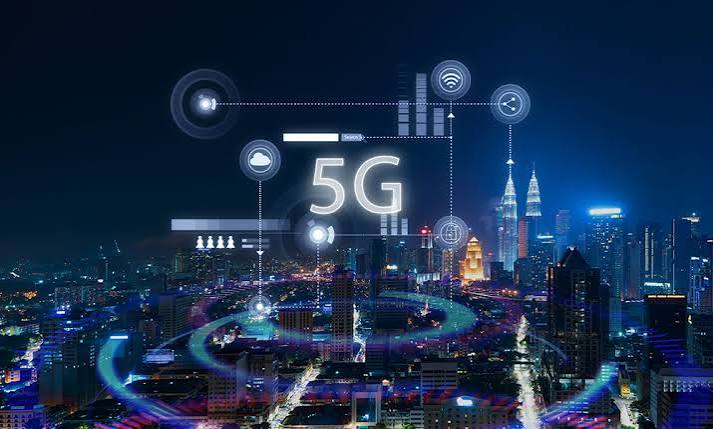
Nigeria is expected to emerge as one of Africa’s leading 5G markets over the next decade, driven by rising investments in next-generation mobile networks, increasing smartphone adoption and growing demand for high-speed connectivity, according to new projections from the GSM Association (GSMA).
While 4G is expected to remain the dominant mobile technology across much of Sub-Saharan Africa in the near term, the GSMA says 5G adoption is steadily gaining momentum, with Nigeria positioned to play a central role in the region’s transition.
In its Mobile Economy Sub-Saharan Africa report, the GSMA projects that Nigeria and South Africa will account for almost half of the region’s estimated 226 million 5G connections by 2030. The report places total 5G connections in Sub-Saharan Africa at 226 million by the end of the decade, representing an adoption rate of about 17%.
The GSMA has previously identified Nigeria as one of the key markets driving Africa’s transition to advanced mobile technologies, reflecting growing readiness for large-scale 5G deployment.
The broader Mobile Economy 2026 report underscores the growing importance of advanced connectivity technologies to economic transformation across emerging markets.
“AI and 5G are expected to remain the primary investment priorities for enterprises through to 2030, reflecting their role as critical enablers of cross-sector digitalisation,” the GSMA said.
Across the continent, 5G adoption is projected to accelerate significantly over the coming years. The GSMA’s Mobile Economy Africa 2025 report estimates that mobile technologies, including 4G, 5G and AI, could contribute up to $270 billion to Africa’s economy by 2030.
Nigeria among early adopters of 5G in Africa
Nigeria was among the first major markets in Sub-Saharan Africa to launch commercial 5G services following spectrum auctions conducted by the Nigerian Communications Commission (NCC) in 2021.
Telecommunications operators including MTN Nigeria and Mafab Communications launched commercial 5G networks in 2022, with Airtel Nigeria subsequently rolling out its own 5G services, marking a competitive push into next-generation connectivity in the country.
The GSMA has previously identified Nigeria as one of the key markets driving Africa’s transition to advanced mobile technologies, reflecting growing readiness for large-scale 5G deployment.
The expansion of 5G is expected to extend beyond faster mobile broadband, enabling a wider range of use cases including fixed wireless access (FWA) for homes and businesses, industrial automation, cloud computing, Internet of Things (IoT) deployments and AI-powered services.


As demand rises for faster mobile broadband, cloud computing, artificial intelligence applications and enterprise connectivity, Nigeria’s large population, expanding digital economy and growing mobile broadband usage are positioning it as one of the continent’s most important 5G markets.
According to GSMA Intelligence, FWA is emerging as one of the most promising early applications of 5G in Sub-Saharan Africa, offering operators a pathway to expand broadband access in underserved areas while unlocking new revenue streams.
However, the pace of adoption will depend on the ability to overcome structural constraints, particularly around device affordability and access.
Smartphone affordability remains key 5G barrier
The GSMA notes that Africa continues to record the lowest smartphone ownership levels globally, with just 24% penetration recorded in 2024. Affordability remains the primary barrier limiting adoption, a challenge that directly affects access to 5G services, which require compatible devices.
To address this gap, GSMA and major operators including MTN, Airtel, Orange and Vodacom have launched initiatives aimed at expanding access to more affordable 4G and 5G-enabled devices across African markets.
The organisation argues that reducing handset costs will be critical to increasing mobile internet usage and accelerating the transition to next-generation networks.
As demand rises for faster mobile broadband, cloud computing, artificial intelligence applications and enterprise connectivity, Nigeria’s large population, expanding digital economy and growing mobile broadband usage are positioning it as one of the continent’s most important 5G markets.
The projections suggest that Nigeria’s role in Africa’s digital future will depend not only on continued network expansion, but also on ensuring that consumers and businesses have access to affordable devices and enabling services required to fully leverage 5G connectivity.





The Bank of Industry (BOI) said it will expand financing for agriculture, local healthcare manufacturing and digital businesses in 2027.
The bank stated this as it seeks to consolidate the gains of its 2025–2027 corporate strategy and strengthen Nigeria’s industrial development.
The bank’s Managing Director and Chief Executive Officer, Olasupo Olusi, disclosed the plan on Thursday at a meeting in Lagos, where he outlined the bank’s priorities for the final year of the strategy.
Mr Olusi said BOI would work with the Federal Ministry of Industry, Trade and Investment on the National Industrial Finance Compact to attract more long-term capital into Nigeria’s industrial sector.
He also said the bank would deploy its new European Investment Bank facilities to agriculture and local healthcare manufacturing to increase domestic production of food and medicines.
The funding includes €85 million secured from the European Investment Bank for agriculture and another €50 million for healthcare manufacturing in 2026, as part of more than €2.2 billion in new funding the bank has secured for Nigerian industry since 2024.


READ ALSO: BOI supports 1.68m jobs as lending rises 26% to ₦644.9 billion
“We will deploy our new European Investment Bank facilities into agriculture and local healthcare manufacturing, so that Nigeria produces more of the food and medicines it consumes,” he said.
The bank also plans to expand its information and communications technology (ICT) and digital economy portfolio through the Investment in Digital and Creative Enterprises (iDICE) programme.
Mr Olusi said the initiatives formed part of the bank’s efforts to consolidate its achievements and meet the targets of its 2025–2027 corporate strategy.
“2027 is the final year of our strategy, and our task is to consolidate and meet every target we set,” the BOI boss, Mr Olusi, said.
BOI said it disbursed N644.9 billion in 2025, reaching 12,501 businesses and supporting 1.68 million jobs.
Discover more from Premium Times Nigeria
Subscribe to get the latest posts sent to your email.

-

 News4 days ago
Mamdani says feds have abdicated on AI, urges New Yorkers to push back
-
News10 hours ago
Obi, Kwankwaso to hold Middle Belt Youth, Village Hall Meeting in Jos
-
News3 days ago
Meta’s Muse hits 10M U.S. downloads in 40 days, a milestone reached by only 11 other apps
-
Business3 days ago
How Your Side Hustle Income Ends Up in Your RSA


