Connect with us

News

Sundar Pichai faces boos, walkout at Stanford graduation ceremony over Google’s Israel, ICE ties

info

Published

on

Sundar io2026 intro close.png

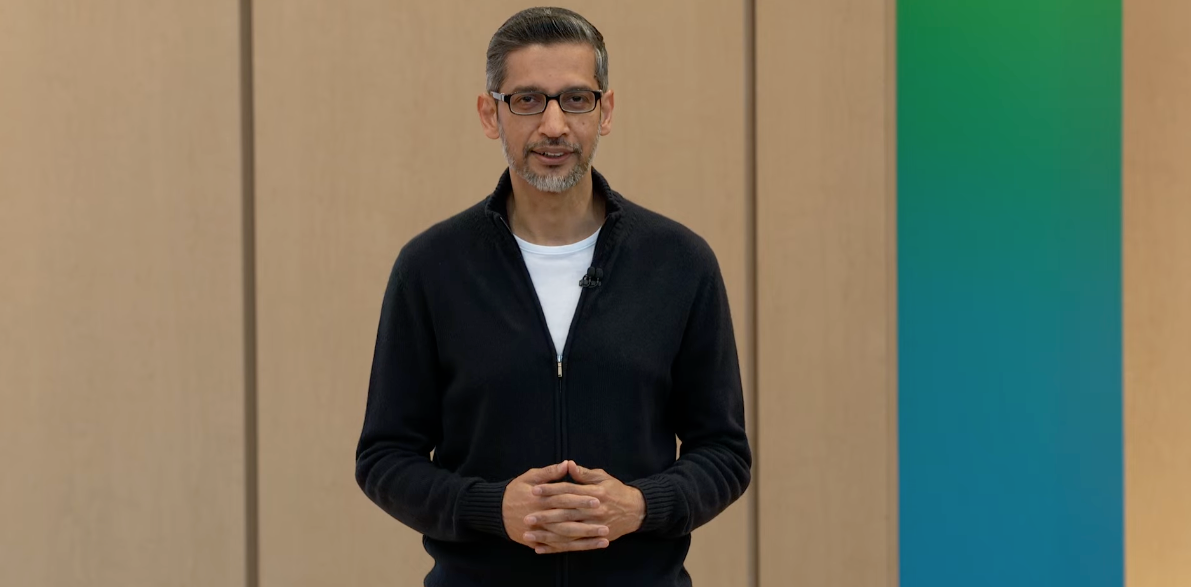
Over the weekend, Google CEO Sundar Pichai faced a small revolt when he delivered his commencement speech at Stanford University, where he earned his graduate degree in materials science and engineering. About 200 students from the graduating class reportedly walked out, while others loudly booed the tech executive.

The focus of the protest was Google’s defense ties — including Project Nimbus, the controversial $1.2 billion contract, shared with Amazon, to provide cloud and AI services to the Israeli military, as well as its relationship with the U.S. Immigration and Customs Enforcement agency.

Student signs included phrases like “ICE SPIES WITH GOOGLE AI” and “GENOCIDE RUNS ON GOOGLE,” as well as “FREE FREE PALESTINE,” a press release associated with the protest notes. Students also waved Palestinian flags and shouted “free Palestine,” online video of the protest shows.

“We are walking out because we refuse to glorify the corporations that fuel this violence and exercise our power to choose differently,” a statement associated with the protest reads.

The walkout was organized by a number of campus activist groups, including Stanford Students for Justice in Palestine, No Tech for Apartheid, and Tech for Liberation. TechCrunch reached out to Google for comment.

As the war in Gaza has raged, Google’s participation in Nimbus has drawn protests from both inside and outside of the company. In 2024, Google fired 28 workers for protesting the contract, although it has continued to suffer internal dissent over the issue since then. It was also recently criticized by the Electronic Frontier Foundation, which accused it and other companies of “choosing to look the other way” on Israel’s use of their services.

Project Nimbus also enjoys support from Amazon. Microsoft has also been criticized for its support of the Israeli military, although the company restricted the Israeli government’s use of its technology after an investigation found that its cloud services were being used to mass-surveil Palestinians.

The student protest also drew criticism from business leaders online. Vinod Khosla, the billionaire co-founder of Sun Microsystems and one of Silicon Valley’s most prominent venture capitalists, posted on X that the protest was “biased, idiotic, short-sighted and very selfish,” adding that it was selfish because the students “ignored the bottom 3 billion people on this planet that could benefit from AI and they are worried about their misinformed selfish self-interest.”

Pichai’s appearance at Stanford is part of a broader pattern. Speakers at college graduation ceremonies around the country have faced boos when they have attempted to get outgoing college students excited about AI. But rarely has student animus been as targeted as it was with Pichai, directed not at AI hype, but at the specific business decisions made by the company he leads. In general, young people seem to believe that AI is threatening their employment opportunities and may be ruining other parts of society as well.

When you purchase through links in our articles, we may earn a small commission. This doesn’t affect our editorial independence.

Continue Reading
Click to comment

Leave a Reply

Your email address will not be published. Required fields are marked *

Health

PT Health Watch: Common cancer risk factors that should not be ignored

info

Published

on

By

New chip replicates how cancer spreads through the body 1787178746 e1788618550556.jpg

MTN ADVERT

Cancer is one of the leading causes of death worldwide, but health experts say many cancer cases are linked to preventable risk factors.

The World Health Organisation (WHO) estimates that cancer caused nearly 10 million deaths globally in 2024, accounting for almost one in six deaths worldwide. It says about 38 per cent of cancers can currently be prevented by avoiding known risk factors and implementing evidence-based prevention strategies.

Cancer continues to affect thousands of families in Nigeria every year. According to WHO, an estimated 130,000 new cancer cases were diagnosed in 2022, with 80,000 deaths.

While cancer can result from several factors, including genetic changes, age and environmental exposures, some established risks are linked to infections, substances and behaviours that can be prevented.

In a recent health awareness video, Nigerian physician and health communicator, Chinonso Egemba, popularly known as Aproko Doctor, highlighted some of these risks, including hepatitis B, aflatoxin, tobacco, alcohol and human papillomavirus (HPV).

PT WHATSAPP CHANNEL

Hepatitis B

According to Aproko Doctor, hepatitis B is particularly dangerous because it can remain in the body without obvious symptoms while damaging the liver.

“When it goes untreated and untested, it’s a virus that starts attacking your liver. Many Nigerians currently are living with it right now, and many of them don’t know because it can sit quietly inside your body for years without a single symptom,” he said.

His warning is supported by WHO, which says chronic hepatitis B infection can cause cirrhosis and liver cancer.

WHO estimates that 240 million people were living with chronic hepatitis B globally in 2024, with the infection contributing to about 1.1 million deaths, mainly from cirrhosis and hepatocellular carcinoma, the most common type of primary liver cancer.

Hepatitis B is preventable through vaccination. WHO recommends hepatitis B vaccination as an important measure for preventing infection and its long-term complications.

Aflatoxin in food

Aproko Doctor warned that the cancer risk can begin with improperly stored food.

“Aflatoxin is basically a poison produced by fungus,” he explained, noting that it can contaminate foods such as grains and groundnuts when they are poorly stored.

According to WHO, Aflatoxins are a group of poisonous mycotoxins produced by certain moulds (Aspergillus species) that contaminate food crops and pose severe health risks like liver cancer. They are toxins produced by certain moulds and can contaminate crops including maize, sorghum, rice and groundnuts. Exposure to aflatoxins can cause liver cancer.

WHO advises discarding food that appears mouldy, discoloured, or shrivelled because mycotoxins can penetrate beyond the visibly affected part.

Aflatoxin exposure can also be particularly dangerous in people infected with hepatitis B. The WHO/FAO Joint Expert Committee on Food Additives says hepatitis B infection is an important contributor to the ability of aflatoxins to cause liver cancer.

This means food storage and handling can also form part of cancer prevention, particularly in communities where grains and other foods are stored for long periods in warm or damp conditions.

Tobacco smoking

Tobacco remains one of the most established cancer risks.

“Smoking generally, as long as you light it with fire and put it on your body, increases the risk of cancer, especially tobacco smoke,” Aproko Doctor said.

He added that the danger was not limited to lung cancer because tobacco smoke contains cancer-causing chemicals that can damage cells throughout the body.

WHO says tobacco smoke contains more than 7,000 chemicals, at least 69 of which are known to cause cancer. Tobacco use is the world’s single greatest avoidable risk factor for cancer mortality.

Smoking can cause cancers of the lung, mouth and throat, oesophagus, bladder, kidney, liver, pancreas, stomach, colon and rectum, cervix and blood, among others.

Alcohol

Alcohol is another established cancer risk. WHO confirms that alcohol consumption increases the risk of several cancers, including cancers of the mouth, throat, oesophagus, liver, colorectum and breast.

WHO also says no level of alcohol consumption can be considered risk-free in relation to cancer.

“The more alcohol you drink, the higher the risk. However, how much and how fast the risk from drinking alcohol increases differs by cancer type,” it noted.

The global body explained that alcohol increases the likelihood of developing certain cancers, with the risk influenced by the amount consumed and other factors.

Human papillomavirus

According to Aproko Doctor, the virus is common, and some types can cause cancer, particularly cervical cancer.

“In women, this particular HPV is responsible for cervical cancer,” he noted.

According to the WHO, persistent infection with high-risk HPV types causes nearly 99 per cent of all cervical cancer cases. HPV is also associated with cancers of the vulva, vagina, anus, penis and mouth and throat.

Although HPV infection is very common, not everyone infected with the virus will develop cancer. WHO says about 90 per cent of HPV infections are controlled naturally by the body, while persistent infection with high-risk types can lead to cancer.

WHO recommends a complete three-step strategy to stop cervical cancer through vaccination, screening, and treatment.

READ ALSO: WHO restricts Ervebo use in Bundibugyo outbreak

Preventing Cancer

A 2026 global analysis by WHO and its International Agency for Research on Cancer (IARC) estimated that 37 per cent of all new cancer cases diagnosed globally in 2022, about 7.1 million cases, were linked to preventable causes.

Tobacco was the leading preventable cause, accounting for 15 per cent of all new cancer cases, followed by cancer-causing infections at 10 per cent and alcohol at three per cent.

WHO recommends avoiding tobacco, reducing or avoiding alcohol, maintaining a healthy weight, eating a healthy diet, engaging in regular physical activity and receiving recommended vaccinations against cancer-causing infections such as hepatitis B and HPV.

As Aproko Doctor noted, understanding the risks is an important first step.“Don’t let anybody deceive you. Say no to smoking in any form,” he said.


Discover more from Premium Times Nigeria

Subscribe to get the latest posts sent to your email.

Continue Reading

News

2027: Amaechi will ask supporters to boycott poll before 11 am on election day – Wike

info

Published

on

By

Nyesom Wike.jpg

The Minister of the Federal Capital Territory (FCT), Nyesom Wike, on Saturday said the African Democratic Congress (ADC) presidential running mate, Rotimi Amaechi, would ask his supporters to boycott the presidential election before 11am on election day.

Wike explained that Amaechi would call for the election to be boycotted because he could not defeat the Rainbow Coalition in Rivers State.

The minister spoke during a grand reception held in his honour in Ikwerre Local Government Area of the state.

According to Wike: “On election day, before 11am, Amaechi will tell his people to boycott the election because he knows there’s no way he’ll defeat us.

Recommended

“If he wins his village, Ubima, then he has won the election. That’s if he will win his own polling unit.

“No more battalions of soldiers to be with him, no more battalions of police to be with him, it’s now that we the battalion of people will come out.”

Wike also accused Amaechi of using a battalion of soldiers to intimidate people in the state.

“All of us are witnesses to it, he was coming like he was the Commander-in-Chief with a battalion of soldiers intimidating our people, now he will come alone,” he added.

Continue Reading

Trending