
Business
#AIOCAIRO2026: Unitrust Insurance Eyes Retail Segment for Next Growth Phase

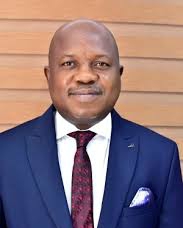
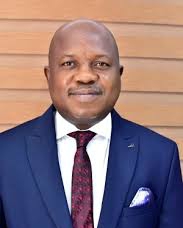
BY NKECHI NAECHE-ESEZOBOR— Unitrust Insurance Company Limited is set to strengthen its presence in Nigeria’s retail insurance market as part of a strategic shift inspired by insights gained at the recently concluded African Insurance Organizations Conference in Cairo, Egypt.
Managing Director/Chief Executive Officer of the company, Mr. Adedayo Arowojolu, said the conference underscored the urgent need for insurers across Africa to expand access to insurance products through innovation, collaboration, and technology-driven solutions.
Speaking on the sidelines of the event, Arowojolu revealed that Unitrust Insurance, traditionally focused on corporate business, is now looking to develop products tailored to individuals and small businesses in a bid to contribute to the growth of insurance penetration in Nigeria.
“For us as a company, one of the key lessons we are taking away from this conference is the need to review our entire processes and product offerings,” he said. “We have concentrated largely on corporate business over the years, but going forward, we need to develop products that are suitable for individuals and strengthen our personal lines of business.”
According to him, discussions at the two-day conference highlighted the importance of leveraging technology to reach underserved populations and make insurance more accessible and affordable.
Arowojolu noted that despite Nigeria’s population of more than 220 million people, insurance penetration remains below one per cent, creating significant opportunities for insurers willing to innovate and address the needs of the mass market.
“The importance of extending insurance products to SMEs and individuals cannot be overemphasized,” he said. “The best way to achieve this is by using technology to reach those who currently have little or no access to insurance services.”
He added that affordability remains a critical factor in encouraging wider adoption of insurance products, especially in an environment where many consumers prioritize more immediate economic needs.
“If insurers can provide products that are relevant to people’s circumstances and financial realities, more Nigerians will begin to see the value of insurance and embrace it,” he said.
The conference also focused on fostering greater collaboration among African insurers, pooling resources, and reducing capital outflows from the continent, themes Arowojolu described as essential to the long-term growth and sustainability of the insurance industry.
He further noted that discussions around the role of insurance in sustaining businesses reinforced the need for increased awareness and education about the benefits of insurance protection.
As Unitrust Insurance evaluates the conference’s key recommendations, the company plans to explore new ways of delivering affordable insurance solutions to retail customers while leveraging technology to broaden its market reach.
“We need to let more people understand the value that insurance brings,” Arowojolu said. “By adapting some of the ideas and lessons from this conference, we believe we can play a greater role in deepening insurance penetration and expanding financial protection for Nigerians.”
This version makes Unitrust’s planned expansion into the retail and personal insurance segment the main news angle while weaving in the broader conference discussions as supporting context.
The post #AIOCAIRO2026: Unitrust Insurance Eyes Retail Segment for Next Growth Phase appeared first on Business Today NG.

The Bank of Industry (BOI) said it will expand financing for agriculture, local healthcare manufacturing and digital businesses in 2027.
The bank stated this as it seeks to consolidate the gains of its 2025–2027 corporate strategy and strengthen Nigeria’s industrial development.
The bank’s Managing Director and Chief Executive Officer, Olasupo Olusi, disclosed the plan on Thursday at a meeting in Lagos, where he outlined the bank’s priorities for the final year of the strategy.
Mr Olusi said BOI would work with the Federal Ministry of Industry, Trade and Investment on the National Industrial Finance Compact to attract more long-term capital into Nigeria’s industrial sector.
He also said the bank would deploy its new European Investment Bank facilities to agriculture and local healthcare manufacturing to increase domestic production of food and medicines.
The funding includes €85 million secured from the European Investment Bank for agriculture and another €50 million for healthcare manufacturing in 2026, as part of more than €2.2 billion in new funding the bank has secured for Nigerian industry since 2024.


READ ALSO: BOI supports 1.68m jobs as lending rises 26% to ₦644.9 billion
“We will deploy our new European Investment Bank facilities into agriculture and local healthcare manufacturing, so that Nigeria produces more of the food and medicines it consumes,” he said.
The bank also plans to expand its information and communications technology (ICT) and digital economy portfolio through the Investment in Digital and Creative Enterprises (iDICE) programme.
Mr Olusi said the initiatives formed part of the bank’s efforts to consolidate its achievements and meet the targets of its 2025–2027 corporate strategy.
“2027 is the final year of our strategy, and our task is to consolidate and meet every target we set,” the BOI boss, Mr Olusi, said.
BOI said it disbursed N644.9 billion in 2025, reaching 12,501 businesses and supporting 1.68 million jobs.
Discover more from Premium Times Nigeria
Subscribe to get the latest posts sent to your email.

First HoldCo Plc has appointed Gwen Mwaba as a non-executive director of the financial institution, effective 15 October, following an approval by the Central Bank of Nigeria (CBN).
The lender disclosed the appointment in a regulatory filing signed by Abiola Baruwa, the group company secretary, on Thursday.
First HoldCo said the appointment was made in accordance with the Nigerian Exchange Limited (NGX) Rulebook.
According to the lender, Ms Mwaba brings significant expertise in corporate governance and board oversight, credit risk and portfolio management, banking strategy, capital deployment, structured trade and commodity finance, development finance, environmental, social and governance (ESG) issues, and emerging-market risk.
Profile
Ms Mwaba brings nearly three decades of experience in global banking and development finance institutions, with particular expertise in credit risk oversight, portfolio governance, corporate and sovereign lending, structured trade and commodity finance, development finance and emerging markets.
Until recently, she served as managing director of Trade Finance and Correspondent Banking at the African Export-Import Bank (Afreximbank), based in Cairo, Egypt.
In that role, Ms Mwaba had executive leadership responsibility for trade finance and structured credit activities across Africa and the Caribbean.
The newly appointed director also oversaw a $19.5 billion portfolio of sovereign, financial institution and corporate exposures.
She contributed to the bank’s Pre-Credit and Credit Committees, providing senior credit judgement on major lending transactions. She also oversaw portfolio strategy, sector exposures and country risk limits.
Before that, Ms Mwaba served as regional head for Anglophone West Africa at Afreximbank, overseeing regional strategy and credit origination across Nigeria, Ghana, Sierra Leone, Liberia, The Gambia and Cape Verde.
Earlier, she was executive vice president of Structured Trade and Commodity Finance at Standard Bank Plc, London, where she was responsible for complex commodity finance, export credit agency-backed facilities and pre-export financing transactions across Africa.
Her earlier banking career included senior roles at Stanbic Bank Zambia and Standard Bank South Africa, including head of Vehicle and Asset Finance and head of Corporate Banking.
READ ALSO: CBN restates single-digit inflation target as FG woos investors with tax credits
Ms Mwaba’s wider industry experience includes membership of the editorial board of Trade Treasury & Payments.
Until recently, her also served on the Multilateral Institutions Board Advisory Panel of the International Trade and Forfaiting Association (ITFA) and the World Trade Organization-led Expert Group on Trade Finance.
Ms Mwaba holds a Master of Business Administration (MBA) from Heriot-Watt University, United Kingdom, and a Bachelor of Science (Honours) degree in Applied Accounting from Oxford Brookes University, United Kingdom.
She is a Fellow of the Association of Chartered Certified Accountants (FCCA) and holds a professional qualification from the Chartered Institute of Transport.
Discover more from Premium Times Nigeria
Subscribe to get the latest posts sent to your email.
-

 News16 hours ago
Obi, Kwankwaso to hold Middle Belt Youth, Village Hall Meeting in Jos
-
News4 days ago
Mamdani says feds have abdicated on AI, urges New Yorkers to push back
-
News3 days ago
Meta’s Muse hits 10M U.S. downloads in 40 days, a milestone reached by only 11 other apps
-
Business3 days ago
How Your Side Hustle Income Ends Up in Your RSA


