Connect with us

News

BCI startup Neurable looks to license its ‘mind-reading’ tech for consumer wearables

info

Published

on

GettyImages 2255262571.jpg

BCI (brain-computer interface) technology — in which neural signals are routed from a person’s head to a computer — was once the stuff of science fiction, but these days the technology represents a competitive corner of the tech industry. One of the companies racing to commercialize BCI is Neurable, which this week announced that it’s looking to license its “mind-reading” technology to consumer wearables.

Neurable specializes in “non-invasive” BCI, which distinguishes itself from firms like Neuralink—the Elon Musk-founded startup known for inserting computer chips directly into people’s skulls—in that its product doesn’t require users to undergo brain surgery to enjoy its benefits.

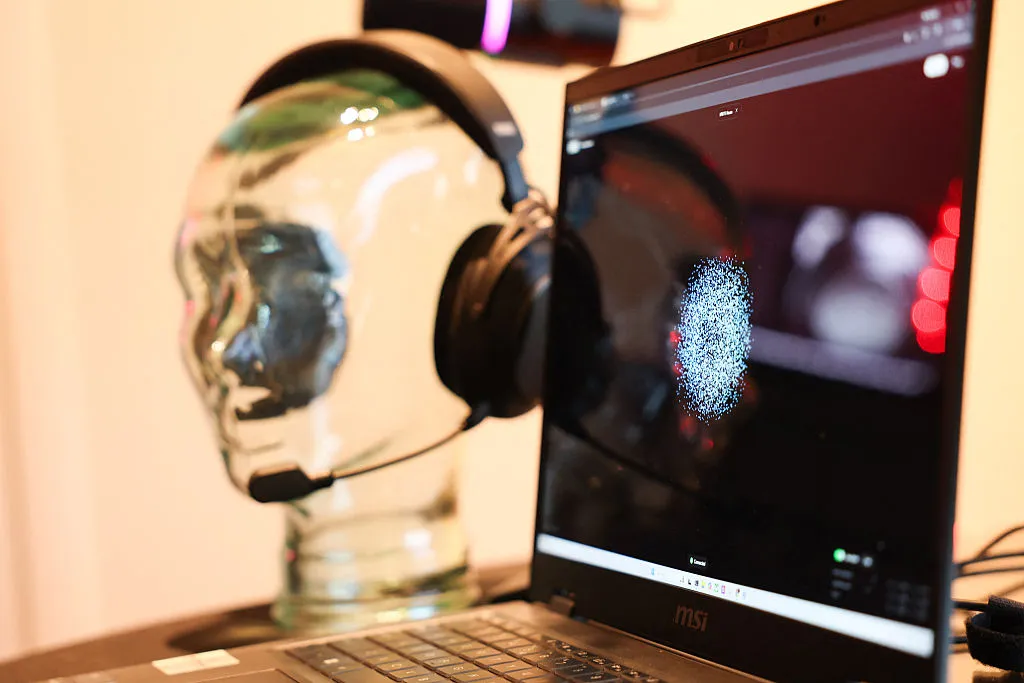
Neurable’s technology works through a combination of EEG sensors and signal processing that can scan a user’s brain activity, analyze it with AI, and provide information about a person’s cognitive performance.

In December, Neurable raised $35 million in a series A, which it plans to use to scale the commercialization of its technology. This week, the company announced that, as part of its expansion effort, it is looking to license its technology to a variety of consumer-facing companies.

The idea is that mind-reading tech (which can provide detailed data about how a person’s brain works while they’re engaged in various activities) could be integrated into wearables across a number of industries—including health and athletic products, productivity tools, and gaming. “Through Neurable’s licensing platform, OEMs can directly integrate its AI-powered brain-sensing technology into existing hardware, such as headphones, hats, glasses, and headbands, while maintaining full control over product design, user experience, and distribution,” the company said in a press release on Tuesday.

Neurable has already fostered partnerships with a number of companies to test out its effectiveness. This includes HP Inc.’s HyperX, a gaming brand, with which it created a headset designed to help gamers “level up their game play by optimizing focus and performance.” It has also partnered with a company called iMotions, a software platform that specializes in human behavior research, to assist with the company’s research initiatives.

In an interview, Neurable’s CEO Ramses Alcaide declined to say what new partnerships the company has in the works, but said that the company was seeking to expand its purview across a host of domains.

Techcrunch event

San Francisco, CA
|
October 13-15, 2026

“In the past, we were very specific about our partnerships,” Alcaide said, noting that Neurable tended to home in on a particular company to prove that a unique commercial application was worthwhile. Now that they know expectations can be met on a number of fronts, the startup is focused on scaling itself, he said.

“What we’re doing now is we’re basically saying, like, ‘Hey, we’ve demonstrated that we’re getting great traction’,” Alcaide said. “Like, let’s make this as ubiquitous as heart rate sensors on your wrist, right?”

Despite the “non-invasive” label, brain data is arguably a little bit more intimate than the information culled from a heart rate sensor, so what kind of privacy protections does a company like Neurable provide?

Alcaide said that the company ensures that user data is “protected and anonymized.” The company’s privacy policy provides a variety of different guidelines for when and how a user’s data might be accessed and used. “We make sure we follow HIPAA standards, like we’ve gone above and beyond where a lot of startups would be at our stage to make sure that we protect the data, we encrypt it, and that we anonymize it,” Alcaide said.

Does Neurable leverage a user’s neural data to train its AI software?, we asked. “We can with user consent, right?” said Alcaide. “But we do it in a very specific way.” That specific way involves asking the user whether their data can be used for the purposes of particular experiments, Alcaide said. “We are not collecting the data, just training on it willy nilly,” he said. In other words, this kind of data usage is quite targeted.

Alcaide said that his industry is at an “inflection point”—one wherein there finally exists “a real business model in neuro-technology that is scalable.” What comes after that inflection point is the big question.

When you purchase through links in our articles, we may earn a small commission. This doesn’t affect our editorial independence.

Continue Reading
Click to comment

Leave a Reply

Your email address will not be published. Required fields are marked *

Health

Advocacy group urges govt to establish spinal cord injury rehabilitation facility

info

Published

on

By

1000159954 scaled e1779311026962.jpg

The Spinal Cord Injuries Association Centre (SCIAN) has appealed to the Nigerian government to establish a dedicated hospital for the rehabilitation of those with spinal cord injuries.

Abdulwahab Matepo, the group’s president, spoke at a press conference on Wednesday in Amuwo-Odofin, Lagos.

Mr Matepo highlighted the neglect and lack of attention to rehabilitation issues in Nigeria despite the high incidence of spinal cord injuries due to road crashes, violence and other causes.

“I did my own (rehabilitation) in Germany. She (secretary) did hers in India. You have people like that. If you ask anybody who has done rehab, it’s either India, Germany, the UK, the US, or South Africa,” the disability rights advocate said.

“ There’s no simple rehab work facility for us in Nigeria.”

PT WHATSAPP CHANNEL

He noted that disability is a universal possibility that can impact any individual at any moment, highlighting the critical necessity for accessible rehabilitation services.

Spinal cord injury occurs when the spinal cord is damaged, disrupting communication between the body and the brain. It damages the nerves in the spinal column, leading to varying degrees of permanent motor, sensory, and functional impairment.

To help survivors of violence, falls, and road traffic accidents in Nigeria regain their quality of life, comprehensive rehabilitation is essential. Such services are urgently needed to foster independence and prevent potentially life-threatening complications.

Government support

Mr Matepo noted that the government allocated some hectares of land to the group for the construction of a rehabilitation centre, but their involvement seems to end there.

He, however, noted that the Lagos State government has contributed by fencing the premises and landscaping, but the purpose of the land has yet to be achieved.

The proposed land for the rehabilitation facility in Amuwo-Odofin, Lagos, within SCIAN premises

According to Mr Matepo, adjusting to life after a spinal cord injury is difficult.

He noted that the absence of mental health resources and societal barriers to embracing this new reality exacerbate the risks of suicide and depression among survivors.

He explained that at the rehabilitation hospital, the spinal cord injury patients would undergo mental health, physical, occupational and vocational therapy, amongst others.

He said the physical therapy includes training in using wheelchairs and other assistive devices, which is often necessary but not always provided, while occupational therapy helps individuals learn new skills to maintain economic independence and community integration.

Mr Matepo added that mental health therapy is crucial for coping with the psychological impact of the injury, including depression, which is a significant issue amongst spinal cord injury survivors.

He also shared a personal experience of being advised to find ground-floor accommodation after he was discharged from the hospital, six months after the accident that left him wheelchair-bound.

Rehabilitation 20230 initiative, policy gap

The group’s president said that in 2017, the World Health Organisation (WHO) launched a programme called ‘Rehabilitation 2030,’ and developed a tool to assess how each country is performing.

The initiative aims to recognise rehabilitation as an essential service and integrate it into the healthcare system.

“Recently, they were in Nigeria to deploy the tool, and what they found was far below expectations,” Mr Matepo said.

He noted that Nigeria lacks a rehabilitation policy and that rehabilitation is not mentioned in its health policy.

Rehabilitation centre overview

On his part, David Majekodunmi, an architect and consultant, emphasised the role of a rehabilitation centre in restoring dignity, rebuilding independence and creating hope for individuals with spinal cord injuries.

David Majekodunmi, an architect and consultant, at the media briefing on Wednesday in Lagos

Mr Majekodunmi noted that the proposed centre would feature a comprehensive range of facilities, including specialised spinal rehabilitation boards, physiotherapy and occupational therapy units, hydrotherapy and mobility training facilities, and vocational and skills-acquisition facilities.


Continue Reading

News

Chelle Names Okonkwo, Osimhen in 25-Man Super Eagles Squad for Poland, Portugal Friendlies

info

Published

on

By

WhatsApp Image 2026 01 04 at 1.25.03 PM.jpeg

Head coach of the Nigeria national team, Eric Chelle, has unveiled a 25-man squad for the Super Eagles’ upcoming international friendly matches against Poland and Portugal in June 2026.

The Malian tactician selected a mix of established internationals and emerging talents as Nigeria continues preparations for future international competitions and qualification campaigns.

Read Also: Olayinka Olajide Leads Nigerian Duo in Women’s 100m Final at Big 12 Championships

Goalkeeper Arthur Okonkwo earned an invitation to the squad alongside prolific striker Victor Osimhen, who headlines the attacking options for the two high-profile encounters.

Regular Super Eagles stars including Ademola Lookman, Alex Iwobi, Wilfred Ndidi and Calvin Bassey were also included in the squad.

The fixtures against Poland and Portugal are expected to provide important tests for Chelle as he continues to build his preferred squad and tactical identity ahead of competitive assignments.

Nigeria will take on Poland before facing Portugal in what are anticipated to be two major international friendlies against strong European opposition.

The games are also expected to offer opportunities for several fringe and new players to impress and cement regular places in the Super Eagles setup.

Super Eagles Squad for Poland, Portugal Friendlies

Goalkeepers:
Maduka Okoye (Udinese, Italy), Francis Uzoho (Omonia, Cyprus), Arthur Okonkwo (Wrexham, England)

Defenders:
Bruno Onyemaechi (Olympiakos, Greece), Zaidu Sanusi (FC Porto, Portugal), Bright Osayi-Samuel (Birmingham City, England), Calvin Bassey (Fulham, England), Semi Ajayi (Hull City, England), Emmanuel Fernandez (Rangers, Scotland), Igoh Ogbu (Slavia Prague, Czech Republic)

Midfielders:
Alex Iwobi (Fulham, England), Frank Onyeka (Coventry City, England), Wilfred Ndidi (Besiktas, Turkey), Fisayo Dele-Bashiru (Lazio, Italy), Raphael Onyedika (Club Brugge, Belgium), Tochukwu Nnadi (Olympique Marseille, France), Alhassan Yusuf (New England Revolution, USA)

Forwards:
Ademola Lookman (Atletico Madrid, Spain), Samuel Chukwueze (Fulham, England), Moses Simon (Paris FC, France), Paul Onuachu (Trabzonspor, Turkey), Akor Adams (Sevilla, Spain), Victor Osimhen (Galatasaray, Turkey), Terem Moffi (FC Porto, Portugal)

Continue Reading

Trending