
News
Telegram ban in India sparks a rush to VPNs, rival apps


As India cut off access to messaging app Telegram for a week over concerns about exam-related fraud, users turned to virtual private networks (VPNs) and alternative messaging apps in unusually large numbers.
App intelligence firm Appfigures told TechCrunch that Tuesday, the day India announced the Telegram restriction, marked the biggest day for VPN app downloads in the country since at least the start of 2025. Downloads of major VPN apps rose 49% from a recent daily average of 139,000 to 208,000, the firm said.
Proton VPN and Turbo VPN recorded some of the largest increases. Downloads of Proton VPN on Apple’s App Store in India jumped 113%, while Turbo VPN downloads rose 85%. On Google Play, downloads of Proton VPN climbed 64% and Turbo VPN downloads increased 35%. NordVPN’s App Store downloads increased 41%, while ExpressVPN downloads on Google Play rose 31%.
The surge also pushed several VPN services up India’s app-store charts. Proton VPN climbed from 18th to 5th in Apple’s Utilities rankings between June 16 and June 18, while its Google Play ranking rose from 8th to 2nd in the Tools category, according to Appfigures.
The spike in VPN demand followed India’s decision to temporarily restrict Telegram until June 22 over concerns that fraudsters were using the platform to target candidates ahead of a re-test for the National Eligibility cum Entrance Test (Undergraduate), the country’s largest entrance examination by applicant volume. The Indian government said the measure was needed to prevent the spread of fake exam papers and related scams. Telegram has challenged the order in the Delhi High Court, arguing that authorities should target specific content rather than block the entire platform.
The response extended beyond app-store download data. Proton said daily registrations from India rose 120% above baseline levels on Wednesday, after hourly registrations had already spiked 150% on Tuesday evening following the Telegram restriction. The company described the increase as “extremely noteworthy” given its existing scale in the country.
Canadian VPN service provider Windscribe reported a similar trend. The company told TechCrunch that signups from India peaked roughly 100% above baseline levels, while first-time downloads of its iOS app in the country rose about 89%.
“The spike in India follows the same general trend we see in areas that ban specific apps, introduce age bans or verification requirements, or otherwise restrict internet access,” Rebecca Rosenberg, growth operations manager at Windscribe, said.

The trend was not limited to a handful of VPN providers. Sensor Tower told TechCrunch that downloads across the VPN app category in India rose 10% day-over-day on June 17, reversing a decline seen over the previous two weeks.
Users also appeared to be exploring alternatives to Telegram. Appfigures said downloads of Signal in India rose 72% on Apple’s App Store and 322% on Google Play following the restriction, while Viber’s App Store downloads increased 216%.
Telegram-linked messaging app iMe recorded one of the sharpest jumps. Its Google Play downloads rose from a recent daily average of about 827 to 50,900 on June 16, Appfigures said.
Yet the restriction did not immediately translate into lower Telegram usage. Sensor Tower said Telegram’s daily active users in India rose 17% on the day the measure was announced — the app’s largest day-over-day increase in the country since a widespread outage of Meta’s services in 2021.
Other data points also suggest heightened efforts to access Telegram following the restriction.
Cloudflare Radar Lead Lai Yi Ohlsen told TechCrunch that DNS requests for Telegram domains in India increased sharply over the two days after the measure was announced. The company cautioned that higher DNS traffic does not necessarily indicate successful access to the platform, and could reflect users repeatedly attempting to reach Telegram after it was blocked.

Telegram pointed to its efforts to cooperate with authorities during hearings in the Delhi High Court this week. Its lawyers said the company had removed channels identified by authorities and questioned the need for a platform-wide restriction affecting what Telegram says are over 150 million users in India.
Government lawyers defended the measure as a temporary, event-linked response tied to the NEET re-test. Solicitor General Tushar Mehta told the court that a permanent ban could raise proportionality concerns but argued the current restriction had a “logical nexus” to the objective being pursued.
After hearing arguments from Telegram and the government on Thursday, the Delhi High Court reserved its order and is expected to deliver its verdict on Friday.
The debate echoes questions raised elsewhere when governments restrict access to major online platforms. Sensor Tower said VPN downloads in the U.S. rose more than 40% week-over-week when TikTok was briefly removed from U.S. app stores in 2025, while Windscribe said it has observed similar patterns following restrictions in countries including Iran and Russia.
When you purchase through links in our articles, we may earn a small commission. This doesn’t affect our editorial independence.






News
NPFL Matchday 10: Tornadoes Stun Abia Warriors, Nasarawa Sink Enyimba as Ikorodu City, Katsina United Stage Comebacks

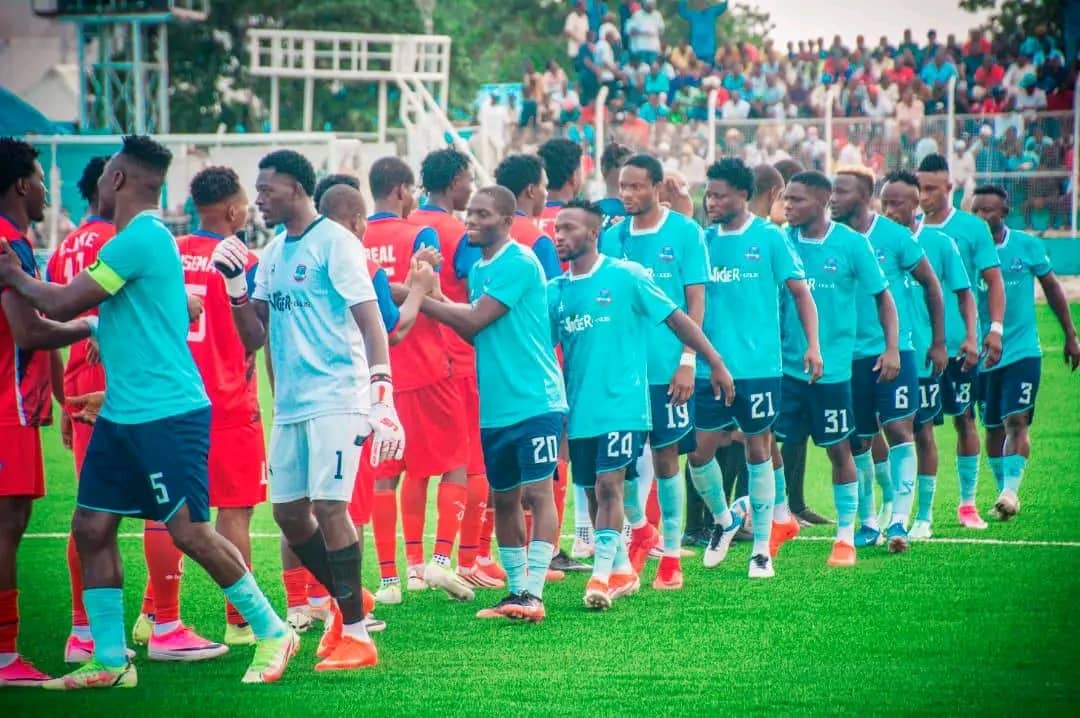
Niger Tornadoes claimed a crucial away victory over Abia Warriors, Nasarawa United continued their impressive run, while Ikorodu City and Katsina United produced dramatic comebacks in an entertaining Nigeria Premier Football League (NPFL) Matchday 10 weekend.
Sports247 reports that the round, which began on Saturday, October 24, continued on Sunday with eight fixtures producing narrow victories, late equalisers and further frustration for struggling Inter Lagos.
Wasiu Jimoh’s 56th-minute strike earned Niger Tornadoes a valuable 1-0 away victory over Abia Warriors, delivering one of the weekend’s standout results. Nasarawa United maintained their winning momentum with another 1-0 triumph, this time against Enyimba.
Jofrank Istifanus scored the decisive goal in the 23rd minute, building on the Lafia Boys’ impressive 2-0 away victory over Inter Lagos on Matchday 9.
Meanwhile, Bendel Insurance defeated Rivers United 2-1, with W. Freeman opening the scoring in the 60th minute before J. Jonathan struck in the 90th minute.
Katsina United staged a remarkable recovery to draw 2-2 against Plateau United in Saturday’s opening fixture. Victor Dawa gave Plateau United a 30th-minute lead before Jibril Ibrahim doubled their advantage in the 82nd minute.
However, Yusha’u Armiya’u responded in the 84th minute, while Umar Rabiu’s stoppage-time equaliser rescued a point for the hosts.
At the Mobolaji Johnson Arena, Ikorodu City also recovered from two goals down to secure a 2-2 Southwest derby draw against Shooting Stars.
Taofeek Otaniyi struck in the third minute before Desmond Ojietefian doubled Shooting Stars’ lead in the 36th minute.
Donald Obiajulu inspired Ikorodu City’s comeback with goals in the 44th and 83rd minutes. Inter Lagos’ difficult campaign continued with a 1-0 defeat to Kun Khalifat with Benjamin 69th minute goal , extending their disappointing run despite changes to their coaching setup.
Elsewhere, Barau FC and Kwara United settled for a 1-1 draw. Anthony Sunday scored in the 40th minute before Goodluck Ogbolu equalised in the 63rd minute.
Warri Wolves and Kano Pillars played out a goalless draw, leaving both sides with a point. Two fixtures remain outstanding, with Ranchers Bees scheduled to host Doma United on 18th November, 2026 and Rangers International set to visit Sporting Lagos at the Mobolaji Johnson Arena on the 25th November, 2026.
Matchday 10 underlined the league’s competitive nature, with away victories, late comebacks and mounting pressure on struggling teams shaping another eventful weekend

Nigeria and France have called for stronger political leadership, increased financing and concrete commitments to accelerate the implementation of the global target to protect 30 per cent of the world’s land and seas by 2030.
The two countries made the call during a Target 3 Action Day at the ongoing 17th Conference of the Parties to the United Nations Convention on Biological Diversity (CBD COP17) in Yerevan, Armenia.
As co-chairs of the High Ambition Coalition (HAC) for Nature and People, the countries stressed the need to sustain political commitment and translate global biodiversity pledges into measurable conservation outcomes.
HAC is the largest multilateral coalition united to protect nature. With 123 member countries, the coalition is leading the historic effort to conserve and protect at least 30 per cent of the world’s land and 30 per cent of the ocean by the year 2030 (“30×30”).
This ambitious plan is a key target of the Kunming-Montreal Global Biodiversity Framework. Established in 2023, the permanent HAC for N&P Secretariat has made significant progress in supporting its members to implement this global target, aiming to halt and reverse biodiversity loss and put nature on a path to recovery.
Charles Nicolai, who spoke on behalf of the coalition, said political leadership must continue beyond adopting the target at CBD COP15 in Montreal, Canada.


“Political leadership did not end in Montreal, when Target 3 was adopted at CBD COP15. It must endure until the target has been collectively achieved,” he said.
Mr Nicolai warned that weak political commitment could slow implementation, adding that only four years remained to achieve the 2030 target.
“Where leadership falters, implementation slows. With only four years remaining until 2030, we cannot afford to lose momentum,” he said, expressing confidence that the 30×30 target remained achievable.
The 30×30 target is a central component of the Kunming-Montreal Global Biodiversity Framework adopted in 2022. It calls on countries to ensure that by 2030, at least 30 per cent of terrestrial, inland water, coastal and marine areas are effectively conserved and managed.
Nigeria, France outline progress
Mr Nicolai said France had used its presidency of the Group of Seven (G7) this year to advance the effective management of marine protected areas.
He said G7 environment ministers agreed to make the issue a collective priority and established a dedicated platform to exchange knowledge and best practices to improve the management of protected marine areas.
In West Africa, he said, Nigeria had played a leading role in advocating for the 30×30 target, using its diplomatic influence to promote a coordinated approach to expanding and strengthening protected areas on land and at sea.
He added that the coalition had organised six regional and global consultations, with support from its secretariat, to identify measures needed to strengthen implementation.
The consultations, held through platforms including ChangeNOW, the Our Ocean Conference, and meetings of the Convention’s scientific subsidiary body, helped develop a 30×30 Ministerial Declaration.
According to Mr Nicolai, the declaration was designed to renew political leadership and encourage coalition members to make more ambitious commitments.
The coalition also presented the declaration and a 30×30 Global Assessment at a Nature Leaders event at the United Nations headquarters, attended by heads of state and ministers from several countries.
Nigeria highlights six principles
In her remarks, Sikeade Egbuwalo, Nigeria’s focal point person to the Convention on Biological Diversity, said achieving the target would require coordinated action across governments, communities, businesses and civil society.
She described the 30×30 ambition as more than a slogan, saying it represented a commitment to nature, people and future generations.
Ms Egbuwalo outlined six guiding principles underpinning the ministerial declaration:g collective responsibility, transparency, effective management, community participation, local implementation and adequate financing.
She said governments must demonstrate progress through transparent reporting, including submissions to the World Database on Protected and Conserved Areas and national reports to the CBD.
She also warned against treating the target as a numerical exercise, stressing that protected areas must be effectively managed, ecologically connected, representative and well governed.
“Quality matters just as much as quantity! It is not enough to draw lines on a map and declare victory,” she said.
Ms Egbuwalo further emphasised the need to ensure that Indigenous Peoples and local communities had meaningful roles in conservation decisions, noting their longstanding contributions to protecting nature.
She called for stronger national implementation and regional cooperation, including progress toward ratifying and implementing the Agreement on the Conservation and Sustainable Use of Marine Biological Diversity of Areas Beyond National Jurisdiction, known as the BBNJ Agreement.
READ ALSO: ANALYSIS: CBD COP17: Russia, Africa disagree as delegates adopt 14 decisions
Funding remains critical
Mrs Egbuwalo identified financing as a major requirement for achieving the 2030 target, particularly in developing countries.
“Ambition is wonderful, but ambition without resources will not get us very far,” she said, calling for adequate, accessible and timely funding to translate commitments into conservation outcomes.
She urged governments, development partners, businesses, civil society organisations and other stakeholders to sustain the momentum generated at COP17 beyond the conference.
Mrs Egbuwalo also announced that the coalition would work towards organising its first 30×30 Global Summit in 2027, providing another platform to assess progress and share successful conservation initiatives.
She said the initiative would bring together governments, non-governmental organisations, funders, Indigenous Peoples and local communities, businesses,s and other partners.
“30×30 is not a competition over who protects the most. It is a collective mission to ensure that nature wins — and when nature wins, humanity wins!”
Discover more from Premium Times Nigeria
Subscribe to get the latest posts sent to your email.
-

 News2 days ago
Obi, Kwankwaso to hold Middle Belt Youth, Village Hall Meeting in Jos
-
News3 days ago
Lotus Bank flags dta privacy risks from unapproved workplace AI tools – Technology Times
-
News3 days ago
Handball President Jibril Saidu Ojih Explains Reasons Behind Introduction Of Transfer Fees For Nigerian Players
-
Entertainment3 days ago
FOGMMON PLATEAU CONGRATULATES EJIDIKE UGOCHUKWU (𝙈𝙞𝙣𝙨𝙩𝙧𝙚𝙡 𝙅𝙞𝙙) ON HIS APPOINTMENT AS NATIONAL PRESIDENT


