Health
Nigerian govt unveils blueprint for secure, interoperable digital health system

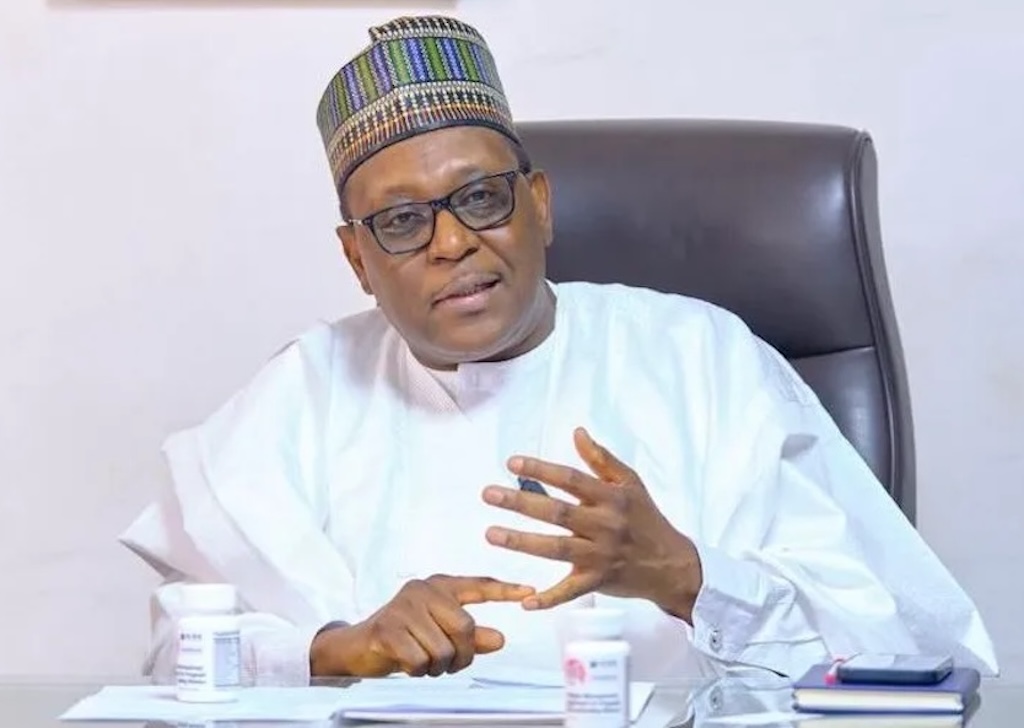

The federal government has unveiled plans to build Nigeria’s digital health ecosystem on the principles of security, interoperability and data sovereignty, describing the move as critical to integrating artificial intelligence (AI), big data and other digital technologies into healthcare delivery.
The Coordinating Minister of Health and Social Welfare, Muhammad Pate, disclosed this on Tuesday at the Insights Learning Forum (ILF) 2026, eHealth Africa’s flagship digital health conference held in Abuja.
Mr Pate was represented by the pioneer National Coordinator of the National Health Technology and Data Analytics Office (NHTDAO), Obi Adigwe.
He stated that although digital health interventions are already being implemented across hospitals, laboratories and disease surveillance systems, Nigeria must ensure they are developed within a unified framework that guarantees the security of health information, enables systems to communicate seamlessly and protects the country’s data.
“Interventions are going on, but the key problem is that whatever is going on, three key principles must underpin engagement in the digital health space: security, interoperability and sovereignty,” he said.

He explained that these principles would guide the development of health information exchanges, disease registries, and targeted data centres, while shaping the implementation of digital health interventions across the country.
According to him, Nigeria’s digital transformation agenda comes at a time when AI, the Internet of Things (IoT) and big data are increasingly being deployed to improve diagnosis, treatment, disease surveillance and patient monitoring worldwide.
However, he stressed that technology alone would not strengthen health systems without the right governance structures.
Regulations, innovation
Mr Pate said Nigeria must develop operational frameworks, policies, and regulations to govern the deployment of digital health technologies and AI.
While noting that digital tools are helping improve access to specialist care, diagnosis and treatment across the world, he questioned whether sufficient regulatory frameworks currently exist to coordinate these interventions.
“Do we have existing frameworks, guidelines and regulations that tie all this together?” he asked.
Mr Pate also called for greater investment in innovation hubs across the country to support young innovators developing AI and machine learning solutions for healthcare.
He noted that many young Africans already possess innovative ideas but require an enabling environment to translate them into practical solutions.
He also stressed the need to strengthen the capacity of Nigeria’s health workforce, stating that doctors, nurses and other health professionals must acquire the skills needed to adopt and implement emerging technologies.
According to him, interoperability standards and data exchange protocols must also be prioritised to ensure health information systems communicate effectively across facilities and countries.
Nigeria’s role in Africa
Mr Pate said Nigeria is prepared to play a leading role in advancing digital health across the continent, just as it emerged as one of Africa’s leading financial technology hubs.
He recalled that although East Africa initially led Africa’s fintech revolution, deliberate collaboration between government and the private sector enabled Nigeria to produce several fintech unicorns.
“We accept your challenge,” he said, responding to calls for Nigeria to take a greater leadership role in digital health innovation across Africa.
He added that technology has become one of the world’s strongest drivers of economic growth, noting that technology companies consistently dominate global market valuations.
According to him, Africa must position itself to benefit from this shift by investing in digital innovation and building resilient health systems.
Continental collaboration
Mr Pate stressed that Nigeria’s digital health strategy is designed not only to address domestic challenges but also to strengthen regional cooperation across Africa.
“We do not design interventions only for Nigeria. We design interventions that solve problems in Nigeria but also bring us closer to our brothers in all the other African countries,” he said.
He noted that health emergencies, environmental challenges and population movements frequently extend beyond national borders, making continental collaboration essential.
Mr Pate said Nigeria is already working with international partners, including the United States Office of the National Coordinator for Health Information Technology, Sweden’s eHealth Agency, Switzerland and Kenya’s Health Information Exchange, to learn from countries that have successfully integrated fragmented digital health systems.
ALSO READ: Nigeria needs ₦500 billion to scale digital health infrastructure over five years — Official
He added that the government has also begun engaging institutions in Francophone and Lusophone African countries to promote interoperability and ensure that digital health systems can function across language and geographical boundaries.
According to him, strengthening continental integration remains central to Nigeria’s digital health vision.
Call to stakeholders
Mr Pate urged the private sector, academia, innovators, and development partners to support the country’s digital health agenda actively.
He challenged investors and entrepreneurs to identify the incentives and policy reforms needed to accelerate innovation, while encouraging researchers to continue generating evidence to guide digital health policies.
Mr Pate also called for greater investment in local data infrastructure, stating that data sovereignty would require Nigeria to strengthen domestic capacity rather than rely heavily on external systems.
Addressing citizens, he said digital transformation should ultimately deliver a seamless healthcare experience comparable to what many people already experience in banking, hospitality and other sectors.
He urged Africans to seize the opportunity presented by digital technologies to improve healthcare delivery across the continent.
“As Africans, are we actually ready?” he asked. “What do you want to see in healthcare as a citizen, as a patient, as an African?”
Mr Pate said achieving a secure, interoperable and inclusive digital health ecosystem would require collective action from governments, development partners, healthcare professionals, innovators and citizens, adding that no single institution can drive the transformation alone.







The Minister of State for Health and Social Welfare, Iziaq Salako, and other stakeholders at the 8th Nigeria Pharma Manufacturers Expo, organised by the Pharmaceutical Manufacturers Group of the Manufacturers Association of Nigeria (PMG-MAN).
Keywords: pharmaceutical manufacturing, Iziaq Salako, medicine security, local production, healthcare value chain, pharmaceuticals, PVAC
The federal government is targeting at least 70 per cent local production of essential healthcare products by 2030 as part of efforts to strengthen medicine security and reduce the country’s dependence on imports.
The Minister of State for Health and Social Welfare, Iziaq Salako, disclosed this on Monday in Lagos while declaring open the 8th Nigeria Pharma Manufacturers Expo, organised by the Pharmaceutical Manufacturers Group of the Manufacturers Association of Nigeria (PMG-MAN).
The expo, themed “Regional Manufacturing: Advancing Africa’s Pharma and Life-Science Sovereignty through Localisation,” brought together stakeholders in Nigeria’s pharmaceutical and life-sciences sector.
$2bn financing, tariff relief for drug makers
Mr Salako said the government’s Presidential Initiative to Unlock the Healthcare Value Chain (PVAC) had secured about $2 billion in financing commitments at single-digit interest rates, with about 50 Nigerian health firms in advanced discussions for funding.

He said the government was also using fiscal measures to support local pharmaceutical manufacturing, noting that 87 local manufacturers were benefiting from a presidential executive order granting zero tariffs on pharmaceutical machinery, active pharmaceutical ingredients (APIs) and excipients across almost 1,000 Harmonised System codes.
According to him, the measures are intended to strengthen domestic manufacturing and build greater resilience into Nigeria’s healthcare supply chain.
From imports to domestic capacity
Speaking further, Mr Salako said disruptions during the COVID-19 pandemic had exposed the risks associated with dependence on global supply chains and underscored the need for Nigeria and other African countries to develop domestic capacity to produce medicines, vaccines, diagnostics and other essential health technologies.
“Our conversation can no longer be limited to whether we can access medicines when global supply chains are functioning,” he said.
Mr Salako described medicine security as an issue of national resilience and sovereignty, saying Nigeria needed to develop capacity across the pharmaceutical value chain rather than concentrate on final-product assembly.
He said ongoing government efforts include expanding local production of APIs, vaccines, biologics, diagnostics and other health commodities.
Mr Salako also cited the operationalisation of the National Institute for Pharmaceutical Research and Development (NIPRD) API Capacity Building and Concept Production Centre, development of commercial API manufacturing capacity and efforts to localise production of HIV, hepatitis and syphilis diagnostic products.
He said Nigeria must also increase investment in research and development and harness its phytomedicinal resources to deepen pharmaceutical manufacturing.
Predictable market for local manufacturers
Mr Salako said the establishment of Medipool, Nigeria’s national Group Purchasing Organisation for essential medicines and medical commodities, would help create predictable demand for locally manufactured products.
He said the organisation would aggregate procurement, negotiate bulk purchases and improve supply-chain efficiency.
READ ALSO: FG seeks action on harmful gender norms to improve adolescent health
In addition, he also urged pharmaceutical manufacturers, researchers, investors and development partners to explore regional markets under the African Continental Free Trade Area (AfCFTA).
He said Nigeria’s pharmaceutical manufacturing ambitions would depend on sustained investment, innovation, regulatory alignment and access to larger regional markets.
Mr Salako said stronger collaboration among government, manufacturers, researchers, investors and development partners would be necessary to build a more resilient pharmaceutical manufacturing ecosystem in Nigeria and across Africa.
Discover more from Premium Times Nigeria
Subscribe to get the latest posts sent to your email.

Resident doctors have given the federal government a 14-day ultimatum to begin implementing outstanding agreements on their welfare and working conditions or face “further industrial action.”
The ultimatum takes effect from 1 October 2026, according to a communique issued at the end of the Nigerian Association of Resident Doctors’ (NARD) 46th Annual General Meeting (AGM) in Calabar, Cross River State.
According to the document signed by the association’s new President, Ogar Idoko, Secretary-General, Besongngem Akotanchi, and Publicity and Social Secretary, Ashimom Msughter, the meeting was held from 21 to 26 September.
The doctors said the ultimatum became necessary due to ongoing delays in resolving several welfare and professional issues, despite the government’s previous engagements and commitments.
Outstanding allowances, salaries
The resident doctors demanded the immediate payment of 19 months of outstanding Professional Allowance Table (PAT) arrears.
They also demanded payment of outstanding arrears arising from the 25/35 per cent upward review of the Consolidated Medical Salary Structure (CONMESS) for doctors and other affected health workers.
The association said several medical doctors were still owed salary and promotion arrears in various federal health institutions.
It also demanded the immediate correction of omissions and errors in the payment of the 2026 Medical Residency Training Fund (MRTF). It called for an upward review of the fund to reflect the current cost of residency training.
The doctors said the reviewed MRTF should also be captured in the 2027 Appropriation Act.
Other demands
The resident doctors called for the accelerated conclusion of the long-running Collective Bargaining Agreement between the Nigerian Medical Association and the federal government.
They said the unresolved review of the CONMESS salary structure had remained outstanding for about 17 years and was contributing to the brain drain affecting the health sector.
The association also called for a sustainable recruitment system to address “the critical manpower shortages occasioned by brain drain and guarantee safe and effective healthcare delivery.”
It demanded the implementation of the approved work-hour regulation policy, including functional biometric systems to document working hours and a standardised system for compensating doctors for excess workload.
The doctors also called for the implementation of “the Assault on Health Workers Prevention Policy across all health institutions with clear accountability mechanisms” and the payment of outstanding pension contributions.
The association further demanded urgent improvements in healthcare infrastructure, equipment and essential medical facilities across the country.
It said poor infrastructure and inadequate equipment were affecting patient safety, healthcare delivery and the training of resident doctors.
Threat of industrial action
Under the resolution, the AGM mandates that the NARD National Executive Council (NEC) “closely monitor” the government’s response over the next two weeks.
The association said it would take “all necessary lawful and constitutionally sanctioned actions”, including further industrial action, if the authorities failed to demonstrate meaningful compliance within the stipulated period.
The latest ultimatum follows several rounds of disputes between resident doctors and the federal government this year.
In January, the doctors suspended a planned nationwide strike scheduled to begin on 12 January after the National Industrial Court restrained the association from embarking on the action, and the government made fresh commitments.
READ ALSO: Resident doctors commend Uba Sani for prioritising healthcare workers’ welfare
In April, resident doctors commenced a nationwide strike over the reversal of the Professional Allowance Table and other outstanding financial obligations. The action was suspended less than 24 hours later following government interventions.
In June, the association issued another 21-day ultimatum over unpaid allowances, salary arrears and delays in the residency training fund.
The resident doctors’ latest ultimatum, therefore, gives the federal government until 1 October to “commence demonstrable implementation of the resolutions contained in this communique.”
Discover more from Premium Times Nigeria
Subscribe to get the latest posts sent to your email.
-

 News4 days ago
Crusoe abandons $1.25B plan to use Boom turbines at AI data centers
-
News3 days ago
Alex Otti should be campaigning for Peter Obi not backing Tinubu – NDC
-
News3 days ago
At Meta Connect, the company’s smart glasses were everywhere
-
News3 days ago
I created an interactive digital avatar of myself — and you can talk to it