News
SPECIAL REPORT: Why Nigerians Should Celebrate Team Nigeria’s Historic Commonwealth Games Campaign—And the Best May Still Be Yet to Come

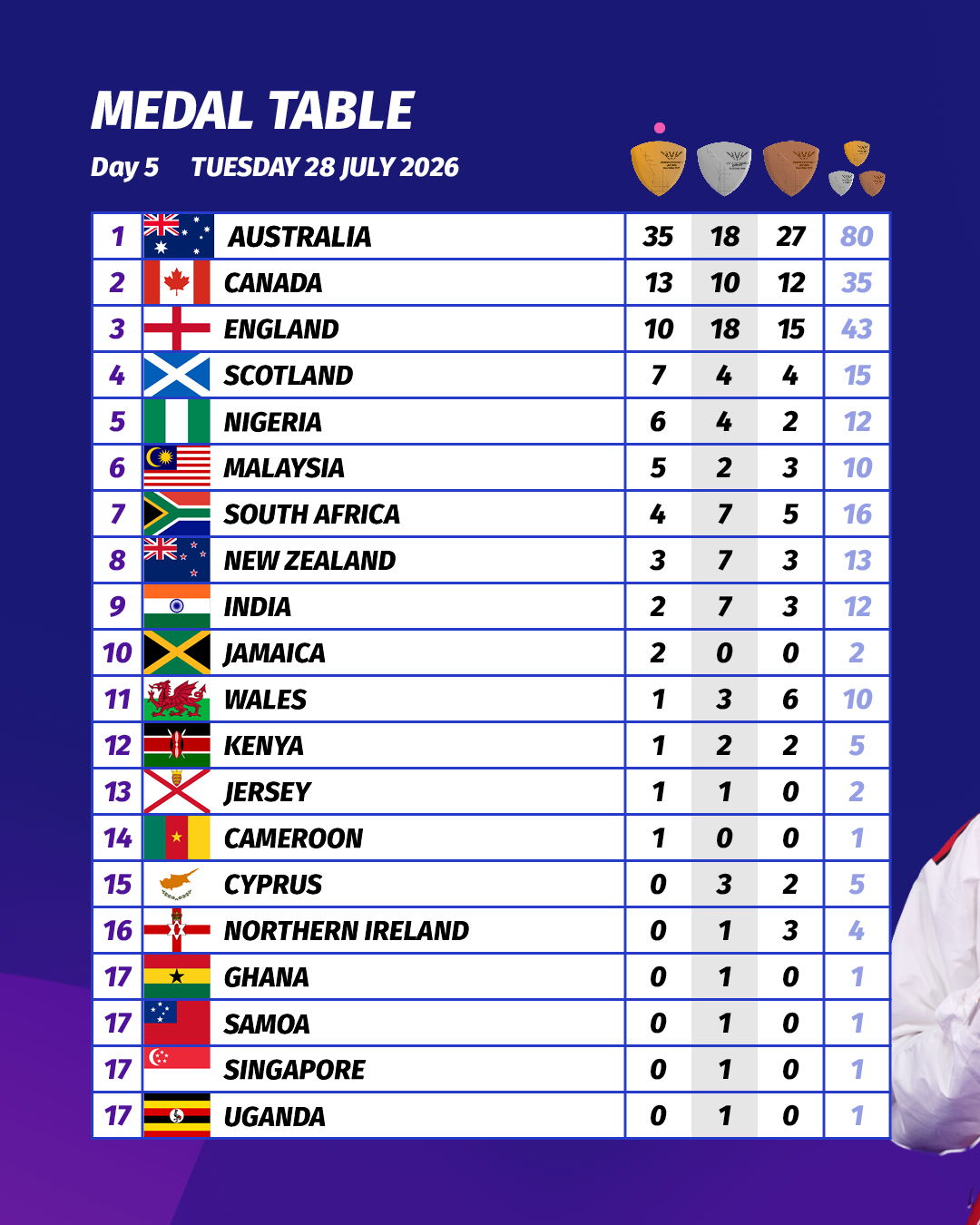
The Glasgow 2026 Commonwealth Games are far from over, yet Team Nigeria has already produced a campaign that deserves to be celebrated across the country.
This is not simply because of the medals won so far. It is because Nigerian athletes are breaking records, ending decades-long droughts, reaching historic finals and restoring the country’s status as one of the Commonwealth’s sporting powerhouses.
What makes the achievement even more remarkable is that Glasgow 2026 is being contested in just 10 sports—the smallest Commonwealth Games programme in more than three decades. With fewer sports comes fewer medal opportunities, making every podium finish more valuable than at previous editions.
Yet Team Nigeria has continued to shine.
The country’s weightlifters have once again reminded the world why Nigeria remains a global force in the sport. Edidiong Umoafia, Onome Didih and Rafiatu Folashade Lawal did not just win gold medals—they rewrote the record books with Commonwealth Games record-breaking performances that announced Nigeria’s dominance on the platform.
On the track, Kayinsola Ajayi ended a 20-year wait for a Nigerian medal in the men’s 100 metres by winning bronze in Glasgow. Since Olusoji Fasuba’s silver medal in Melbourne in 2006, no Nigerian male sprinter had climbed the Commonwealth Games podium in the blue-riband event. Ajayi has now revived Nigeria’s proud sprint tradition and shown that the country can once again challenge the Commonwealth’s fastest men.
Perhaps the most emotional moment of the Games came through Temitope Adeshina, whose bronze medal in the women’s high jump ended a remarkable 72-year wait for a Nigerian Commonwealth Games medal in the event. She also became the first Nigerian woman ever to win a Commonwealth Games high jump medal and only the third Nigerian in history to stand on the podium after Josiah Majekodunmi (1950) and Emmanuel Ifeajuna (1954).
History has also been made in the swimming pool.
Abduljabar Adama reached the men’s 50m butterfly final, a landmark achievement for Nigerian swimming. At a Games where countries like Australia, England and Canada traditionally dominate the pool, seeing a Nigerian contest a sprint butterfly final is another sign that the nation is making progress in sports where success has been rare.
On the basketball court, Nigeria’s women’s Wheelchair 3×3 team secured the country’s first-ever Commonwealth Games victory in the event by defeating India, earning a place in the quarterfinals and opening another exciting chapter in Nigerian para sport.
Even the athletes who narrowly missed the podium have contributed to this remarkable campaign. Seventeen-year-old Miracle Ezechukwu reached the women’s 100m semi-finals on her Commonwealth Games debut, while Favour Ashe and Nicholas Fakorede came within touching distance of the men’s 100m final, underlining the depth of Nigeria’s sprint programme.
Behind these achievements is a renewed belief within Team Nigeria.
The National Sports Commission’s athlete-first reforms—including improved welfare, better preparation and immediate financial rewards for medal winners—have created an environment in which athletes can focus on performance. The results are now evident in Glasgow, where Nigerian competitors continue to rise to the occasion against some of the Commonwealth’s best.
Most importantly, the Games are not over.
Nigeria still has athletes competing in athletics, boxing, swimming, para-athletics and other medal events. More opportunities remain, more finals are ahead, and more history could still be written before the curtain falls on Glasgow 2026.
For Nigerians at home and around the world, this is not just a successful Commonwealth Games campaign—it is a statement of resilience, preparation and renewed ambition.
From ending a 72-year medal drought in the high jump, to breaking a 20-year jinx in the men’s 100m, reaching a historic swimming final, recording a first-ever wheelchair basketball victory and rewriting the Commonwealth Games record books in weightlifting, Team Nigeria has already given the nation countless reasons to celebrate.
And if the performances so far are any indication, the biggest celebrations may still lie ahead.







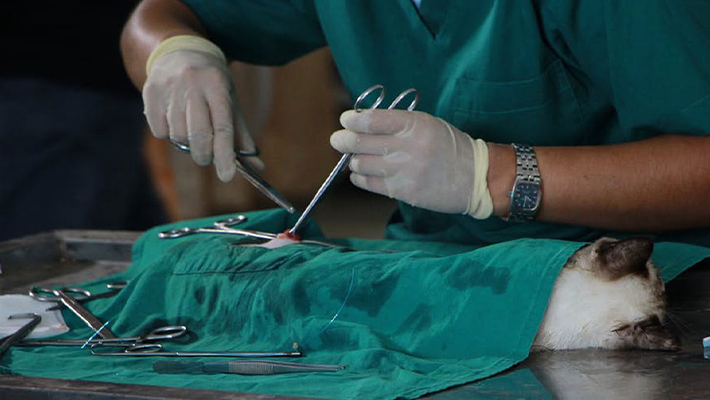
The Nigerian Veterinary Medical Association (NVMA), Kogi chapter, has urged the state government to employ at least two veterinary doctors per local government area (LGA).
The association said the move would strengthen rabies surveillance and the state’s One Health response.
The state chairman of the association, Tolu Omotugba, made the call on Monday in Lokoja at a news conference to commemorate the 2026 World Rabies Day.
World Rabies Day is celebrated annually on September 28.
The aim is to raise awareness about rabies prevention and to highlight progress in defeating this horrifying disease.
Mr Omotugba said Kogi, with 21 LGAs, a large dog population used for hunting and security, and porous borders, could not afford to be complacent about rabies.
According to him, rabies is a disease that is 99.9 per cent fatal once symptoms appear but 100 per cent preventable.
He said, though veterinary officers in the state civil service were putting in their best, their number was grossly inadequate.
“We have about 28 to 30 veterinary officers currently in the Kogi civil service, which is not enough. Some LGAs do not even have the presence of a veterinary officer. Most states in the federation have more than 50 to 100, some about 200.
“We are suggesting a minimum of two per LGA so that they can, at least, do disease reporting, especially for diseases of public health concern.
‘’If the state can do well, they can have as many as five per LGA,” he said.
He expressed concern over the high number of unreported rabies cases in Kogi and across the country.
Mr Omotugba recalled that in 2025, Bassa LGA in Plateau lost 12 lives, including a family of three, to rabies, adding that “a single dog bite, a single scratch, can end a family.”
He said the 2026 theme, “Stronger Together,” underscored the need for collaboration among Ministries of Health, Environment, Education and Livestock, veterinary and medical doctors, environmental health officers and community leaders.
He commended the federal government, through the Federal Ministry of Livestock Development led by Minister Idi Mukhtar Maiha, for its vaccination target.
According to him, the ministry is targeting 70 per cent annual dog vaccination and zero human deaths from rabies by 2030.
The chairman noted that 26,000 doses were deployed to eight high-risk states in 2025, while the Federal Capital Territory (FCT) recently launched vaccination for 20,000 dogs.
Mr Omotugba said that Kogi still relied on outdated laws, citing the Rabies Act of 1935 and the Dogs Law, Cap 36 of Northern Nigeria.
‘’The law provides for seizure and licensing but lacks modern population management and enforcement,” he said.
He said that less than five per cent of dogs in Lokoja, Okene, Anyigba and Ankpa were licensed.
“We cannot eliminate a 21st-century disease with 20th-century laws,” he said.
He, therefore, urged the state government to domesticate the Kogi State Rabies Control and Responsible Dog Ownership Bill 2026 to make annual vaccination compulsory.
Mr Omotugba also called for the establishment of a dog registry, penalties for stray dogs, and replacing shooting on sight with humane management.
He also called for a dedicated budget line for rabies under the Livestock Productivity and Resilience Support (L-PRES) Project to support free mass vaccination.
He recommended sensitisation and post-exposure prophylaxis in state hospitals, as well as creating a Kogi One Health Rabies Task Force.
“Let Kogi lead as the first state in North-Central to be rabies-free,” he said.
(NAN)

-

 Health4 days ago
WHO expands recommended contraceptive options, backs longer-lasting methods
-
News3 days ago
Crusoe abandons $1.25B plan to use Boom turbines at AI data centers
-
News4 days ago
PDP dissolves Kano State Working Committee, chairman accepts removal
-
News2 days ago
Alex Otti should be campaigning for Peter Obi not backing Tinubu – NDC