Business
CPPE Warns Against Textile Import Ban, Calls for Reforms



The Centre for the Promotion of Private Enterprise (CPPE) has cautioned against the Senate’s resolution calling for a ban on textile fabric imports, warning that the proposed restriction could hurt the Nigerian economy, disrupt supply chains, and threaten millions of jobs.
In a statement signed by the CPPE’s Chief Executive Officer, Muda Yusuf, on Sunday, the think tank stated that although reviving Nigeria’s textile industry is a legitimate objective, banning textile imports would not address the sector’s underlying problems.
On 9 June, the Senate called for a total ban on the importation of textile products into the country as part of efforts to revive the struggling textile industry and create jobs. The lawmakers argued that a complete ban on textile imports is necessary to protect local manufacturers and revive cotton production.
However, the CPPE said the proposed ban would impose substantial collateral costs on downstream industries rather than revitalise the textile sector.
“The proposed measure is unlikely to achieve its intended objectives and could have significant adverse consequences for the Nigerian economy. While the objective of reviving Nigeria’s textile industry is legitimate and commendable, an outright import prohibition is unlikely to achieve that objective.”

“Rather than revitalising the textile industry, the proposed ban could impose substantial collateral costs on downstream industries, disrupt critical supply chains and jeopardise millions of jobs and livelihoods,” the CPPE said. Narrow view
The think tank argued that the proposal reflects “a narrow view” of the industry’s challenges by overlooking the extensive linkages between textile manufacturing and Nigeria’s garment, fashion, furniture, and creative economy value chains.
According to the CPPE, Nigeria’s fashion, garment-making, and tailoring industry, estimated at N10 trillion, provides livelihoods for around 10 million Nigerians and relies heavily on imported textile fabrics as inputs.
It warned that restricting textile imports would disrupt production, raise costs, reduce consumer choice, and threaten thousands of micro, small, and medium-sized enterprises operating within the fashion and garment industry.
The group added that the garment industry generates significant domestic value through design, tailoring, branding, embroidery, merchandising, and retailing, often creating more local value than the textile inputs themselves.
The CPPE also stated that textile fabrics are critical inputs for Nigeria’s furniture and interior design industry, estimated at ₦7 trillion, noting that any disruption in fabric supply would increase production costs and weaken the sector’s competitiveness.
The organisation maintained that the decline of Nigeria’s textile industry was driven mainly by structural constraints rather than import competition.
“The decline of Nigeria’s textile industry is primarily the consequence of long-standing structural constraints rather than import competition.”
“These include high energy costs, expensive credit, poor infrastructure, logistics bottlenecks, obsolete technology, smuggling, weak access to long-term finance, and policy inconsistency,” the CPPE said.
Failed tariffs
The group noted that imported textile fabrics already attract a combined Import Duty and Import Adjustment Tax (IAT) of between 35 and 45 per cent. Still, it said the tariff protections have failed to revive the industry because the major challenge remains the high cost of production.
“It is noteworthy that imported textile fabrics already attract a combined Import Duty and Import Adjustment Tax (IAT) of between 35 and 45 per cent.”
“Yet these tariff protections have not restored the industry’s competitiveness because the core problem lies in production economics rather than import penetration,” it said.
The CPPE further argued that domestic textile manufacturers currently lack the capacity to meet the quantity, quality, and variety of fabrics required by the country’s fashion, garment, furniture, and interior design industries.
“An outright import ban would therefore create supply shortages, increase production costs, and weaken downstream industries that generate significantly more employment than textile manufacturing itself,” it said.
Value-chain strategy
Instead of imposing import restrictions, the CPPE called for a comprehensive value-chain strategy to revive the textile sector.
The CPPE recommended a comprehensive strategy to revive the textile industry, beginning with strategic government procurement that would require the military, paramilitary agencies, schools, and other public institutions to prioritise locally produced textiles and garments for uniforms.
It also proposed establishing a Textile Competitiveness Fund, financed with a portion of textile-related import tax revenues, to provide single-digit financing for technology upgrades and industry modernisation.
The organisation also called for the revival of domestic cotton production through improved seedlings, mechanisation, extension services, enhanced security, and guaranteed off-take arrangements for farmers.
READ ALSO: Tinubu urges African countries to end raw mineral exports, deepen value addition
It urged stronger border enforcement to curb smuggling and improve the effectiveness of existing tariffs, alongside reforms to reduce energy costs, improve infrastructure, lower financing costs, and create a more competitive environment for manufacturers.
The think tank concluded that improving competitiveness, rather than banning imports, offers a more sustainable pathway to revitalising Nigeria’s textile industry.
“The challenge confronting Nigeria’s textile industry is fundamentally one of competitiveness rather than import penetration. Sustainable revival will require structural reforms that improve productivity, reduce production costs, revive cotton production, expand access to affordable finance, and leverage government procurement to stimulate domestic demand,” the CPPE said.






The Nigerian Ports Authority (NPA) has moved to address rail connectivity and logistics challenges affecting inland dry ports as part of efforts to integrate the facilities into the nation’s port system and improve cargo movement across the country.
The move followed a meeting between the NPA management, led by its Managing Director, Abubakar Dantsoho, and the Executive Director of Dala Inland Dry Port, Ahmad Rabiu, alongside representatives of Funtua Inland Dry Port, at the authority’s corporate headquarters in Marina, Lagos.
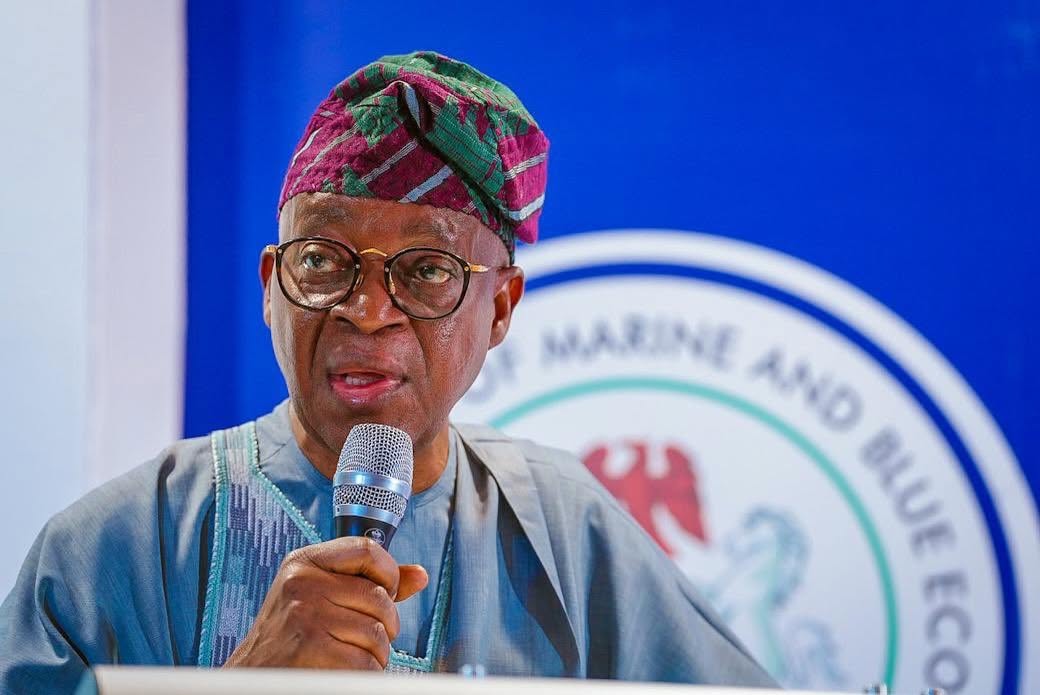
The engagement came after the Minister of Marine and Blue Economy, Adegboyega Oyetola, directed the transfer of operational oversight of inland dry ports to the NPA.
The discussions focused on strengthening institutional collaboration, addressing infrastructure constraints and improving operational efficiency across Nigeria’s maritime logistics chain.
Speaking during the meeting, Mr Dantsoho stressed the need to upgrade inland dry port infrastructure and technical capacity to complement ongoing modernisation efforts at the nation’s seaports.
He said the facilities must be equipped to handle increasing cargo volumes and support the broader transformation of Nigeria’s maritime sector.

“For our Inland Dry Ports to function at the same velocity as the ongoing modernisation across our seaports, we must proactively upgrade dry port infrastructure and technical capacity,” Mr Dantsoho said.
He explained that the integration of digital platforms, including the Port Community System (PCS) and the National Single Window, into seaport operations must be matched by corresponding improvements at inland dry ports.
“As we integrate digital systems such as the Port Community System (PCS) and the National Single Window in our seaports, the dry ports must deploy modern equipment and advanced technical capabilities to handle larger cargo volumes and bigger vessels coming to our coast,” he added.
Increased private-sector investment
The NPA managing director also called for increased private-sector investment in inland dry port infrastructure, noting that stronger investment would be critical to improving cargo handling capacity and operational efficiency.
He cited APM Terminals’ establishment of an Export Processing Terminal in Northern Nigeria as an example of private-sector participation in the development of inland logistics infrastructure.
ALSO READ: INVESTIGATION: Ganduje embroiled in multi-billion naira Kano dry port ownership scandal
Mr Dantsoho assured stakeholders that efforts to optimise the inland port system were underway and confirmed plans to visit the Dala and Funtua facilities to assess their operational conditions and infrastructure requirements.
Operational oversight
Speaking on behalf of the delegation, Hassan Bello welcomed the transfer of operational oversight to the NPA, expressing appreciation for what he described as a seamless transition.
Mr Bello referenced the gazetted Port Act, which recognises inland dry ports as official ports of origin and destination, while drawing attention to challenges confronting the facilities, particularly inadequate rail connectivity and broader logistics constraints.
Rail access is a critical component of inland dry port operations, as efficient connections to the national rail network can facilitate cargo movement between seaports and inland destinations, potentially reducing pressure on road transport and lowering logistics costs.
The meeting also established a framework for further technical consultations, infrastructure integration and physical planning to identify the requirements for improving operations at the facilities.
The discussions highlighted the need for detailed technical assessments, stakeholder coordination and physical inspections to establish infrastructure priorities and guide subsequent project development.
The planned visits to Dala and Funtua inland dry ports are expected to provide NPA with a clearer understanding of the facilities’ operational challenges and the interventions required to strengthen their roles in cargo distribution, trade facilitation and wider maritime logistics network.
Discover more from Premium Times Nigeria
Subscribe to get the latest posts sent to your email.
-

 Business3 days ago
Communications Ministry made ₦345.5 million duplicate payment for Abuja ICT Park project
-
News3 days ago
LumenUs helps automate tedious paperwork in times of grief
-
Business4 days ago
Fuel subsidy would cost Nigeria over N20trn yearly — Minister
-
News3 days ago
Inside INEC’s AI and cybersecurity plans to secure Nigeria’s 2027 Elections – Technology Times