News
Glasgow 2026: Ajayi Wins Bronze as Eseme Storms to Commonwealth Games 100m Gold in Historic Glasgow Final


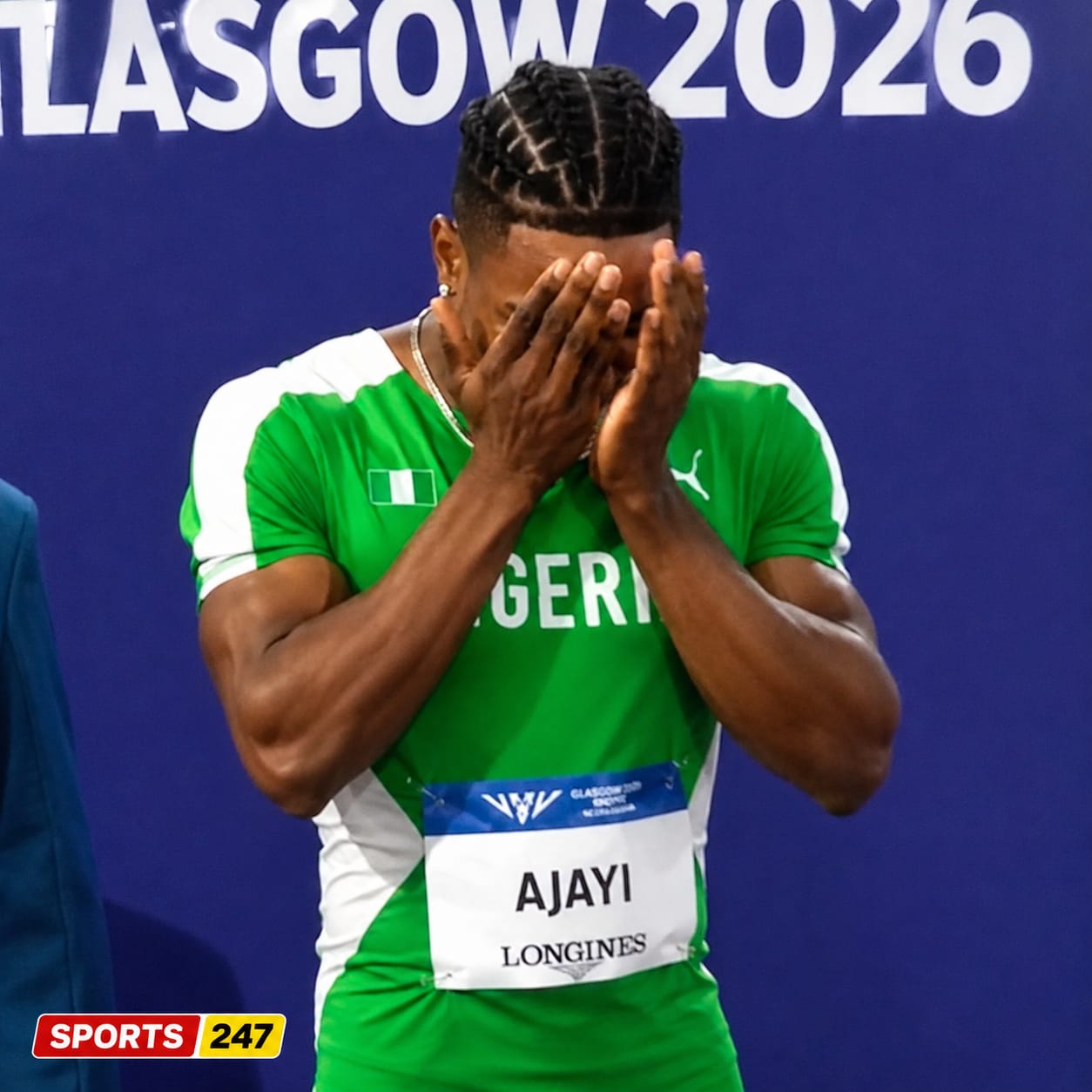
Nigeria’s Kayinsola Ajayi delivered a superb performance to claim the bronze medal in the men’s 100 metres after clocking a blistering 9.90 seconds in a breathtaking Commonwealth Games final at Scotstoun Stadium on Tuesday night.
Ajayi, who had qualified impressively from the semi-finals earlier in the day, produced another outstanding run to finish third behind Cameroon’s Emmanuel Eseme, who powered to a Games Record of 9.83 seconds to win gold, while Australia’s Lachlan Kennedy claimed silver in an Australian Record of 9.85 seconds.
South Africa’s Gift Leotlela narrowly missed the podium despite posting a season’s best 9.91 seconds, finishing just one-hundredth of a second behind the Nigerian.
The result marks another major milestone in Ajayi’s rapidly rising career and gives Team Nigeria another athletics medal at the Glasgow 2026 Commonwealth Games.
The 20-year-old has been one of Nigeria’s standout sprinters throughout the 2026 season, consistently running among the world’s fastest times. His bronze-medal performance in Glasgow confirms his emergence as one of Africa’s brightest sprint talents and signals a promising future ahead of the next World Championships and Olympic cycle.
The final lived up to expectations, producing one of the fastest races in Commonwealth Games history. Eseme’s 9.83 shattered the previous Games record, while Kennedy’s 9.85 established a new Australian record. Ajayi’s 9.90 ensured Nigeria was represented on the podium after surviving a highly competitive field that included South Africa’s Gift Leotlela, Wales’ Jeremiah Azu, Australia’s Edward Nketia, Ghana’s Benjamin Azamati and South Africa’s Cheswill Johnson.
Ajayi’s medal also capped an impressive outing for Nigeria’s men’s sprint team. Although Favour Ashe and Adekalu Nicholas Fakorede narrowly missed the final after their semi-final races, Ajayi carried the nation’s hopes into the championship race and delivered when it mattered most.
His podium finish adds to Team Nigeria’s growing medal haul in Glasgow and continues the country’s impressive campaign across athletics and weightlifting.
For Nigeria, the message from Scotstoun Stadium was clear: the country’s sprint tradition remains alive, and Kayinsola Ajayi has announced himself on one of the biggest stages in Commonwealth sport




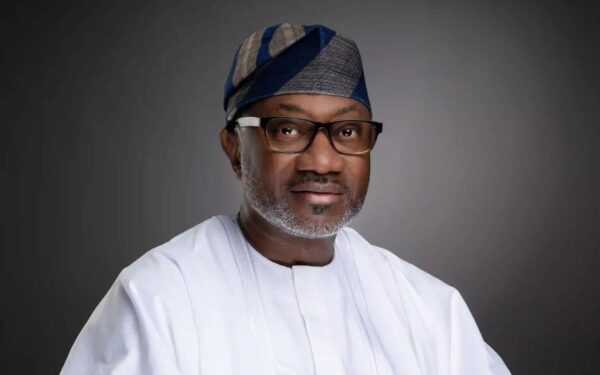
Femi Otedola, the chairman of First HoldCo Plc, has revealed that he shared a bunk bed with Lagos State Deputy Governor Obafemi Hamzat during their boarding school days 49 years ago.
Mr Otedola disclosed this in a post on X after hosting a dinner in honour of his longtime schoolmate, Mr Hamzat, attended by Aliko Dangote, the president of Dangote Group, and Abdulsamad Rabiu, the chairman of BUA Group.
The business tycoon said Mr Hamzat’s character has been defined over the years by honesty, sincerity, fairness, and strong moral principles.
“Yesterday, I hosted dinner in honour of @DrObafemiHamzat, the incoming Governor of Lagos State,” Mr Otedola said.
“A man of the highest integrity, with whom I shared a bunk bed at boarding school 49 years ago,” he added.
Mr Otedola stated that his longstanding relationship with Mr Hamzat has given him insight into the deputy governor’s character and values.


“My experience of his character over the years has been defined by his honesty, sincerity, fairness and strong moral principles,” Mr Otedola said.
READ ALSO: Tinubu’s reforms have put Nigerian economy on path of sustainable growth – Otedola
He, however, did not disclose the name of the boarding school he attended with the Lagos State deputy governor.
The billionaire investor has interests in financial services and oil & gas. He holds about 27.7 per cent of First HoldCo’s shares, following months of steadily increasing his stake in the banking group.
Mr Hamzat is seeking to contest the 2027 governorship election in Lagos State on the platform of the All Progressives Congress (APC), and has served as deputy governor under incumbent Governor Babajide Sanwo-Olu since 2019.
He emerged as the APC governorship candidate in May 2026.
Mr Hamzat served as Lagos State Commissioner for Science and Technology and later as Commissioner for Works and Infrastructure from 2005 to 2015.
Discover more from Premium Times Nigeria
Subscribe to get the latest posts sent to your email.

-
News2 days ago
NUCAP: Nigeria targets 20 million people with 3,700 telecom towers – Technology Times
-

 News3 days ago
Gunmen storm Plateau mining site, kill two persons
-
News3 days ago
Nigeria needs stronger collaboration ‘to shape internet governance’ – Technology Times
-
News1 day ago
Euromatch NPFL: Matchday 9 results