News
Thea Energy lands $20M federal grant to build its magnets for fusion reactors

For hard-tech startups, manufacturing is a pricey endeavor. Now, Thea Energy has a leg up courtesy of a Department of Energy grant.
The fusion power startup told TechCrunch Monday that it has received a $20 million award from ARPA-E to help manufacture its modular high-temperature superconducting (HTS) magnets.
HTS magnets are costly but important components in any magnetic confinement reactor, one of the two main ways startups are attempting to harness fusion power for commercial purposes. In magnetic confinement reactors, powerful magnetic fields contain and compress plasma, helping to heat the particles until the fuel can fuse and release large amounts of energy.
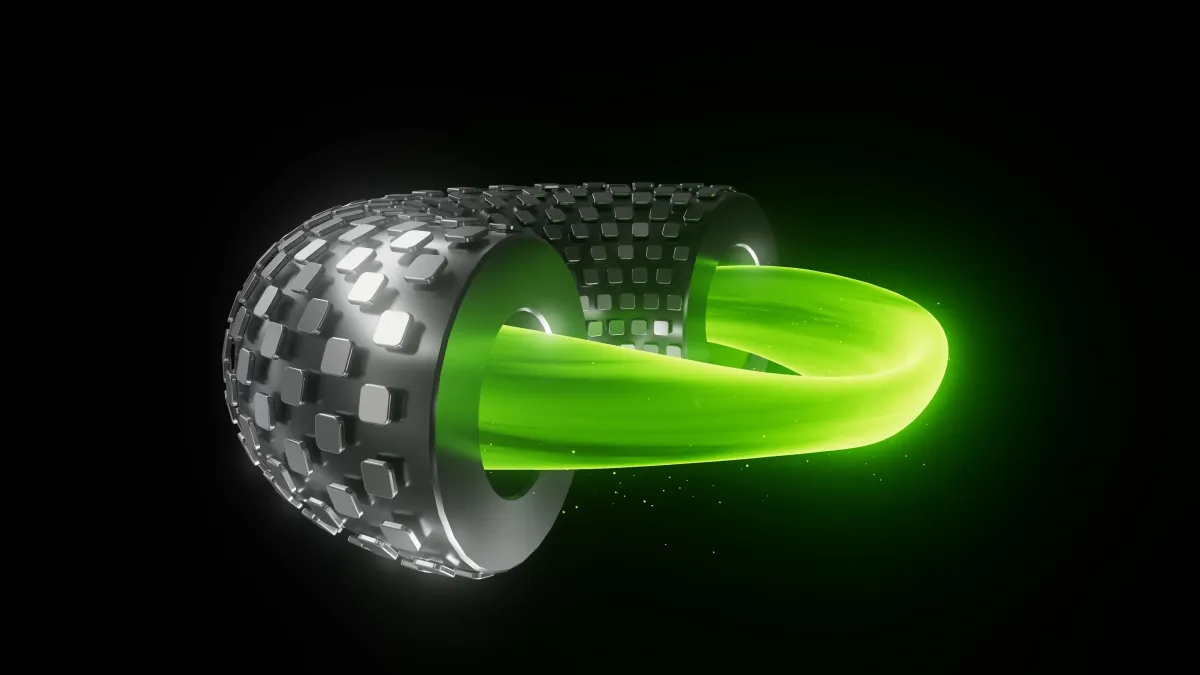
Thea’s reactor is based on a design known as a stellarator. Stellarators look like inner tubes that have been twisted and squeezed in ways that help it confine the plasma more effectively. Most stellarators use magnets that are built to mimic those twists and turns, which makes them expensive to manufacture.

To minimize manufacturing costs, Thea uses fewer variants. The 12 large magnets that do the heavy lifting are made from four different templates, and the more than 300 smaller magnets used to fine tune the plasma are all identical. They’re arrayed around the periphery of the reactor, similar to how pixels are distributed across a computer display.
The small magnets are controlled by software, an arrangement should allow for more forgiving construction tolerances, which could lower costs, Thea says.
Thea is among the top funded fusion power startups, having raised $100 million in May on top of a $20 million Series A it raised in 2024. Like many of its peers, Thea has plans to build a commercial scale fusion power plant in the mid-2040s.
When you purchase through links in our articles, we may earn a small commission. This doesn’t affect our editorial independence.







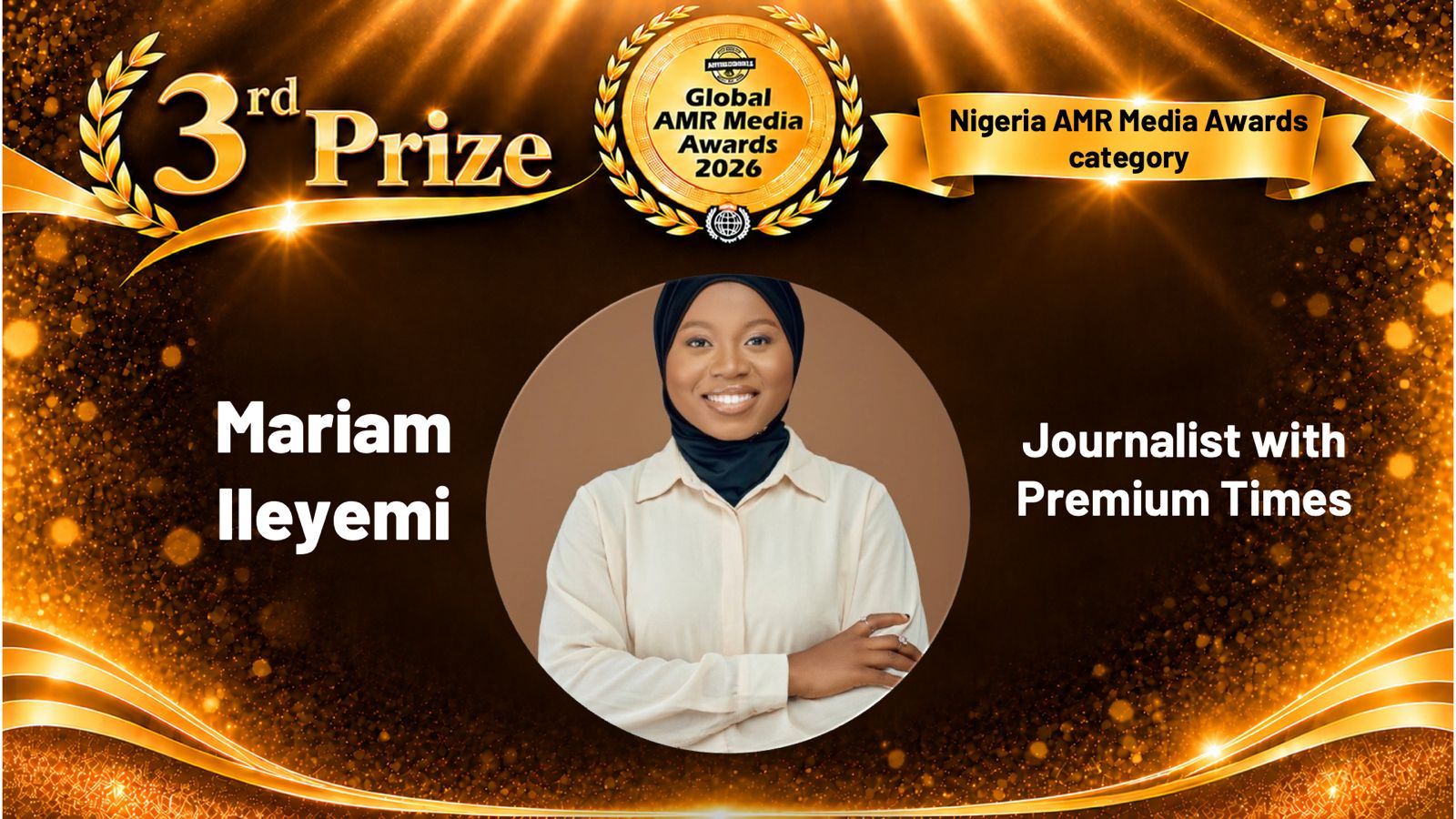
PREMIUM TIMES journalist Mariam Ileyemi has emerged as the third-prize winner in the Nigeria AMR Media Awards (NAMA), recognising her reporting on antimicrobial resistance (AMR).
The NAMA is a national category of the 2026 Global AMR Media Awards (GAMA), which recognises journalists and other media professionals whose work raises awareness of drug-resistant infections and promotes action against the growing public health threat.
The 2026 awards received 382 entries from four global regions, with Africa accounting for 193 submissions. Asia-Pacific followed with 134 entries, while Europe and the Americas recorded 28 and 27 entries, respectively. Nigeria submitted 96 entries for the global and national competitions, representing about a quarter of the total submissions.
Ms Ileyemi was recognised for her report examining the gender dimensions of AMR, including how gender-based violence, social inequalities and barriers to healthcare affect women’s exposure to drug-resistant infections and access to treatment.
In the report, published in March 2026, she highlighted calls by health experts for gender-responsive policies to address antimicrobial resistance.
The recognition adds to her reporting on AMR. In November 2024, she collaborated with Nike Adebowale-Tambe, the PREMIUM TIMES Head of Health and Development Desk, on a special investigation examining the experiences of Nigerians affected by drug-resistant infections and the challenges they face when medicines fail.


In the NAMA category, Kazeem Biriowo of Nigerian Tribune won first prize, while Julian Adetinuyo of News Scope Africa came second.
Seven other journalists received special mentions: Folashade Akpan of the News Agency of Nigeria, Chioma Obinna of Vanguard, Helen Oji Emmanuel of Blueprint, Fatima Saka of DistinctNews, Chinyere Okorafor of Nigeria Health Times, Laide Akinboade of Daily Asset and Odimmegwa John Peter of New Africa Horizon.
The winners in the Nigerian category will receive certificates and cash prizes supported by the Art for Health Initiative, a non-profit organisation.
The awards were announced on 11 November during the Sixth Global Media Forum on AMR, ahead of World Antimicrobial Resistance Awareness Week, observed annually from 18 to 24 November.
Nigeria is scheduled to host the Fifth Global High-Level Ministerial Conference on AMR in Abuja from 6 to 8 December 2026. The conference, the first of its kind to be held on African soil, is expected to bring together government representatives and other stakeholders to strengthen global action against antimicrobial resistance.
Other Nigerian winners
Other Nigerian journalists also received recognition in the global award categories.
 In the category for reporting on the Fifth High-Level Ministerial Conference on AMR, Annabel Nwachukwu of the Federal Radio Corporation of Nigeria won first prize, followed by Edward Samuel Ikpete of Voice of Nigeria in second place and Doris Obinna of The Sun in third. Alice Etuka of The Fact Daily received a special mention.
In the People’s Reporting category, Isioma Appiah-Yeboah of Clean Beat Radio won first prize, Racheal Abujah of NAN won second, and Helen Shikanda, a Kenyan, came third. Princess Ekwi-Ajide of the Anambra Broadcasting Service, Smith Nwokocha of Port Harcourt Wakawaka Blog and Chioma Vivian James of True Verdict received special mentions.
Patience Ihejirika of Leadership Newspaper and Benedict Ifeanyi Chukwu of Kaftan TV also received special mentions in the Africa category.
The Global AMR Media Awards are organised by the Global AMR Media Alliance, a network of media professionals working to raise awareness of antimicrobial resistance and promote its visibility within global health security and the United Nations Sustainable Development Goals.
Media coverage of AMR
Speaking after the announcement, Shobha Shukla, chairperson of the Global AMR Media Alliance, congratulated Nigerian journalists and commended Ojoma Akor, founding chairperson of the Nigeria AMR Media Alliance, for highlighting the effects of AMR and strengthening media efforts to address the problem.
Ms Shukla said AMR was not merely a medical or scientific issue but also a societal and development challenge that required action beyond laboratories and hospitals.
“We need an informed public, accountable governments, and responsible practices across human, animal, and environmental health,” she said.
She said the media has the power to connect these issues, amplify the experiences of affected communities and turn public awareness into action.
Ms Shukla urged journalists to move beyond reporting AMR solely as a health news issue and help build public support for responsible antimicrobial use and stronger health systems.
Ms Akor, in her comments, described the inaugural NAMA awards as an important milestone for health and science journalism in Nigeria, noting that AMR had received insufficient attention in newsrooms despite its implications for public health, healthcare delivery, food security and national development.
She said the awards recognised journalism’s role in making an often-unseen public health threat visible, translating complex scientific evidence into accessible information, amplifying the experiences of affected communities and holding institutions accountable.
“As an alliance, we remain committed to building the capacity of journalists, encouraging investigative and solutions-oriented reporting, and ensuring that AMR receives the sustained attention it deserves,” she said.
Chidera Rosecamille Aneke, founder of the Art for Health Initiative, said AMR is one of the organisation’s focal areas and explained that its support for the NAMA awards was intended to encourage innovative storytelling.
“AMR is one of our organisation’s focal areas, and we are glad to support the NAMA awards to push innovative storytelling to communicate AMR in ways the audience can understand,” she said.
She said the initiative works at the intersection of storytelling, media and the arts to promote public understanding and action on critical health issues.
Understanding antimicrobial resistance
Antimicrobial resistance occurs when bacteria, viruses, fungi and parasites change over time and no longer respond effectively to medicines used to treat infections. This makes infections harder to treat and increases the risk of severe illness and death.
The problem affects human and animal health, food production and the environment, making it a One Health concern.
Nigeria’s National Action Plan on Antimicrobial Resistance 2024–2028 cites estimates that 64,500 deaths in the country were directly attributable to AMR in 2019, while 263,400 deaths were associated with it. The country has also acknowledged surveillance gaps that make it difficult to establish the full scale of drug-resistant infections.
About Mariam Ileyemi
Mariam Ileyemi is a Nigerian journalist on the Health and Development Desk at PREMIUM TIMES. Her reporting covers antimicrobial resistance, disease prevention, and primary healthcare.
She was named PREMIUM TIMES Reporter of the Year 2025 and is a fellow of the Africa Health Communications Fellowship and Media-EIS Fellowship, among others.
She was recently nominated for the Outstanding Health Investigation Award at the Private Sector Health Alliance of Nigeria (PSHAN) Annual Awards. She is also a recipient of the Mamman Marshall Scholarship for Women in Journalism.
Discover more from Premium Times Nigeria
Subscribe to get the latest posts sent to your email.

The chairman of the Independent National Electoral Commission, INEC, Prof. Joash Amupitan, has appealed to Nigerians to have confidence in his leadership, assuring them that he will deliver free, fair, credible and inclusive elections in 2027.
Amupitan gave the assurance on Thursday during a dialogue organised by the Kimpact Development Initiative, KDI, at Chatham House in London, United Kingdom.
Speaking against the backdrop of concerns over the credibility of the 2023 general election, the INEC chairman admitted that technical problems during the exercise had affected public confidence in the commission.
“The 2023 general election significantly affected public confidence in INEC, and the commission is still working to rebuild the trust of Nigerians,” he said.
Amupitan, however, assured Nigerians that measures had been introduced to prevent inaccurate polling unit results from appearing on the INEC Result Viewing Portal, IReV, in 2027.
“The major problems we identified in 2023 occurred during the collation of results. We have now introduced technical measures to detect errors and prevent inaccurate results from being uploaded to IReV,” he said.
“We have introduced safeguards to ensure that any result that is inaccurate at the polling unit will not be uploaded to IReV. Nigerians should be able to trust the results they see on the portal,” he said.
“The recent off-cycle governorship elections in Anambra and Osun states demonstrated improvements in our performance, as we were able to declare the results the day after voting,” he added.
The INEC chairman also announced that the commission would conduct a nationwide mock accreditation and voting exercise on November 28, 2026, to test its preparations for the 2027 general election.
Amupitan further maintained that his previous involvement in legal cases involving political disputes would not affect his neutrality as electoral umpire.
“My loyalty is solely to the Constitution of the Federal Republic of Nigeria and the Electoral Act,” he said.
2027: Trust me to deliver credible elections – Amupitan tells Nigerians
-

 News4 days ago
Troops Arrest Suspected Gunrunner, Neutralise Two Terrorists in Plateau
-
News3 days ago
APM holds Presidential Campaign in Plateau, Pledges Security and Economic Reset
-
News4 days ago
'How many times will you approve Ibom Deep Seaport' – NDC blasts Tinubu over 'endless lies'
-
News3 days ago
APC Legacy Assembly Expresses Confidence in Tinubu Ahead of 2027 Election