
Business
FCCPC, Lagos consumer agency warn businesses on price tags, refunds, product labelling

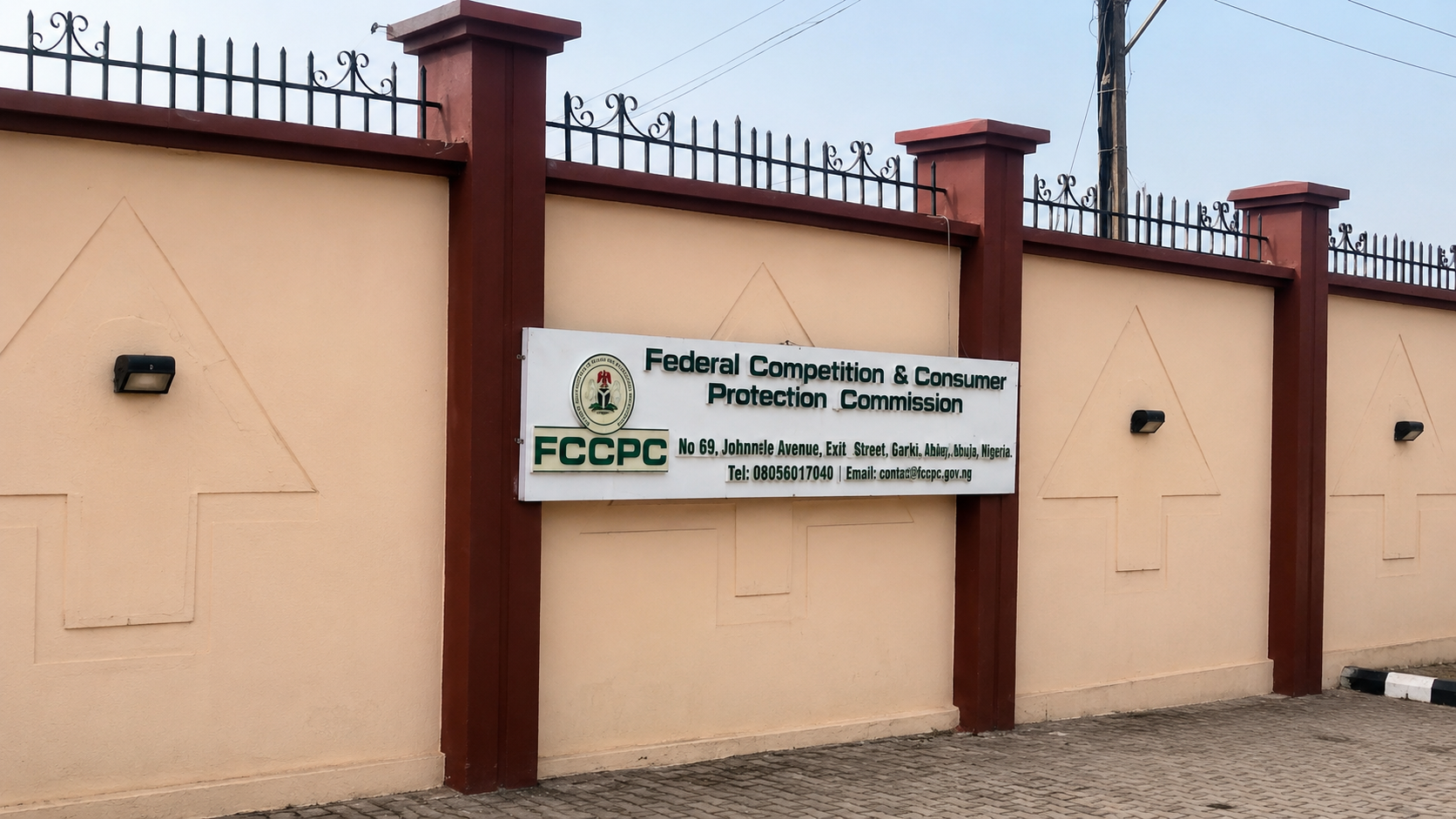

The Federal Competition and Consumer Protection Commission (FCCPC) and the Lagos State Consumer Protection Agency (LASCOPA) have stepped up efforts to address unfair practices in marketplaces, with a renewed focus on price tagging, product labelling and businesses’ obligations to honour returns and refunds where applicable.
The initiative was unveiled on Wednesday during a stakeholders’ engagement organised by both agencies in Ikeja, Lagos, as regulators sought greater compliance with consumer protection laws through dialogue with businesses.
Speaking at the event, the Executive Vice Chairman of the FCCPC, Tunji Bello, said consumer confidence remains central to a healthy marketplace, particularly in Lagos, Nigeria’s commercial hub, where millions of transactions take place daily across markets, supermarkets, shopping malls, neighbourhood stores and online platforms.
Mr Bello, represented by the FCCPC’s South-west Coordinator, Olubumi Otti, said those transactions not only drive economic growth and create jobs but also depend on trust between businesses and consumers.
“Consumers must be confident that the price they see is the price they will pay,” he said.

He added, “They must be able to rely on the information provided about the products they buy. They must also know that where the law gives them the right to a refund, replacement, or repair, that right will be respected.”
According to him, transparent business practices encourage consumer spending, build customer loyalty and promote fair competition.
He said the engagement focused on three recurring issues affecting consumers and businesses: price tagging, minimum product labelling requirements, and return and refund obligations.
“These may seem like ordinary aspects of doing business, but they play a vital role in building confidence in the marketplace.
They help consumers make informed decisions, encourage fair competition, and create a level playing field for businesses that choose to operate responsibly,” Mr Bello said.
Engagement before enforcement
Mr Bello said the commission’s objective was not merely to remind businesses of their legal obligations but to explain why compliance benefits both consumers and businesses.
According to him, the FCCPC believes engagement is often more effective than confrontation because businesses are more likely to comply when regulatory expectations are clearly understood.
“We expect businesses to deal with us honestly and transparently,” he said.
He noted, however, that the commission continues to receive complaints from consumers over avoidable marketplace practices.
Highlighting one of the issues, Mr Bello said displaying prices is a basic requirement of fairness.
“A consumer should know what an item costs before deciding whether to buy it. No one should have to take a product to the checkout before learning its price. Neither should two customers be quoted different prices for the same product simply because a seller believes one can afford to pay more than the other.”
Partnership
Also speaking, the General Manager of LASCOPA, Afolabi Sholebo, said the engagement reflected a shared commitment to making the marketplace fair, transparent and deserving of consumers’ trust.
He said businesses had recently faced regulatory sanctions over practices such as failing to display prices, selling expired products, inadequate product labelling and refusing legitimate requests for returns or refunds.
READ ALSO: FCCPC resumes digital lending regulations as court upholds powers
Mr Sholebo said compliance with pricing regulations, labelling standards and consumer redress mechanisms is a legal obligation under the Federal Competition and Consumer Protection Act, 2018, as well as the Lagos State Consumer Protection Law.
The engagement comes amid increased consumer protection enforcement by the FCCPC.
In recent months, the commission has intensified actions against businesses over alleged exploitative pricing, misleading trade practices and violations of consumer rights. It has also repeatedly urged businesses to comply with provisions of the Federal Competition and Consumer Protection Act by displaying prices clearly, providing accurate product information and respecting consumers’ rights to appropriate remedies where provided by law.
The FCCPC has consistently maintained that strengthening compliance with consumer protection laws is aimed at promoting transparency, encouraging fair competition and improving confidence in Nigeria’s marketplace.
Discover more from Premium Times Nigeria
Subscribe to get the latest posts sent to your email.



The Bank of Industry (BOI) said it will expand financing for agriculture, local healthcare manufacturing and digital businesses in 2027.
The bank stated this as it seeks to consolidate the gains of its 2025–2027 corporate strategy and strengthen Nigeria’s industrial development.
The bank’s Managing Director and Chief Executive Officer, Olasupo Olusi, disclosed the plan on Thursday at a meeting in Lagos, where he outlined the bank’s priorities for the final year of the strategy.
Mr Olusi said BOI would work with the Federal Ministry of Industry, Trade and Investment on the National Industrial Finance Compact to attract more long-term capital into Nigeria’s industrial sector.
He also said the bank would deploy its new European Investment Bank facilities to agriculture and local healthcare manufacturing to increase domestic production of food and medicines.
The funding includes €85 million secured from the European Investment Bank for agriculture and another €50 million for healthcare manufacturing in 2026, as part of more than €2.2 billion in new funding the bank has secured for Nigerian industry since 2024.

READ ALSO: BOI supports 1.68m jobs as lending rises 26% to ₦644.9 billion
“We will deploy our new European Investment Bank facilities into agriculture and local healthcare manufacturing, so that Nigeria produces more of the food and medicines it consumes,” he said.
The bank also plans to expand its information and communications technology (ICT) and digital economy portfolio through the Investment in Digital and Creative Enterprises (iDICE) programme.
Mr Olusi said the initiatives formed part of the bank’s efforts to consolidate its achievements and meet the targets of its 2025–2027 corporate strategy.
“2027 is the final year of our strategy, and our task is to consolidate and meet every target we set,” the BOI boss, Mr Olusi, said.
BOI said it disbursed N644.9 billion in 2025, reaching 12,501 businesses and supporting 1.68 million jobs.
Discover more from Premium Times Nigeria
Subscribe to get the latest posts sent to your email.

First HoldCo Plc has appointed Gwen Mwaba as a non-executive director of the financial institution, effective 15 October, following an approval by the Central Bank of Nigeria (CBN).
The lender disclosed the appointment in a regulatory filing signed by Abiola Baruwa, the group company secretary, on Thursday.
First HoldCo said the appointment was made in accordance with the Nigerian Exchange Limited (NGX) Rulebook.
According to the lender, Ms Mwaba brings significant expertise in corporate governance and board oversight, credit risk and portfolio management, banking strategy, capital deployment, structured trade and commodity finance, development finance, environmental, social and governance (ESG) issues, and emerging-market risk.
Profile
Ms Mwaba brings nearly three decades of experience in global banking and development finance institutions, with particular expertise in credit risk oversight, portfolio governance, corporate and sovereign lending, structured trade and commodity finance, development finance and emerging markets.
Until recently, she served as managing director of Trade Finance and Correspondent Banking at the African Export-Import Bank (Afreximbank), based in Cairo, Egypt.
In that role, Ms Mwaba had executive leadership responsibility for trade finance and structured credit activities across Africa and the Caribbean.
The newly appointed director also oversaw a $19.5 billion portfolio of sovereign, financial institution and corporate exposures.
She contributed to the bank’s Pre-Credit and Credit Committees, providing senior credit judgement on major lending transactions. She also oversaw portfolio strategy, sector exposures and country risk limits.
Before that, Ms Mwaba served as regional head for Anglophone West Africa at Afreximbank, overseeing regional strategy and credit origination across Nigeria, Ghana, Sierra Leone, Liberia, The Gambia and Cape Verde.
Earlier, she was executive vice president of Structured Trade and Commodity Finance at Standard Bank Plc, London, where she was responsible for complex commodity finance, export credit agency-backed facilities and pre-export financing transactions across Africa.
Her earlier banking career included senior roles at Stanbic Bank Zambia and Standard Bank South Africa, including head of Vehicle and Asset Finance and head of Corporate Banking.
READ ALSO: CBN restates single-digit inflation target as FG woos investors with tax credits
Ms Mwaba’s wider industry experience includes membership of the editorial board of Trade Treasury & Payments.
Until recently, her also served on the Multilateral Institutions Board Advisory Panel of the International Trade and Forfaiting Association (ITFA) and the World Trade Organization-led Expert Group on Trade Finance.
Ms Mwaba holds a Master of Business Administration (MBA) from Heriot-Watt University, United Kingdom, and a Bachelor of Science (Honours) degree in Applied Accounting from Oxford Brookes University, United Kingdom.
She is a Fellow of the Association of Chartered Certified Accountants (FCCA) and holds a professional qualification from the Chartered Institute of Transport.
Discover more from Premium Times Nigeria
Subscribe to get the latest posts sent to your email.
-

 News21 hours ago
Obi, Kwankwaso to hold Middle Belt Youth, Village Hall Meeting in Jos
-
News3 days ago
Meta’s Muse hits 10M U.S. downloads in 40 days, a milestone reached by only 11 other apps
-
Business3 days ago
How Your Side Hustle Income Ends Up in Your RSA
-
Business4 days ago
Mbah Rebuilds Technical College, Prepares Enugu Youths for Tech-Driven Future


