Connect with us

Education

Nigeria, UNESCO launch mobile learning for teachers

info

Published

on

Images

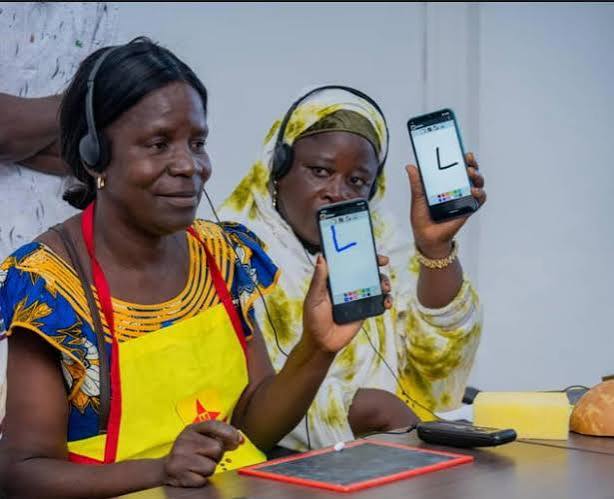
The Federal Government, in partnership with UNESCO and the Pan-African University, has launched a mobile learning initiative to improve teacher professional development through digital technology.

The programme integrates mobile-based learning into the Pan-African Virtual and Electronic University Initiative and is designed to provide teachers and school leaders with flexible access to training resources through technology-enabled learning platforms.

The three-day Master Training Programme, themed “Empowering Female Teachers and School Leaders through Integrating Mobile-based Learning in the Pan-African Virtual and Electronic University (PAVEU) Initiative,” is being implemented by the Federal Ministry of Education in collaboration with the UNESCO International Institute for Capacity Building in Africa and the Pan African University, with funding support from the Government of Japan.

According to the ministry, the initiative targets five African countries: Nigeria, Algeria, Cameroon, Kenya and South Sudan. It seeks to expand access to continuous professional development for educators, particularly female teachers and school leaders.

The Federal Government, UNESCO and Pan African University launch a mobile learning initiative to improve teacher professional development across five African countries through digital technology. Image credit: Image FX.


“The initiative leverages mobile technology to overcome barriers such as time constraints, geographical limitations and inadequate infrastructure, enabling educators to access quality learning resources anytime and anywhere through a low-data, offline-friendly platform,” the ministry said.


Mobile learning plan to address barriers facing teachers in Nigeria

The ministry said the programme aims to address barriers that have limited teachers’ access to regular training, including geographical constraints, connectivity challenges and inadequate learning infrastructure.

“The initiative leverages mobile technology to overcome barriers such as time constraints, geographical limitations and inadequate infrastructure, enabling educators to access quality learning resources anytime and anywhere through a low-data, offline-friendly platform,” the ministry said.

The programme, the Federal Ministry of Education said, places particular emphasis on female teachers and school leaders as part of efforts to promote inclusive access to professional development opportunities.

“Accessible professional development is essential to strengthening learning outcomes and building a resilient, inclusive and future-ready education system,” the ministry said.

The deployment of mobile learning tools aligns with broader efforts across Africa to use digital platforms to improve access to education and professional training. UNESCO-IICBA has previously promoted digital development programmes for teachers across the continent, focusing on improving teacher competencies and strengthening education systems through capacity building.

UNESCO’s Global Teacher Campus initiative has also focused on providing online courses to enhance teachers’ digital skills and pedagogical competencies. The organisation estimates that the world will require about 44 million additional teachers by 2030, including an estimated 15 million new teachers in sub-Saharan Africa.

The PAVEU initiative, developed under the Pan African University framework, is designed to support virtual learning and expand access to higher education and professional development opportunities across African countries through digital platforms.

The Federal Government has in recent years introduced several digital education programmes, including virtual learning platforms and digital teacher training initiatives, as part of efforts to integrate technology into Nigeria’s education system.

In 2026, the government launched the HOPE-EDU programme, a $552 million education initiative expected to support about 29 million children, more than 500,000 teachers and 65,000 public schools through improved learning outcomes and education infrastructure.

According to UNICEF, Nigeria’s education system faces a significant learning crisis, with more than 70% of children lacking foundational literacy and numeracy skills, partly due to weak teacher capacity and limited access to standardised professional development opportunities.

The challenge is compounded by digital access limitations. UNICEF reports that only 36% of Nigeria’s population uses the internet, while 47% of teachers possess basic ICT skills, highlighting gaps in educators’ ability to fully leverage digital learning tools.

UNESCO-IICBA said the initiative is built around the use of mobile platforms to provide flexible learning opportunities for teachers who may be unable to attend traditional face-to-face training programmes. The institute added that the project is designed to strengthen teacher professional development and resilience by integrating mobile-based learning solutions into national teacher education systems across the five participating African countries.

Stay ahead with real-time reports, breaking news, and exclusive insights delivered directly to your phone. Don’t settle for outdated information. Join PLATEAUREPORTS NEWS on WhatsApp for 24/7 updates.

Follow the PlateauReports channel on WhatsApp

Continue Reading
Click to comment

Leave a Reply

Your email address will not be published. Required fields are marked *

Education

Minister Pledges Pedestrian Bridges, Improved Road Access To Tertiary Institutions

info

Published

on

IMG 20260923 WA0001.jpg

The Minister of Works, Sen. Dave Umahi, has pledged the Federal Government’s commitment to providing pedestrian bridges and improving road access to tertiary institutions across the country.

Umahi made the commitment in Abuja on Tuesday while receiving the report of the Northwest leg of the Nationwide Federal Roads Project Tour conducted by the National Association of Nigerian Students (NANS).

The minister said the government had taken note of students’ concerns about road safety and access to their institutions, assuring that requests for pedestrian bridges would receive attention.

“The pedestrian bridge you requested is noted. We will do it,” Umahi said, stressing the government’s determination to address safety concerns affecting students.

He said the government had taken special note of the need to incorporate access routes to campuses into future road construction projects where possible.

“I have also taken special note of our future investment in our road construction to ensure that, where possible, we should put bridges leading to our campuses,” he said.

Umahi disclosed that the Federal Government was already responding to similar requests from some tertiary institutions, including the University of Abuja and Nnamdi Azikiwe University, Awka.

“The University of Abuja requested for pedestrian bridge, we are doing that. We are doing also that of Nnamdi Azikiwe University in Awka, they also requested,” he said.

He assured students that the ministry would continue to listen to requests aimed at improving their safety and access to educational institutions.

“As long as you make your request for the safety of our students, we will continue to listen to you,” Umahi said, commending the students for their knowledge and commitment to nation building.

The minister further said future road projects would, where possible, include spurs leading directly to tertiary institution campuses to enhance accessibility and reduce risks to students.

He said the Federal Government was intentional about completing ongoing road projects across the country, urging students to obtain firsthand information about infrastructure projects rather than relying solely on reports or social media narratives.

Umahi also encouraged students to visit project sites, inspect government projects and provide feedback on areas requiring improvement.

He disclosed that the main pavement of the first 105 kilometres of the Lagos-Calabar Coastal Highway was expected to be completed by November 2026.

The minister, however, expressed concern over the destruction of infrastructure along the Lagos-Calabar Coastal Highway, particularly around the Apapa axis, warning that vandalism could undermine the benefits of major government investments.

“I wept when I saw the level of destruction under the bridge in Apapa axis,” Umahi said, describing the damage to the infrastructure as unacceptable.

He said people were passing through the bridge piers, while trailers were reportedly being driven over the piers to move from one point to another, describing the situation as “mind-boggling damage.”

Umahi stressed that the destruction of public infrastructure, including the cutting of metals and damage to block works, should not be regarded as development.

He said public infrastructure represented the country’s future and urged citizens to protect government projects for the benefit of present and future generations.

Earlier, the NANS President, Afeez Akinteye, said the association embarked on the nationwide road project tour to physically assess ongoing and completed Federal Government projects and determine their impact on students.

Akinteye said the Northwest leg of the tour covered Kano, Jigawa, Kaduna and Sokoto states, where the delegation inspected several major federal road projects.

He listed the projects inspected to include the Kano-Kwanar Danja-Hadejia Road, Kano Northern Bypass, Kano-Maiduguri Road, Kano-Katsina Road, Kaduna-Kano Road, Kano-Kongolam Road, Abuja-Kaduna-Zaria-Kano Road and Zaria-Funtua-Sokoto Road.

Others, he said, included the Kaduna-Pambegua-Jos Road, Wusasa-Jos Road, Mando-Birnin Gwari Road, Sokoto-Badagry Road and Illela-Dukamaje Road.

According to him, the delegation also inspected the 122.89-kilometre Mando-Birnin Gwari Federal Highway in Kaduna State, which he described as strategically important for inter-state connectivity.

The NANS president said the association paid particular attention to the relevance of the projects to students because roads leading to tertiary institutions were essential to access to education.

“For Nigerian students, these roads are more than transportation routes. They are part of the daily infrastructure through which we access our campuses,” he said.

He said the Kano Northern Bypass was particularly significant because of its connection to 10 tertiary institutions across the region, adding that its completion would provide an alternative route for students and commuters.

Akinteye said the bypass would also help ease traffic pressure within Kano metropolis and strengthen inter-state connectivity.

The NANS president called for the construction of a pedestrian bridge at the Federal Co-operative College, Kaduna, along the Abuja-Kaduna-Zaria-Kano route, citing the safety of students who use the road.

He said the association was impressed by the scale and spread of the projects inspected, as well as the pace and quality of construction observed during the tour.

He said the delegation observed works involving pavement construction, earthworks, drainage, subgrade preparation and solar street lights on completed projects.

Akinteye added that NANS would continue the nationwide inspection in other regions and communicate its observations to students and the general public.(NAN)

Continue Reading

Education

South Africa: 11-Year-Old Boy Assaulted, Circumcised by Four Schoolmates in Toilet

info

Published

on

1001034422 1788422901.webp

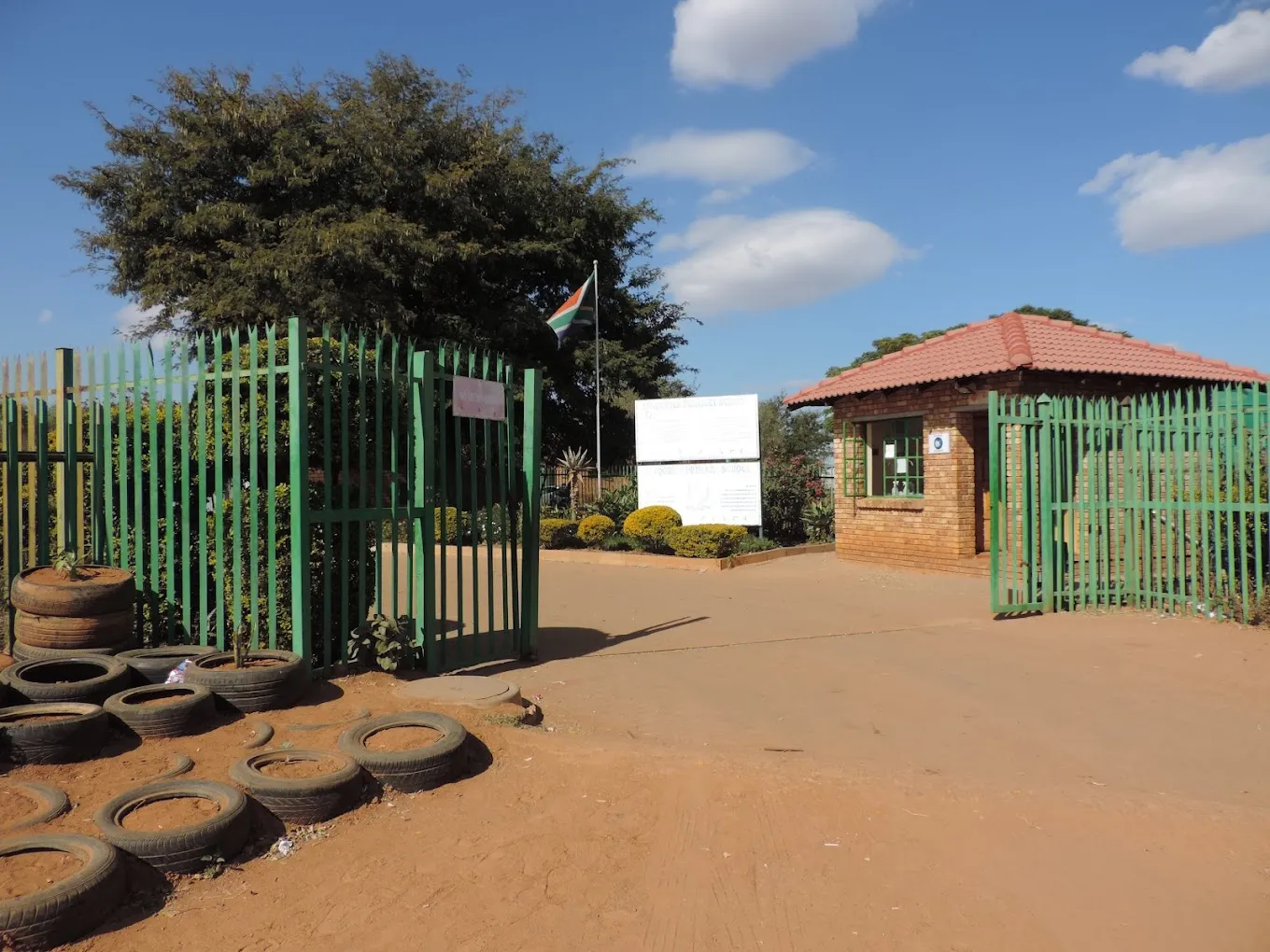
An 11-year-old pupil at Sinqobile Primary School in Soshanguve, South Africa, was allegedly dragged into a school toilet and forcibly circumcised by four older students during break time.

The Grade 5 pupil was reportedly attacked by four Grade 7 students, who allegedly pinned him down before one of them used a sharp blade to remove his foreskin.

The boy was also allegedly threatened with violence if he disclosed the incident to anyone.

According to his mother, the child returned home after the incident but initially refused to tell her what had happened. She later noticed that he was walking unusually and, days later, discovered that he was in severe pain.

The mother said her son eventually showed her his swollen private parts, prompting her to rush him to a doctor.

“He then showed me his swollen private parts and I rushed him to the doctor and it was then that we learned four pupils had circumcised him,” she said.

She said her son told her that the older boys had attacked him in the school toilets during break and threatened to beat him if he told anyone.

The mother subsequently opened a criminal case and refused to allow her son to return to school. Police later persuaded the boy to attend an identity parade, where he reportedly helped identify the four students.

South African Police Service spokesperson, Captain Tintswalo Sibeko, confirmed that a case of assault with intent to cause grievous bodily harm was being investigated.

“Our Family Violence, Child Protection and Sexual Offences Unit are investigating and no arrests have been made at this stage,” Sibeko said.

The Gauteng Department of Education also confirmed that the matter was under police investigation, while saying the school had not reported any similar circumcision attacks.

Deputy Principal George Mahlungu said the school was shocked by the incident.

“We are perplexed by what happened. This school is a place where a child should be safe,” he said.

The school has about 2,050 pupils between the ages of seven and 15.

A doctor who examined the boy reportedly said the procedure appeared to have been carried out in a manner similar to traditional tribal initiation practices. However, the doctor said a full diagnosis could not be made until the swelling subsided.

The boy’s mother said her son had become traumatised by the incident and was afraid to return to school.

Police investigations are ongoing, and no arrests had been made as of the latest report.

Continue Reading

Trending