News
‘Mission 11 Is Possible’ — Peter Ijeh Backs Super Falcons to Conquer Africa Again

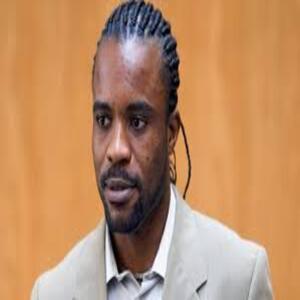
Former Super Eagles striker Peter Ijeh believes the Super Falcons have what it takes to retain their WAFCON title despite facing their toughest challenge yet from Africa’s emerging women’s football powers.
Former Super Eagles forward Peter Ijeh has backed the Super Falcons to successfully defend their Women’s Africa Cup of Nations (WAFCON) title, although he believes the 2026 edition will be one of the toughest in the competition’s history.
READ ALSO: ‘Europe Will Keep Pulling Away’ — Peter Ijeh Delivers Stark Verdict On Nigerian Football
Nigeria heads into the tournament in Morocco as the defending champions and record 10-time African champions, with the added objective of securing qualification for the 2027 FIFA Women’s World Cup.
Speaking ahead of the competition, Ijeh acknowledged that the Super Falcons remain Africa’s benchmark but warned that the gap between Nigeria and the rest of the continent continues to narrow.
“I believe Nigeria can win an 11th WAFCON title. It’s mission possible, but it won’t be easy because every team now wants to beat the defending champions,” Ijeh said.
The former Nigeria international noted that the rapid development of women’s football across Africa has made the continental championship far more competitive than in previous years.
“This tournament will be more difficult than what we’ve seen before. Countries have invested heavily in women’s football, and everyone wants to dethrone Nigeria,” he added.
Despite the growing challenge posed by teams such as hosts Morocco, South Africa, Zambia and Ghana, Ijeh believes the Super Falcons possess the experience, quality and winning mentality required to remain at the summit of African women’s football.
Nigeria has won more WAFCON titles than any other nation and enters the tournament with a squad blending experienced internationals and exciting young talents capable of extending the country’s dominance on the continent.
Beyond retaining the continental crown, the Super Falcons are also targeting qualification for the 2027 FIFA Women’s World Cup, making a strong start to the tournament crucial.
Ijeh believes that if the Super Falcons maintain their focus and handle the pressure that comes with being Africa’s most successful women’s national team, they have every chance of lifting a record-extending 11th WAFCON title in Morocco.







The United States has expressed support for Nigeria’s ongoing efforts to tackle renewed violence in Plateau State, particularly in communities around Barkin Ladi Local Government Area.
The U.S. government said it would continue to work with Nigerian authorities to protect Christian communities in the Middle Belt.
It also urged the Nigerian government to sustain its security response following fresh attacks that left several people dead in parts of Plateau State.
The statement was issued against the backdrop of renewed violence in Barkin Ladi and neighbouring areas, where residents have faced attacks, killings and displacement in recent days.
“The United States commends Nigeria’s strong response to the latest attacks from Fulani militant groups,” the U.S. Bureau of African Affairs said.
“We will continue to work with the Nigerian government to protect Christians in the Middle Belt. We urge Nigeria to continue the momentum and defend the Barkin Ladi communities in particular.”
The comments have drawn attention to the worsening security situation in Plateau State, especially communities that have suffered repeated attacks over the years.
The latest violence occurred between Saturday, September 19, and Sunday, September 20, with reports of killings in Barkin Ladi, Riyom and surrounding communities.
At least nine people were reported killed during the latest incidents.
Five of the victims were passengers travelling towards Gana-Ropp in Barkin Ladi Local Government Area when they were ambushed.
The victims were reportedly labourers travelling to the area when gunmen attacked them.
The Pyem Youth Leader in Gana-Ropp, Ukasha Garaba, confirmed that the bodies of five victims had been recovered from the area.
“We evacuated the corpses of five persons from Gana-Ropp. They were passengers who were travelling as labourers.”
The attack was followed by another incident in Dorowa Babuje, also in Barkin Ladi.
Two people, including a pastor, were reportedly killed while travelling to church.
The incident caused fresh tension in the community and surrounding areas, with residents reporting continued gunfire around the Kantoma axis.
Women and children were reportedly moved to safer locations as residents feared further attacks.
A community member, Lawrence Shong, said: “As I speak to you, at about 12:15 p.m. on Sunday, we are still hearing sounds of gunshots. Women and children are currently being evacuated because of the ongoing attack.”
The spokesman of the Berom Youth Moulders, Rwang Tengwong, also called for a stronger and sustained security presence in the affected communities.
“Military personnel have been drafted to the community, and what we need now is sustained security deployment to protect the people and prevent further attacks.”
The fresh incidents were not restricted to Barkin Ladi.
A woman was reportedly killed at Baten Wereng in Riyom Local Government Area on Saturday night, while another person was killed at Ratyidi in the Fan District.
Several cattle were also reportedly killed or stolen around Dorowa Maranba and the Kantoma axis.
Gambo Abubakar, Secretary of the Miyetti Allah Cattle Breeders Association of Nigeria in Barkin Ladi, confirmed the reports of cattle being stolen and called on security agencies to investigate the incident.
Earlier in the month, nine passengers were reportedly killed after gunmen attacked a commercial vehicle at Dungus Junction in Kuru community, Jos South Local Government Area.
Other deadly incidents were also reported in Mangu and Riyom, further raising concerns about the security of rural communities and people travelling between them.
The recurring attacks have affected different categories of residents, including farmers, traders, travellers, herders, religious workers and members of local security groups.
The situation has also placed additional pressure on security agencies operating in Plateau State.
Plateau State Governor Caleb Mutfwang has repeatedly maintained that his administration is working with security agencies to confront those responsible for attacks and protect residents.
Following the latest killings, the governor said he remained committed to protecting the people of the state.
“I cannot abandon my responsibility of securing the people of Plateau State. We will protect our people with all that we have, within the ambit of the law. Plateau State will not be defeated by violence or the gun. We must remain united because our collective strength is critical to overcoming the challenges confronting us.”
In a related development, Politics Nigeria reported on September 24 that the Plateau State chapter of the Miyetti Allah Cattle Breeders Association of Nigeria warned against attributing the killing of Deputy Commander of Operation Rainbow, CSP Dennis David Babale, to Fulani people without credible evidence.
Babale was reportedly ambushed by gunmen while travelling along the Bokkos-Barkin Ladi road on September 22.
He later died from injuries sustained during the attack.
The development underlines the difficulty surrounding the security crisis in Plateau, where communities have repeatedly accused one another of attacks and reprisals.
.
-

 News4 days ago
Crusoe abandons $1.25B plan to use Boom turbines at AI data centers
-
News3 days ago
Alex Otti should be campaigning for Peter Obi not backing Tinubu – NDC
-
News4 days ago
At Meta Connect, the company’s smart glasses were everywhere
-
News3 days ago
I created an interactive digital avatar of myself — and you can talk to it