News
Glasgow 2026: History Made! Abduljabar Adama Finishes Fifth in Commonwealth Games Final, Announces Nigeria’s Arrival in World Swimming


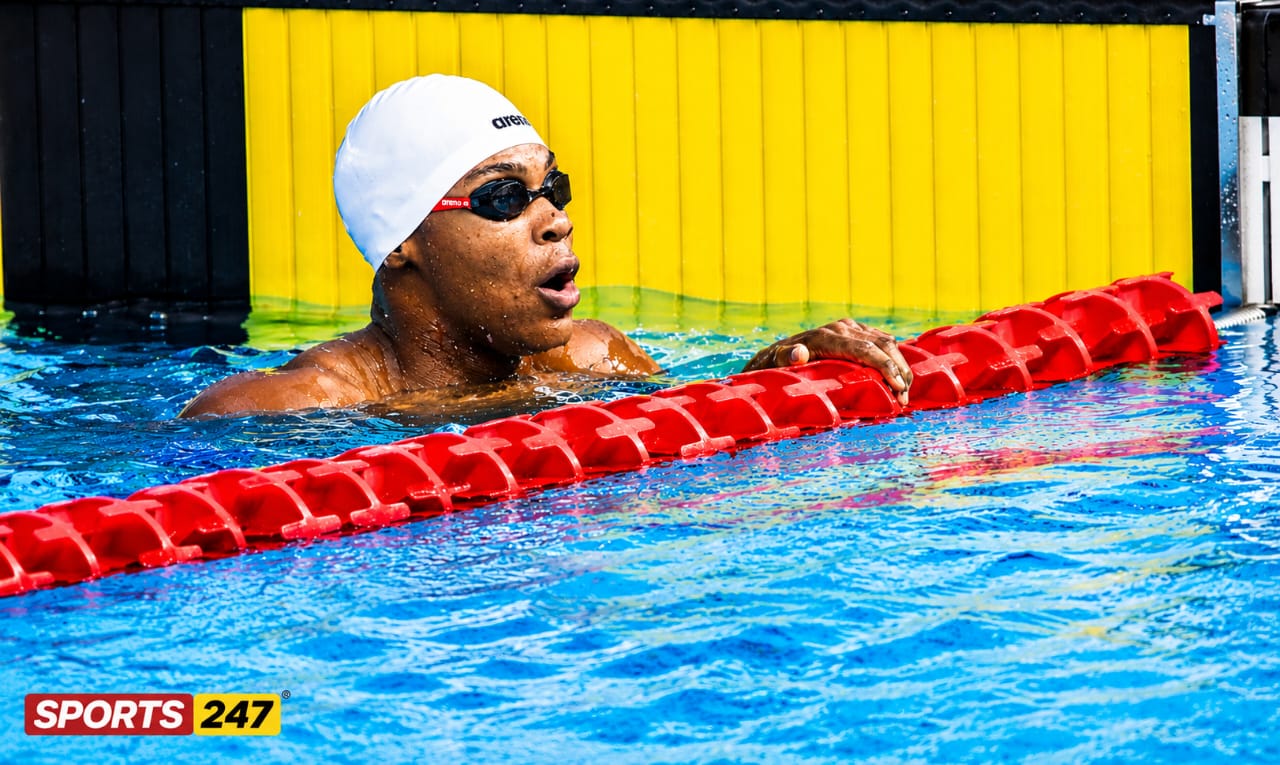
He may have missed out on a medal, but Abduljabar Adama achieved something that could prove even more significant for Nigerian swimming.
The 18-year-old sensation became the first Nigerian swimmer to compete in a Commonwealth Games men’s 50m Butterfly final, finishing an impressive fifth in a world-class field at the Glasgow 2026 Commonwealth Games.
Read Also: “History Is Being Made in Glasgow, and Nigeria Must Build on This Momentum” — SSA Adeboye
Adama stopped the clock at 23.42 seconds, holding his own against some of the biggest names in international swimming.
Australia dominated the race as Kyle Chalmers and Ben Armbruster shared the gold medal after both clocked a Games Record-equalling 22.73 seconds, while fellow Australian Cameron McEvoy claimed bronze in 22.92 seconds. Canada’s Joshua Liendo finished fourth ahead of the Nigerian, with England’s Jacob Peters, South Africa’s Calvyn Justus and Scotland’s Dean Fearn completing the finalists.
For Nigeria, however, the biggest victory was Adama’s presence in the final itself.
No Nigerian man had ever reached the final of the Commonwealth Games 50m Butterfly before now, making the teenager’s achievement another landmark moment in the country’s sporting history.
It is the latest chapter in the rapid rise of one of Africa’s brightest swimming talents.
Adama first grabbed global attention in 2025, when he became the first Nigerian swimmer ever to win a medal at a World Aquatics Championship, claiming silver in the Men’s 50m Butterfly at the World Aquatics Junior Championships in Otopeni, Romania. During that unforgettable championship, he broke the Nigerian record twice in one day, lowering the national mark in both the heats and semi-finals before securing his historic silver medal. His achievement sent shockwaves through Nigerian swimming and established him as one of the sport’s most exciting young prospects.
The youngster, who trains at the Mount Kelly Swimming Academy in the United Kingdom, has continued to improve with every major competition and is widely regarded as one of Nigeria’s brightest hopes for future global championships and the Los Angeles 2028 Olympic Games, where the 50m Butterfly will make its Olympic debut.
His run to the Glasgow final was equally impressive. Adama progressed confidently through the heats before producing another outstanding performance in the semi-finals to become the first Nigerian to book a place in the championship race.
Although he narrowly missed the podium, his fifth-place finish represents one of the finest performances ever by a Nigerian swimmer at the Commonwealth Games and reinforces the country’s growing reputation in a sport long dominated by traditional powerhouses such as Australia, Canada and England.
For Team Nigeria, Adama’s achievement is another reminder that Glasgow 2026 has become a Games of historic breakthroughs.
From Goodness Nwachukwu’s world record in para athletics, to Kayinsola Ajayi’s first Nigerian men’s 100m medal in 20 years, Temitope Adeshina’s historic high jump bronze, and the weightlifting heroes rewriting Commonwealth Games records, Nigeria has continued to produce performances that are changing perceptions on the international stage.
Abduljabar Adama may return home without a medal around his neck, but he leaves Glasgow with something equally valuable—a place in Nigerian sporting history.
At just 18 years old, his journey is only beginning. If his remarkable rise over the past two years is any indication, the best is yet to come for the young swimmer who has already dared to take Nigerian swimming where it has never been before.


The presidential candidate of the Young Progressives Party, YPP, Architect Peter Agada, has criticised the All Progressives Congress, APC, administration’s 90-day action plan to ease the cost of living, describing it as a campaign strategy that does not reflect Nigeria’s economic realities.
Agada told reporters in Abuja that the government had introduced several economic interventions without achieving the desired results.
The criticism followed the announcement by the Minister of Finance and Coordinating Minister of the Economy, Wale Edun, that the National Economic Council, NEC, had approved a 90-day plan to address the rising cost of living.
Agada argued that the government should consider a Labour-direct ward-to-ward development strategy, which he said could reach Nigerians within 60 days.
“Labour-direct the ward-to-ward strategy remains an option that can capture all Nigerians within 60 days of implementation. We said 60 days; about 20 days are gone before the elections,” he said.
He urged the government to engage individuals with practical solutions to improve the economy, particularly at the grassroots level.
According to him, the government should incorporate the Labour Direct Information Network into its proposed monitoring dashboard to track projects, employment, production, feedstock, outputs, taxes and revenue through a single application.
Agada also questioned the effectiveness of previous government measures, including subsidy interventions, fuel price reduction proposals and the removal of illegal levies.
“I think that I align with those who opined that the economic team of Mr. President has failed to address Nigeria’s numerous economic challenges,” he said.
He added that the government’s repeated announcements had raised doubts about the effectiveness of its economic management.
“All his intervention plans, including the reduction of pump price, which did not go in line with NNPC and CNG, and he also talked about the removal of illegal levies, and nothing was done,” Agada said.
The YPP candidate questioned the timing of the 90-day plan, arguing that its implementation period extended beyond the forthcoming election.
“These promises back and forth are for Nigerians to believe and vote them back into office,” he said.
“If you believe in the rules of the game they are playing, there are just 85 days to the election, and you are saying a 90-day timeline to cushion the cost of living. So after the election, what happens?”
Agada further alleged that previous interventions announced by President Bola Tinubu’s administration had failed to deliver the expected relief to Nigerians.
He cited proposed funding for manufacturing, micro, small and medium enterprises, conditional grants, grain and fertiliser distribution, agricultural production and rice farmers as examples of earlier measures.
He also questioned the decision to remove tariffs on food imports, arguing that the policy had failed to bring food inflation under control.
The YPP candidate noted that other announced measures included funding for compressed natural gas, CNG, infrastructure development and an increase in the minimum wage.
Agada urged Nigerians to scrutinise the government’s latest economic proposals and demand accountability for previous commitments.
He said the proposed monitoring dashboard should include monthly employment figures to establish whether government interventions were creating jobs.
“Let us look at these things critically: if he says he is looking at a raft of measures now to be able to change what he has cost in the past three years, how feasible is it going to be? And that is why we are saying that Nigerians need to be circumspect; we need to hold government to account,” he said.
He maintained that without measurable results, the 90-day action plan could amount to a political strategy ahead of the 2027 general election.
High cost of living: ‘It will yield no result’ – YPP’s Agada faults Tinubu
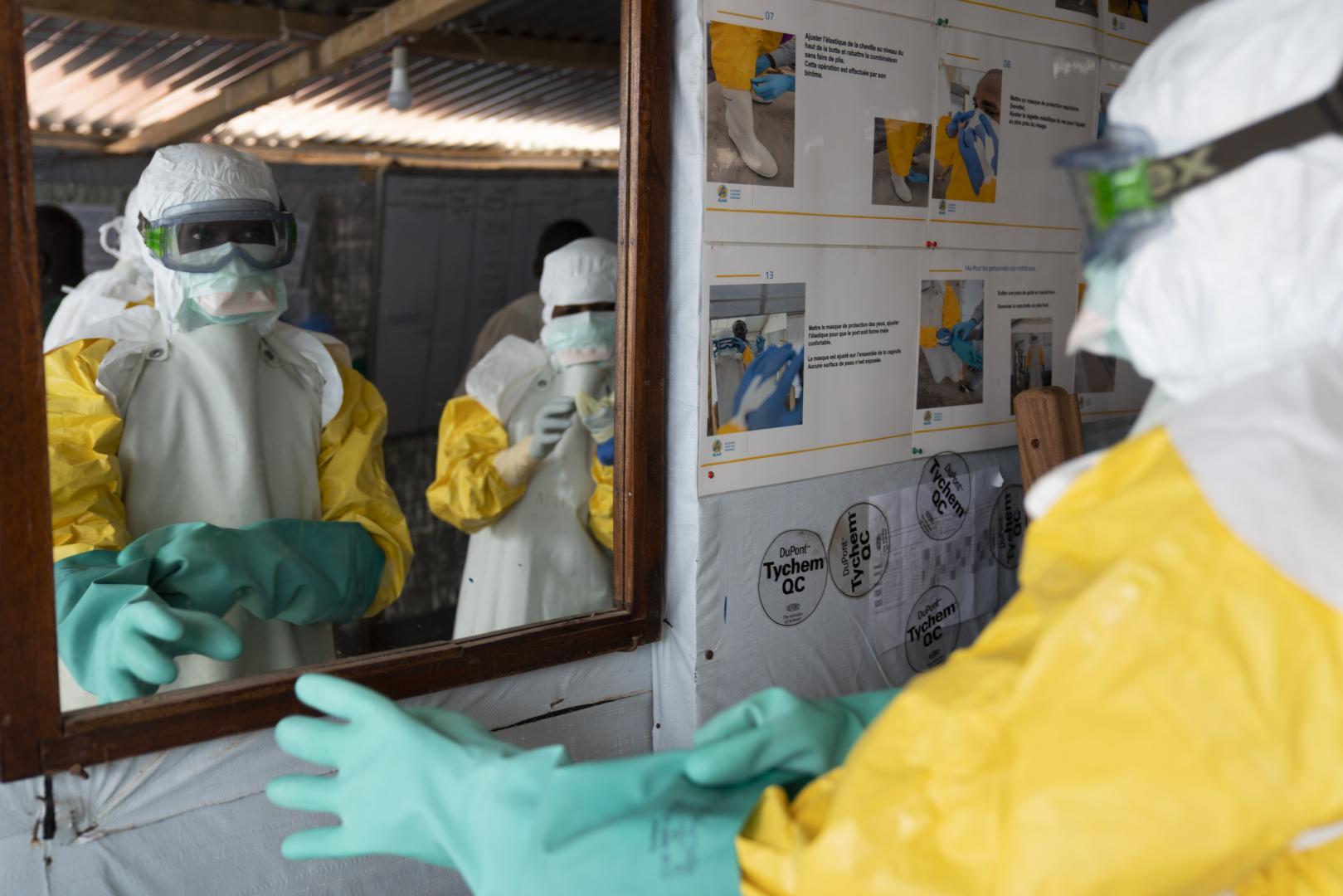
Uganda has barred travellers with a history of travel to the Democratic Republic of the Congo (DRC) from transiting through the country as it investigates the traveller who tested positive for Ebola disease in Nigeria.
The Ugandan Ministry of Health announced the measure on Friday, alongside the reinstatement of traveller locator forms “to facilitate timely follow-up and contact tracing where necessary.”
“The Ministry of Health wishes to update the country on an ongoing investigation into the traveller who tested positive for Bundibugyo Virus Disease in Nigeria.
“Available information indicates that the traveller did not exhibit symptoms at the time of departure from Uganda. However, investigations are continuing to establish the timing of symptom onset and the circumstances surrounding her infection,” the ministry noted in a statement signed by its Director General of Health Services, Charles Olaro.
It added that Uganda is working with Nigerian health authorities to establish the traveller’s full travel history, movements and possible exposure. It has also requested additional information from Nigeria, including detailed travel records and genomic sequencing results, where available.
The country insisted that it “remains Ebola-free.”


Uganda had earlier battled an outbreak of Ebola disease caused by the Bundibugyo virus, which was declared on 15 May 2026 after cases were imported from the DRC.
The country recorded 20 confirmed cases, including two deaths, before declaring the outbreak over in August after 42 days without a new locally acquired case.
As of 20 October, the DRC had recorded 9,704 confirmed cases and 4,687 deaths across eight provinces, according to the World Health Organisation (WHO).
Uganda tightens controls
The ministry said infection prevention and control measures had been reinforced at all points of entry and exit and health facilities, while surveillance continued across the country.
It also warned that provisions of Uganda’s Public Health Act would be invoked where public health requirements were breached.
The ministry urged communities to report suspected unauthorised border crossings to relevant authorities for screening and public health follow-up.
The ministry urged travellers and the public to remain calm and vigilant, practise proper hand hygiene and comply with screening and other public health measures.
Earlier Uganda clarification
Uganda’s latest measures follow an earlier clarification after Nigeria announced its Ebola case and said the patient had arrived on an international flight from Uganda.
On 21 October, Uganda said the traveller’s passage through the country does not establish that she contracted Ebola there. The ministry said preliminary information indicated that she had travelled to eastern DRC for business before passing through Uganda and that she had not shown symptoms while in the country.
Uganda also said at the time that it had no active Ebola cases. The latest statement maintains that position, saying investigations with Nigerian authorities are still ongoing.
Nigeria case linked to Kenya
On Friday, Nigeria announced a genomic finding showing that the virus detected in its patient is highly similar to the virus found in Kenya’s first imported case.
Nigeria’s Coordinating Minister of Health and Social Welfare, Muhammad Pate, said the finding does not establish that the Nigerian patient was infected in Kenya, as there was no evidence that she had travelled there.
The Africa Centres for Disease Control and Prevention (Africa CDC) had earlier said it was investigating a possible link between the Nigerian and Kenyan cases because both patients travelled through Uganda’s Entebbe International Airport on 3 October.
Kenya’s first case was imported from the DRC through Uganda. The country has since recorded nine confirmed cases, including two deaths, with the eight additional cases linked to the first patient.
Discover more from Premium Times Nigeria
Subscribe to get the latest posts sent to your email.
-

 News1 day ago
Obi, Kwankwaso to hold Middle Belt Youth, Village Hall Meeting in Jos
-
News4 days ago
Meta’s Muse hits 10M U.S. downloads in 40 days, a milestone reached by only 11 other apps
-
Business3 days ago
How Your Side Hustle Income Ends Up in Your RSA
-
News3 days ago
Blacksmith hits unicorn valuation after Sequoia leads Series C