Connect with us

News

Justice Veronica Julcit Dadom Elevated to Court of Appeal, Marks New Chapter in Distinguished Judicial Career


info

Published

on

IMG 7987.jpeg

The Nigerian judiciary has recorded another significant milestone with the elevation of Hon. Justice Veronica Julcit Dadom to the prestigious position of Justice of the Court of Appeal of Nigeria, a recognition of her years of exemplary service, integrity, and commitment to the administration of justice.

Justice Dadom’s elevation is being celebrated by members of the legal profession, judicial officers, public servants, and well-wishers across Plateau State and beyond, who have described the appointment as well-deserved and a testament to her outstanding contributions to the nation’s judicial system.

Throughout her career on the bench, Justice Dadom has earned a reputation for diligence, fairness, professionalism, and unwavering dedication to the rule of law. Her judgments and conduct have consistently reflected a deep commitment to justice, equity, and the protection of fundamental rights, earning her the respect of colleagues, lawyers, and litigants alike.

Before her elevation, Justice Dadom served with distinction as a Judge of the High Court, where she handled numerous civil, criminal, and constitutional matters with exceptional competence. Her legal reasoning, attention to detail, and adherence to judicial ethics contributed significantly to strengthening public confidence in the justice system.

Her appointment to the Court of Appeal represents not only a personal achievement but also a major source of pride for Plateau State and the legal community. The Court of Appeal occupies a critical position within Nigeria’s judicial hierarchy, serving as the intermediate appellate court that reviews decisions from lower courts and ensures the proper interpretation and application of the law.

Legal practitioners have noted that Justice Dadom’s wealth of experience and sound judicial temperament will further enrich the appellate court and contribute to the continued development of Nigerian jurisprudence. Many observers believe that her elevation comes at a time when the judiciary requires experienced and principled jurists capable of upholding justice and safeguarding democratic values.

Tributes have continued to pour in from various quarters, with many describing Justice Dadom as a role model for young lawyers and aspiring judicial officers. Her journey through the legal profession is seen as an inspiring example of hard work, perseverance, excellence, and dedication to public service.

The elevation also underscores the increasing recognition of the important role women continue to play in the Nigerian judiciary. Over the years, female judicial officers have made remarkable contributions to the growth of the nation’s legal system, and Justice Dadom’s appointment further strengthens that legacy.

As she assumes her new responsibilities at the Court of Appeal, expectations remain high that Justice Veronica Julcit Dadom will bring the same level of integrity, wisdom, and commitment that have characterized her judicial career. Her appointment is widely regarded as a victory for merit, professionalism, and the continued pursuit of excellence within Nigeria’s justice sector.

With this elevation, Justice Dadom joins the ranks of some of the nation’s most accomplished appellate jurists, further cementing her place among distinguished legal minds dedicated to advancing justice, protecting the rule of law, and strengthening Nigeria’s democratic institutions.

:::

Congratulations to Hon. Justice Veronica Julcit Dadom on this remarkable achievement and milestone in service to the nation.

Continue Reading
Click to comment

Leave a Reply

Your email address will not be published. Required fields are marked *

Business

WAICA Relocates Secretariat to New Office in Accra

info

Published

on

The West African Insurance Companies Association (WAICA) has announced the relocation of its Secretariat from the National Insurance Commission (NIC) building in Ghana to a new rented facility at Pyramid House, on the fourth floor, along Ring Road in Accra.

The association disclosed this in a notice issued on behalf of its President, Governing Council and entire membership, explaining that the relocation was necessitated by the expansion of its operations to better serve its growing membership across West Africa.

According to the notice signed by Davies Ivasere, Secretary General/Chief Executive Officer of WAICA, the association had enjoyed the generosity and hospitality of Ghana’s National Insurance Commission, which had provided accommodation for its Secretariat since its inception.

However, as the association expands its activities and pursues new strategic initiatives, it has moved into dedicated office space to support its growing operational needs.

“Since inception, WAICA has enjoyed the immense generosity and hospitality of the National Insurance Commission (NIC), Ghana, which has graciously housed our Secretariat. As our operations expand to better serve our growing membership across West Africa, we have transitioned into dedicated office space to accommodate our strategic initiatives,” the notice stated.

The association consequently advised its stakeholders, members and partners to direct all correspondence relating to the WAICA Secretariat to its new address with immediate effect.

WAICA expressed appreciation to its partners for their continued support and commitment to advancing the insurance industry across the West African sub-region.

The relocation marks an operational development for the association as it seeks to strengthen its capacity to serve insurance companies and promote the growth of the regional insurance market.

The post WAICA Relocates Secretariat to New Office in Accra appeared first on Business Today NG.

Continue Reading

News

How OpenAI turned its coding tools into dots, an always-on personal assistant

info

Published

on

55593495974 7bfdac6a15 k.jpg

The always-on AI personal assistant, which keeps working in the background even when you aren’t asking it to, is this year’s answer to the question of how people will actually use deep learning models. The startup Instinct became an overnight sensation, and Meta put the full force of its marketing behind its assistant, Muse.

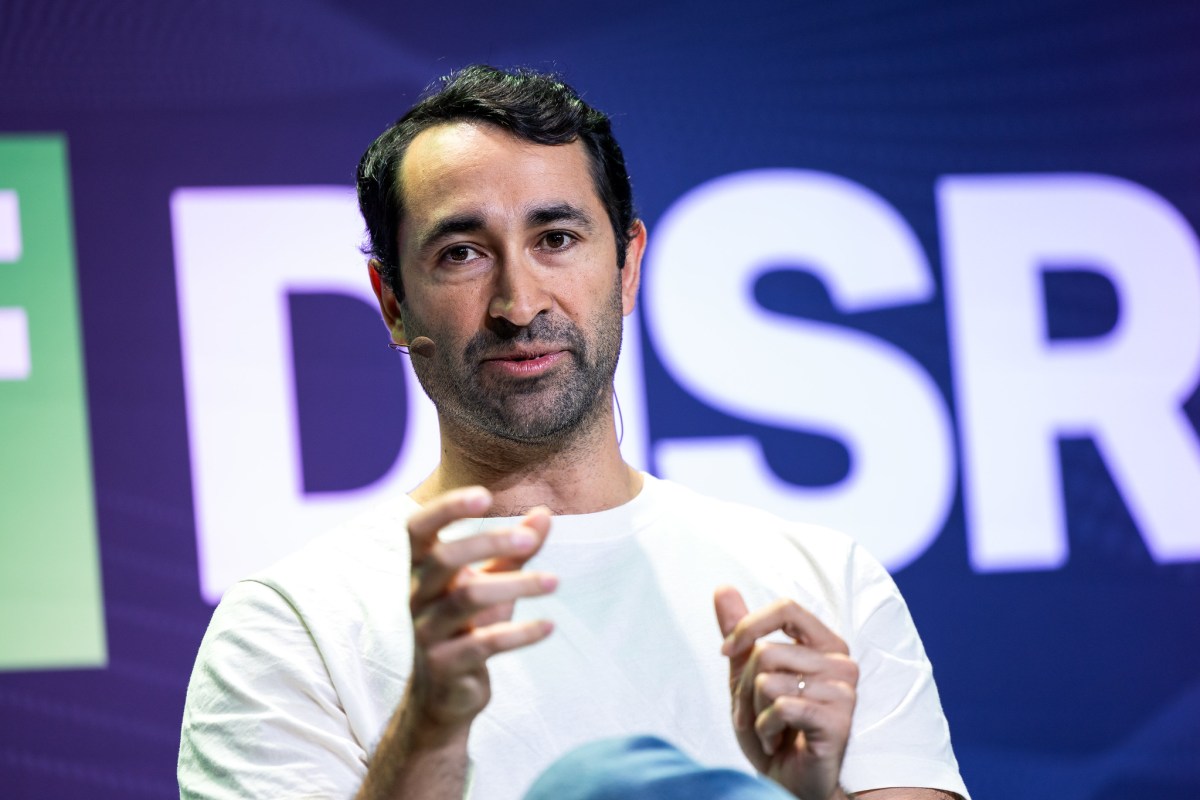
OpenAI wasn’t going to be left out. The company released dots, its assistant offering, at its developer day in late September. Alexander Embiricos, who leads OpenAI’s enterprise product team, joined us at TechCrunch Disrupt this month to explain where the product came from—starting with the question of why so many companies seem to be turning to cutesy mascots as avatars for their trillion-parameter matrix multiplication machines.

“There’s kind of this convergent evolution happening,” Embiricos said of the efforts to build AI assistants. “As we were working on the product, we realized if we could frame this as, it’s an entity and it’s a single conversation, not many different conversations….it starts to become intuitive.”

The assistant is available in the ChatGPT desktop and mobile apps to subscribers on the Pro tier or higher, with plans starting at $100 a month. Once it is connected to your calendar, email, computer and other tools, the agent tries to help you get your work done.

Embiricos points out that you could achieve much of dots’ functionality with Open AI’s Codex app, its coding tool, released at the beginning of this year. But that requires more work and hand-holding. He recalled celebrating when his wife started leaving her computer on all night so that her agents could keep working.

“On the product team, what I think about is, how do we make this intuitive and useful to people?” he told Disrupt attendees. “A lot of that isn’t building some new piece of tech into the product; it’s how you frame it to the user and how it feels.”

Making the technology feel intuitive meant repackaging the functionality of the company’s models into something more accessible, a path it was already on as it spun ChatGPT Work out of the agentic coding tools it had built for software engineers. Even the name—a play on the negative space inside of OpenAI’s logo—is intended “to feel like just something that could eventually be ubiquitous.” (Asked when he learned that rival AI entrepreneur Elon Musk owns the dot.com URL, Embiricos said, “I found out very late.”)

The idea of a persistent agent is that it doesn’t need prompting. For OpenAI, means more token usage, and for users, a more pro-active assistant “that’s sort of thinking about you and thinking how to help you,” as Embiricos put it.

In our testing, the assistant’s ability to think ahead is apparent and often useful, but it isn’t quite there yet. It will flag calendar conflicts and upcoming deadlines, but not necessarily in the most timely fashion.

“The first time it told me about one of those [conflicts]—this is like early in development—it told me three minutes before the thing,” Embiricos says of his dot. “It’s like, ‘Hey, this thing is coming up. You might want to do something about it.’ I only have three minutes!”

Embiricos expects the timing to improve over time, but the proactive approach is key to the product. “I was hearing about an engineer at a drone delivery startup, and they were saying, ‘We had this outage, and by the time I noticed that the outage was going on, my dot had already noticed the outage was happening, had already analyzed the outage, and had come to me with useful information for how we could resolve the outage.’”

Giving dot the keys

As with most AI agent use cases, there’s a tension between the personal information an AI model needs to be useful and exactly how much personal data you are exposing to a software company. Muse has been criticized for the profiles it builds of your family and friends, which the software uses to know, say, what kind of restaurant you might want to go to with a specific pal, but could also add incredible value to Meta’s advertising business. Does dots collect similar data?

“Yes, we have a thing that we built into dots, which we call proactive research,” Embiricos said. “On a cadence, it will think about what it knows about you, what is the conversation that it’s had, and then what have you given it access to that it can think about, and then it will go and research, ‘What could I do to be more helpful to you?’ And then, basically, it will propose that.”

It’s difficult to separate the data needs of the agent from that of its parent corporation. Hark, a start-up developing its own AI personal assistant, is explicit in pointing out it that it doesn’t collect data to fuel an advertising business the way that OpenAI and Meta do.

With dots, OpenAI says that the agent has the same privacy controls as ChatGPT itself: Users can turn off model training (stopping OpenAI from using their conversations to improve its AI), and control what resources it accesses within your computer and how. Still, those controls aren’t granular and the app can be pushy. For example, it refuses to accept read-only access to cloud drives.

“What I think we need to do is basically build out super, super, super granular controls,” Embiricos said, but he pointed to the model’s intelligence and discretion as the other side of this coin.

“This is actually something we kind of got some flack about when we launched,” Embiricos said. “We had really conservative defaults over what the agent would do, and it would ask for permission a lot. I remember knowing that we were going to see that feedback, but thinking, ‘This is okay, we can tune that over time.’”

Can personal AI agents scale?

The other big question about AI agents is whether they can scale. They’re fun when only a few people have them, and stories of agents snagging hard-to-get reservations abound. But businesses don’t necessarily like dealing with agents and might not be equipped to. People certainly don’t like dealing with them (note: stop having your AI agents pitch me), and Embiricos is among those people. He also has a human assistant because OpenAI’s corporate partners want to interact with a person, he said, adding, “I personally never intend to have a meeting with someone else’s agent.”

If the AI industry is right that agents are our future, can we get there without overwhelming the infrastructure that our world currently runs on, from businesses and websites to payment networks?

“At OpenAI…we’re not always moving the fastest in terms of shipping the next ability for the agent to work with the world,” he said. “When we do, we’re doing it really closely in collaboration with the rest of the ecosystem. I probably can’t say too much here, but we’re deep in lots of conversations with payment processors.”

Letting an AI assistant spend money through partnerships with payment companies would be a potentially lucrative first for OpenAI, but also a big ask for consumers. Giving an assistant access to my email inbox already feels like a big ask, but my bank account is off limits. For now.

When you purchase through links in our articles, we may earn a small commission. This doesn’t affect our editorial independence.

Continue Reading

Trending