Health
FG releases outbreak response funds to states to boost Ebola preparedness

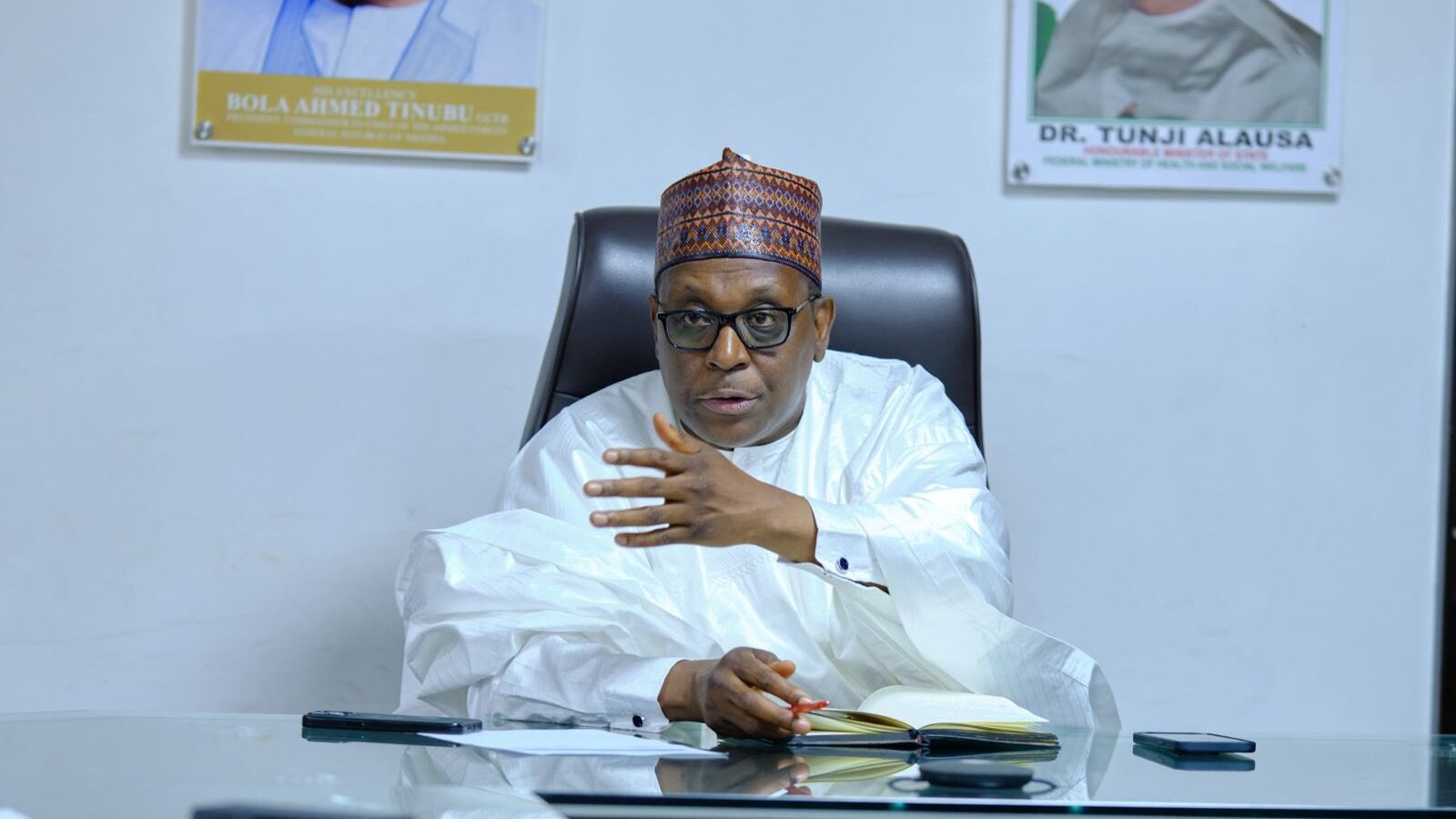

The federal government has approved the release of State Outbreak Investigation and Response Funds (S-OIRF) to support outbreak preparedness and response activities nationwide.
The move is part of ongoing efforts to strengthen Nigeria’s readiness against Ebola Virus Disease (EVD) and other emerging public health threats.
This was made known on Saturday in a statement released by the Federal Ministry of Health and Social Welfare and signed by the Assistant Director, Information & Public Relations, Ado Bako.
The approval, granted by the Coordinating Minister of Health and Social Welfare, Muhammad Pate, authorises the disbursement of 50 per cent of the S-OIRF allocation, amounting to N21.2 million for each state, through the Nigeria Centre for Disease Control and Prevention (NCDC) Gateway of the Basic Health Care Provision Fund (BHCPF).
According to the government, the intervention complements ongoing efforts to strengthen national preparedness and response capacities, including the work of the multi-sectoral Presidential Task Force on Ebola Preparedness and Other Health Threats, chaired by the Chief of Staff to the President, Femi Gbajabiamila.

No confirmed Ebola case
The government said Nigeria currently has no confirmed case of Ebola Virus Disease, but noted that the release of the funds is intended to ensure states have the resources needed to strengthen surveillance, preparedness and rapid response systems in the event of any public health emergency.
It explained that the approval represents a one-time special dispensation to enable states to access critical preparedness funding amid growing concerns about emerging public health threats.
The government added that the measure also highlights its commitment to accountability and prudent management of public resources.
‘States must account for funds’
As chairman of the BHCPF Ministerial Oversight Committee, Mr Pate directed all beneficiary states to retire both current and previously disbursed outbreak response funds within six months.
He also instructed states to comply fully with established financial management, reporting and accountability requirements.
“Preparedness remains one of the most effective tools in protecting public health. While it is important that states have timely access to resources needed to strengthen outbreak preparedness and response capacities, it is equally important that public funds are managed responsibly and accounted for in line with established regulations,” Mr Pate said.
READ ALSO: Cross River activates Ebola response system, intensifies border surveillance
Mr Pate said the approval demonstrates the government’s commitment to strengthening health security while maintaining accountability, adding that efforts would continue to support states in improving their ability to prevent, detect and respond to public health threats in a transparent and responsible manner.
Background
The federal government’s action followed renewed Ebola outbreaks in the Democratic Republic of the Congo and Uganda, prompting concerns about the risk of cross-border transmission.
Authorities subsequently announced plans to strengthen surveillance at airports and land borders, activate isolation and referral facilities, and improve coordination among health, aviation and security agencies.






The federal government has announced plans to invest an additional $3 billion in Nigeria’s health sector by 2030 as part of efforts to reduce dependence on foreign assistance and strengthen domestic health financing.
The Coordinating Minister of Health and Social Welfare, Muhammad Pate, said this on Monday in Abuja at a media conference announcing the fifth Global High-Level Ministerial Conference on AMR, scheduled for 6 -8 December, 2026.
Mr Pate said the conference, the first to be hosted on African soil, would focus on translating global commitments into practical actions with the theme, “One Health: Advancing Global AMR Commitment through Local Action”.
He was responding to questions on the health Memorandum of Understanding (MoU) between Nigeria and the United States.
The News Agency of Nigeria (NAN) reports that Nigeria and the United States signed a five-year bilateral health MoU on 19 December 2025, under the US America First Global Health Strategy.
Mr Pate said the planned investment was part of a transition arrangement under which both countries would work towards Nigeria fully financing its health sector by 2030.

“From now until 2030, the expectation is that the federal government will put in $3 billion into health, which is more than what the US government will contribute as it ramps down its contribution,” he said.
He said the arrangement reflected Nigeria’s position that long-term dependence on external assistance was not in the country’s national interest.
“Our position is that dependency in the long run is not in our national interest on external support,” he said.
“We articulated that we want Nigeria to exit from dependency from other entities over time.”
Health financing
Mr Pate acknowledged that achieving self-sustaining health financing would require increased domestic investment, noting that Nigeria was not yet in a position to fully fund its health sector.
He said 15 Nigerian government institutions, including the ministries of Foreign Affairs, Finance, and Health and Social Welfare, participated in articulating Nigeria’s position during negotiations with the United States.
According to him, the US had supported health programmes in Nigeria for about 25 years, including interventions for HIV, tuberculosis and malaria, benefiting millions of Nigerians.
However, following a shift in US government policy in 2025, Nigeria decided to assume greater responsibility for financing its health programmes.
“How do we own it responsibly? So, with the US government, we agreed that we will have a transition. By 2030, they exit and we exit. That means we fully fund our health sector,” he said.
Mr Pate said President Bola Tinubu had increased domestic health allocations, including providing six per cent of the government budget for health, as part of efforts to strengthen Nigeria’s contribution.
He emphasised that sustainable financing would require all three tiers of government to increase spending on citizens’ health.
Mr Pate said the transition was intended to strengthen Nigeria’s ownership of health programmes and reduce reliance on funding decisions made by other countries.
“We cannot rely on somebody else’s taxpayers funding for the health of Nigerians,” he said.
On concerns surrounding the MoU, Mr Pate described it as a non-binding framework for cooperation, anchored on Nigeria’s national policies and laws.
“The MoU that was signed with the US government is a non-binding MoU. It is anchored on Nigerian policy, national policies and laws, does not subvert our sovereignty or subvert US government sovereignty over their resources.
“It’s also one that either party can walk away at any time,” he said.
Mr Pate said the Attorney-General of the Federation had also confirmed that the agreement contained nothing that subverted Nigeria’s national interest.
He added that the MoU was publicly available and interested parties could request a copy from the ministry through the Freedom of Information process.
READ ALSO: Nigeria is building a sustainable health financing future, By Muhammad Ali Pate
The minister said the agreement aligned with the government’s Health Sector Renewal Investment Initiative, which prioritises improved governance, stronger primary healthcare, expanded health insurance coverage, domestic production and increased health security.
He said the cooperation would support public health and laboratory capacity, including the detection of antimicrobial resistance, while promoting local capacity to produce essential health commodities.
Mr Pate said strengthening domestic production and ensuring local markets could supply essential medicines, including antimicrobials, were important steps towards reducing external dependence.
He said the transition would require sustained efforts and domestic investment to ensure Nigeria could finance its health priorities as external contributions declined.
Mr Pate urged Nigerians to examine the agreement and its provisions, saying the government’s objective was to strengthen national ownership of health financing and service delivery.
(NAN)
Discover more from Premium Times Nigeria
Subscribe to get the latest posts sent to your email.

State government-owned hospitals in Kwara State are introducing electronic medical records (EMR) to strengthen health information management and modernise public healthcare delivery in the state.
The Executive Secretary of the KW-HMB, Abdulraheem Malik, disclosed this to PREMIUM TIMES in Ilorin, the state capital.
He said the initiative, being implemented through KW-HMB under the HOPE-PHC Project, will see healthcare workers begin training on the system in November.
The digital healthcare programme is expected to reduce reliance on paper-based medical records, improve access to patients’ medical histories and promote continuity of care across public hospitals in the state.
The system is also designed to strengthen administrative efficiency and support evidence-based decision-making in hospital management.
The rollout builds on an earlier hospital digitalisation pilot involving six hospitals and the state government’s ongoing efforts to integrate digital solutions into healthcare service delivery.
The initiative also complements the board’s efforts to strengthen health information management, including the inauguration of its Data Management Committee in August 2026.
The KW-HMB boss, Mr Malik, commended Governor AbdulRahman AbdulRazaq for approving the initiative, describing it as an important milestone in the state’s drive towards a more efficient, accountable and technology-driven public healthcare system.
READ ALSO: 30 children rescued from illegal orphanage in Kwara
Mr Malik said the adoption of electronic medical records would strengthen hospital operations, improve patient information management and support more efficient clinical encounters across the state.
He reaffirmed the board’s commitment to working with relevant stakeholders to ensure the successful implementation of the programme and deliver more responsive, efficient and patient-centred healthcare services to residents.
The staff training scheduled for November is expected to equip healthcare personnel with the skills required to operate the system effectively.
When fully implemented, the initiative is expected to improve the management of patients’ health information and support better coordination of care across Kwara State’s public hospitals.
Discover more from Premium Times Nigeria
Subscribe to get the latest posts sent to your email.
-

 Business3 days ago
Communications Ministry made ₦345.5 million duplicate payment for Abuja ICT Park project
-
News3 days ago
LumenUs helps automate tedious paperwork in times of grief
-
Business4 days ago
Fuel subsidy would cost Nigeria over N20trn yearly — Minister
-
News3 days ago
Inside INEC’s AI and cybersecurity plans to secure Nigeria’s 2027 Elections – Technology Times