Business
Dangote refinery cuts jet fuel price to N1,450 per litre

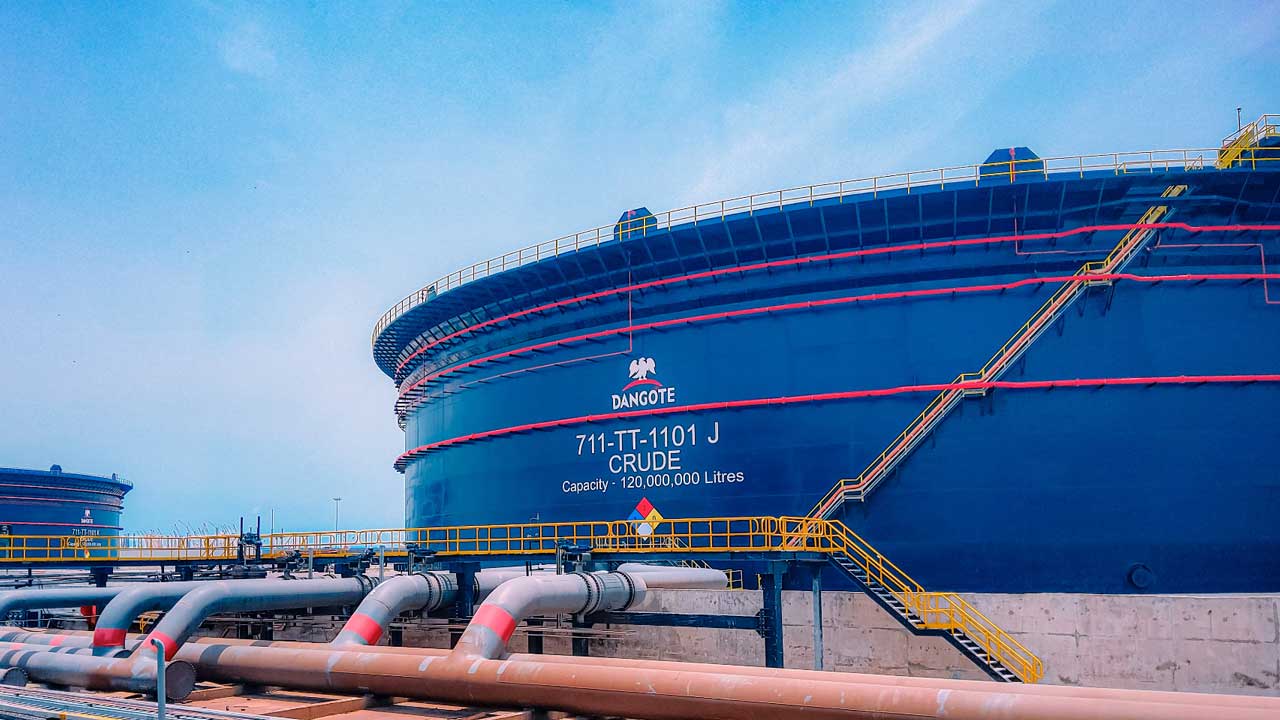

The Dangote Petroleum Refinery has reduced its gantry price for aviation turbine kerosene (ATK), commonly known as jet fuel, to N1,450 per litre.
A source at the refinery confirmed the development on Friday, saying the price was reduced from N1,550 per litre to N1,450 per litre.
According to the source, the adjustment took effect on Tuesday.
The latest reduction comes less than two weeks after the refinery lowered the ex-depot price of premium motor spirit (PMS), also known as petrol, by N75 per litre.
In a circular to oil marketers, the refinery said the petrol price adjustment, which took effect on 16 June, followed developments in the international energy market.

READ ALSO; Dangote refinery raises processing capacity to 700,000 barrels per day
PETROAN calls for price review
Following the decline in global crude oil prices, the Petroleum Products Retail Outlets Owners Association of Nigeria (PETROAN) called on refiners, depot owners and fuel importers to reflect the changes in their ex-depot and retail prices.
The association said lower crude oil prices provide an opportunity for operators in the downstream petroleum sector to reduce prices and provide relief for consumers.
Jet fuel remains one of the major operating costs for airlines, making changes in its price closely watched by operators in the aviation sector.

Nigeria and Russia have agreed to replace a 59-year-old aviation agreement, aiming to update air transport relations and create opportunities for stronger connectivity between the two countries.
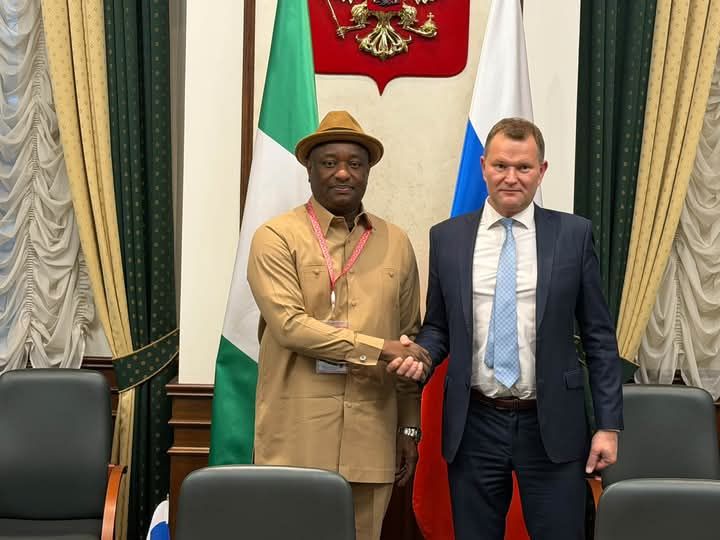
The agreement to renegotiate the Bilateral Air Services Agreement (BASA), which dates back to 1967, was reached during a meeting between Nigeria’s Minister of Aviation and Aerospace Development, Festus Keyamo, and Russian officials on the sidelines of the Third Russia-Africa Summit in Moscow.
Mr Keyamo disclosed the development in a post on his X account on Friday, saying both countries had agreed to complete negotiations within six months and sign a new agreement in Saint Petersburg, Russia, in April 2027.
He said the Nigerian delegation met with Dmitry Stanislavovich Zverev, the State Secretary and Deputy Minister of Transport of the Russian Federation.
“We resolved to renegotiate our last Bilateral Air Service Agreement that was made in 1967. We set a timeline of six months to conclude the negotiations and sign a new one in Saint Petersburg in April 2027,” Mr Keyamo said.
He added that both countries had formed negotiating teams to begin work toward an agreement within the agreed period.

The proposed renegotiation is expected to update the framework governing air transport between Nigeria and Russia, reflecting changes in the international aviation industry over the past six decades.
What the agreement means
A Bilateral Air Services Agreement provides the legal framework for scheduled air services between two countries. It generally sets out the conditions under which airlines from both countries can operate international flights, including routes, traffic rights, designated airlines and other operational arrangements.
Nigeria’s Ministry of Aviation and Aerospace Development says its Air Transport Management Department negotiates and reviews new and existing air services agreements and monitors their implementation.
The ministry also works with the Nigerian Civil Aviation Authority and other aviation agencies to facilitate international air links and regulate airline operations.
The proposed replacement of the Nigeria-Russia agreement could therefore create opportunities for improved air connectivity and cooperation between their aviation sectors.
However, neither Mr Keyamo nor the ministry disclosed proposed flight routes, designated airlines or the frequency of possible operations under the new agreement.
Wider cooperation
Beyond the aviation agreement, Mr Keyamo said the meeting also examined other areas of cooperation between Nigeria and Russia.
He said both sides had resolved to explore additional opportunities in the coming months.
The Nigerian delegation included the Director-General of the Nigerian Civil Aviation Authority, Capt: Chris Najomo, and the Registrar of the Nigerian College of Aviation Technology, Dr Danjuma Adamu Ismaila.
Directors from the Federal Ministry of Aviation and Aerospace Development and the NCAA also participated in the discussions.
ALSO READ: Nigeria sends low-level delegation to Russia-Africa summit
Nigeria and Russia have maintained diplomatic relations since shortly after Nigeria gained independence in 1960. Their relationship has included cooperation in areas such as defence, trade, science and technology.
According to the Nigerian Embassy in Russia, the Soviet Union provided political and military assistance to Nigeria during the 1967–1970 Civil War. Cooperation between the two countries has also extended to space technology, including the launch of Nigeria’s satellites aboard Russian rockets in 2011.
The planned aviation agreement is expected to form part of broader efforts to deepen bilateral relations and identify further areas of cooperation.
Both countries are expected to begin negotiations through their respective teams, aiming to conclude the process and sign the new agreement in Saint Petersburg in April 2027.
Discover more from Premium Times Nigeria
Subscribe to get the latest posts sent to your email.
-
News4 days ago
MTN Challenges Nigerians: Compare our data prices with Kenya, South Africa, Zimbabwe – Technology Times
-

 News3 days ago
Upwind raises $400M after walking away from Datadog acquisition offer
-
News3 days ago
GOVERNOR MUTFWANG OPENS 11TH JOS NATIONAL TRADE FAIR, TARGETS INDUSTRIAL GROWTH FOR PLATEAU
-
News4 days ago
Dakar 2026: “Today’s Young Athletes Are Tomorrow’s Olympic Champions” — SSA Adeboye Charges Team Nigeria