News
ALTON’s tariff assurance: Why Nigeria’s telecoms cost review is not another price hike – Technology Times

Stay connected via Google News

The reassurance by the Association of Licensed Telecommunications Operators of Nigeria (ALTON) that there are no plans for another increase in telecoms tariffs is likely to come as a relief to millions of Nigerians still adjusting to the impact of the sector’s first major retail price adjustment in more than a decade.
The clarification follows growing public concern over the Nigerian Communications Commission’s (NCC) ongoing review of Mobile Termination Rates (MTRs), a regulatory exercise that some industry watchers and consumers feared could trigger fresh increases in the cost of voice, SMS and data services.
However, according to ALTON, the industry group of the major mobile network operators (MNOs) operating in Nigeria, the ongoing review is not about what consumers pay. Instead, it is focused on wholesale charges between telecommunications operators, a less visible but strategically important aspect of the economics underpinning Nigeria’s telecoms industry.
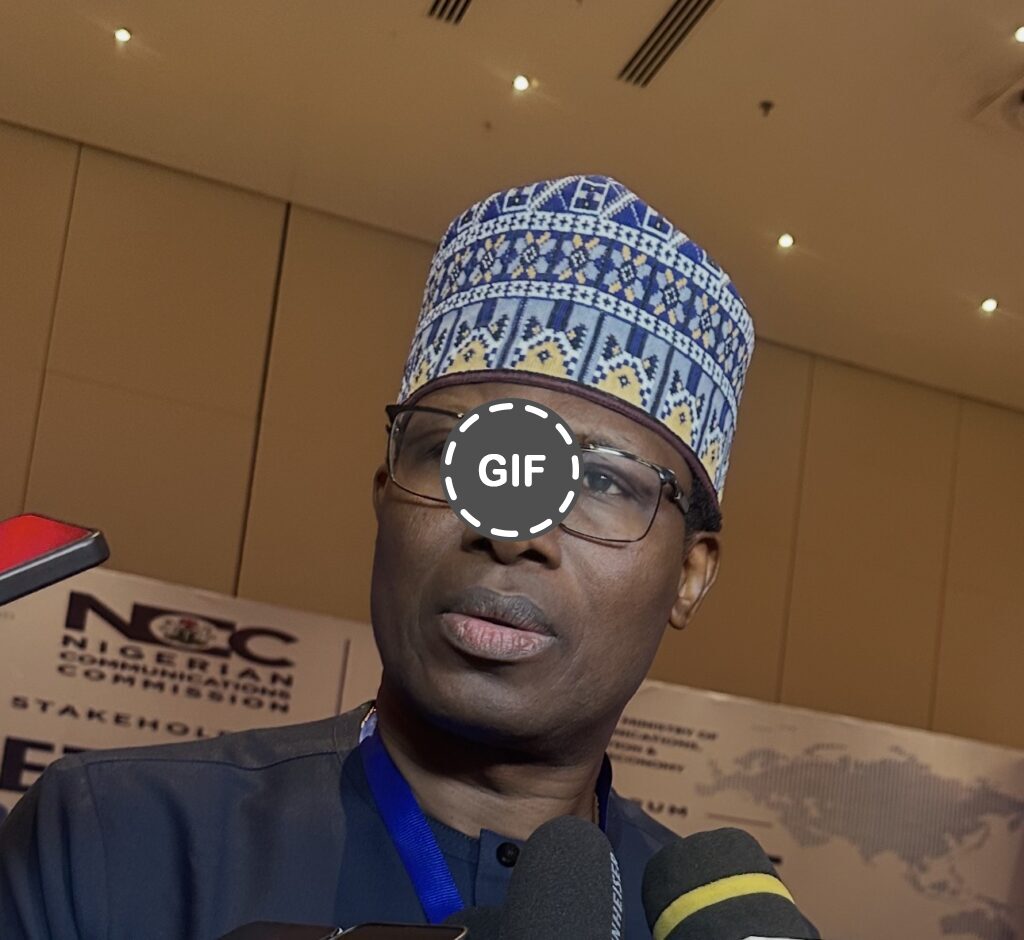
“There are no conversations around tariff review at this time. There are no discussions around upward review of tariff for our consumers,” Gbenga Adebayo, Chairman of ALTON, says while speaking in an interview with AriseTV.
The assurance highlights an important distinction in telecommunications regulation: not every pricing review conducted by the regulator directly translates into higher consumer tariffs.


However, according to ALTON, the industry group of the major mobile network operators (MNOs) operating in Nigeria, the ongoing review is not about what consumers pay. Instead, it is focused on wholesale charges between telecommunications operators, a less visible but strategically important aspect of the economics underpinning Nigeria’s telecoms industry.
ALTON: Understanding Mobile Termination Rates
At the centre of the current regulatory exercise are Mobile Termination Rates, commonly referred to as MTRs.
MTRs are wholesale fees paid by one telecommunications operator to another whenever a call originates on one network and terminates on a different network.
For example, when an MTN subscriber calls an Airtel subscriber, MTN pays Airtel an interconnection fee for completing that call on its network. Similar arrangements exist across all mobile networks.
Subscribers do not directly pay these charges. Rather, they form part of the underlying cost structure that operators consider when pricing retail services.
“What our regulator, the Nigerian Communications Commission, has done is to commence what we call a cost study that determines the wholesale rates between operators, meaning that if I originate a call from my network and I terminate on the other network, there is that internal charge rate between us,” Adebayo explains.
The current wholesale rates were established in 2018 and have remained unchanged for eight years. Under the existing framework, established operators pay ₦3.90 per minute, while new entrants are charged ₦4.70 per minute.
Given the profound changes that have occurred within the telecoms sector over the past eight years, industry analysts argue that a review has become inevitable.


“What our regulator, the Nigerian Communications Commission, has done is to commence what we call a cost study that determines the wholesale rates between operators, meaning that if I originate a call from my network and I terminate on the other network, there is that internal charge rate between us,” Adebayo explains.
Why the NCC is reviewing MTRs now
The NCC’s decision to undertake a fresh cost study reflects the changing economics of operating telecommunications networks in Nigeria.
Since the last review in 2018, operators have experienced significant increases in operating expenses driven by inflation, foreign exchange volatility, rising energy costs and continued investments in network modernisation.
At the same time, consumer communication behaviour has evolved dramatically.
Internet-based communication platforms such as WhatsApp, Telegram and other over-the-top (OTT) services have altered traditional voice traffic patterns, affecting operators’ revenue models and interconnection dynamics.


The review will also assess international call termination rates, which determine how much foreign operators pay when calls originating overseas terminate on Nigerian networks.
The cost study is therefore intended to determine whether existing wholesale rates accurately reflect present-day market realities.
As part of the exercise, the NCC has engaged KPMG to undertake a comprehensive industry-wide cost analysis and stakeholder consultation process.
The review will also assess international call termination rates, which determine how much foreign operators pay when calls originating overseas terminate on Nigerian networks.
“This study is also to determine what is a fair price for terminating calls from overseas on Nigerian network among other things,” Adebayo says.
Why consumers fear another tariff increase
Public sensitivity around telecoms pricing remains high largely because of the major tariff adjustment approved by the NCC in January 2025.
The regulator approved increases of up to 50% in retail tariffs, marking the first significant upward review in more than a decade.
Operators had argued that years of rising operational costs, currency depreciation, inflation and energy expenses had rendered previous tariffs unsustainable.
Although the adjustment was considered necessary to preserve industry viability, it also increased the financial burden on consumers already facing broader economic pressures.
Against this backdrop, news of another pricing review naturally generated concerns that fresh increases in call and data charges could be imminent.
ALTON’s clarification appears aimed at dispelling such fears.
“I must assure Nigerians,” Adebayo adds, “that last year we got some review in our rate for reasons of industry sustainability. Government has made it very clear to us that against that review that was made last year, we must provide better quality services, we must expand our network, we must deepen penetration of services. And that’s what we are doing at this time.”


“I must assure Nigerians,” Adebayo adds, “that last year we got some review in our rate for reasons of industry sustainability. Government has made it very clear to us that against that review that was made last year, we must provide better quality services, we must expand our network, we must deepen penetration of services. And that’s what we are doing at this time.”
The industry’s new priority: Service quality and expansion, ALTON says
Rather than seeking additional tariff increases, operators say their immediate focus is on meeting obligations attached to last year’s retail tariff adjustment.
Those obligations include improving quality of service, expanding network coverage and extending connectivity to underserved and unserved communities.
This commitment comes at a critical time for Nigeria’s digital economy ambitions.
The Federal Government has prioritised broadband expansion, digital inclusion and increased access to online services as key pillars of national economic transformation.
Achieving those goals will require sustained investments in network infrastructure, including fibre deployment, base stations, transmission systems and digital service platforms.
The wholesale cost review being undertaken by the NCC could therefore play an important role in ensuring that interconnection charges remain fair, transparent and investment-friendly.
A poorly calibrated wholesale framework could discourage network expansion or create competitive distortions within the market.
Conversely, an efficient interconnection regime can strengthen competition, improve service quality and support continued investment across the industry.


Any revised Mobile Termination Rates would primarily affect commercial relationships among operators rather than directly altering subscriber tariffs. Nevertheless, because wholesale charges influence operators’ cost structures, the review remains strategically important for the long-term sustainability of the telecoms sector.
What happens next?
The outcome of the NCC’s cost study is expected to shape the future economics of inter-network communications in Nigeria.
Any revised Mobile Termination Rates would primarily affect commercial relationships among operators rather than directly altering subscriber tariffs.
Nevertheless, because wholesale charges influence operators’ cost structures, the review remains strategically important for the long-term sustainability of the telecoms sector.
For now, however, ALTON’s message is clear: Nigerians should not interpret the ongoing regulatory exercise as a precursor to another increase in the prices of calls, SMS or data services.
Instead, the review represents a routine but significant effort to align wholesale telecoms pricing with current economic realities while supporting a sustainable and competitive communications industry.
For consumers concerned about another round of tariff hikes, the industry’s assurance offers some welcome breathing space.
Stay ahead with real-time reports, breaking news, and exclusive insights delivered directly to your phone. Don’t settle for outdated information. Join TECHNOLOGYTIMES NEWS on WhatsApp for 24/7 updates.
Join Our Whatsapp Channel



Nigerian table tennis prospect Matthew Kuti has set his sights on winning two gold medals for the country at the 2026 Youth Olympic Games in Dakar, Senegal, as he intensifies preparations for the competition.
Kuti is targeting victory in both the men’s singles and mixed doubles events, expressing confidence in his preparation while acknowledging the technical demands of table tennis at the highest level.
“Thinking game is a very difficult game and it’s very scientific game. So I’m very, very happy that I participate in today’s game,” Kuti said.
The young Nigerian explained that his ambition is to represent the country successfully in Dakar, where he hopes to compete across multiple events and convert his preparations into gold medals.
“My challenge is to go there and take a gold for Nigeria, play many tournament and also there is mixed doubles in Dakar and singles. I want to win the two,” he said.
Kuti acknowledged that achieving the double target would require commitment and hard work, noting that he is currently in training as he works towards peak performance for the Games.
“So I will try my best. I will try what I can do because now I’m in training. So I will try my best,” he added.
The Youth Olympic Games will take place in Senegal from October 31 to November 13, 2026, bringing together young athletes from across the world in a multi-sport competition.
For Kuti, the tournament represents an opportunity to test himself against international opposition and contribute to Nigeria’s medal ambitions. His focus on both singles and mixed doubles reflects his determination to make the most of the opportunities available to him in Dakar.
With preparations ongoing, the Nigerian youngster will be hoping that his training, tournament experience and determination can translate into strong performances when the competition begins.

The Lagos State House of Assembly has unanimously supported the proposed establishment of state police, following its consideration of the Constitution Amendment Bill transmitted by the National Assembly.
The speaker, Mudashiru Obasa, disclosed this on Tuesday during plenary, which lawmakers reconvened for after cutting their recess short to consider the proposed amendment.
Mr Obasa said the establishment of state police had remained a recurring issue from the fifth to the 10th assembly, with successive legislatures discussing ways to strengthen security and protect lives and property.
He described the development as a step forward but expressed concern that some issues raised by state legislatures had not been adequately addressed.
“I am pleased that the issue of state police has received attention, but there are concerns that must be addressed to ensure that the arrangement works effectively,” Mr Obasa said.
The bill, titled the Constitution of the Federal Republic of Nigeria, 1999 (Sixth Alteration) Bill, 2026, seeks to provide for the establishment of the State Police Service and related matters.
The speaker said further developments in the amendment process should give states greater control over policing arrangements but stressed the need to clearly define the relationship between federal and state police, particularly regarding powers, control and responsibilities.
“The functions and responsibilities of state police should be clearly defined, with appropriate provisions made for state legislatures,” he said.
He commended President Bola Tinubu for commitment to democracy and democratic institutions, as well as the Senate and House of Representatives for advancing the proposal.
Mr Obasa further called for a clear constitutional provision for parliamentary police to protect legislative institutions and preserve their independence.
He cited past incidents in which state legislative buildings were allegedly demolished or locked up at the instance of governors, describing such developments as threats to legislative autonomy.
“There should also be provisions for parliamentary police, as we have in the United States Congress and at Westminster in the United Kingdom, to protect democracy and safeguard state legislatures.
“We must learn from past incidents in which a governor could order demolition of a legislative building or have a state legislature locked up simply to serve personal interests.
“To prevent such incidents from happening again and protect our nascent democracy, we must safeguard our existing state legislatures. Establishing parliamentary police will help protect legislative institutions and ensure that independence of the legislature is not undermined,” he said.
The speaker expressed confidence that outstanding concerns would be addressed as the constitutional amendment process progressed.
The House subsequently adjourned plenary until November 9, 2026.
The Lagos assembly‘s position comes as the push for state police has crossed its most critical constitutional hurdle.
The Presidential Working Group on the National Policing Bill, chaired by the Chief of Staff to the President, Femi Gbajabiamila, had on Friday announced that 24 State Houses of Assembly had approved the Constitution (Sixth Alteration) Bill, 2026.
According to him, the approval meets the two-thirds threshold—24 of 36 states—required under Section 9 of the 1999 Constitution for alteration.
The Working Group chairman commended the state assemblies and the National Assembly for passing the amendment in both chambers.
The 24 states are Adamawa, Delta, Edo, Kwara, Nasarawa, Ogun, Osun, Oyo, Plateau, Rivers, Taraba, Zamfara, Enugu, Anambra, Imo, Ekiti, Kebbi, Akwa Ibom, Bayelsa, Benue, Cross River, Abia, Yobe, and Kaduna.
With Lagos’ unanimous vote on Tuesday, the figure has now risen to 25, leaving 11 states yet to formally communicate their positions.
The National Assembly transmitted the bill to the states on September 16 with a 30-day administrative window.
(NAN)

-

 News3 days ago
Troops rescued 70 abductees, recovered N10 million ransom: DHQ
-
News3 days ago
Plateau Activates Ebola Preparedness Measures, Urges Residents to Observe Safety Guidelines
-
Business3 days ago
CBN grants JP Morgan approval-in-principle to set up merchant bank
-
Business3 days ago
REA Ends 16 Years of Darkness in Two Kano Communities