News
Cyberdecks are having a moment, rejecting big tech surveillance with style and substance

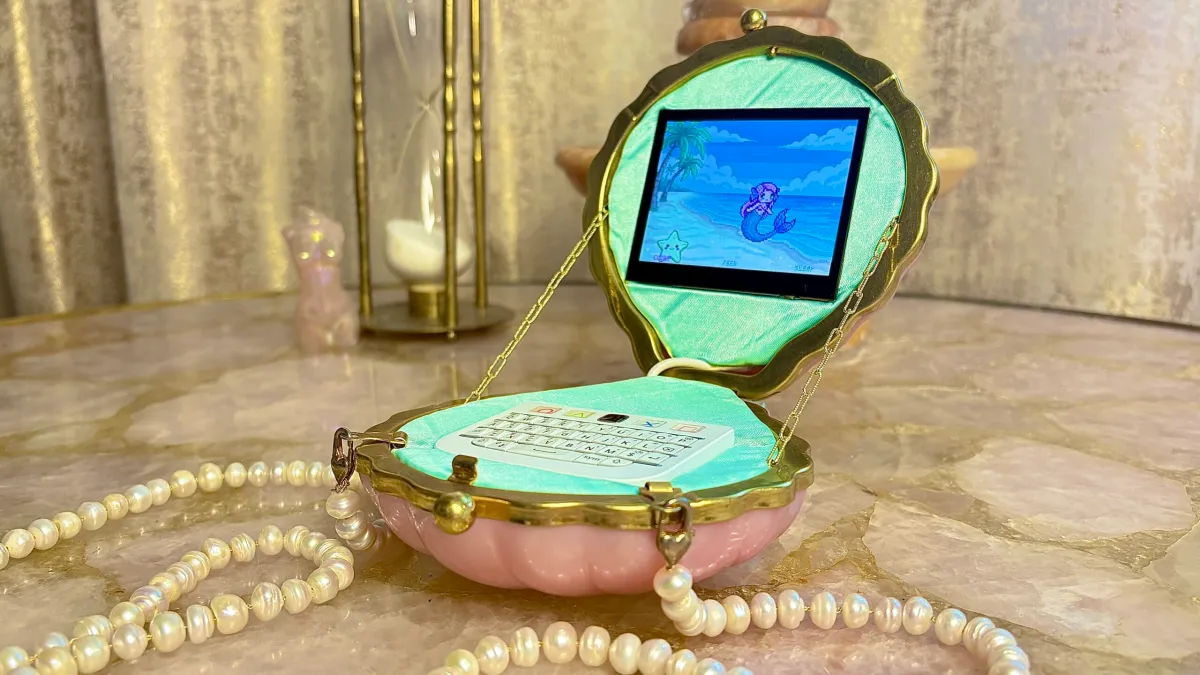
When I reach out to the self-proclaimed “open source baddie” CC for an interview, I’m pretty sure she’s emailing me back from a pink mermaid purse.
“I’m just having so much fun,” she tells me about her seashell cyberdeck. “It’s a Tamagotchi. It’s also an e-reader. It’s networked to my vault and my servers, so it has access to all of my server data, which has all my PDFs, and books, and notes, and everything… It’s also connected to my local AI setup at home.”
CC has no background in software engineering or computer science, but she’s gotten good enough at building unconventional cyberdecks — small DIY computers — that she documents the process on her blog Bimbo Tech so that other women can follow her lead, even if they don’t yet know what RAM is.
The idea of the cyberdeck originated in William Gibson’s 1984 sci-fi novel “Neuromancer,” and when credit card-sized computers like the Raspberry Pi came on the market in the 2010s, hardware enthusiasts began building and sharing their own cyberdecks in niche online communities. But over the last few months, these communities have exploded in popularity thanks to women on social media who are teaching each other to build artistic, hyper-feminine computers by documenting their building processes.
“I have a running joke that there’s this underlying misogyny in tech — because whenever they release a pro model, or an elite model… I’m always like, let me guess, it’s black or silver,” CC said. “It’s never going to come in pink.”
The process of customizing and designing a cyberdeck has become an art form in itself. On Instagram and TikTok, you can find a cyberdeck made of wood and moss that runs Game Boy Color games; a desert-inspired MP3 player built inside a 3D-printed fossil; a Barbie dollhouse that opens up to reveal a functional mini-computer; or a duck figurine that can be used to record voice notes.

“I don’t want Meta AI glasses. I want to pirate books in a tiny embellished shell,” said the creator Sarahbelle Kim on TikTok. “No one can surveil you there. You can get some basic parts at the thrift store or eBay and just customize it.”
There’s obviously an aesthetic motivation to the rise of girly cyberdecks — why not use a Hello Kitty purse to check your email? It’s fun for the sake of fun. But the women building these over-the-top, bedazzled cyberdecks aren’t in it for the glitter alone. This trend is reaching its peak at a time when people feel powerless against the omnipresent homogeneity of big tech.
“I think that’s such a refreshing thing for people who were sold these devices that are like Apple’s… If you try to jailbreak it, if you try to do anything to this phone that you paid $1,000 for, that you own, it’s out of warranty,” CC said. “So I just love seeing people taking the power back into their hands, taking the control back into their hands, which obviously always means creativity when people are given the means to go outside of the black box.”
Maro Vardanyan doesn’t work with hardware as a blockchain developer, but she’s always enjoyed collecting and tinkering with old computer parts.
“A few months ago, I just started as a hobby making art and jewelry pieces and purses with recycled or upcycled old computers I had,” she said. “When I saw everyone doing cyberdecks, I was like, wait, why am I just doing recycled and upcycled ones when I can actually preserve the pieces on something that’s wearable, that’s movable?”

Vardanyan has taken a different approach to building cyberdecks, opting instead to emphasize the historic relationship between fiber art and technology. Vardanyan refers to her work as “crocheting with computers” or “macrame motherboards,” deliberately nodding to the role of weaving — a practice often viewed as domestic, women’s labor — in the history of early computing.
Before silicon processors, some early computers ran on magnetic-core memory, made up of copper wiring that was precisely threaded to encode the 1s and 0s of binary code. In order for NASA to build the Apollo Guidance Computer, for example, expert women textile workers were tasked with meticulously weaving wires in painstakingly complex patterns, which powered the spacecraft that landed the first man on the moon.

“The original processor was handwoven by seamstresses, not by engineers or anybody else,” she said. “I feel like the hand weaving, and even the fashion-meets-technology… It’s so full circle.”
Vardanyan started weaving pink Raspberry Pis to make purses and corsets, then posted photos of her works-in-progress on X.
“Of course, when the macrame went viral, all of the men are like, ‘This is such a waste of the Raspberry Pi,’ … or, ‘what about the rain?’” she said. “And then I have to be like, ‘Actually, it’s preserved in an acrylic shell.’ And then they’re like, ‘This is so performative, and the GPIO is gonna lose energy!’ And I’m like, ‘Actually, I’m using a conductive thread, so it actually will move and be fully functioning.’”
CC has also encountered condescending men on the internet who balk at the idea that someone would use a Raspberry Pi on something as frivolous as a seashell purse computer during a RAM shortage.
“This guy on Reddit was like, ‘You built your first computer a month ago, calm the f— down.’ Mind you, I’ve been building PCs for years,” CC said. “So, long story short, he ends up apologizing and buying me the circuit board for my next cyberdeck.”
From CC’s mermaid purse computer to Vardanyan’s Raspberry Pi corset, these cyberdecks are a direct rejection of Silicon Valley culture, and not just in their egregious embrace of the color pink. They’re impractical and inefficient on purpose, which seems sacrilegious in a culture so obsessed with optimization that unregulated Chinese peptide injections are trendy. It’s a radical act to opt for hacky, DIY tech experiences in order to forge a closer relationship with the devices that feel so abstract despite their ubiquity.
“Ten years ago, I would walk into a conference, there would be three girls, and people would literally just be like, ‘Were you hired for the marketing team?’” Vardanyan said. “I can’t even tell you how amazing it is seeing so many girls all over my social media and Instagram being into hardware, being into software, and then educating [each other], and that’s definitely the energy that we’re missing on every level in society.”
When you purchase through links in our articles, we may earn a small commission. This doesn’t affect our editorial independence.






The Nigeria Democratic Congress, NDC, presidential candidate, Peter Obi, has said President Bola Tinubu created history by producing the highest number of poor people.
Obi made the remark while criticising Tinubu over Nigeria's rising poverty level.
Speaking during the inauguration of the NDC's campaign council in Kaduna State on Monday, Obi questioned what Nigerians had gained from the billions of naira borrowed by Tinubu's government.
He faulted Tinubu for blaming opposition candidates instead of explaining his administration’s achievements.
Obi further said that he and his running mate, Senator Rabiu Musa Kwankwaso, would focus on solving Nigeria’s problems rather than blaming others.
“He has made history as the president that has produced the highest number of poor people according to the recent report.
“Just last Saturday, Tinubu was launching his second-term campaign. Rather than explain to Nigerians what he used all the billions he borrowed for, or what he achieved with the 2023, 2024 and 2025 budgets, he blamed other people.”
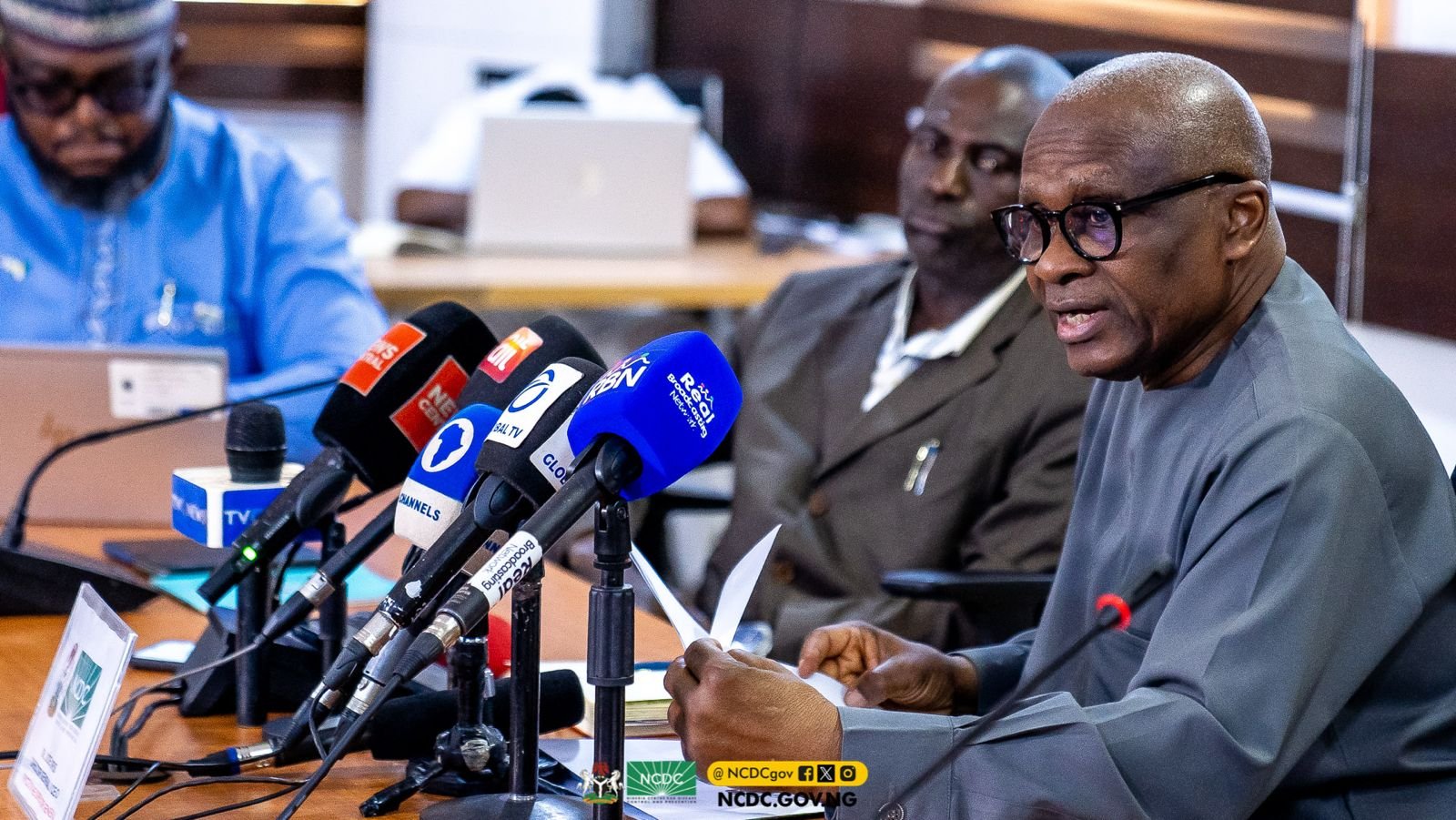
Nigeria’s decision to evacuate its confirmed Ebola patient to Switzerland was based on diplomatic considerations, human rights and international health regulations, the Director-General of the Nigeria Centre for Disease Control and Prevention (NCDC), Jide Idris, has revealed.
Speaking on Channels Television’s Politics Today on Monday, Mr Idris said the federal government approved the transfer after consultations with the Coordinating Minister of Health and Social Welfare, Muhammad Pate, and assurances that adequate infection prevention measures would be maintained throughout the journey.
The clarification follows an earlier report that the patient, a woman who is the wife of a Swiss diplomat in Nigeria, was evacuated through the private jet wing of the Nnamdi Azikiwe International Airport in Abuja.
Mr Idris dismissed suggestions that the government had secretly removed the patient from Nigeria, saying the evacuation followed a formal request from the Swiss Embassy.
“I won’t use the word ‘snuck out’. That’s a no-brainer. It is the first time something like that has happened,” he said.
He said the government weighed the implications of the transfer for public health, international health regulations and the patient’s rights before granting approval.


According to him, officials ensured that infection prevention and control protocols were followed from the hospital where the patient was receiving treatment to the aircraft that transported her.
Patient remains positive
Mr Idris said the patient had tested positive twice before her evacuation, explaining that improvements in her clinical condition did not necessarily mean she had cleared the virus.
He commended the Nigerian medical team for stabilising her condition, which he said had deteriorated to the point of multiple organ failure.
“There are no drugs to deal with this virus,” Mr Idris said, referring to the absence of an established antiviral treatment specifically targeting the Bundibugyo virus responsible for the current outbreak.
Mr Pate earlier confirmed that Nigeria’s Ebola patient and her husband arrived safely in Switzerland on Monday following their medical evacuation from Abuja.
In an update posted on his official X account, Mr Pate said the patient was receiving treatment at Geneva University Hospitals, while her husband had been placed in isolation at University Hospital Zurich.
“The Swiss authorities have confirmed that the patient and her spouse arrived safely in Switzerland today,” he said.
Previous development
Nigeria confirmed its first Ebola case on 20 October, after a 42-year-old Ugandan-born woman living in Abuja tested positive for the disease.
The patient had returned to Nigeria on 3 October after travelling to Uganda and developed symptoms few days later.
She was subsequently admitted to a health facility in Abuja, where she received treatment in isolation before her evacuation to Switzerland on Monday.
Following her evacuation, the World Health Organisation (WHO) said Nigeria had no active confirmed Ebola cases, although contact monitoring and other containment measures were continuing.
The WHO said Nigeria was continuing to monitor 52 contacts, while Switzerland had taken responsibility for the patient’s care and monitoring her husband, who was among the 53 contacts previously identified.
The NCDC had earlier identified 53 primary contacts linked to the confirmed case, including healthcare workers, the patient’s husband, domestic staff and personnel involved in collecting samples.
Health authorities are monitoring the contacts for possible symptoms to detect any additional infections and prevent further transmission.
Mr Pate had earlier said Nigeria could declare the Ebola outbreak over as early as 7 December if no further confirmed or probable cases were detected.
Caution
Mr Idris urged Nigerians to maintain good hand hygiene and exercise caution during mass gatherings, particularly where close physical contact could occur.
He said handwashing could reduce the spread of several infectious diseases, while recommending measures to limit unnecessary physical contact in crowded settings.
However, he stressed that Ebola is not airborne. The virus spreads primarily through direct contact with the blood or other bodily fluids of an infected person, or with contaminated materials.
He advised people who develop symptoms consistent with Ebola, particularly after contact with a suspected or confirmed case, to seek prompt medical guidance.
Mr Idris also cautioned against relying on herbal mixtures to prevent or cure the disease, saying there was no established evidence that such preparations could prevent or treat Ebola. He warned that some herbal products could also cause harmful side effects.
Discover more from Premium Times Nigeria
Subscribe to get the latest posts sent to your email.
-

 News4 days ago
Obi, Kwankwaso to hold Middle Belt Youth, Village Hall Meeting in Jos
-
News4 days ago
Left alone with nothing to do, AI agents started playing
-
News2 days ago
Plateau Activates Ebola Preparedness Measures, Urges Residents to Observe Safety Guidelines
-
Featured4 days ago
Dachung Musa Bagos Foundation Becomes First Nigerian Partner of Manchester Global Foundation