News
Kano by-election signals weakness of NDC as mushroom political movement – Gov Yusuf








The Independent National Electoral Commission (INEC) has said political parties may lose the right to field candidates in the 2027 elections if the names of those candidates were not contained in the membership registers submitted to the commission.
The commission also said affected candidates may not be replaced where their emergence resulted from a violation of the Electoral Act.
INEC National Commissioner for Information and Voter Education, Mohammed Haruna, disclosed this while speaking on Trust TV’s Daily Politics programme on Wednesday evening.
His comments come amid growing questions over the status of some candidates whose membership of political parties and participation in primaries are being challenged following the Supreme Court judgment delivered on September 24, 2026.
One of the cases that has attracted attention is that of Kingsley Chinda, the All Progressives Congress (APC) governorship candidate in Rivers State.
Chinda registered as an APC member on April 27, 2026, before the party’s governorship primary held on May 21.
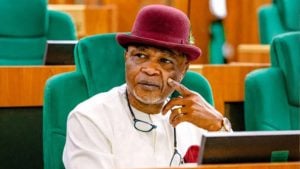
The Rivers APC has maintained that Chinda met the requirement because there were 24 days between his registration and the primary.
The party has rejected calls for his disqualification and argued that the Supreme Court judgment does not invalidate his candidacy.
The issue, however, has continued to generate legal questions, particularly over the membership register used by the APC for the primary and whether candidates were members of their respective parties when the relevant registers were submitted to INEC.
The Association of Legislative Drafting Practitioners (ALDRAP) had earlier approached the Federal High Court in Abuja over the Rivers APC nomination process and subsequently asked INEC to examine Chinda’s candidacy after the Supreme Court ruling.
The Supreme Court judgment itself did not name Chinda or order his disqualification. Instead, the apex court restored Sections 77(5), 77(6), 77(7) and 84(2) of the Electoral Act 2026 after the Court of Appeal had earlier declared the provisions unconstitutional.
The provisions place requirements on political parties concerning their membership registers and the conduct of primaries, congresses and conventions.
Section 77(5) provides that only members whose names are contained in the membership register submitted to INEC within the required period can participate in a party’s primary, congress or convention.
Section 77(6) prevents political parties from using a different membership register for such exercises.
Section 77(7) provides that a political party that fails to submit its membership register within the stipulated period cannot field a candidate for an election.
The Supreme Court also upheld Section 84(2), which provides for direct primaries or consensus as methods of nominating candidates.
Against this background, Haruna said INEC was examining the records of candidates across the various elective positions.
He stressed that the commission would not allow political parties to benefit from a breach of the law by simply replacing a candidate whose nomination is found to have violated the statutory requirements.
“It’s like you committed an offence. And then, you come and benefit from it. You remember cases that we had of some in Zamfara, you remember Plateau? The same thing.
“The parties, because they did the wrong thing, they thought they could now steal through the candidates.
“And the law was very clear. Once you do that kind of thing, you cannot benefit from it. You are benefiting from it, if you are able to substitute a candidate,” he said.
Haruna further indicated that the implications could extend beyond governorship contests.
According to him, INEC had interacted with candidates across the different levels of the 2027 elections and would examine whether their names appeared on the appropriate party registers.
“All the candidates, all the way to the Houses of Assembly, we interviewed them. If their names are not on the party register, they were not members of the party at the time that they contested for those tickets,” Haruna said.
He added that the final outcome could affect parties across several elective positions, depending on the findings of the commission’s review.

In another development, the Supreme Court had ruled unanimously in favour of INEC in the dispute involving the Zenith Labour Party (ZLP).
The seven-member panel, led by Justice Adamu Jauro, held that the disputed provisions were not inconsistent with the 1999 Constitution.
The apex court consequently set aside the earlier Court of Appeal decision and restored the judgment of the Federal High Court, which had dismissed the challenge to the provisions. It also awarded N2 million in costs against the Zenith Labour Party.
INEC had appealed to the Supreme Court after the Court of Appeal, in July, struck down the provisions relating to party membership registers and candidate nomination.
The commission has since moved to obtain and study the certified true copy of the Supreme Court judgment before taking a final position on the candidates whose nominations may be affected.
Haruna explained that INEC had to be careful with the document because of previous cases involving forged court judgments.
“You can’t be too careful with these things because even when you see copies and they tell you it’s a CTC, it may be forged. We’ve seen instances where people have even gone, have the audacity to forge a Supreme Court judgment.
“So, we have to be very careful to make sure that when you took us, we did put a lot of pressure and we were able to get it yesterday (Tuesday),” he said.

INEC Chairman Joash Amupitan had earlier confirmed that the commission received the Certified True Copy of the Supreme Court judgment on Tuesday and that the document was being reviewed.
The commission is expected to make a definite pronouncement on the implications of the judgment by Tuesday next week.
Until then, candidates whose nominations have come under scrutiny cannot automatically be regarded as disqualified solely because of the Supreme Court judgment.
The ruling restored the relevant provisions of the Electoral Act, while questions surrounding individual nominations will depend on the membership records, primary processes and other documents before INEC and, where necessary, the courts.
The Rivers APC has insisted that he became a member 24 days before the primary and therefore met the 21-day requirement under Section 77 of the Electoral Act.

-

 News3 days ago
2027: El-Rufai’s detention could hurt APC, generate sympathy – SEDSAC director, other analysts express views
-
News3 days ago
Lucid Motors’ EV output falls to lowest level in almost 2 years
-
News4 days ago
Nigerians warned as AI creates new sextortion threat – Technology Times
-
Business3 days ago
NAIPE 11th Annual Conference Moves to 12 Noon as 28 Stakeholders Back Event