News
Peace without justice is fragile: Berom Leaders Accuse Fulani Militants of Genocide, Demand Urgent Intervention


The Berom in Diaspora Coalition (BDC) has raised a fresh alarm over what it described as “the prolonged genocide” against the indigenous people of Berom land and other Plateau communities.
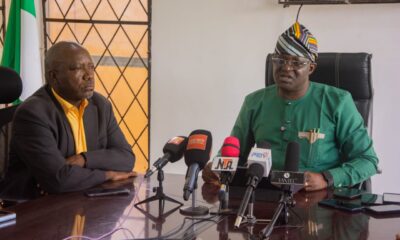
The coalition made the call during a world press conference held on Wednesday, November 12, 2025, at the Bishop’s Court Conference Hall, Jos, to draw national and international attention to what it termed “the continuous and systematic killings, displacement, and land grabbing of Berom people by Fulani militants.”

Delivering the statement, Mr. Barry Barnabas Dazih, who represented the BDC, lamented the long years of unprovoked attacks on Berom communities, stressing that “peace without justice is fragile.” He said the Berom people have remained peaceful despite decades of targeted violence.
“We are not gathered here to promote hate or division,” he said. “We are gathered to demand justice, accountability, and protection. For too long, our people have been killed, our lands seized, and our cries ignored.”
According to the BDC, over 10,000 Berom people have been killed since 2001, while about 151 communities have been displaced across the state. The statement accused successive Nigerian governments of ignoring the plight of indigenous Plateau communities despite repeated attacks and appeals for help.
The coalition also highlighted a disturbing new threat to the lives of three activists—Rev. Ezekiel Dachomo, journalist Masara Kim, and human rights lawyer Barr. Dalyop Solomon Mwantiri—allegedly targeted by militants for their outspoken advocacy. The BDC called on security agencies to provide immediate protection for the individuals and to act swiftly to prevent further bloodshed.

Citing several communities that have been “forcibly occupied,” including parts of Riyom, Barkin Ladi, Jos South, and Bokkos LGAs, the group urged both the Nigerian government and international organizations such as the United Nations, African Union, and ECOWAS to intervene.
“The Fulani militants have continued their campaign of violence even after Nigeria’s designation as a ‘Country of Particular Concern’ by the United States,” the statement read. “We therefore demand that these groups be officially declared terrorists and that military operations be launched to reclaim occupied lands and restore displaced communities.”
The coalition outlined a nine-point demand, including the release of ₦10 billion earlier announced for victims of violent attacks, the prosecution of perpetrators, and the implementation of community-based security measures to prevent future atrocities.

BYM President, Barr. Solomon Dalyop, reaffirmed solidarity with the BDC, insisting that what is happening in Plateau is “not a herders-farmers clash but a calculated plan to wipe out indigenous nationalities.” He condemned the alleged complicity and silence of some state actors.
“They want to destroy this country because it is not their own,” Dalyop said. “Our people are being slaughtered, our lands renamed, and our heritage erased while authorities look away.”

BECO President, Da Gyang Dudu, added that all Berom organizations fully endorsed the statement issued by the diaspora coalition, emphasizing that the document “reflects the collective pain and position of the Berom nation.”

Also speaking, the Information Officer of the Berom Elders Council, Da Yakubu Taddy, urged Nigerians to rise above religious and ethnic sentiments when addressing insecurity, warning that silence in the face of injustice only emboldens perpetrators. He criticized the federal government for failing to act decisively despite admitting to knowing the locations of the attackers.
“Killings are happening — it’s time we admit that instead of arguing whether the victims are Christians or Muslims,” Taddy said. “Every Nigerian has a right to speak up when wrong is being done. People are living on land that does not belong to them, and authorities tell us to go to court. For goodness’ sake, is that fairness? Is that justice? The government must wake up because parts of this country are now under the control of bandits who tax citizens before they farm. If those in power know where these criminals are, then why are they still free?”


Also speaking, the Berom Elders Council Secretary, Dara Francis, questioned the sincerity of Nigeria’s leadership in tackling terrorism, saying:
“It’s not that the Nigerian military lacks the capacity; they lack the will. In one week, this problem can be solved. But each day we see the killings intensify, and nobody is held accountable.”


Speakers further decried the growing number of displaced children, widows, and orphans affected by years of conflict, warning that their neglect could lead to future insecurity.
“These children have watched their parents killed and their homes destroyed. If not properly rehabilitated, they will grow up with pain and vengeance in their hearts,” one elder cautioned.


The coalition concluded by urging all Nigerians—regardless of tribe or religion—to speak against injustice.
“A government that pampers killers and punishes victims is an accomplice,” Dazih said in closing. “When truth becomes tribal and justice selective, what remains is not a country but a graveyard with a flag. We demand justice now—for the dead, the displaced, and the generations yet unborn.”
The conference ended with renewed calls for unity among Plateau and Middle Belt ethnic nationalities and for global attention to what the group described as “a silent genocide unfolding in Nigeria’s heartland.”


News
Frontier AI labs say their models refuted the Exponential Time Hypothesis. What does that mean?


-

 News3 days ago
Troops rescued 70 abductees, recovered N10 million ransom: DHQ
-
News3 days ago
Plateau Activates Ebola Preparedness Measures, Urges Residents to Observe Safety Guidelines
-
Business3 days ago
CBN grants JP Morgan approval-in-principle to set up merchant bank
-
Business3 days ago
REA Ends 16 Years of Darkness in Two Kano Communities