News
2026 FIFA World Cup: Tani Oluwaseyi Carries Nigerian Presence as Canada Thrash Qatar 6-0

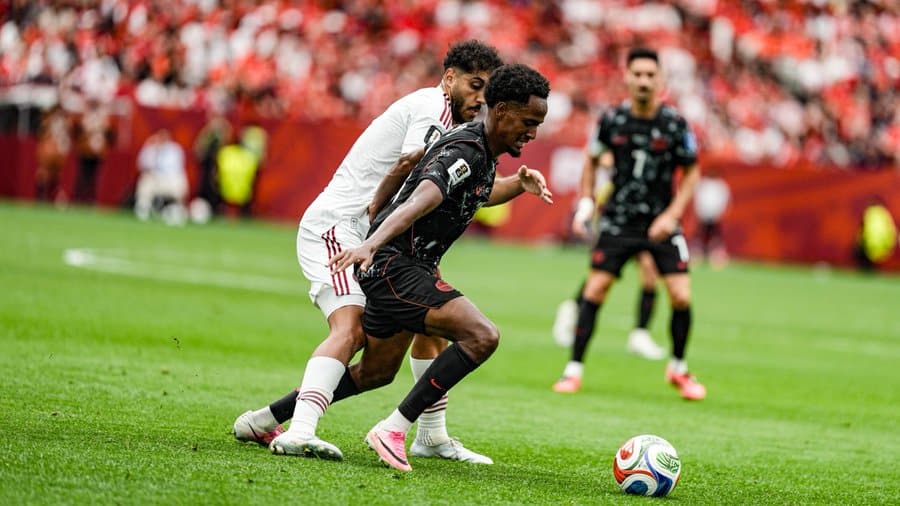
Nigeria may have missed out on the FIFA World Cup, but the country’s presence is still being felt through players of Nigerian descent competing for other nations.
READ ALSO: Onyah Favour Caps Breakthrough Season with First Team All-American Honors at NCAA Championships
One of those players is Tani Oluwaseyi, who was part of a historic night as Canada dismantled Qatar 6-0 to register their first-ever FIFA World Cup victory.
Canada were dominant from the opening whistle at BC Place and took the lead in the 17th minute when veteran striker Cyle Larin found the back of the net once again.
The Canadians doubled their advantage in the 29th minute through Jonathan David, before Qatar’s task became even more difficult two minutes later after Homam Elamin was shown a red card, reducing the Asian side to 10 men.
Jonathan David grabbed his second goal in first-half stoppage time after reacting quickest to a rebound following a saved header from Larin, sending Canada into the break with a comfortable 3-0 lead.
Canada’s momentum continued after halftime despite concerns over midfielder Ismaël Koné, who suffered an injury following a challenge from Assim Madibo. The Qatari midfielder was sent off, leaving his side with just nine men.
Inspired by their dominance, Canada extended their advantage in the 64th minute when Nathan Saliba curled home a brilliant free-kick, with players dedicating the goal to the injured Koné.
For Nigerian fans, the spotlight then shifted to Tani Oluwaseyi.
The Nigerian-born striker was introduced in the 71st minute by head coach Jesse Marsch, replacing Ali Ahmed as Canada continued their march toward a memorable victory.
Just four minutes later, Canada made it 5-0 after pressure from substitute Jacob Shaffelburg forced a Qatar defensive error.
Jonathan David then completed his hat-trick in second-half stoppage time to seal an emphatic 6-0 triumph.
While Nigeria’s absence from the World Cup remains a disappointment, Oluwaseyi’s participation offers a reminder of the country’s enormous football influence beyond its borders.
Though he did not get on the scoresheet, the forward proudly represented Nigeria’s football heritage on the biggest stage, giving supporters back home a player to rally behind.
Canada’s victory was not only historic; it also showcased how players with Nigerian roots continue to shape international football, even when the Super Eagles themselves are not part of the tournament.



The Nigeria Democratic Congress, NDC, in Borno State has dismissed its House of Assembly candidate, Mohammed Bunu, over alleged involvement in campaign activities linked to the African Democratic Congress, ADC, presidential candidate, Atiku Abubakar.
The decision was communicated in a letter dated October 25, 2026, signed by the NDC state Deputy Chairman, Umar Fema.
The letter said the allegations stemmed from campaign materials bearing the ADC logo, the slogan “SABON TAFIYA, SABON SALO,” and the names and photographs of Atiku and Bunu.
According to the letter, the disciplinary process began at the Hausari Ward level before the matter was referred to the Maiduguri Metropolitan Council, MMC, party leadership for investigation.
Fema said the ward executive invited Bunu to respond to the allegations on October 23, but he did not attend.
He was invited again on October 24 to appear before an investigation committee but allegedly failed to attend.
The MMC party chairman, Adamu Ibrahim, subsequently endorsed the recommendation for disciplinary action and forwarded it to the state leadership.
The NDC said it decided to dismiss Bunu after considering the allegations and reports submitted through its disciplinary process.
NDC sacks Borno Assembly candidate over alleged pro-Atiku campaign

A video has surfaced online showing some members of the Agaji volunteer group of Jama’atu Izalatil Bid’ah Wa Iqamatus Sunnah, JIBWIS, popularly known as Izala, chanting lyrics that appear to call for armed attacks on citizens in Enugu and Jos.
The footage, which gained attention on social media, particularly X on Sunday, shows a group of uniformed young men wearing brown attire and blue berets, reportedly associated with the Agaji volunteer wing of the Islamic organization.
In the video, one of the men leads a morale song containing references to obtaining an AK-47 rifle to attack people described as “infidels” in Enugu and Jos.
The chant includes the lyrics: “He should be given AK47. He would then go to Enugu, the land of the infidels. On Sunday when they are worshiping and clapping, he would then open fire, so that he can kill the infidels.”
The singer subsequently repeats the call for an AK-47, this time referencing Jos, and chants about killing more people he describes as infidels, before referring to the act as “the training.”
“He asked to be given AK-47 again. So that he can go to Jos and kill more infidels. That is the training.”
The exact date and location where the video was recorded have not been verified.
The footage, which has sparked reactions online, raised concerns over the possibility of attacks on Christians in Nigeria.
Video of JIBWIS members threatening Christians in Nigeria emerges
-

 News3 days ago
Obi, Kwankwaso to hold Middle Belt Youth, Village Hall Meeting in Jos
-
News4 days ago
Handball President Jibril Saidu Ojih Explains Reasons Behind Introduction Of Transfer Fees For Nigerian Players
-
Entertainment4 days ago
FOGMMON PLATEAU CONGRATULATES EJIDIKE UGOCHUKWU (𝙈𝙞𝙣𝙨𝙩𝙧𝙚𝙡 𝙅𝙞𝙙) ON HIS APPOINTMENT AS NATIONAL PRESIDENT
-
News2 days ago
Plateau Activates Ebola Preparedness Measures, Urges Residents to Observe Safety Guidelines