Health
FG, Global Fund inaugurate expanded Abuja medical warehouse


The federal government and the Global Fund on Tuesday inaugurated the expanded Abuja Premier Medical Warehouse (APMW) to strengthen the storage and distribution of health commodities nationwide.
The Coordinating Minister of Health and Social Welfare, Muhammad Pate, described the facility as a critical national asset that would improve commodity security and support the delivery of healthcare services.
Represented by the Permanent Secretary of the ministry, Daju Kachollom, Mr Pate said the project aligns with ongoing reforms aimed at expanding storage capacity and improving the distribution of essential medicines.
“The significance of this project cannot be overstated, as it represents a leap forward in ensuring that public health products, vaccines and medical supplies maintain integrity,” he said.
He said the inauguration is to showcase achievements recorded through the partnership between the federal government and the Global Fund while reinforcing commitments to supply chain reforms.

Mr Pate assured the Global Fund that the federal government would provide the resources required to maintain the facility and its assets.
He noted that delays in the supply of health commodities could negatively affect service delivery, underscoring the importance of adequate storage infrastructure.
The minister commended development partners, including UNICEF and the Gates Foundation, for their continued support of Nigeria’s health sector.
“To the Global Fund, the support goes beyond infrastructure. It represents a commitment to a shared vision of equity, access and excellence in healthcare,” he said.
Mr Pate also urged officials responsible for managing the facility to ensure its sustainability through diligence, accountability and effective utilisation.
“Today’s commission is a reminder that with determination, partnership and innovation, we can overcome challenges and build a robust health system capable of delivering quality and affordable healthcare for all,” he said.
Successful collaboration
In her opening remarks, Ms Kachollom described the commissioning as a testament to successful collaboration among government, development partners and stakeholders.
Represented by the Director, Food and Drugs Services, Adeola Olufowolabi-Yusuf, she said the project demonstrated what could be achieved through collective commitment to improving citizens’ health and wellbeing.
“This moment is a testament to what can be achieved when government, development partners and stakeholders unite in the shared mission of improving the health and well-being of our citizens,” she said.
Ms Kachollom described the expansion of the warehouse as a game-changer for Nigeria’s healthcare system.
She expressed appreciation to the Global Fund for supporting the project and acknowledged UNICEF, the warehouse contractor and Land Designs Ltd. for their contributions to its successful completion.
Also speaking, Peter Sands, Executive Director of the Global Fund, said strong supply chains depended not only on infrastructure but also on people, systems and governance.
“It is not just about a building or available infrastructure. You need trained and committed people, good management and governance, technology and systems,” he said.
Mr Sands said the warehouse would provide a critical foundation for a stronger and more efficient supply chain capable of delivering essential health commodities when needed.
In his goodwill message, Charles Lolika, Deputy Representative, Operations, United Nations Children’s Fund (UNICEF), said the expanded warehouse and 22 state medical warehouses would improve storage capacity, inventory management, commodity security and distribution efficiency.
According to him, the facilities are expected to benefit an estimated 149 million people across 21 states, including about 68 million children.
“We extend our sincere appreciation to The Global Fund for its generous funding support, which made this critical investment in health infrastructure possible,” he said.
Mr Lolika added that the partnership between UNICEF and the Global Fund was also supporting the upgrade of more than 150 primary healthcare centres across the country.
He said the initiative demonstrated the value of coordinated efforts among government, funding partners, implementing agencies and technical service providers.
The World Health Organisation Representative in Nigeria, Pavel Ursu, described the warehouse as a foundational investment for the country’s health system.
“When we think about the warehouse, this is a foundational element and building block for a health system, and it is definitely not to serve only three diseases,” he said.
Mr Ursu said the project reflected years of consistent implementation and commitment by stakeholders involved in its execution.
He commended UNICEF for successfully navigating the challenges associated with major infrastructural projects and delivering the facility.
Mr Ursu said stakeholders must sustain the momentum generated by the project to achieve measurable improvements in health outcomes.
Also speaking, Nkata Chuku, Deputy Director, Health Systems Strengthening, Gates Foundation Nigeria, said commodity security remained central to reducing deaths among women and children and combating infectious diseases.
READ ALSO: Anambra to expand telemedicine services for improved healthcare access
Mr Chuku said the investment aligned with the foundation’s efforts to strengthen health systems and improve last-mile delivery of health commodities.
He expressed optimism that the investment would improve the availability of critical commodities in health facilities across Nigeria and strengthen supply chain visibility nationwide.
The News Agency of Nigeria (NAN) reports that the warehouse serves as a central hub for storing and distributing essential medicines, vaccines and other public health commodities.
Its expansion is expected to boost national storage capacity, improve inventory management and strengthen the distribution of life-saving supplies nationwide as part of efforts to upgrade 22 warehouses across 21 states.


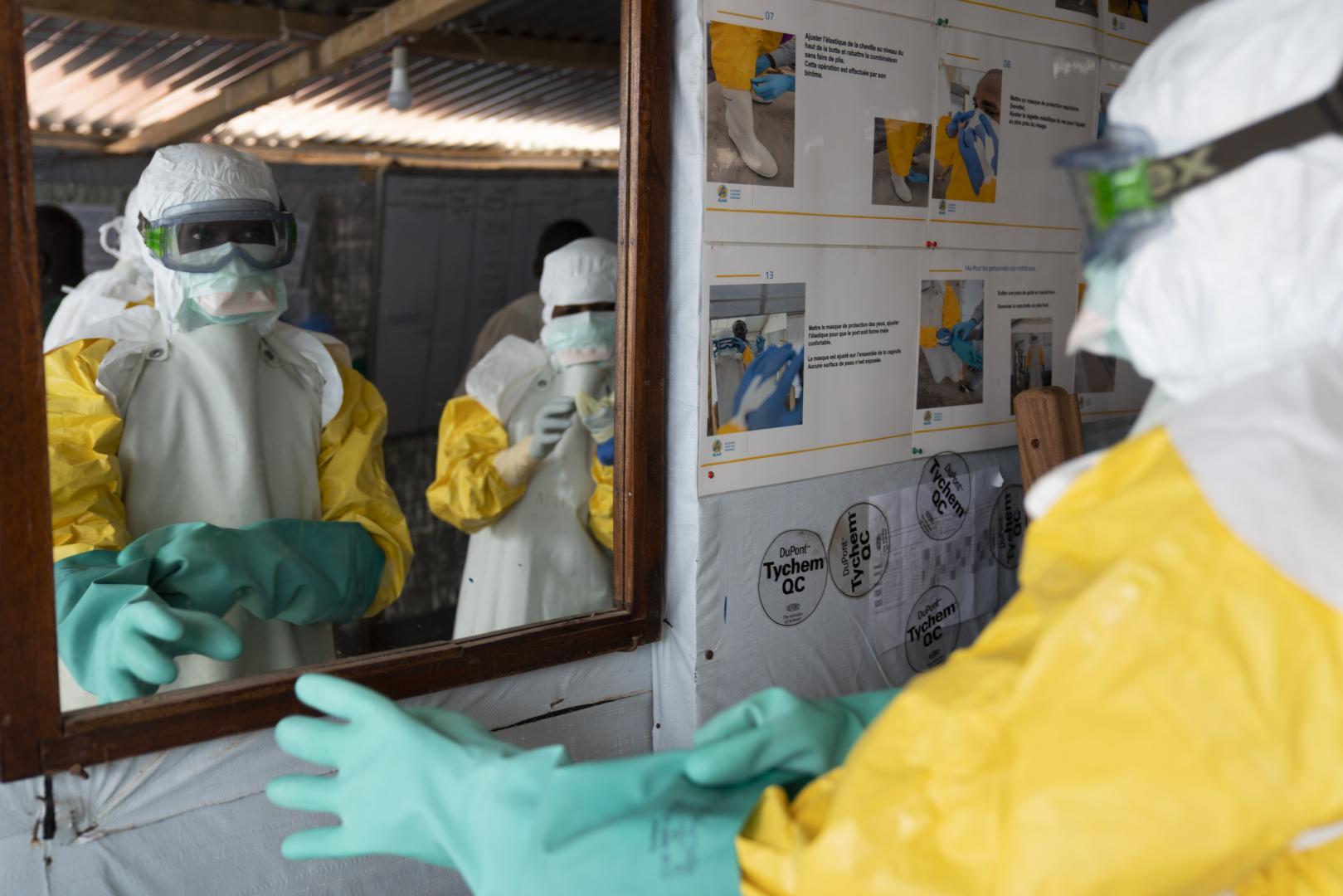
Uganda has barred travellers with a history of travel to the Democratic Republic of the Congo (DRC) from transiting through the country as it investigates the traveller who tested positive for Ebola disease in Nigeria.
The Ugandan Ministry of Health announced the measure on Friday, alongside the reinstatement of traveller locator forms “to facilitate timely follow-up and contact tracing where necessary.”
“The Ministry of Health wishes to update the country on an ongoing investigation into the traveller who tested positive for Bundibugyo Virus Disease in Nigeria.
“Available information indicates that the traveller did not exhibit symptoms at the time of departure from Uganda. However, investigations are continuing to establish the timing of symptom onset and the circumstances surrounding her infection,” the ministry noted in a statement signed by its Director General of Health Services, Charles Olaro.
It added that Uganda is working with Nigerian health authorities to establish the traveller’s full travel history, movements and possible exposure. It has also requested additional information from Nigeria, including detailed travel records and genomic sequencing results, where available.
The country insisted that it “remains Ebola-free.”

Uganda had earlier battled an outbreak of Ebola disease caused by the Bundibugyo virus, which was declared on 15 May 2026 after cases were imported from the DRC.
The country recorded 20 confirmed cases, including two deaths, before declaring the outbreak over in August after 42 days without a new locally acquired case.
As of 20 October, the DRC had recorded 9,704 confirmed cases and 4,687 deaths across eight provinces, according to the World Health Organisation (WHO).
Uganda tightens controls
The ministry said infection prevention and control measures had been reinforced at all points of entry and exit and health facilities, while surveillance continued across the country.
It also warned that provisions of Uganda’s Public Health Act would be invoked where public health requirements were breached.
The ministry urged communities to report suspected unauthorised border crossings to relevant authorities for screening and public health follow-up.
The ministry urged travellers and the public to remain calm and vigilant, practise proper hand hygiene and comply with screening and other public health measures.
Earlier Uganda clarification
Uganda’s latest measures follow an earlier clarification after Nigeria announced its Ebola case and said the patient had arrived on an international flight from Uganda.
On 21 October, Uganda said the traveller’s passage through the country does not establish that she contracted Ebola there. The ministry said preliminary information indicated that she had travelled to eastern DRC for business before passing through Uganda and that she had not shown symptoms while in the country.
Uganda also said at the time that it had no active Ebola cases. The latest statement maintains that position, saying investigations with Nigerian authorities are still ongoing.
Nigeria case linked to Kenya
On Friday, Nigeria announced a genomic finding showing that the virus detected in its patient is highly similar to the virus found in Kenya’s first imported case.
Nigeria’s Coordinating Minister of Health and Social Welfare, Muhammad Pate, said the finding does not establish that the Nigerian patient was infected in Kenya, as there was no evidence that she had travelled there.
The Africa Centres for Disease Control and Prevention (Africa CDC) had earlier said it was investigating a possible link between the Nigerian and Kenyan cases because both patients travelled through Uganda’s Entebbe International Airport on 3 October.
Kenya’s first case was imported from the DRC through Uganda. The country has since recorded nine confirmed cases, including two deaths, with the eight additional cases linked to the first patient.
Discover more from Premium Times Nigeria
Subscribe to get the latest posts sent to your email.
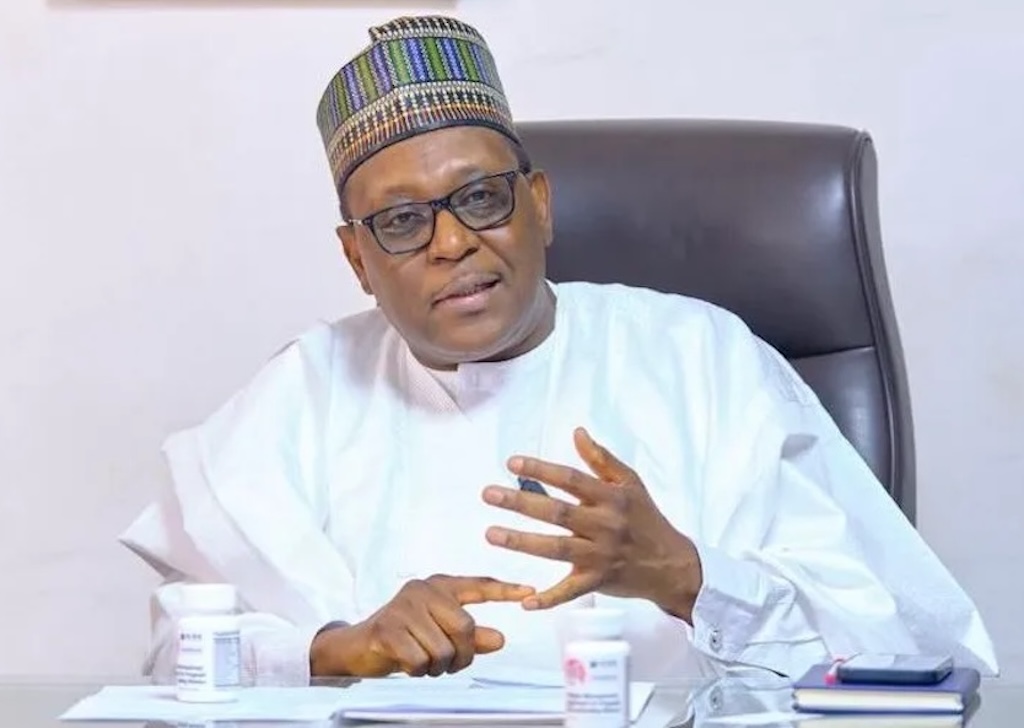
The Coordinating Minister of Health and Social Welfare, Muhammad Pate, has confirmed that the Ebola virus detected in Nigeria is highly similar to the virus identified in Kenya’s first imported case.
Mr Pate disclosed this on Friday during a briefing at the Federal Ministry of Health in Abuja, saying genomic sequencing showed that the viruses differed by only one mutation.
He said the analysis was conducted by sequencing teams at the Nigeria Centre for Disease Control and Prevention (NCDC) and the Institute of Genomics and Global Health at Redeemer’s University, Ede, Osun State, with the team led by virologist Christian Happi.
However, he cautioned that the finding does not establish how the Nigerian first case acquired the infection.
“Based on the genomic analysis, there is no evidence of travel of that index case in Kenya that links it to Nigeria, but the viruses are appearing to be related,” he said.
He added that the finding could change the understanding of the route of transmission as further investigations and testing continue.
Kenya has so far recorded nine confirmed Ebola cases caused by Bundibugyo virus, including one death, according to the European Centre for Disease Prevention and Control (ECDC). Eight of the cases were linked to the country’s first imported case from the Democratic Republic of the Congo (DRC), including four healthcare workers.
Africa CDC probes link
The genomic finding came on the same day the Africa Centres for Disease Control and Prevention (Africa CDC) said it is investigating a possible connection between Nigeria’s case and Kenya’s first imported case.
The agency said both patients had travelled through Entebbe International Airport in Uganda on 3 October, prompting investigations into whether they had shared equipment or had other contact. Africa CDC, however, stressed that no connection had been established between the infections.
The Kenyan patient travelled from the DRC through Uganda before arriving in Nairobi. He later died, becoming the first recorded Ebola death in Kenya’s current outbreak.
The Nigerian patient also passed through Uganda, but Ugandan authorities had earlier rejected suggestions that this established the country as the source of her infection.
Uganda denies active case
On 21 October, Uganda’s Ministry of Health said it had no confirmed active Ebola case and that the Nigerian patient’s transit through the country did not establish that she contracted the virus there.
The ministry said preliminary information indicated that the Nigerian woman had travelled to eastern DRC for business and passed through Uganda in early October without showing symptoms. It said the location of her exposure remained under investigation.
The new genomic finding now provides evidence of similarity between the Nigerian and Kenyan infections, although Nigerian authorities have not established that the patient was infected in Kenya.
One confirmed case
Mr Pate said Nigeria still has only one confirmed Ebola case and that authorities were continuing contact tracing, quarantine and additional testing of contacts.
Some tests have returned negative results, while others are pending, he said.
He urged Nigerians to remain vigilant but calm, saying there is no need for panic.
“We will continue to work diligently to ensure that we contain this virus as much as possible, and that we avoid a situation that spills over to the communities,” he said.
READ ALSO: Ebola: Atiku demands details of FG’s N10bn emergency fund
The minister said the government is also strengthening infection prevention and control measures in health facilities and would train health workers on how to identify and manage suspected cases.
He urged hospitals to notify public health authorities of suspected cases and encouraged Nigerians to observe basic preventive measures, including regular handwashing and hygiene.
Mr Pate also said Ebola is not currently known to be transmitted through the air but through close contact with infected body fluids.
He urged Nigerians to rely on information from public health authorities, including the NCDC, Federal Ministry of Health, World Health Organisation and Africa CDC, rather than unverified information on social media.
Discover more from Premium Times Nigeria
Subscribe to get the latest posts sent to your email.
-

 News1 day ago
Obi, Kwankwaso to hold Middle Belt Youth, Village Hall Meeting in Jos
-
News4 days ago
Meta’s Muse hits 10M U.S. downloads in 40 days, a milestone reached by only 11 other apps
-
Business4 days ago
How Your Side Hustle Income Ends Up in Your RSA
-
News3 days ago
Blacksmith hits unicorn valuation after Sequoia leads Series C