News
Xenophobia: Nigeria warns South Africa tensions could hit MTN – Technology Times


Stay connected via Google News

The Federal Government has signalled that rising xenophobic tensions in South Africa could have implications for the operating environment of major South African businesses operating in Nigeria, particularly telecoms giant MTN Nigeria, and other firms with significant investments in the country.
The warning comes as anti-immigration groups in South Africa intensify campaigns against foreign nationals ahead of a June 30 deadline issued by some activist groups demanding that undocumented migrants leave the country.
In Nigeria, South African-linked companies maintain a strong presence across banking, broadcasting, hospitality and financial services. These include MTN Nigeria, the nation’s largest mobile network operator with over 95 million phone subscribers, Stanbic IBTC, majority-owned by South Africa’s Standard Bank Group, MultiChoice, operator of the DStv platform, and hotel brands such as Protea.
Speaking during an interview with TVC News on anti-migrant protests in South Africa, Bianca Odumegwu-Ojukwu, Minister of Foreign Affairs, expressed concern over the treatment of Nigerians in the country and suggested that lawmakers could consider measures aimed at making South Africa “feel the pinch” if the attacks and harassment of Nigerians continue.


“Nobody is asking them to provide proof of identity, nobody is asking South African staff that go to work here whether they are South Africans or Nigerians and nobody is taking over their shops or their businesses. But this is happening to Nigerians in South Africa,” she said.
South Africa’s xenophobia: Lawmakers to decide fate of MTN Nigeria, minister says
Responding to concerns about firms such as MTN and other South African companies operating in Nigeria, Odumegwu-Ojukwu stressed that Nigerians have generally allowed South African businesses to operate freely despite recurring tensions.
“Nobody is asking them to provide proof of identity, nobody is asking South African staff that go to work here whether they are South Africans or Nigerians and nobody is taking over their shops or their businesses. But this is happening to Nigerians in South Africa,” she said.
Odumegwu-Ojukwu revealed that discussions with South African authorities had not provided the assurances Nigeria was seeking. According to the minister, South African authorities cited difficulties in protecting migrants because foreign nationals are dispersed across local communities rather than concentrated in designated areas.
“I must say the conversation was not particularly encouraging,” she said, referring to engagements with her South African counterpart.
The minister also accused South Africa of failing to fully implement a previously agreed memorandum designed to provide early warning mechanisms during periods of tension.
“We signed this memorandum. Once they got back to South Africa, they decided that they weren’t going to adhere to it,” she said.
Although South African President Cyril Ramaphosa has publicly condemned vigilantism and insisted that ordinary citizens have no authority to demand identity documents from migrants, Odumegwu-Ojukwu said stronger action is still needed to curb harassment and attacks. Drawing a comparison with a previous diplomatic intervention in Ghana, she said Nigerian authorities had not seen the same level of urgency from South Africa.
While the minister stopped short of endorsing direct action against South African firms, she acknowledged growing calls for a review of Nigeria’s response.
“Those options are not on the table for me. The options are on the table for our legislators. They themselves will come up with what steps that need to be taken to make South Africa feel the pinch,” she said.
The minister argued that continued attacks were already harming South Africa’s international image, adding that the country has been “stained with the stigma of a xenophobic country.”
Stay ahead with real-time reports, breaking news, and exclusive insights delivered directly to your phone. Don’t settle for outdated information. Join TECHNOLOGYTIMES NEWS on WhatsApp for 24/7 updates.
Join Our Whatsapp Channel



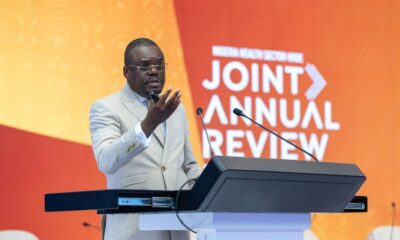


The presidential candidate of the African Democratic Congress, ADC, Atiku Abubakar, former Kogi West Senator, Dino Melaye and Emmanuel Fayose, a House of Representatives aspirant in Ekiti State, have urged Nigerians to reject President Bola Tinubu and the All Progressives Congress, APC, in the 2027 general election.
They made the call during a meeting with ADC leaders and members in Abuja on Thursday, warning that the country's economic challenges could worsen if Tinubu secured a second term.
Atiku, who was represented by his spokesman, Kenneth Okonkwo, accused the President of undermining democratic institutions by allegedly exercising excessive control over the legislature and the judiciary.
He said the National Assembly had failed to hold the executive accountable, arguing that lawmakers were prioritising the President's interests over those of ordinary Nigerians.
“In Nigeria today, the parliament is for the president, not for the people,” Okonkwo said, adding that the legislature was supposed to check the executive in the interest of citizens.
He criticised what he described as excessive government spending amid widespread economic hardship, insisting that lawmakers should scrutinise public expenditure and demand accountability.
Okonkwo also called on opposition parties to unite and present credible candidates capable of providing effective representation and delivering democratic dividends.
He questioned the President's frequent foreign trips, arguing that constitutional provisions on presidential succession must be respected.
The ADC spokesman further criticised the administration's borrowing, arguing that rising debt obligations were placing additional pressure on public finances and worsening the country's economic difficulties.
He likened the country's economic situation to the biblical wilderness, arguing that the removal of fuel subsidy had increased the burden on Nigerians already struggling with hunger and poverty.
Okonkwo also raised concerns about Tinubu's health and capacity to govern, saying Nigerians needed a leader capable of managing the country's challenges. He, however, acknowledged that illness was a human condition and should not be used to stigmatise anyone.
Former Kogi West lawmaker, Senator Dino Melaye, in his remarks, criticised Tinubu's comparison of Nigeria's situation with Egypt while defending the President's position against calls for the restoration of fuel subsidy.
Melaye argued that Egypt had overtaken Nigeria in several economic indicators, including gross domestic product, per capita income, unemployment and poverty, insisting that the President's comparison was misplaced.
He said Nigeria needed leadership capable of addressing its economic problems, warning that the hardship currently experienced by citizens could become more severe if Tinubu returned to office in 2027.
“This hunger you are seeing now is prelim. This hunger you are seeing now is introduction to hunger. You have not even gotten to hunger,” Melaye said, warning Nigerians about the possible consequences of another APC administration.
The former lawmaker also criticised the National Assembly, describing it as an extension of the executive rather than an independent institution capable of holding the government accountable.
Drawing on his experience in the House of Representatives and Senate, Melaye argued that the legislature must reclaim its constitutional responsibility of checking the executive and protecting the interests of Nigerians.
He called on opposition figures across political parties to work together, stressing that the country's survival should take precedence over personal ambitions, ethnic considerations and political affiliations.
Melaye urged opposition leaders, including Peter Obi, Rabiu Kwankwaso and other political figures, to recognise the need for cooperation in the 2027 election, arguing that Nigeria required a leader capable of uniting its diverse population.
Also speaking, Emmanuel Fayose, the younger brother of former Ekiti State Governor Ayodele Fayose, alleged that the Tinubu administration was concerned about Atiku's popularity and political influence.
Fayose said the South-West would play a significant role in determining the outcome of the 2027 presidential election, urging Nigerians to assess political candidates based on their records and capacity to lead.
He also expressed confidence that Atiku could attract substantial support in the region, while emphasising the need for voter education and sensitisation, particularly among young people.
2027: Atiku, Melaye, Fayose warn Nigerians against Tinubu’s re-election

-

 News4 days ago
Amazon to fund 12 small nuclear reactors at former Indiana coal plant
-
News3 days ago
Mamdani says feds have abdicated on AI, urges New Yorkers to push back
-
News3 days ago
Meta’s Muse hits 10M U.S. downloads in 40 days, a milestone reached by only 11 other apps
-
Business2 days ago
How Your Side Hustle Income Ends Up in Your RSA