
Business
FG debunks claims of plans to introduce telecoms, fuel taxes

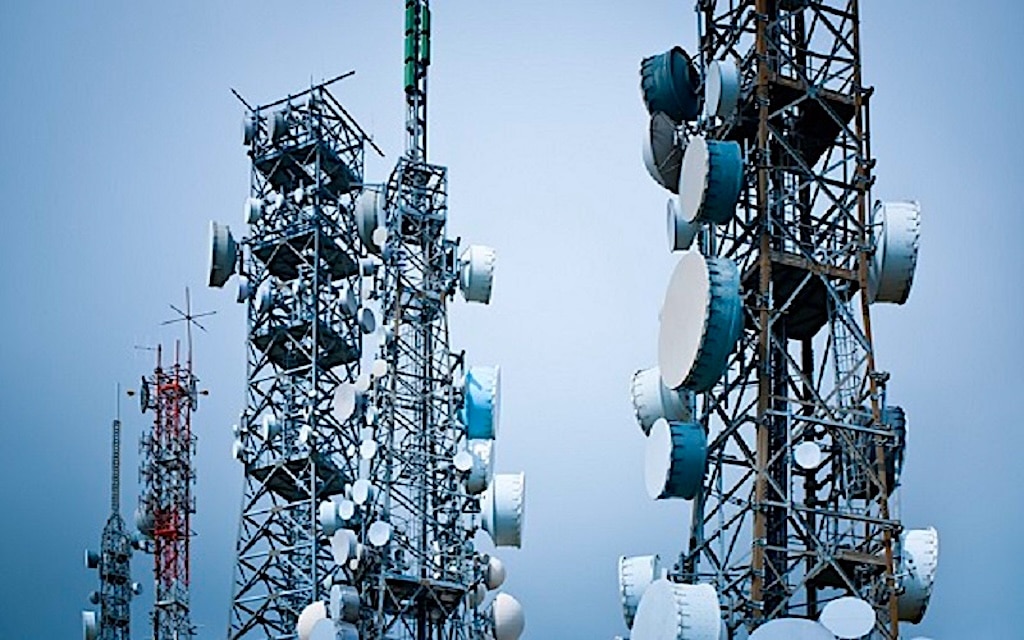

The Federal Government has dismissed reports suggesting it plans to introduce new taxes on telecommunications services and petroleum products, saying the claims are false and misleading.
The Federal Ministry of Finance disclosed this on Wednesday in a statement signed by Maryann Duke, senior special assistant on communications and press secretary to the Minister of Finance and Coordinating Minister of the Economy, Taiwo Oyedele.
It said the reports, which linked the proposed taxes to the International Monetary Fund (IMF) Article IV Consultation on Nigeria, do not reflect its position.
According to the government, the recommendations contained in the IMF report are advisory and do not constitute policy decisions or binding actions for Nigeria.
“The Federal Government is not considering the introduction of any new taxes on telecommunications services or petroleum products,” the statement said.

Fuel tax rules remain unchanged.
The government also clarified that existing tax arrangements on petroleum products remain in place.
It said the Value Added Tax (VAT) waiver on fuel has not been removed and is still active.
It also explained that any fuel surcharge can only take effect through a ministerial order published in the Official Gazette, adding that no such action is being considered.
According to the statement, the current arrangements have helped cushion the impact of global fuel price changes on Nigerian households and businesses.
READ ALSO: NRS launches Rev360 to ease tax compliance
Telecoms excise duty
On telecommunications, the government said the excise duty introduced before 2023 has already been repealed under the new tax laws.
It added that the tax is, therefore, no longer in force.
The ministry urged Nigerians, media organisations and businesses to disregard claims about new telecoms and fuel taxes.
It said Nigeria’s tax policy remains focused on improving revenue collection, supporting economic growth, and attracting investment, rather than increasing the tax burden on citizens.
The ministry added that any future tax changes would be communicated through official channels and implemented strictly in line with due process.


Airtel Mobile Commerce N.V. (Airtel Money), the mobile money business of Airtel Africa, has set the offer price for its planned initial public offering (IPO) at £1.96 per share, implying an estimated market capitalisation of £5.3 billion ($7.0 billion) at admission.
Airtel Africa disclosed this in a statement on Thursday, saying Airtel Money intends to list its ordinary shares on the London Stock Exchange, with admission currently expected on 14 October.
The planned listing followed Airtel Africa’s announcement on 23 September of its intention to undertake an IPO for Airtel Money, which operates mobile money services across several African markets.
Listing offer
Under the offer, certain existing shareholders of Airtel Money are expected to sell 270 million existing shares. Also, an additional 27 million shares may be sold if the over-allotment option is fully exercised.
Airtel Africa said it does not expect to sell its existing Airtel Money shares in the offer, except pursuant to the over-allotment option.
The telco said it would remain a “long-term strategic shareholder” in Airtel Money and support the business as it moves into its next phase as an independently listed company.

Based on current indications from existing shareholders, approximately 16.5 per cent of Airtel Money’s issued ordinary share capital is expected to be held in public hands if the over-allotment option is not exercised.
This could rise to approximately 17.5 per cent if the maximum additional shares are sold, according to Airtel Africa.
Airtel Money expects the level of public ownership to make it eligible for inclusion in the FTSE UK indices.
The company said it intends to apply for admission of its ordinary shares to the equity shares category of the Official List of the UK Financial Conduct Authority and for trading on the London Stock Exchange’s Main Market.
Airtel Money said further details of the offer would be contained in its prospectus, which it said would be made available on Airtel Money’s IPO website, subject to applicable access restrictions, on Thursday.
READ ALSO: What Dangote IPO signals – NGX Chairman
Airtel Africa has been planning to spin off its mobile money business from its core telecoms operations following the financial subsidiary’s performance in previous years.
Its mobile money unit, Airtel Money, logged a strong performance in 2025, recording $1.4 billion in turnover, more than one-third higher than what it reported a year before.
Airtel Africa is a leading provider of telecommunications and mobile money services, with operations in 14 countries in sub-Saharan Africa.
Airtel Africa provides an integrated offer to its subscribers, including mobile voice and data services, as well as mobile money services, both nationally and internationally.
Discover more from Premium Times Nigeria
Subscribe to get the latest posts sent to your email.
-

 News1 day ago
PLASU Opens Doors to Global Investors at 2nd Inaugural Lecture
-
News1 day ago
Plateau Specialist Hospital Celebrates Nigeria at 66, Salutes Mutfwang’s Health Initiatives
-
News1 day ago
Nigeria At 66: Rotjimwa Yilyok Salutes President Tinubu, APC Leadership and Plateau Government
-
News2 days ago
Nigeria’s data protection agency’s revenue surges over ₦12b as compliance expands – Technology Times


