Health
NMA warns of wider health crisis as LASUTH doctors’ strike enters second day


The Nigerian Medical Association (NMA), Lagos State branch, has raised a concern about the ongoing three-day warning strike by resident doctors at the Lagos State University Teaching Hospital (LASUTH), stating that it may trigger broader disruptions in the Lagos healthcare system if unresolved welfare issues persist.
The strike, now in its second day, followed a resolution by the Association of Resident Doctors (ARD) of LASUTH at its 19th Ordinary General Meeting and Scientific Conference, where members voted to withdraw services over long-standing, unaddressed welfare concerns.
According to a report by Channels Television, the association said the decision followed repeated engagements and ultimatums that failed to produce concrete action from the state government.
The president of the association, Alaba Akirele, said the government had failed to respond adequately despite sustained engagements with stakeholders, warning that further industrial action remained possible if the situation did not improve.
Following deliberations, the congress demanded the immediate resumption of construction of the Resident Doctors’ Quarters at LASUTH, urgent implementation of the revised professional allowance structure for doctors in Lagos State, and payment of specialist allowances to eligible Senior Registrar doctors.

The association also confirmed that the warning strike would run for three days, from Monday night, 15 June, to Friday, 19 June, and cautioned that continued inaction could escalate the dispute.
More details
In a statement reported by The Punch newspaper on Thursday, the NMA Lagos Chairman, Ewonowo Sunday, described the situation as “deeply unfortunate but avoidable,” blaming prolonged delays in negotiations between the state government and the doctors for the breakdown in industrial harmony.
Mr Sunday said the association viewed the development with deep concern, noting that strike action, though a last resort, often becomes inevitable when sustained dialogue fails.
“We view this development with deep concern. Regrettably, this crisis was avoidable if all concerned stakeholders had been more proactive and responsive in addressing the legitimate concerns raised by the resident doctors,” he said.
Grievances
The NMA outlined several unresolved issues at the centre of the dispute, including delayed implementation of revised professional allowances, unpaid promotion arrears, and weak welfare support for medical trainees.
It also cited infrastructural and institutional concerns, such as the completion of the Resident Doctors’ Quarters and Residency Training Centre at LASUTH, the payment of specialist allowances to eligible senior registrars, and the settlement of outstanding promotion arrears.
Other demands include approval and release of the 2026 Medical Residency Training Fund (MRTF), payment of teaching allowances to registrars and house officers, and strengthened security measures for healthcare workers and patients within LASUTH and across Lagos State health facilities.
Wider health system impact
The association warned that the LASUTH dispute reflects a pattern of unresolved welfare issues affecting resident doctors across Nigeria’s health system.
It noted that similar tensions have been reported at other tertiary hospitals, including the Lagos University Teaching Hospital (LUTH), where doctors have raised concerns over working conditions and welfare provisions.
The NMA also referenced the wider national context, including a 21-day ultimatum issued by the Nigerian Association of Resident Doctors (NARD) to the federal government over unpaid allowances, residency funding, and related entitlements.
According to the association, the recurrence of such disputes points to a systemic challenge that, if left unaddressed, could trigger coordinated industrial action across the country’s health sector.
The NMA urged the Lagos State government, the Federal Ministry of Health and Social Welfare, and hospital management authorities to urgently intervene to prevent further escalation of the dispute.
It stressed that sustained delays in addressing welfare concerns risk weakening healthcare delivery and lowering morale among medical professionals.
READ ALSO: Kebbi State raises retirement age bar for doctors
The association added that adequate welfare support for health workers remains critical to sustaining quality healthcare services for patients.
Appeal for calm and dialogue
Despite its warnings, the NMA Lagos leadership called on resident doctors to remain calm and professional while discussions continue with relevant authorities.
It reaffirmed its commitment to dialogue and constructive engagement to restore industrial harmony and ensure uninterrupted healthcare delivery across Lagos State.






Health
Nigerian drugmaker Fidson selected to manufacture generic influenza antiviral under global licence

A Nigerian pharmaceutical company, Fidson Healthcare Plc, has been selected to develop and manufacture a generic version of baloxavir marboxil, an antiviral medicine used to treat influenza.
The selection makes Fidson one of 11 manufacturers across nine countries chosen under a voluntary licensing agreement between the Medicines Patent Pool (MPP) and Swiss pharmaceutical company Roche.
The company disclosed this in a press release signed by its media contact, Tope Akindele. The MPP, a United Nations-backed public health organisation, also announced the sublicence agreements on 25 September.
The selected manufacturers are from Brazil, China, India, Indonesia, Malaysia, Nigeria, Uganda, Ukraine and Vietnam. The MPP said the arrangement is intended to “diversify supply pathways for influenza treatment, support regional production, and strengthen preparedness for future outbreaks and pandemics.”
What it means for Fidson, Nigeria
The selection makes Fidson one of the manufacturers that would develop, manufacture and supply generic versions of baloxavir in 129 countries covered by the licence, subject to regulatory authorisation.
The agreement also gives selected manufacturers access to technical data, reference products for bioequivalence studies and other support to facilitate product development and regulatory approval.

The MPP said it selected the manufacturers following an open Expression of Interest process and an assessment of their technical and regulatory capacities and commitment to producing quality-assured baloxavir products.
The organisation said having manufacturers in different regions would help build production capacity closer to the populations the medicines are intended to serve and strengthen the resilience of global supply.
For Nigeria, the selection places a local pharmaceutical manufacturer in a global effort to expand production of an influenza antiviral while strengthening domestic and regional pharmaceutical manufacturing capacity.
Selection strengthens Africa’s role
Fidson’s Managing Director and Chief Executive Officer, Biola Adebayo, described the selection as a validation of the company’s commitment to quality-assured pharmaceutical manufacturing and innovation.
“Being selected by the Medicines Patent Pool as a sublicensee under the Roche-MPP voluntary licensing programme for baloxavir marboxil is both an honour and a validation of Fidson’s longstanding commitment to quality-assured pharmaceutical manufacturing, innovation, and improving healthcare outcomes,” Mr Adebayo said.
He said the partnership would allow the company to contribute to efforts to strengthen regional health security and preparedness for future health emergencies.
“As an African healthcare company, we are proud to contribute to global efforts aimed at strengthening regional health security, enhancing preparedness for future health emergencies, and ensuring that life-saving medicines reach the patients who need them most,” he said.
Mr Adebayo said the partnership also demonstrated the growing role of African manufacturers in the global health ecosystem.
He said Fidson would work with Roche, the MPP and other stakeholders to support broader access to baloxavir across eligible markets.
READ ALSO: Fidson, Nigeria’s largest pharmaceutical company, delivers N3.6 billion dividend to shareholders
Part of pandemic preparedness
The announcement came as global leaders gathered in New York for the United Nations General Assembly to discuss pandemic prevention, preparedness and response.
The MPP said the licensing arrangement is designed to build manufacturing capacity before, rather than during, a health emergency.
Charles Gore, Executive Director of the MPP, said the organisation would work with the selected manufacturers on product development and regulatory approval, aiming to make quality-assured generic baloxavir available as quickly as possible.
“By combining global manufacturing capacity with regionally focused production, we are helping build a more geographically diverse and resilient supply base for the future,” Mr Gore said.
Discover more from Premium Times Nigeria
Subscribe to get the latest posts sent to your email.
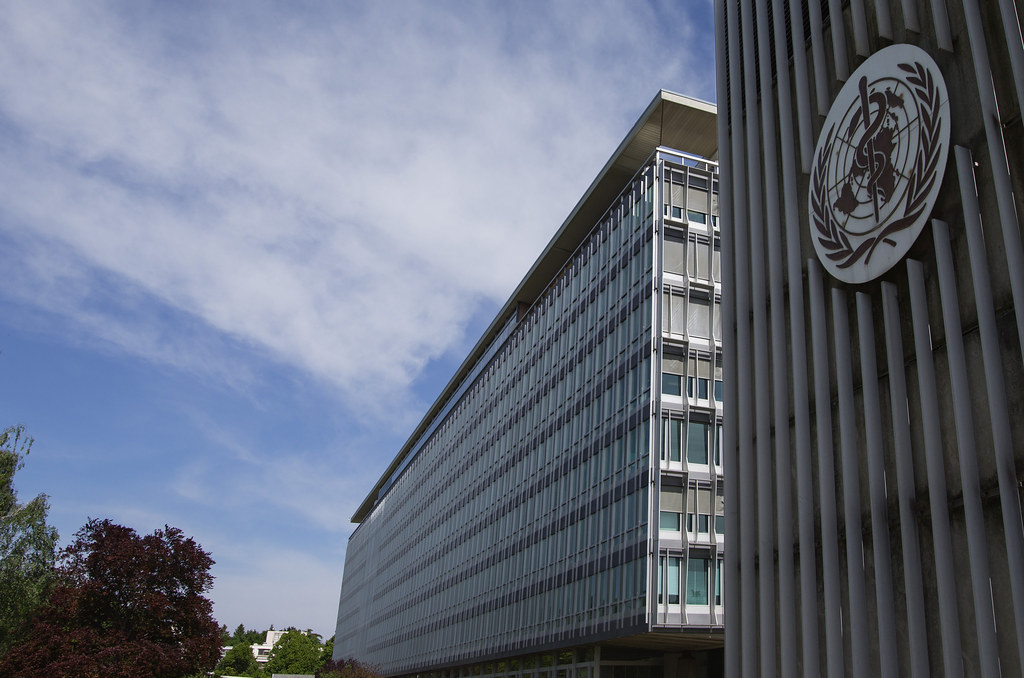
Non-communicable diseases (NCDs) such as heart disease, diabetes and dementia accounted for 74 per cent of global deaths in 2023, up from 58 per cent in 2000, according to the latest estimates released by the World Health Organisation (WHO).
The findings, contained in the WHO’s latest Global Health Estimates released on Friday, show that although global life expectancy has largely recovered from the disruption caused by the COVID-19 pandemic, the world’s disease burden is increasingly shifting towards chronic illnesses and mental health conditions.
According to the report, global life expectancy reached 73.3 years in 2023, almost returning to the 73.4 years recorded in 2019 before the pandemic. However, healthy life expectancy, which measures the number of years people live in good health, recovered more slowly, reaching 62.8 years in 2023, still 0.4 years below its pre-pandemic level.
The WHO noted that eight of the world’s 10 leading causes of death were NCDs in 2023, highlighting a long-term global shift away from communicable diseases.
Cardiovascular diseases remain leading killer
The report identified cardiovascular diseases as the leading cause of death and disease burden worldwide.
It said ischaemic heart disease alone caused approximately 9.5 million deaths and 210 million disability-adjusted life years (DALYs) in 2023. DALYs measure years of healthy life lost due to illness, disability or premature death.
While many parts of the world have made significant progress in reducing the burden of ischaemic heart disease since 2000, the WHO reported rising individual-level risks in the Western Pacific and South-East Asia regions, highlighting persistent inequalities in cardiovascular health outcomes.
The organisation also reported substantial increases in the burden of other chronic diseases.
According to the report, the risk of dying from diabetes has risen considerably since 2000, particularly in South-East Asia.
Alzheimer’s disease and dementia have also become more prominent.
Dementia rose from the 19th leading cause of death globally in 2000 to the fifth in 2023, while deaths linked to the condition tripled during the period.
Mental health concerns
The WHO also highlighted the growing impact of mental health conditions on global health.
Between 2019 and 2023, the global age-standardised DALY rate increased by approximately 20 per cent for depressive disorders and nearly 45 per cent for anxiety disorders.
Together, depression and anxiety accounted for an estimated 110 million years of healthy life lost through premature death and disability in 2023.
The report further showed changing patterns in drug use disorders across regions.
Between 2000 and 2023, the WHO Region of the Americas recorded the largest increases in mortality risk and healthy life loss associated with drug use disorders, while the Western Pacific region experienced substantial declines.
READ ALSO: Drug-resistant bacterial infections kill one million people annually – WHO
Need for stronger health data systems
Speaking further on the findings, Alani Labrique, Director of WHO’s Department of Data, Digital Health, Analytics and AI, described rising life expectancy as one of public health’s greatest achievements.
However, Mr Labrique noted that the next challenge is ensuring that the additional years people live are spent in good health, while health systems adapt to the changing needs of ageing populations and the growing burden of chronic diseases.
He said the estimates provide countries with evidence on how patterns of death and disease burden are changing over time, helping governments shape health policies, strengthen digital and data infrastructure, and improve their ability to generate insights needed for targeted health interventions.
Discover more from Premium Times Nigeria
Subscribe to get the latest posts sent to your email.
-

 Health2 days ago
Plateau: Medical Women Association of Nigeria Marks Older Persons Day with Free Outreach
-
News3 days ago
PLASU Opens Doors to Global Investors at 2nd Inaugural Lecture
-
News4 days ago
Nigeria At 66: Rotjimwa Yilyok Salutes President Tinubu, APC Leadership and Plateau Government
-
News4 days ago
Plateau Specialist Hospital Celebrates Nigeria at 66, Salutes Mutfwang’s Health Initiatives