
News
Bukayo Saka Parries Concern Over His Injury Status, After Missing England’s 4-2 Victory Versus Croatia


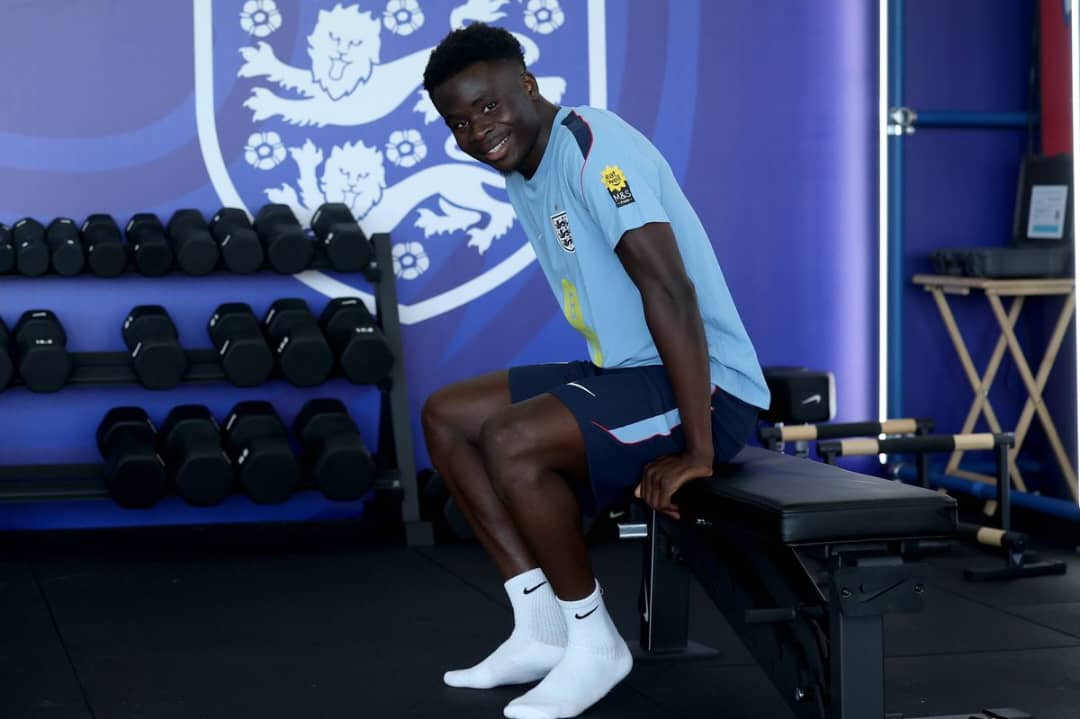
Arsenal star, Bukayo Saka has parried worries over his injury status and insists he is ready to play for England at the ongoing FIFA World Cup, where he sat out his team’s opening match on Wednesday, Sports247 reports.
England dumped Croatia 4-2 at AT&T Stadium in Dallas, Texas in their Group L opener, but Saka was not part of The Three Lions’ squad that got deserved revenge for their loss to the same country in the Russia 2018 semi-finals.
Read Also: Arike Ogunbowale Shakes USA’s Women’s NBA With 22 Points, Five 3-pointers In Dallas Wings’ Victory
The Gunners’ winger was always a major worry ahead of Wednesday’s game, as he is still recovering from a nagging achilles injury that he picked up earlier this season with his club.
However, Saka said he is feeling better and ready to play the next game, as he is eager to defy all odds, but admitted that it all depends on The Lions’ coach, Thomas Tuchel, who decides the squad’s line-up.
“I don’t want to say anything that goes against the manager. But what I would say between Mikel (Arteta) and Arsenal, since March, they have managed me amazingly and helped me get back on the pitch.
“I am feeling better than I have felt for the last few months. I am ready to go. As players it’s the biggest gamble, especially if you’re not feeling your sharpest. You have the choice whether you don’t play or you put yourself out there knowing people are going to judge you.
“I’m happy to take the gamble. It (often pays) off, I’d say. I’m going to continue doing that. But I am feeling a lot better than I did in March and I’m ready to go,” Saka submitted philosophically.
Sports247 reports further that it’s now left to be seen if Tuchel will consider Saka fit enough to start against Ghana next week in England’s second game of the ongoing Mundial in USA, Canada and Mexico.






Lagos State is investing $22 million to develop a unified 6,000-kilometre digital network, a major expansion of the fibre infrastructure the government says is needed to support connectivity, digital public services and the state’s growing technology-driven economy.
The proposed network builds on approximately 3,000 kilometres of fibre ducts and networks already laid across the state, potentially giving Lagos a significantly broader digital infrastructure footprint as it seeks to connect more locations and strengthen the backbone supporting its digital economy.
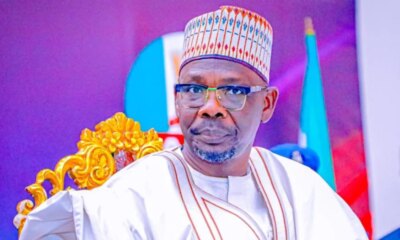
Dr Kadri Obafemi Hamzat, Deputy Governor of Lagos State, disclosed the investment on Tuesday at the fifth edition of TeXcellence, held at the Landmark Event Centre in Lagos.

“Africa’s challenge is no longer a shortage of innovation but the inability to scale successful ideas into sustainable systems that deliver widespread economic and social benefits,” Hamzat said. For Lagos, the proposed 6,000-kilometre network is part of the infrastructure required to close that gap between digital innovation and mass adoption.
With fibre, Lagos broadens digital infrastructure footprint
The scale of the proposed network places fibre infrastructure at the centre of Lagos State’s digital transformation strategy. Beyond providing connectivity, the network is expected to support internet access, digital government services and technology-enabled economic activities across the state.
The announcement comes as Lagos continues to expand the use of digital platforms for public administration and service delivery, increasing the importance of resilient and widely available connectivity infrastructure.
Speaking at the event, themed “Accelerating Africa’s Digital Future Lacks Direction and a Sustained Force,” Hamzat said Africa’s technology challenge was no longer a shortage of innovation but the difficulty of scaling successful ideas into sustainable solutions capable of reaching millions of people.
“Africa’s challenge is no longer a shortage of innovation but the inability to scale successful ideas into sustainable systems that deliver widespread economic and social benefits,” Hamzat said.
For Lagos, the proposed 6,000-kilometre network is part of the infrastructure required to close that gap between digital innovation and mass adoption.
The deputy governor called on governments and private sector organisations to sustain investment in digital infrastructure, establish predictable policies and implement institutional reforms that would enable technology innovations to deliver wider economic and social benefits.
He also called for the removal of bureaucratic bottlenecks that constrain technology businesses and innovators, arguing that a more enabling environment would allow businesses to expand and develop solutions addressing societal challenges.
Digital infrastructure underpinning public services
Hamzat linked the state’s infrastructure investments to broader digital reforms already taking place across Lagos.
He disclosed that more than 6.4 million residents had been enrolled in the state’s resident identity system, while digital reforms had streamlined processes including physical planning permits and mortgage consent applications.
The figures illustrate the growing dependence of government services on digital infrastructure, with the proposed fibre network potentially providing a broader connectivity backbone for the delivery and expansion of such services.
The government’s digital infrastructure programme, he added, also extends to support for research and technology businesses through the Lagos State Science Research and Innovation Council (LASRIC).
Hamzat said LASRIC had supported 80 researchers and more than 75 startups, while approximately ₦1 billion was available in grants for innovators.
The state is also considering an innovation law that would commit a fixed proportion of its annual budget to research, development and risk capital.
According to Hamzat, such a framework would create a more predictable funding structure for researchers and technology businesses developing locally relevant solutions.
He further called for stronger collaboration between government and industry, proposing measurable commitments from both sides to accelerate digital transformation.
Fibre network as digital economy backbone
The proposed 6,000-kilometre network is significant because of the role fibre infrastructure plays in supporting high-capacity digital connectivity.
With approximately 3,000 kilometres of fibre ducts and networks already laid, the new investment would build on an existing infrastructure base rather than starting from scratch.
The resulting network is expected to provide infrastructure that can support the increasing demand for internet connectivity, cloud-based services, digital government platforms, technology businesses and other data-intensive activities.
However, the announcement did not provide details on the geographical coverage of the proposed 6,000-kilometre network, its implementation timeline, funding structure beyond the disclosed $22 million investment or specific completion targets.
Africa must build digital sovereignty
At the same event, Adewale Adeyipo, Group Managing Director and Chief Executive Officer of CWG Plc, urged African governments and technology companies to prioritise digital sovereignty, local artificial intelligence infrastructure and sustainable technology deployment.
Adeyipo said Africa must take deliberate steps to own and shape its digital future rather than depend solely on technologies and infrastructure developed elsewhere.
He called for increased investment in local computing infrastructure, affordable digital devices and digital literacy, while stressing the need to move artificial intelligence solutions beyond experimental projects into reliable and commercially viable systems.
According to him, Africa’s digital transformation requires clear direction, sustained investment and measurable outcomes rather than speed alone.
The discussions at TeXcellence reinforced the importance of coordinated investment in infrastructure, innovation and technology deployment if digital transformation is to reach a larger proportion of the population.
-

 News4 days ago
Microsoft’s Satya Nadella says AI models need an ‘emergency brake’
-
Business3 days ago
Veritas Kapital CEO Nwakuche Joins Coal City University Governing Council
-
News4 days ago
Kwankwaso receives former APC members who defected to NDC in Kano
-
News2 days ago
Meta releases its first frontier model, Muse Wonder


