Connect with us

News

Ouster’s new color lidar is coming to replace cameras

info

Published

on

Rev8 family s.jpg

The tech industry has spent the last decade asking whether self-driving cars need lidar sensors, cameras, or all of the above. Lidar company Ouster says it has a new answer: put them both in the same sensor.

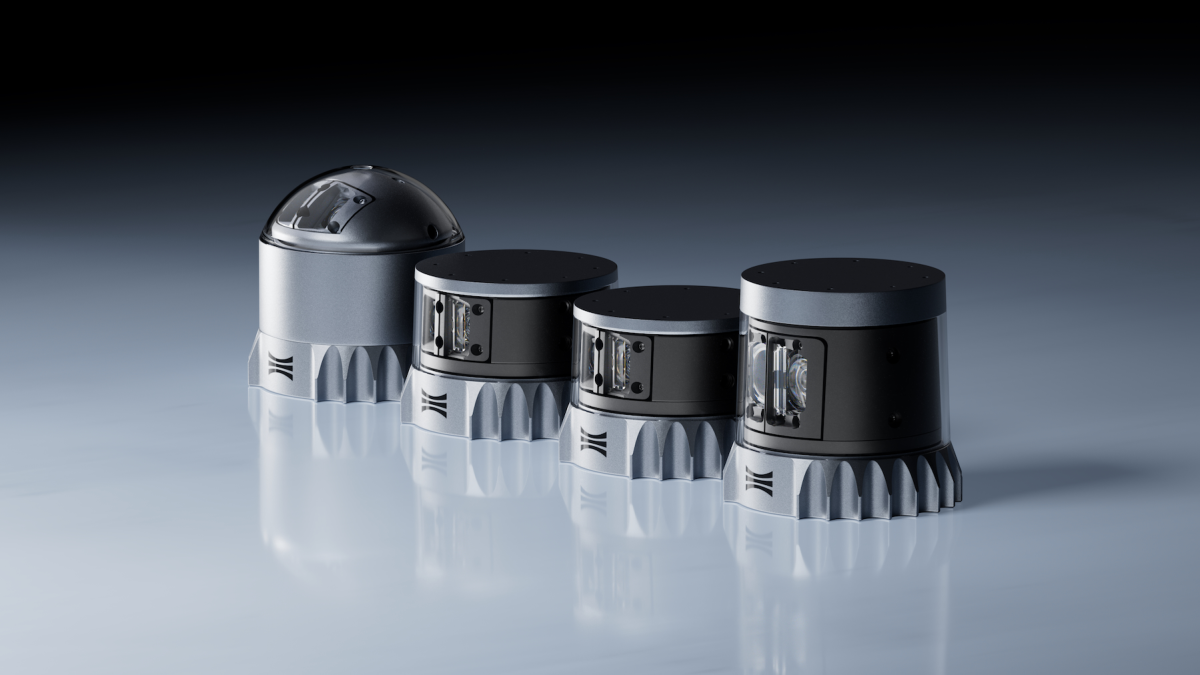
On Monday, the San Francisco-based company announced a new lineup of lidar sensors it calls “Rev8,” all of which offer so-called “native color lidar.” These sensors are capable of capturing color imagery and three-dimensional depth information at the same time, doing the work of two sensors in one.

Ouster CEO Angus Pacala said the development has been a decade in the making at his company, and he wasn’t shy about his ambitions for the new product lineup in an exclusive interview with TechCrunch, calling it the “holy grail of what a roboticist has always wanted.”

“For all of human history, it’s been: you buy a lidar sensor, you buy a camera, and you try to make sense of the combination with some higher level reasoning, and waste an enormous amount of time doing this,” he told TechCrunch. “And companies only get really halfway there in terms of calibrating and fusing the data streams.”

Ouster’s new sensors, he said, change this equation.

“The goal is to obviate cameras. There’s no reason that one sensor can’t do both,” he said.

The Rev8 lineup arrives at a dynamic moment for lidar companies. There has been a years-long wave of consolidation happening, with Ouster buying Velodyne, and Luminar’s assets recently getting acquired in bankruptcy.

Techcrunch event

San Francisco, CA
|
October 13-15, 2026

At the same time, the market for sensors is exploding. Waymo and others have finally deployed working robotaxis and are scaling quickly. Robotics companies — humanoid and industrial — are hoovering up investment dollars and need sensors to perceive the world. There’s so much interest in the space that new companies like Boston-based Teradar are popping up and testing the waters with entirely new modalities. (In Teradar’s case, it’s using terahertz imaging.)

A color lidar that combines pinpoint depth information with camera-quality image data could be especially valuable to the robotics players, Pacala said. And he said Ouster worked with Fujifilm and image science company DXOMARK to understand “what it means to build a great camera.”

In fact, Pacala claims Ouster’s color lidar is “improving in many ways on a modern camera” thanks to the way the company already designs and builds its sensors.

Ouster uses so-called “digital lidar” architecture. Instead of the analog approach, which involves many moving parts, Ouster captures the lidar info directly on its custom chip using what’s known as single photon avalanche diode (SPAD) detectors.

The company is using this same SPAD technology to capture the color image data in the Rev8 sensors. Pacala said this novel technique allows its image capture to be more sensitive than a normal camera.

“It’s 48-bit color, 116 dB of dynamic range, like mega pixel resolution. These are top line numbers that make it pound for pound good camera. But it just so happens it’s coming as a pre-fused data stream as a 3D colorized point cloud,” he said. “You can actually use the data as a camera stream as well, but it’s that’s one of the powers of this system, is you can use just the lidar data stream, you can use just the camera data stream, or you can use the pre-fused data stream, depending on how kind of forward-thinking your perception team is.”

Pacala said his company has already shipped samples to existing customers and that it’s now taking orders. He said he’s particularly proud of the OS1 Max sensor, which he said he considers to be “the industry’s best long range lidar.” It can see 500 meters in all directions and is smaller than other long range lidar “by a big margin.”

“We’ve had a long range LiDAR, but it hasn’t been just like clearly a cut above everything else,” he said. “That’s a big leap for Ouster. I think it means that we’ll start to see it much more on high-speed robo-trucking, robotaxi applications, I think a lot of drone stuff will transition to the OS1 Max.”

Other new lidars built on the Rev8 platform will include the OS0, OS1, and OSDome, according to a press release.

Ouster isn’t the only company that has started talking about color lidar. Last month, Chinese company Hesai announced its own color lidar platform that it says will enter mass production by the end of this year. Other companies, like Innoviz, have previously pitched their own takes on “color lidar.”

Pacala says most other players trying to “fuse” cameras and lidar sensors are basically packaging them together in a box, though. The approach Ouster (and, to be fair, Hesai) is taking is putting the lidar and imaging tech on the same chip.

This dramatically cuts down on the amount of work Ouster’s customers have to do to make sense of the competing sensor streams, Pacala said, and it also sets those customers up to eventually eschew cameras altogether — all while being cheaper and smaller than Ouster’s previous technology.

“This is kind of fundamentally changing the value proposition of what we’re selling to a customer from this stage forward,” he told TechCrunch.

When you purchase through links in our articles, we may earn a small commission. This doesn’t affect our editorial independence.

Continue Reading
Click to comment

Leave a Reply

Your email address will not be published. Required fields are marked *

News

Meta reportedly moves to unwind $2B Manus deal after Beijing’s demand

info

Published

on

By

GettyImages 2194278734.jpg

Meta has begun dismantling its $2 billion acquisition of Manus, completing an operational separation from the Chinese-founded AI startup and halting data sharing between the two companies. This is the most concrete step yet toward complying with a divestiture order Beijing issued roughly two months ago on national security grounds.

Meta has cut Manus off from its internal systems, Bloomberg reported, preventing employees from using Manus tools for internal projects as the two companies move toward a full separation.

Meanwhile, according to May reports, the co-founders of Manus have held preliminary discussions about raising approximately $1 billion from outside investors to reclaim the startup from Meta, a move that could pave the way for a Chinese joint venture structure and an eventual listing in Hong Kong, a venue that has seen a surge in AI listings this year for Chinese AI startups like MiniMax and Zhipu.

What was supposed to be a landmark exit for Chinese AI is quickly unraveling. The move underscores Beijing’s determination to retain control over strategically sensitive technology, regardless of a company’s offshore incorporation.

In addition to the forced divestiture, Chinese authorities have since expanded travel restrictions to researchers and executives at private firms, requiring government approval before heading abroad. China is also tightening its grip on foreign capital, with reports indicating that top AI firms, including Moonshot AI, StepFun, and ByteDance, will need government sign-off before accepting U.S. investment, adding another layer to Beijing’s sweeping effort to control its AI sector.

Even as Meta moves to sever ties with Manus, the agentic AI startup has continued to ship new features, rolling out integrations with Similarweb and Shopify.

Manus drew widespread attention with a viral agent demo relocated its staff to Singapore in mid-2025 before announcing a $2 billion acquisition by Meta in December. Chinese regulators moved to scrutinize the transaction earlier this year, citing potential violations of technology export controls and foreign investment rules.

Manus investors, including California-based venture firm Benchmark, have already received their proceeds from the acquisition, while Asian backers, including Tencent, HSG, and ZhenFund, have indicated they will cooperate with the unwinding process, according to the WSJ.

Manus’ Chinese origins with parent company Butterfly Effect drew scrutiny on both sides of the Pacific, with Senator John Cornyn questioning whether American capital should flow to a Chinese-linked firm.

Meta and Manus did not immediately respond to a request for comment outside regular business hours.

When you purchase through links in our articles, we may earn a small commission. This doesn’t affect our editorial independence.

Continue Reading

News

P-YAEP: 500 Plateau Youths Begin Agribusiness Journey Under State Empowerment Initiative

info

Published

on

By

IMG 8519.jpeg

The Plateau Youth Agricultural Empowerment Programme (P-YAEP) has officially commenced the orientation and project briefing for 500 successfully shortlisted beneficiaries, signaling a major step forward in the Plateau State Government’s commitment to youth empowerment through agriculture. The programme is designed to equip young people with the skills, resources, and opportunities needed to participate actively in the agricultural value chain while contributing to food security and economic growth across the state.

The orientation exercise, held at the Azi Nyako Youth Centre in Jos, brought together beneficiaries from various local government areas, government officials, youth leaders, project managers, and stakeholders in the agricultural sector. The gathering served as an opportunity to familiarize participants with the objectives of the programme, the expectations of beneficiaries, and the responsibilities required to ensure the successful implementation of their agricultural projects.

Speaking during the event, officials emphasized that P-YAEP is more than just an empowerment scheme, describing it as a strategic investment in the future of Plateau’s youth. Beneficiaries were encouraged to approach the programme with dedication, discipline, and a commitment to learning, noting that agriculture remains one of the most viable pathways for job creation, wealth generation, and sustainable development in the state.

Project managers also used the briefing session to provide detailed insights into the operational framework of the initiative, including project timelines, monitoring mechanisms, and support structures available to participants. They highlighted the importance of accountability, transparency, and proper resource management, stressing that the success of the programme depends largely on the commitment and active participation of the beneficiaries.

As the programme moves into its implementation phase, expectations remain high that the initiative will create meaningful opportunities for young people, boost agricultural productivity, and strengthen rural economies across Plateau State. With 500 youths now set to embark on their agribusiness journey, P-YAEP is being widely regarded as a bold and practical step toward reducing unemployment and fostering a new generation of agricultural entrepreneurs in the state.

Continue Reading

Trending