News
WAFCON 2026 Fall-out: Talent Is Least Of Nigeria’s Problems That Prevent Good Results In Sports – Nkechi Obi

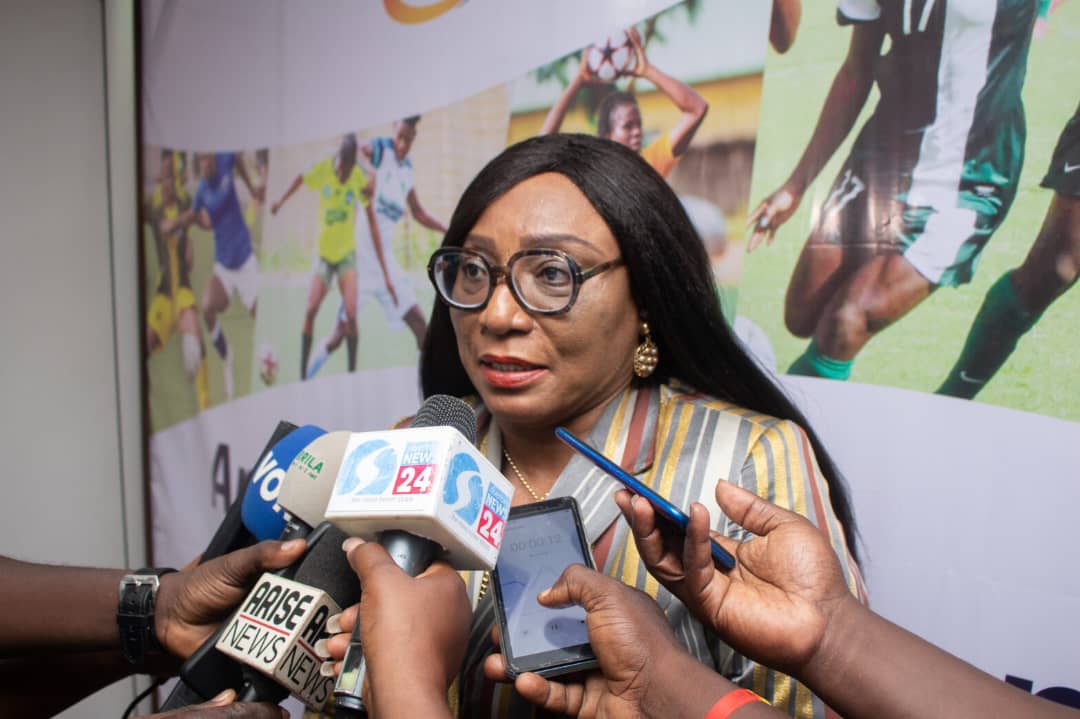
As a fact-finding panel commences inquiries into reasons behind recent setbacks hitting all levels and gender of Nigerian football, one of the country’s former officials, Nkechi Obi has declared that talent is not a major problem affecting the nation.
Sports247 reports that Obi, who is an erstwhile head of Nigeria Women Football League (NWFL), noted that the country has an abundance of talent but administrators keep on placing priority on hunting for what they already have, instead of providing platforms for those natural resources to be fully utilised.
Read Also: ‘A Welcome Development’ — Elumelu Backs NFF Fact-Finding Committee
Obi forwarded a deep insight into her viewpoint and made suggestions on the way forward while speaking during ‘Hot Seat’ segment of Sports247’s television programme, Inside Naija Sports, which streams online via YouTube and airs on NTA News 24 at 10am every Saturday.
She added, “We need a pipeline that converts raw talents to finished products seamlessly. The back-end support for this comes in terms of infrastructure that ensure everyone at the grassroots can participate in sports.
“Unfortunately, the conversation in Nigeria has always been about discovery of talents, but that should not be our focus. Talent is the least of our problems.
“Nigeria is like fertile soil where talents spring up naturally. However, the problem we have is how to channel our raw talents into finished products.”
The erudite and highly articulate sports guru, who is also a marketing expert, went on to profer steps that can take Nigeria out of the woods and put the country’s football teams firmly back on track.
Obi added, “We can put things right by creating a vibrant ecosystem on which sporting activities are built. For that to happen, we need adequate infrastructure; so that the whole community can get involved in sports.
“That means, first and foremost, we need to encourage mass participation in sports and put in place a market development strategy. This means we need a community driven participatory strategy that involves everybody who has an interest in sports.
“If you gather as many people as possible together at the community, the ones who are talented will naturally emerge and stand out. That would make it easier to start building your teams on a regular basis.”
She concluded by reeling out the merits of a mass-participation strategy and various benefits that would fall into place for the country, especially in terms of a steady reservoir of raw talents waiting to be harnessed in a gradual progression over time.
“This strategy will help us build a healthier citizenry, develop a vibrant market for goods and improve our service delivery efforts. This will also give us adequate feedback on the financial implications of our sports activities.
“We will be able to judge whether our sports sector is worth billions or not. We will see it by watching data and statistics that flow with the number of people involved in our sports and what they gain from it.
“Many people in Nigeria don’t like looking at data, but I follow it a lot. We have to start looking at figures to know if we are improving or not and what to do next.
“For instance, Little Baseball in America has 80 million children playing every weekend and they can gauge what economic gains can come out of it – if every child buys a bat, gloves, boots and a ball. That’s how you calculate economic development in sports, and you can make projections about dividends it will bring the country as a whole.”




Health
Updated: Independence Anniversary: Tinubu promises stronger primary healthcare for poor Nigerians

President Bola Tinubu has promised to strengthen primary healthcare services for poorer Nigerians as part of his administration’s efforts to reduce poverty and improve living conditions.
Mr Tinubu, in a televised address marking the country’s 66th Independence Anniversary, said his administration would work with state and local governments to strengthen primary healthcare, basic education, and other essential public services poorer Nigerians depend on.
“That is why, working with our states and local governments, we will continue to strengthen primary healthcare, basic education, and the essential public services poorer Nigerians depend on most,” he said.
The promise comes against the backdrop of persistent challenges in Nigeria’s primary healthcare system, with recent assessments and PREMIUM TIMES investigations documenting shortages of health workers, poor infrastructure, inadequate equipment and gaps in basic utilities at several facilities.
PHCs face staffing, infrastructure gaps
A recent assessment of 1,480 primary healthcare centres across 16 states found that 97 per cent of the facilities failed to meet the national minimum staffing requirement.
The assessment, conducted between October 2023 and June 2025 by Orodata Science and Civic Tech, covered 277 local government areas across Nigeria’s six geopolitical zones.


Only three per cent of the facilities assessed met the national minimum staffing requirement, while 11 of the 16 states had no assessed PHC that met the standard.
The assessment also found that 40 per cent of the facilities had broken ceilings or leaking roofs, while 38 per cent operated without electricity.
Another 39 per cent relied on unsafe water sources, while 75 per cent lacked essential neonatal resuscitation equipment.
About 75 per cent of the PHCs assessed were located in rural communities, where such facilities often serve as the first, and sometimes only, formal source of healthcare for residents, the report said.
PREMIUM TIMES’ recent investigation into rural PHCs in Osun State also found that challenges persisted at some facilities despite government spending and interventions aimed at revitalising primary healthcare.
The investigation across three PHCs found problems including deteriorating infrastructure, inadequate staffing, limited equipment and gaps in essential services.
Increase in PHC financing
The federal government has, however, reported increased funding for primary healthcare under the Basic Health Care Provision Fund (BHCPF).
In June, the Coordinating Minister of Health and Social Welfare, Muhammad Pate, said N339 billion had been disbursed to states through the BHCPF since its establishment in 2014, with N235 billion of the amount disbursed in the three years of the Tinubu administration.
Mr Pate said the increased funding reflected intensified investment in primary healthcare and had helped expand access to essential health services.
He said more than 8,000 PHCs across the 36 states were receiving funding through the BHCPF gateways, while assessments were underway to increase the number of supported facilities to 17,600 nationwide.
The government has also launched the Primary Healthcare Provision Strengthening Programme (HOPE-PHC), a $570 million programme designed to strengthen primary healthcare as part of a wider human capital development and poverty-reduction initiative.
The link between healthcare and poverty reduction
In his address, Mr Tinubu acknowledged that millions of Nigerians still struggle to meet basic needs, including healthcare costs.
“I am also conscious that millions of our fellow citizens cannot wait for tomorrow. Some Nigerian families still struggle today for the next meal, the next school fee, the next medical bill, or simply enough money to get to work,” he said.
ALSO READ: FG approves N32 billion for BHCPF to strengthen primary healthcare services
He said the difficulties facing vulnerable Nigerians were not created by the economic reforms of the last three years but were the accumulated consequences of decades of low productivity, inadequate infrastructure, insufficient opportunities and institutions that had often failed those who needed them most.
Mr Tinubu said his administration could not erase in four years problems that had accumulated over generations but could change their course.
“We can build an economy that steadily lifts people out of poverty while ensuring that those who remain vulnerable are not abandoned along the way,” he said.
He said the government was strengthening direct support for poor households and improving the National Social Register so that assistance reaches those who genuinely need it.
Discover more from Premium Times Nigeria
Subscribe to get the latest posts sent to your email.
-

 News3 hours ago
Plateau Specialist Hospital Celebrates Nigeria at 66, Salutes Mutfwang’s Health Initiatives
-
News4 days ago
Cross River Ikan Sports Fight Back To Beat Gateway Horns 25-19 In Showtime Bowl Series XV Flag Football
-
 News3 days ago
TikTok Access Disrupted in Parts of Northern Nigeria as Users Turn to VPNs
-
Business3 days ago
Court orders NMDPRA to continue issuing fuel import licences to Matrix, AA Rano, AYM Shafa