Health
Donor cuts, govt inaction push HIV patients towards death, uncertainty in Rivers, Akwa Ibom (2)

This is the second part of this report. Read the first part here.

Grace* never saw a state budget document, she never read a federal appropriation law or examined a budget implementation report.
She probably did not know that Nigeria’s HIV response was financed largely by international donors, or that governments at both the federal and state levels had, for years, pledged to assume greater responsibility for sustaining the programmes that kept people like her alive.
What she knew was simple: the community health worker who discreetly delivered her antiretroviral medicines stopped coming, the counselling sessions ended, and the confidential support that allowed her to avoid the crushing weight of stigma vanished.
Forced to collect her medication at a public treatment centre, Grace was recognised, felt exposed, and eventually withdrew from care.
Her experience raises the central question at the heart of this investigation.

As international donors began scaling back community HIV programmes, were governments, particularly in Rivers and Akwa Ibom, two of Nigeria’s highest HIV-burden states, prepared to fill the gap?
A PREMIUM TIMES investigation, based on official budget documents, budget implementation reports, government expenditure records and interviews with government officials, programme managers, health advocates and people living with HIV, found little evidence that they were.
Instead, the newspaper found a practice that raises troubling questions about responsibility and accountability.
Year after year, governments at both the state and federal levels approved budgets for HIV response. Each year, much of that money was not released.
The consequence is weakened health systems, interrupted community services, and patients who disappear from care without raising an alarm.
As donor support shrank, the expectation was that governments would step in and take ownership of the response.
However, PREMIUM TIMES did not see evidence that this happened in Rivers and Akwa Ibom. Instead, both states continued to make budgetary provisions for the HIV response while implementation lagged.
Budgets approved, funds withheld
Official budget documents and implementation reports reviewed by PREMIUM TIMES reveal a recurring pattern in both Akwa Ibom and Rivers states: governments consistently budgeted for HIV programmes, but the approved funds often failed to reach the agencies responsible for implementing them.

In Akwa Ibom, the State Agency for the Control of AIDS received capital allocations in every budget cycle reviewed by PREMIUM TIMES.
The agency was allocated capital budgets of N24.05 million in 2023, N10 million in 2024, N33 million in 2025 and N150 million in the 2026 budget.

The allocations covered activities central to HIV response, including the procurement of antiretroviral medicines, HIV rapid test kits, condoms and screening consumables.
On paper, the commitments suggested a government preparing to strengthen HIV services, although the approved funds were less than one per cent of the health sector’s total capital budget in each of the fiscal years reviewed by PREMIUM TIMES.
Conversely, budget performance reports reviewed by PREMIUM TIMES show that despite the budgetary allocations, the agency received no capital releases between 2023 and 2024.
The state has also not published the capital budget implementation report for 2025 or the first half of 2026, making it impossible for the public to independently determine whether subsequent releases were made and, if so, how the money was spent.
When contacted by PREMIUM TIMES, the Commissioner for Health, Ekem Emmanuel, said the agency received some support towards the end of 2025.
However, neither the commissioner nor the officials of the State Agency for the Control of AIDS provided documentary evidence of the amount released, the source of the funds, or the specific programmes financed.
However, the National Agency for the Control of AIDS (NACA), which conducts annual reviews of each state’s HIV investment through its state counterparts, told PREMIUM TIMES that Akwa Ibom had released only 1 per cent of its total 2024 and 2025 HIV appropriations.
Since the commissioner said funding was provided in 2025, the one per cent reported expenditure suggests that the oil-rich state spent no more than N330,000 out of its N33 million capital budget.
Across the border in Rivers State, PREMIUM TIMES found a similar pattern.
Official budget documents show that the state appropriated N180 million for HIV interventions in 2023 and another N230.66 million in 2024

The allocations covered procurement of HIV rapid test kits and consumables, community HIV counselling and testing, condom distribution and even the development of a state HIV anti-stigma law.
Yet the corresponding budget implementation reports
For 2025 and 2026, the Rivers State government has not published the approved fiscal documents necessary for independent scrutiny of HIV spending.
Repeated requests by PREMIUM TIMES seeking clarification from officials of the State Agency for the Control of AIDS yielded no explanation on whether subsequent releases had been made.
Interestingly, NACA told PREMIUM TIMES that Rivers State had zero release for HIV/AIDS during the period under review.
The findings indicate that while both states continued to budget for HIV response, they did not release the budgeted funds, at a time when international support was becoming increasingly uncertain.
Accountability beyond the budget books
The implications extend far beyond accounting records, as every unreleased allocation represents programmes that could not be implemented, outreach campaigns that never occurred, patients who were not traced after missing appointments and communities not reached with HIV testing and prevention services.
Uduak Nyaetok, the executive director of Milestone Initiative for Human Rights and Empowerment, an NGO that provides HIV response in the Niger Delta, told PREMIUM TIMES that HIV treatment does not begin with antiretroviral medicines.
Ms Nyaetok said it begins with prevention, especially by identifying people who do not know they are infected.
She noted that, “After testing, a good HIV response depends on counsellors who encourage frightened patients to start treatment.
“It relies on community workers who return to homes after appointments are missed and support groups that help people overcome stigma strong enough to keep them away from clinics.”
According to Ms Nyaetok, the withdrawal of donor-funded community services disrupted that chain of care.
Although some donor-supported HIV prevention activities, particularly case finding, have gradually resumed since June, she said the interruption exposed the consequences of governments failing to assume greater ownership of the HIV response.
“When the support was withdrawn, those who followed up on treatment were no longer there, and the viral suppression of the patients dropped. When they engage in risky behaviour, infections will definitely be high, and evidence abounds in data of new infections published.”
NACA agrees with her position. In response to a PREMIUM TIMES media enquiry, the AIDs agency said, “Programme data indicates that interventions implemented by the United States government-funded structures, particularly at the community level, experienced setbacks in coverage for case finding, pre-exposure prophylaxis uptake, and condom distribution.”
Ms Nyaetok argued that state governments must increase investment in community-based HIV services, especially in rural communities where many residents live far from health facilities.
For people like Grace*, the loss of community-based support was not simply the withdrawal of a donor-funded programme. It meant the disappearance of the very services that enabled them to remain in treatment, protect their privacy and live with dignity.
Federal spending tells similar story
The questions of accountability and responsibility are not confined to state governments. A PREMIUM TIMES review of federal financing trends between 2021 and 2026 also reveals a widening disconnect between budget approvals and actual spending.
In 2025, as uncertainty over international HIV funding intensified, the federal government approved N18.27 billion as capital expenditure for NACA, more than double the amount approved in 2024.

The increase suggested a recognition that domestic financing needed to grow as donor support became less certain.
Yet government expenditure records published on Govspend.ng, a portal that tracks and analyses federal government spending, showed that only 31.2 per cent of the approved capital allocation was cash-backed.
The following year, domestic investment weakened even further. Although the 2026 budget approved N13.97 billion as capital expenditure for NACA, government spending records show that only N36.68 million (0.3 per cent) of the approved allocation had been spent between January and May.
NACA told PREMIUM TIMES that the capital release had improved by June and that by mid-year, the agency had received 3.8 per cent of the approved allocation.
Even more disturbing was how the money was used between January and May. Of the amount expended, only N16.13 million went directly towards HIV response programmes, but only in Lagos State out of the 36 states of the federation.
By June, the agency said the total expenditure on the HIV response in Lagos had risen to N210 million. NACA, however, explained that the expenses were for two different constituency projects.

The remaining expenditure covered items such as cleaning services and staff welfare. N7.4 million was for the “Part payment for second quarter of cleaning service for NACA main building for November 2025 to January 2026,” while N13.12 million spent in April was for the supply of 364 bags of rice (25kg) and 152 cartons of vegetable oil for NACA staff.
Those figures raise difficult questions about Nigeria’s preparedness to sustain HIV services as international partners gradually reduce direct programme implementation.
The disconnect further threatens one of the foundations of global HIV control. The UNAIDS 95-95-95 targets require that 95 per cent of people living with HIV know their status, 95 per cent of those diagnosed receive sustained treatment, and 95 per cent of those receiving treatment achieve viral suppression. But meeting those targets requires far more than purchasing medicines.
“It demands sustained investment in community testing, patient follow-up, laboratory systems, adherence counselling and community support,” Ms Nyaetok said.
She said this is the very intervention that has suffered most from shrinking donor assistance.
For Grace’s* family, those gaps not filled by domestic financing led to a painful experience. They are pained that when the support system vanished, nobody replaced it quickly enough.
However, NACA told PREMIUM TIMES that they are on top of the response effort by improving on the National Domestic Resource Mobilisation and Sustainability Strategy (2021-2025), which sets out key objectives and innovative approaches to address the domestic resource gap for HIV prevention and treatment interventions.
It noted that the federal government had launched the HIV Trust Fund of Nigeria under the Nigeria Business Coalition Against AIDS, with N10.7 million mobilised in 2024.
NACA added “The Government of Nigeria recognises that the integration of HIV treatment and related health intervention into State Health insurance Schemes will ensure sustainability of funding for HIV treatment and prevention services. To facilitate this, NACA, the National Health Insurance Authority along with partners, developed the National Blueprint for Integration of HIV into State Health Insurance Schemes in 2020.
“Nigeria has moved towards sustainable domestic financing by leveraging financial protection schemes such as the Basic Health Care Provision Fund, State Health Insurance Schemes, and Private Health Insurance to avert out-of-pocket payments for PLHIV beneficiaries at the point of care.
“HIV testing is now included in benefit packages at the national and subnational levels, thus paving the way for the inclusion of ARV treatment in the near future. The benefits also cover baseline and treatment monitoring investigations and management of opportunistic infections. Efforts are ongoing to target the enrolment of PLHIV into financial protection schemes at the state level.”
NACA said that to address the funding gap, the federal government injected $200 million (about N260 billion) into the federal budget in 2025. However, as shown earlier, PREMIUM TIMES found that only N5.7 billion was spent by NACA.
Smaller epidemics, stronger investments
Perhaps one of the most thought-provoking findings of PREMIUM TIMES’ investigation is the contrast between Nigeria’s highest HIV-burden states and some of its lowest.
Rivers has the largest population of people living with HIV in Nigeria, while Akwa Ibom consistently ranks among the states with the highest burden. Conventional public health planning would suggest that both should rank among the country’s strongest domestic investors in HIV programmes.
However, financial records tell a different story. While Rivers and Akwa Ibom struggled to convert budget promises into actual spending, several states with significantly lower HIV burdens continued making measurable domestic investments.
In Kwara State, where an estimated 20,259 people are living with HIV, about one-eighth of Akwa Ibom’s burden, the government spent N608.63 million on HIV interventions in 2024, according to a budget implementation report reviewed by PREMIUM TIMES.
Between January and September 2025, the state released another N132.16 million as counterpart funding for Global Fund-supported HIV and malaria programmes.
Its 2026 budget goes even further, earmarking N8.29 billion for Global Fund-supported health interventions, including HIV, as part of efforts to strengthen domestic financing.
The contrast extends beyond Kwara. Zamfara, one of Nigeria’s lowest HIV-burden states, spent N3.42 million directly on HIV programmes in 2025, despite having an estimated 13,253 people living with HIV.
Yobe, which has the country’s lowest HIV burden, also recorded direct spending of N500,000 on HIV interventions in 2025.
The comparison is not intended to suggest that those states have solved their HIV financing challenges. However, it illustrates that domestic investment is possible even where the epidemic is far smaller.
That reality makes the experience in Rivers and Akwa Ibom more difficult to explain. Both states rank among Nigeria’s most economically strategic sub-national governments, benefiting from substantial oil revenues and historically receiving some of the country’s largest allocations from the Federation Account.
Akwa Ibom currently ranks as the country’s fourth-largest Federation Account Allocation Committee (FAAC) recipient. As PREMIUM TIMES reported earlier this year, Governor Umo Eno’s administration generated N2.53 trillion in revenue within its first 32 months in office.
Although Rivers State has not published its fiscal books since 2025, the oil-rich State ranks second among FAAC revenue earners in the country.
Regardless, interviews with health workers, advocates and people living with HIV show that as donor-funded programmes contracted, domestic financing failed to expand at the pace required to protect the gains made over two decades.
For people living with HIV, the difference between a budget approved in a government document and money released into the health system is measured in whether a counsellor notices when a patient misses an appointment, whether a community worker quietly delivers medicines to someone too afraid to be seen at an HIV clinic, whether a support group remains open for an adolescent struggling with stigma, or whether a newly infected person is diagnosed before unknowingly transmitting the virus to someone else.
Those are the investments that sustained Nigeria’s HIV response for years. They are also the investments that many patients and advocates told PREMIUM TIMES have steadily faded just as governments were expected to assume ownership of the response.
With the global target of ending AIDS as a public health threat by 2030 approaching, NACA insists that Nigeria is well-positioned to achieve the targets by 2030, but gives an important warning: “The risks that could hinder the attainment of the goals are related to funding instability from government and donor partners.”
Editor’s Note: * The names marked with asterisks have been changed to protect the privacy and identities of vulnerable individuals featured in this report.
This reporting was supported by the Centre for Journalism Innovation and Development (CJID).
Discover more from Premium Times Nigeria
Subscribe to get the latest posts sent to your email.




Kenya has confirmed a ninth case of Ebola, with health authorities saying all eight surviving patients are improving.
The latest Kenyan case involves a 24-year-old man who is a close relative of the first patient. He developed symptoms while in quarantine and tested positive on 19 October, according to the Kenyan Ministry of Health.
In a statement published on its X account on Tuesday and signed by Patrick Amoth, the Director-General for Health, the ministry said all nine cases belonged to one known cluster, with no evidence of transmission beyond the group.
Kenya’s first patient was a 40-year-old man who travelled from the Democratic Republic of the Congo (DRC) through Uganda before arriving in Nairobi on 3 October. He died at a Nairobi hospital on 5 October.
Treatment and contact tracing
The ministry said the eight surviving patients were stable and responding well to supportive care. It added that it had received 500 doses of medicine to support treatment for confirmed patients.
Contact tracing has also progressed, with 134 of the 135 identified contacts (99.3 per cent) traced and placed in quarantine.

The ministry said contacts who entered quarantine on 6 October and remain symptom-free would complete their 21-day monitoring period and begin returning home from 25 October.
It added that authorities had distributed protective equipment, diagnostic kits, and sample-collection materials to high-risk counties, and established a dedicated laboratory at Kenyatta National Hospital to support testing and prevent disruption to other hospital laboratory services.
Kenya, it noted, has not imposed restrictions on travel, trade or public gatherings. The cases in Kenya are linked to the ongoing Ebola outbreak in the DRC, where the Bundibugyo virus has caused thousands of infections and deaths.
WHO reported more than 8,700 confirmed cases and more than 4,200 deaths in the DRC as of 6 October, with transmission continuing across dozens of health zones.
Nigeria confirms first case
The Kenyan update comes as Nigeria confronts its own Ebola infection, with the federal government confirming the first case in Abuja on Tuesday.
PREMIUM TIMES reported that the patient was a woman who arrived in Nigeria on an international flight from Uganda. She is receiving treatment in isolation at a private hospital in the Federal Capital Territory.
In a statement signed by the Coordinating Minister of Health and Social Welfare, Muhammad Pate, the federal government said it had begun contact tracing and identified 44 close contacts, including healthcare workers, patients, caregivers, and travel contacts.
The government urged healthcare facilities nationwide to remain vigilant, promptly isolate suspected cases, maintain strict infection prevention measures and report suspected infections to public health authorities.
The development has heightened concerns about cross-border transmission, particularly as the outbreak in East and Central Africa coincides with frequent international travel and movement between countries.
Nigeria’s response includes surveillance, laboratory testing, isolation and contact tracing to identify possible infections and limit further transmission.
Discover more from Premium Times Nigeria
Subscribe to get the latest posts sent to your email.
The 44 people identified as contacts of Nigeria’s confirmed Ebola patient will remain in isolation for at least three weeks.
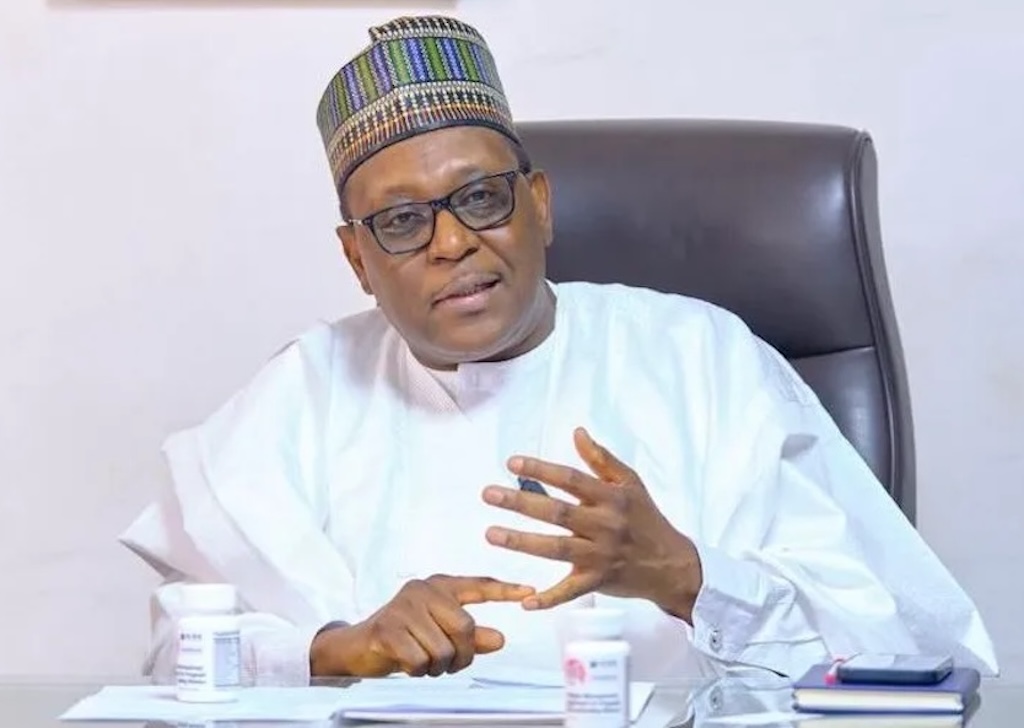
The Coordinating Minister of Health and Social Welfare, Muhammad Pate, disclosed this Tuesday evening during an NTA interview, shortly after the ministry announced Nigeria’s first confirmed Ebola case in the Federal Capital Territory (FCT).
Mr Pate said authorities are currently treating the case as an imported infection and not community transmission.
“At this moment, we are treating it as an imported case, not community transmission,” he said, adding that the situation could change if the virus begins to spread beyond the known contacts.
He said the 44 contacts, including healthcare workers, patients, caregivers and travel contacts, are being isolated at a designated facility in Abuja. At the same time, public health teams determine who may have been infected.
“They remain in communication with their families by phone and other ways, but not physical contact, until we clarify who is infected and who is not,” he said.
Travel manifest obtained
The minister said Nigeria had been conducting risk-based surveillance at points of entry for the past five months through the Nigeria Centre for Disease Control and Prevention (NCDC) and Port Health Services.
He said the aviation industry had also been an important partner in the surveillance effort.
According to Mr Pate, authorities obtained the infected passenger’s travel manifest, which is helping them identify people who may have been exposed.
He said the patient was asymptomatic when she entered Nigeria and developed symptoms after arriving in the country.
“This makes it less likely that the travel itself exposed folks at risk,” Mr Pate said, while noting that authorities were still investigating the circumstances surrounding her entry into Nigeria.
The patient, an unidentified woman who recently arrived in Nigeria on an international flight from Uganda, is currently in isolation and receiving medical care at a private hospital in the FCT.
Symptoms
Mr Pate urged Nigerians and health workers to watch for symptoms including fever, headache, nausea, vomiting, body aches, and severe muscle pain.
He said the Ebola variant involved in the current outbreak is different from the Sudan and Zaire variants, adding that bleeding could occur but is less prominent than with some other Ebola variants.
The case comes amid an ongoing regional outbreak of Bundibugyo Ebola virus, which the NCDC has been monitoring since the outbreak was reported in the Democratic Republic of the Congo (DRC).
The minister also stressed the importance of travel history when assessing suspected cases, particularly among people who have recently travelled to eastern Africa.
He said the Abuja patient had no confirmed travel to the DRC, so authorities presumed she was likely infected in Uganda.
READ ALSO: Ebola in Abuja: 10 things Nigerians should know about the deadly virus
“We presume it is likely that it was picked up in Uganda,” he said, stressing the complexity of tracing the source of infectious diseases.
Regional outbreak continues
The Nigerian case comes amid an ongoing Ebola outbreak in the DRC, where the disease has spread across several provinces.
WHO reported more than 8,700 confirmed cases and more than 4,200 deaths in the DRC as of 6 October, with transmission continuing across dozens of health zones. The outbreak is caused by the Bundibugyo virus.
Kenya reported its first imported case on 6 October: a Kenyan citizen who had been living in the DRC and travelled to Kenya via Uganda.
On 20 October, Kenyan authorities confirmed a ninth case involving a close family member of the first patient.
Uganda, from which the Nigerian patient recently travelled, recorded 20 cases between May and June 2026. The country subsequently ended its outbreak after completing the required 42-day period without a new confirmed case.
Discover more from Premium Times Nigeria
Subscribe to get the latest posts sent to your email.
-

 News2 days ago
Euromatch NPFL: Matchday 9 results
-
News3 days ago
NUCAP: Nigeria targets 20 million people with 3,700 telecom towers – Technology Times
-
News4 days ago
Nigeria needs stronger collaboration ‘to shape internet governance’ – Technology Times
-
News4 days ago
Gunmen storm Plateau mining site, kill two persons