Health
FEC approves N540bn to upgrade National Hospital, build cancer centre

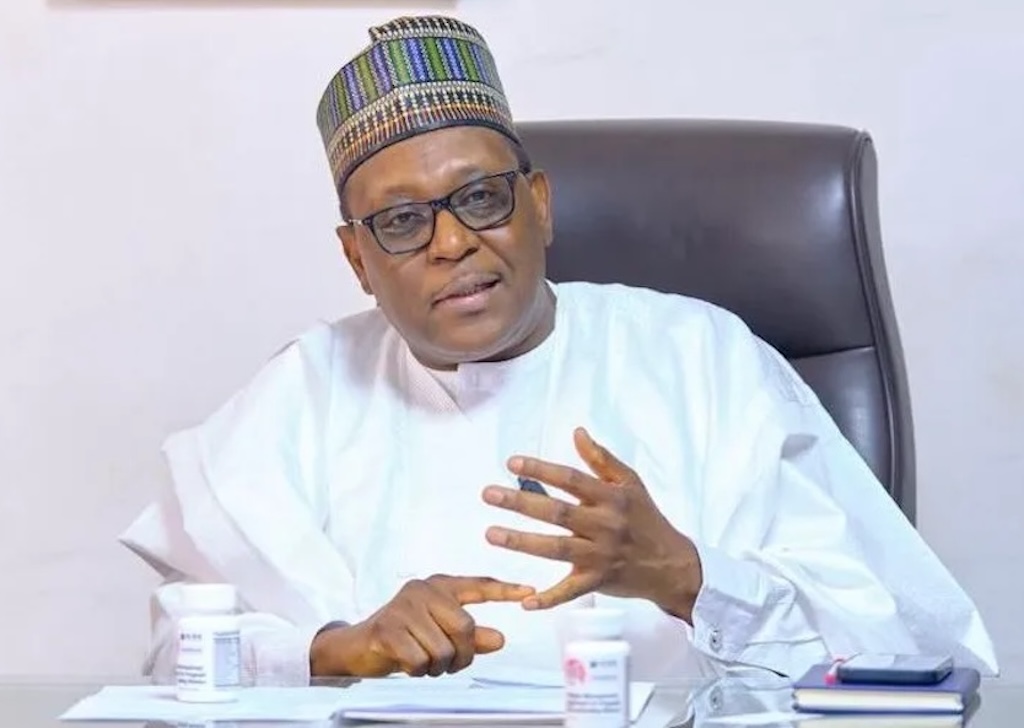

The Federal Executive Council (FEC) has approved projects worth about N540 billion to upgrade the National Hospital, Abuja, to a quaternary healthcare institution and to build a new cancer treatment centre.
Quaternary healthcare refers to highly specialised medical care involving advanced treatment, research and management of complex conditions.
The approvals were disclosed by the Minister of Health and Social Welfare, Muhammad Pate, after the weekly FEC meeting on Wednesday.
The Personal Assistant to President Bola Tinubu on Special Duties, Kamorudeen Yusuf, shared details of the approvals in a post on X.
The approved projects include the construction of new facilities at the National Hospital, Abuja, a Neuroscience Institute and a new National Institute for Cancer Research and Treatment (NICRAT) facility.

National Hospital upgrade
According to Yusuf, the council approved N18.74 million for the refitting of the hospital’s administrative block, with Visible Construction Limited awarded the contract.
It also approved N64.92 billion for modular clinics and a theatre complex, to be constructed by Strabbing Construction Limited.
Another N103 billion was approved for a new hospital wing, with CBC Global Civil Construction Limited awarded the contract.
The project is expected to be completed within 24 months.
The council further approved N69 billion for a Neuroscience Institute covering neurosurgery, radiology and rehabilitation. CBC Global Civil and Building Construction Limited was awarded the contract.
The approvals are part of plans to transform the National Hospital, which Pate said had lagged behind its “original vision” due to years of underinvestment since its establishment about 25 years ago.
Cancer centre
The largest of the approved projects is the N302.3 billion facility for the National Institute for Cancer Research and Treatment.
Yusuf said the project, awarded to CBC Global Civil and Building Construction Nigeria Limited, has a 36-month completion period.
READ ALSO: FG seeks African-led research, partnerships to tackle hepatobiliary cancers
The facility is expected to strengthen cancer research and treatment capacity in the country.
“The projects follow President Tinubu’s directive to strengthen healthcare infrastructure nationwide, and that funding comes through National Assembly appropriations already reflected in the 2025 and 2026 budgets rather than direct ministry allocation,” Pate was quoted to have said.
Discover more from Premium Times Nigeria
Subscribe to get the latest posts sent to your email.






The Federal Capital Territory Administration (FCTA) has approved the resumption of work on the long-abandoned Utako General Hospital and the renovation and upgrading of 14 other general hospitals across the territory.
The FCT Mandate Secretary for Health and Environmental Services, Adedolapo Fasawe, disclosed this to journalists after the 19th FCT Executive Council meeting on Tuesday, presided over by the FCT Minister, Nyesom Wike.
The intervention, she said, would involve the construction and equipping of the Utako hospital, as well as the provision of medical equipment and improvements to existing facilities across the territory.
Reviving Utako hospital
Ms Fasawe said Mr Wike had directed the immediate commencement of work at the Utako General Hospital, which has remained abandoned for years.
She said the intervention would go beyond the construction of the facility to include its equipping and staffing, with the aim of ensuring that the hospital is able to provide healthcare services when completed.
For the 14 existing general hospitals, she said the administration would procure new medical equipment, including X-ray machines and diagnostic materials, while hospital theatres would also be upgraded.

The interventions, according to her, are intended to improve access to reliable and affordable healthcare for residents of the territory.
Ms Fasawe added that the administration had also continued to meet its financial obligations to health insurance providers and health maintenance organisations (HMOs) through the regular payment of premiums and capitation.
Other council decisions
Beyond the health sector, the FCT Executive Council approved several other projects and interventions at the meeting.
The Chief of Staff to the FCT Minister, Chidi Amadi, said the council considered 20 memoranda presented by various secretariats, departments and agencies.
According to him, the submissions were aimed at advancing infrastructure development and improving public services across the capital.
One of the approvals was the digitalisation of the FCT High Court, covering about 67 courtrooms across its judicial divisions.
The council also approved two contracts for the supply of examination materials to primary, junior secondary and senior secondary school students across the FCT.
The Mandate Secretary for Education, Danlami Hayyo, said the initiative formed part of the administration’s broader efforts to improve public education through facility renovations, better classrooms and continued instructional support.
Mr Hayyo said the improvements had encouraged some parents to transfer their children from private schools to public schools.
The Satellite Towns Development Department (STDD) also secured approval for a N5.703 billion contract for the construction of a 33KV power supply line from Dawaki to Tukulo and surrounding villages in Bwari Area Council.
The STDD Coordinator, Abdulkadir Zulkiflu, said CGC Nigeria Limited was awarded the contract and that the project would be completed within eight months.
The council also ratified two road projects in the satellite towns that had already been completed and commissioned.
Discover more from Premium Times Nigeria
Subscribe to get the latest posts sent to your email.
Health
Updated: Independence Anniversary: Tinubu promises stronger primary healthcare for poor Nigerians

President Bola Tinubu has promised to strengthen primary healthcare services for poorer Nigerians as part of his administration’s efforts to reduce poverty and improve living conditions.
Mr Tinubu, in a televised address marking the country’s 66th Independence Anniversary, said his administration would work with state and local governments to strengthen primary healthcare, basic education, and other essential public services poorer Nigerians depend on.
“That is why, working with our states and local governments, we will continue to strengthen primary healthcare, basic education, and the essential public services poorer Nigerians depend on most,” he said.
The promise comes against the backdrop of persistent challenges in Nigeria’s primary healthcare system, with recent assessments and PREMIUM TIMES investigations documenting shortages of health workers, poor infrastructure, inadequate equipment and gaps in basic utilities at several facilities.
PHCs face staffing, infrastructure gaps
A recent assessment of 1,480 primary healthcare centres across 16 states found that 97 per cent of the facilities failed to meet the national minimum staffing requirement.
The assessment, conducted between October 2023 and June 2025 by Orodata Science and Civic Tech, covered 277 local government areas across Nigeria’s six geopolitical zones.
Only three per cent of the facilities assessed met the national minimum staffing requirement, while 11 of the 16 states had no assessed PHC that met the standard.
The assessment also found that 40 per cent of the facilities had broken ceilings or leaking roofs, while 38 per cent operated without electricity.
Another 39 per cent relied on unsafe water sources, while 75 per cent lacked essential neonatal resuscitation equipment.
About 75 per cent of the PHCs assessed were located in rural communities, where such facilities often serve as the first, and sometimes only, formal source of healthcare for residents, the report said.
PREMIUM TIMES’ recent investigation into rural PHCs in Osun State also found that challenges persisted at some facilities despite government spending and interventions aimed at revitalising primary healthcare.
The investigation across three PHCs found problems including deteriorating infrastructure, inadequate staffing, limited equipment and gaps in essential services.
Increase in PHC financing
The federal government has, however, reported increased funding for primary healthcare under the Basic Health Care Provision Fund (BHCPF).
In June, the Coordinating Minister of Health and Social Welfare, Muhammad Pate, said N339 billion had been disbursed to states through the BHCPF since its establishment in 2014, with N235 billion of the amount disbursed in the three years of the Tinubu administration.
Mr Pate said the increased funding reflected intensified investment in primary healthcare and had helped expand access to essential health services.
He said more than 8,000 PHCs across the 36 states were receiving funding through the BHCPF gateways, while assessments were underway to increase the number of supported facilities to 17,600 nationwide.
The government has also launched the Primary Healthcare Provision Strengthening Programme (HOPE-PHC), a $570 million programme designed to strengthen primary healthcare as part of a wider human capital development and poverty-reduction initiative.
The link between healthcare and poverty reduction
In his address, Mr Tinubu acknowledged that millions of Nigerians still struggle to meet basic needs, including healthcare costs.
“I am also conscious that millions of our fellow citizens cannot wait for tomorrow. Some Nigerian families still struggle today for the next meal, the next school fee, the next medical bill, or simply enough money to get to work,” he said.
ALSO READ: FG approves N32 billion for BHCPF to strengthen primary healthcare services
He said the difficulties facing vulnerable Nigerians were not created by the economic reforms of the last three years but were the accumulated consequences of decades of low productivity, inadequate infrastructure, insufficient opportunities and institutions that had often failed those who needed them most.
Mr Tinubu said his administration could not erase in four years problems that had accumulated over generations but could change their course.
“We can build an economy that steadily lifts people out of poverty while ensuring that those who remain vulnerable are not abandoned along the way,” he said.
He said the government was strengthening direct support for poor households and improving the National Social Register so that assistance reaches those who genuinely need it.
Discover more from Premium Times Nigeria
Subscribe to get the latest posts sent to your email.
-

 News1 day ago
Plateau Specialist Hospital Celebrates Nigeria at 66, Salutes Mutfwang’s Health Initiatives
-
News20 hours ago
PLASU Opens Doors to Global Investors at 2nd Inaugural Lecture
-
News1 day ago
Nigeria At 66: Rotjimwa Yilyok Salutes President Tinubu, APC Leadership and Plateau Government
-
 News4 days ago
TikTok Access Disrupted in Parts of Northern Nigeria as Users Turn to VPNs