Connect with us

News

RWVL Project Reaches 22,634 Beneficiaries Across Nigeria In 4 Months

info

Published

on

5df7b7e0 adc7 452b bd7a 06f4961ea7d3.jpeg


By Oluwatope Lawanson


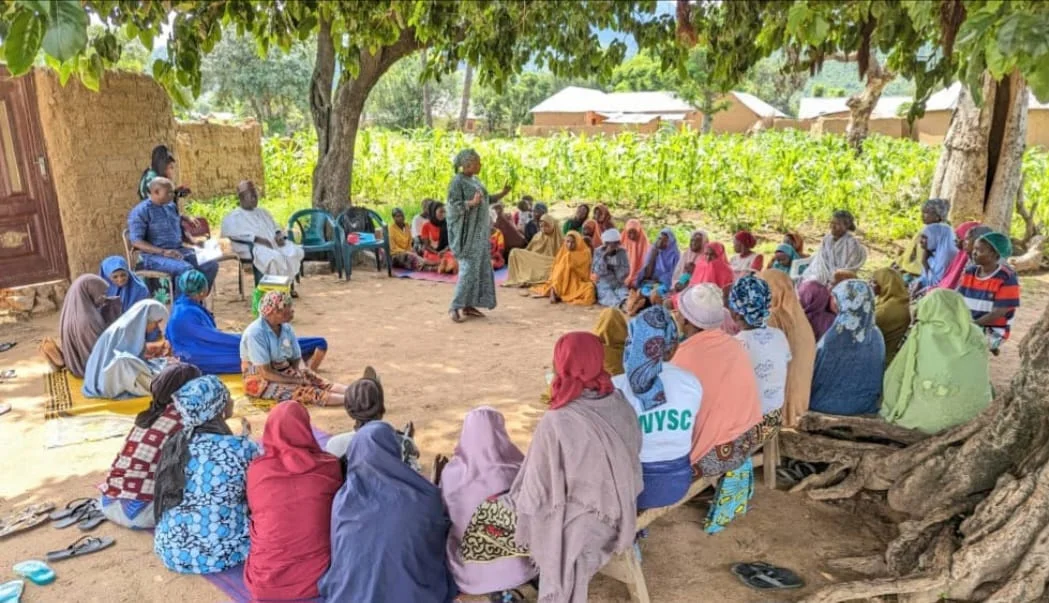
The Renewed Women’s Voice and Leadership (RWVL) Nigeria Project says it reached no fewer than 22,634 direct beneficiaries across the country between April and July, with women accounting  for the largest proportion.


This is stated in a programme performance data compiled from monthly reports submitted by project partners and signed by Mr Emmanuel Olonade, Communications Specialist for RWVL.


The News Agency of Nigeria (NAN) reports that the RWVL Project is designed to strengthen the voice, leadership and rights of women and girls.


Also, it is designed to promote gender equality and support resilient, peaceful and inclusive communities across Nigeria.


The project is being implemented by ActionAid Nigeria with funding support from Global Affairs Canada, in collaboration with women’s rights organisations and other partners across its areas of operation.


Olonade said the report showed that the beneficiaries were reached through 102 activities implemented by 14 partner organisations across 52 local government areas and 96 communities nationwide.


He said 17,394 of the beneficiaries, or 76.8 per cent, were women aged 18 years and above.


He said other beneficiaries comprised 3,781 men, representing 16.7 per cent; 889 girls aged 0-17, 3.9 per cent; and 570 boys aged 0-17, 2.5 per cent.


According to him, 1,324 persons living with disabilities, representing 5.8 per cent of the beneficiaries, were also reached.


“The data further revealed that Kwara recorded the highest number of beneficiaries with 4,715, followed by the Federal Capital Territory with 2,842; Benue with 2,386; Cross River with 1,987 and Plateau with 1,865,” he said.


He said activities carried out during the period were spread across five major thematic areas, including women’s leadership, which accounted for 29 per cent.


He said gender-based violence awareness and response accounted for 24 per cent of the activities.


‘’Others are economic empowerment, including financial literacy and Village Savings and Loan Association support, 20 per cent; community mobilisation and sensitisation, 15 per cent.


‘’Stakeholder engagement and advocacy accounted for eight per cent,”  he said.


He said the project supported 346 VSLA groups across 11 states, with a combined membership of 7,842 people, 90 per cent of whom were women.


Speaking on the performance of the project, the Executive Director, Voice of Women Empowerment Foundation, Mrs Toun Sonaiya, said the figures reflected the scale and impact of the interventions.


“The April to July 2026 data provides a clear picture of the reach of the RWVL Project during the reporting period, with 22,634 direct beneficiaries recorded across 102 activities.


“The data also shows significant participation by women, alongside interventions focused on leadership, economic empowerment, GBV awareness and response, community mobilisation and advocacy,” she said.


Sonaiya said the project recorded a 96 per cent data completeness rate, with beneficiary figures recalculated and validated from partner submissions.(NAN) (www.nannews.ng)

Edited by Abujah Racheal/Esenvosa Izah

Continue Reading
Click to comment

Leave a Reply

Your email address will not be published. Required fields are marked *

News

Taraba South: Ashumate Unveils Legislative Agenda

info

Published

on

By

Screenshot 2026 08 21 at 12.47.08 AM 1200x675.png

The Peoples Democratic Party candidate for Taraba South Senatorial District, Dr Jesse Ashumate, has outlined a legislative programme focused on agriculture, security, healthcare and employment opportunities for residents of the zone.

Ashumate unveiled the agenda in Abuja on Thursday while inaugurating his campaign council ahead of the forthcoming general elections.

The former Taraba State Commissioner for Finance said his priorities, if elected to the Senate, would include attracting agricultural infrastructure to the district, promoting peaceful coexistence and creating opportunities for young people and small businesses.

Agriculture featured prominently in his proposals, with Ashumate arguing that Taraba South possesses enormous potential in rice, yam and fish production but lacks sufficient infrastructure to maximise its contribution to Nigeria’s food supply.

He said the quality and volume of agricultural produce from Taraba deserved greater recognition and corresponding federal investment. According to him, although Benue is widely described as Nigeria’s food basket, Taraba contributes significantly to the food that reaches markets across the country.

Ashumate said he would pursue legislation and federal interventions aimed at establishing specialised agricultural institutions within the senatorial district.

Among the proposals are a fisheries institution around communities along the River Benue basin and crop research facilities designed to provide technical support, improved seedlings and modern farming knowledge to local farmers.

He also pledged to promote irrigation and other modern agricultural practices to reduce farmers’ dependence on seasonal rainfall and improve productivity throughout the year.

On insecurity, Ashumate said recurring communal disputes and farmer-herder clashes required solutions that addressed both security and economic realities. He advocated a gradual transition from open grazing to modern ranching, arguing that Nigeria’s growing population and increasing pressure on available land had made the old system increasingly difficult to sustain.

The PDP candidate pointed to established ranching operations on the Mambilla Plateau as evidence that livestock production could be successfully conducted under a more organised system. He said herders should be adequately sensitised on the economic benefits of ranching, including improved livestock productivity and reduced conflict with farming communities.

Ashumate also expressed support for a properly designed state police system, provided that adequate safeguards were put in place to prevent abuse. He added that legislation should continue to protect the constitutional rights of Nigerians to reside, conduct lawful businesses and move freely in any part of the country.

Beyond agriculture and security, the candidate promised to push for improved healthcare facilities in rural communities and increase efforts to secure federal employment opportunities for qualified constituents.

He also identified Micro, Small and Medium Enterprises as an important tool for reducing unemployment, promising to support initiatives that would make financing and other forms of assistance more accessible to entrepreneurs in Taraba South.

Ashumate said his broader objective was to promote a society in which economic opportunities were expanded while communities lived together peacefully regardless of ethnic or social differences.

An indigene of Wukari Local Government Area, Ashumate is a Fellow of the West African College of Physicians. He previously worked as a Principal Medical Officer in public health institutions in Taraba State and later served as Director of Health Services at the Federal University, Wukari.

He also served two terms as Commissioner for Finance in Taraba State.

Continue Reading

Health

FEC approves N540bn to upgrade National Hospital, build cancer centre

info

Published

on

By

Professor Muhammad Ali Pate copy.jpg

MTN ADVERT

The Federal Executive Council (FEC) has approved projects worth about N540 billion to upgrade the National Hospital, Abuja, to a quaternary healthcare institution and to build a new cancer treatment centre.

Quaternary healthcare refers to highly specialised medical care involving advanced treatment, research and management of complex conditions.

The approvals were disclosed by the Minister of Health and Social Welfare, Muhammad Pate, after the weekly FEC meeting on Wednesday.

The Personal Assistant to President Bola Tinubu on Special Duties, Kamorudeen Yusuf, shared details of the approvals in a post on X.

The approved projects include the construction of new facilities at the National Hospital, Abuja, a Neuroscience Institute and a new National Institute for Cancer Research and Treatment (NICRAT) facility.

PT WHATSAPP CHANNEL

National Hospital upgrade

According to Yusuf, the council approved N18.74 million for the refitting of the hospital’s administrative block, with Visible Construction Limited awarded the contract.

It also approved N64.92 billion for modular clinics and a theatre complex, to be constructed by Strabbing Construction Limited.

Another N103 billion was approved for a new hospital wing, with CBC Global Civil Construction Limited awarded the contract.

The project is expected to be completed within 24 months.

The council further approved N69 billion for a Neuroscience Institute covering neurosurgery, radiology and rehabilitation. CBC Global Civil and Building Construction Limited was awarded the contract.

The approvals are part of plans to transform the National Hospital, which Pate said had lagged behind its “original vision” due to years of underinvestment since its establishment about 25 years ago.

Cancer centre

The largest of the approved projects is the N302.3 billion facility for the National Institute for Cancer Research and Treatment.

Yusuf said the project, awarded to CBC Global Civil and Building Construction Nigeria Limited, has a 36-month completion period.

READ ALSO: FG seeks African-led research, partnerships to tackle hepatobiliary cancers

The facility is expected to strengthen cancer research and treatment capacity in the country.

“The projects follow President Tinubu’s directive to strengthen healthcare infrastructure nationwide, and that funding comes through National Assembly appropriations already reflected in the 2025 and 2026 budgets rather than direct ministry allocation,” Pate was quoted to have said.


Discover more from Premium Times Nigeria

Subscribe to get the latest posts sent to your email.

Continue Reading

Trending